
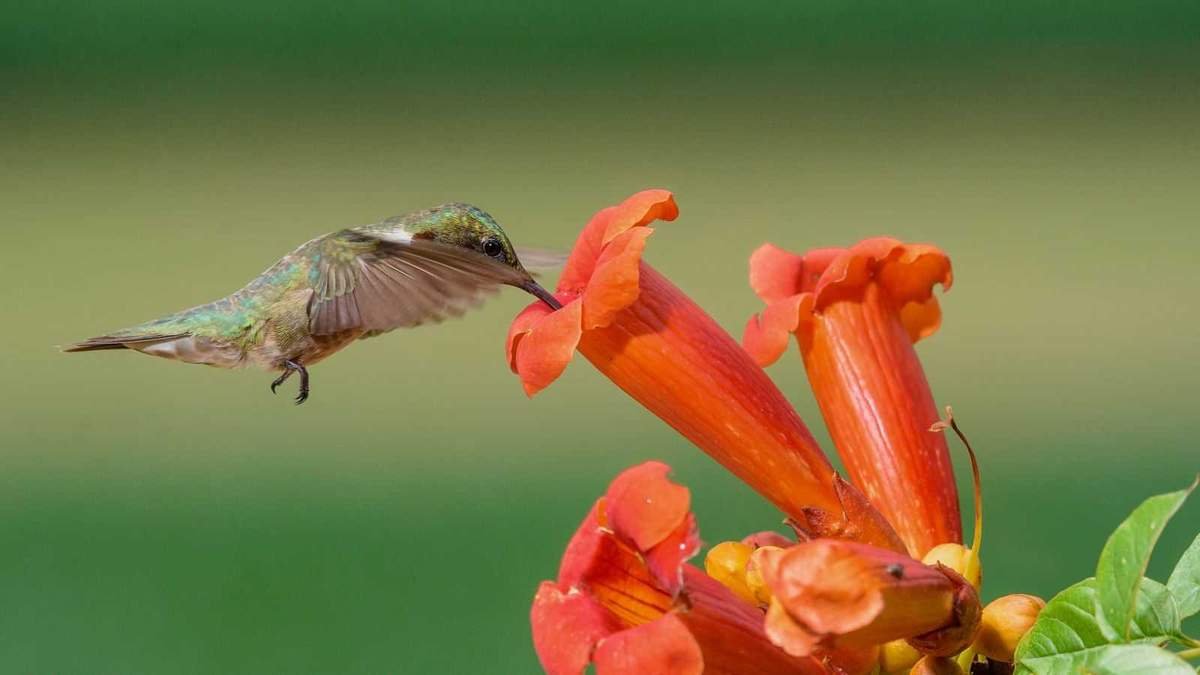
Trumpet vine (Campsis radicans) is a climbing plant that draws hummingbirds with its tubular, nectar-filled flowers. You can successfully cultivate trumpet vine in pots even in limited areas, as long as you manage its growth effectively.
This vigorous climber is known for its rapid growth, but that doesn't mean you can't grow it in containers. Opt for compact varieties that thrive in larger, sunlit pots. With proper support, watering, feeding, pruning, and winter care, you can enjoy a vibrant display year after year.
If you're keen on adding height and attracting pollinators to your garden, there are several key points to consider when growing trumpet vines. Below are seven essential tips for achieving a stunning display while keeping your trumpet vine manageable.
1. Select a Compact Variety

Some trumpet vine species can reach up to 40 feet in a growing season, which is unmanageable in pots. Fortunately, there are compact varieties that make container growth feasible.
For pot cultivation, choose a less vigorous cultivar of Campsis radicans. These varieties are specifically bred for smaller gardens and are perfect for pots, allowing for controlled growth without compromising on blooms.
Look for varieties like 'Indian Summer' and 'Flava,' which are more compact and less aggressive than standard trumpet vines. They're easier to manage in larger containers and will produce bright flowers, making them ideal pollinator-friendly container plants.
You can purchase a live Campsis radicans 'Flava' plant at Amazon. This native species features yellow trumpet-shaped flowers that hummingbirds love, and its growth can be managed through pruning.
Additionally, you can find a live 'Indian Summer' trumpet vine plant at Amazon.
2. Choose an Appropriate Pot
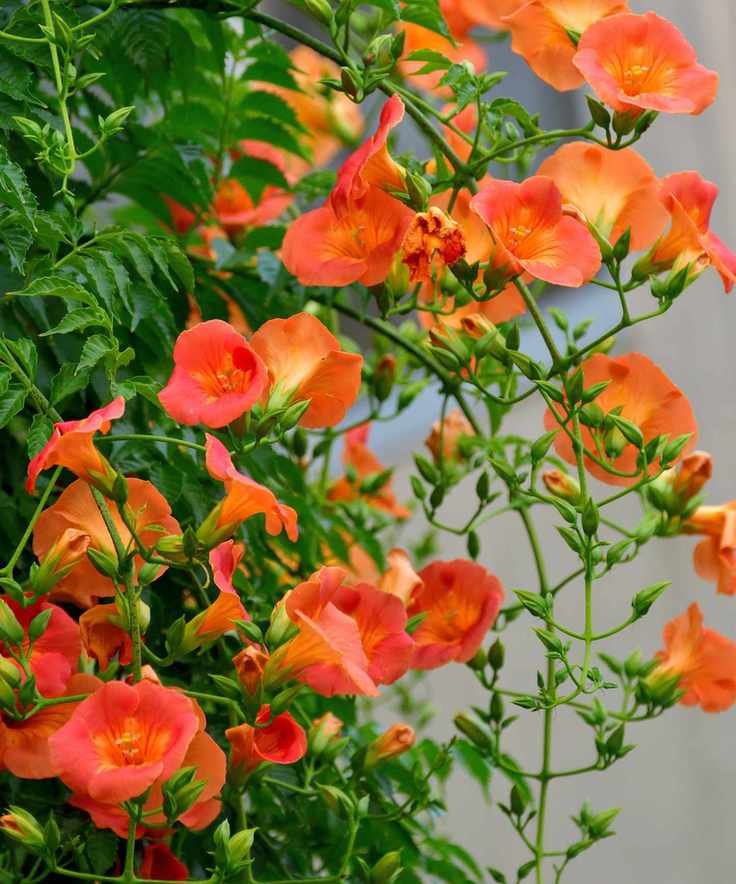
Even compact trumpet vines require a sizable container. Aim for a pot that holds at least 15-25 gallons, typically around 16-24 inches wide and deep to accommodate their extensive root systems.
Opt for a heavier pot made from materials like terracotta or ceramic to prevent the top-heavy plant from tipping over in strong winds. Ensure your planter has drainage holes to avoid waterlogging.
Fill the pot with a well-draining potting mix, such as this Miracle-Gro potting mix, available at Amazon.
WARNING: Trumpet vines have aggressive roots and can spread via suckers. Growing them in pots helps contain their potentially invasive nature, but check for roots growing out of the bottom of the container. If you see any, trim them back to prevent escape.
3. Ensure Plenty of Sunlight
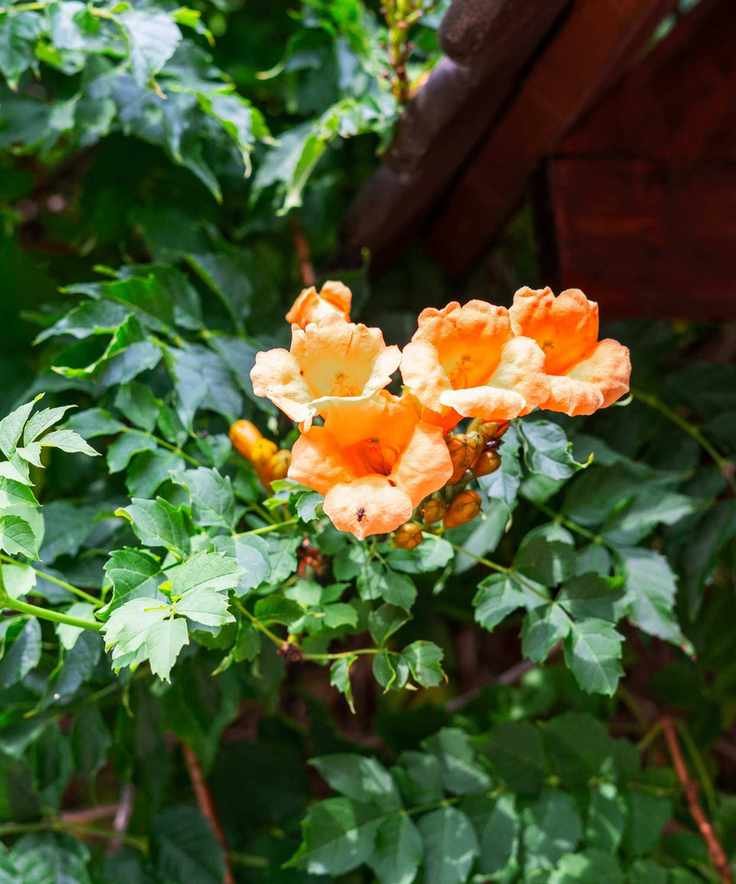
To attract the maximum number of hummingbirds and other pollinators, trumpet vine needs sunlight.
It flourishes with 6-8 hours of direct sunlight daily but can tolerate partial shade, though flowering may be reduced. Excessive shade could result in plenty of vines but few blooms.
In addition to full sun, the vine benefits from protection against cold winds. A sunny, sheltered spot on a patio or against a wall where it can climb a trellis is ideal.
4. Provide Support
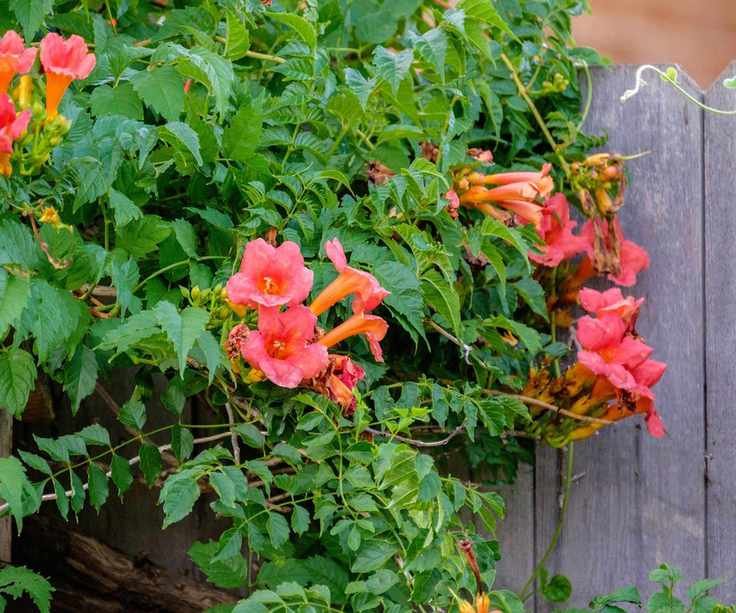
As a flowering climber, trumpet vine requires a structure to climb, which should be set up while the plant is still small.
This support can be a trellis or an obelisk, such as this iron obelisk at Wayfair that fits nicely in a large pot and offers a striking backdrop for the vine.
If your trumpet vine is near a wall, you can attach a wooden trellis from Amazon for it to grow up.
Alternatively, consider a raised garden bed with an attached trellis from Walmart, perfect for climbing plants. You can plant the trumpet vine directly in the bed or place a potted vine into the planting area and allow it to climb the trellis.
Begin training the climber early by gently tying young shoots to the support with soft ties, like these plant ties at Amazon.
5. Regular Watering and Feeding

Container-grown climbers require more frequent watering and feeding than those in the ground. While established trumpet vines in the ground may only need watering during dry spells, those in pots need more consistent care.
The soil in containers dries out quickly in warm weather, and lush plants can rapidly deplete nutrients. Regular deep watering is crucial, especially during summer heat—aim for twice a week or more.
Additionally, a balanced fertilizer in spring, like this all-purpose plant food from Burpee, followed by a monthly high-potassium feed (like this tomato fertilizer with kelp at Amazon) will ensure optimal blooming.
6. Prune Annually
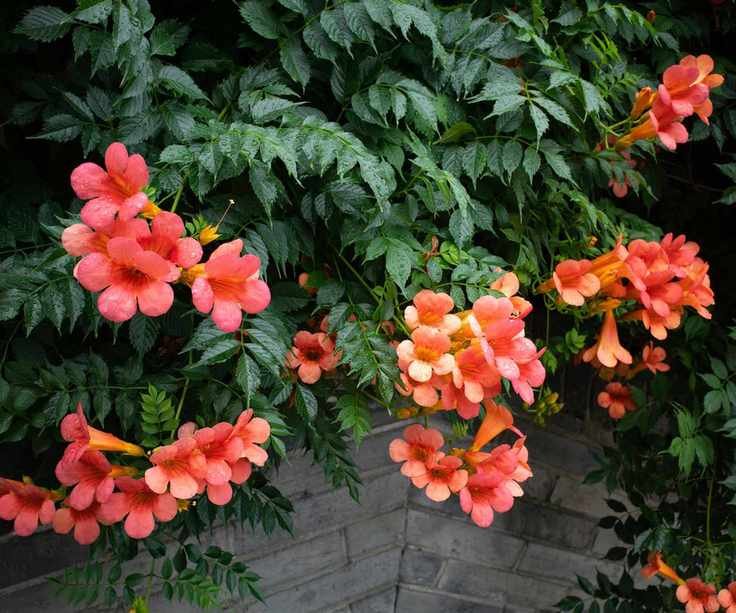
Annual hard pruning is essential for controlling the size of trumpet vines in pots, making it a crucial maintenance task.
Prune in late winter or early spring. Don't hesitate to cut back significantly, as trumpet vines bloom on new growth—those produced in the current season. Trim back growth to about 12 inches, which is effective for keeping it manageable in pots.
Wear gloves while pruning, as the sap can irritate the skin.
Use clean, sharp pruning tools. A pair of pruning shears (like these Corona bypass pruners at Garden Goods Direct) works well for hard pruning, while loppers are needed for thicker stems over an inch wide.
7. Winter Protection
Trumpet vines are hardy in US hardiness zones 4 to 10 when planted in the ground. However, their hardiness is lower in pots due to root exposure.
In colder climates, take measures to protect potted trumpet vines during winter. Move the container to a sheltered area against a wall to shield it from frost.
Alternatively, you can wrap the pot in frost cloth, burlap (get a roll of burlap at Amazon), or winter pot covers to insulate the roots from freezing temperatures.
Summer Jazz Fire is a compact trumpet vine that reaches 2-3 feet tall and wide, making it perfect for smaller spaces.
This soil moisture meter features a straightforward dial with color zones to help you quickly determine when to water your trumpet vines growing in containers.
A set of two gardening gloves made from 68% bamboo offers comfort and flexibility. They're soft yet durable, providing protection from scratches and cuts.
If you're seeking unique vertical plants that attract hummingbirds and butterflies for your wildlife garden, check out this guide on underrated climbing plants that are known to draw wildlife, including pollinators and beneficial insects.


