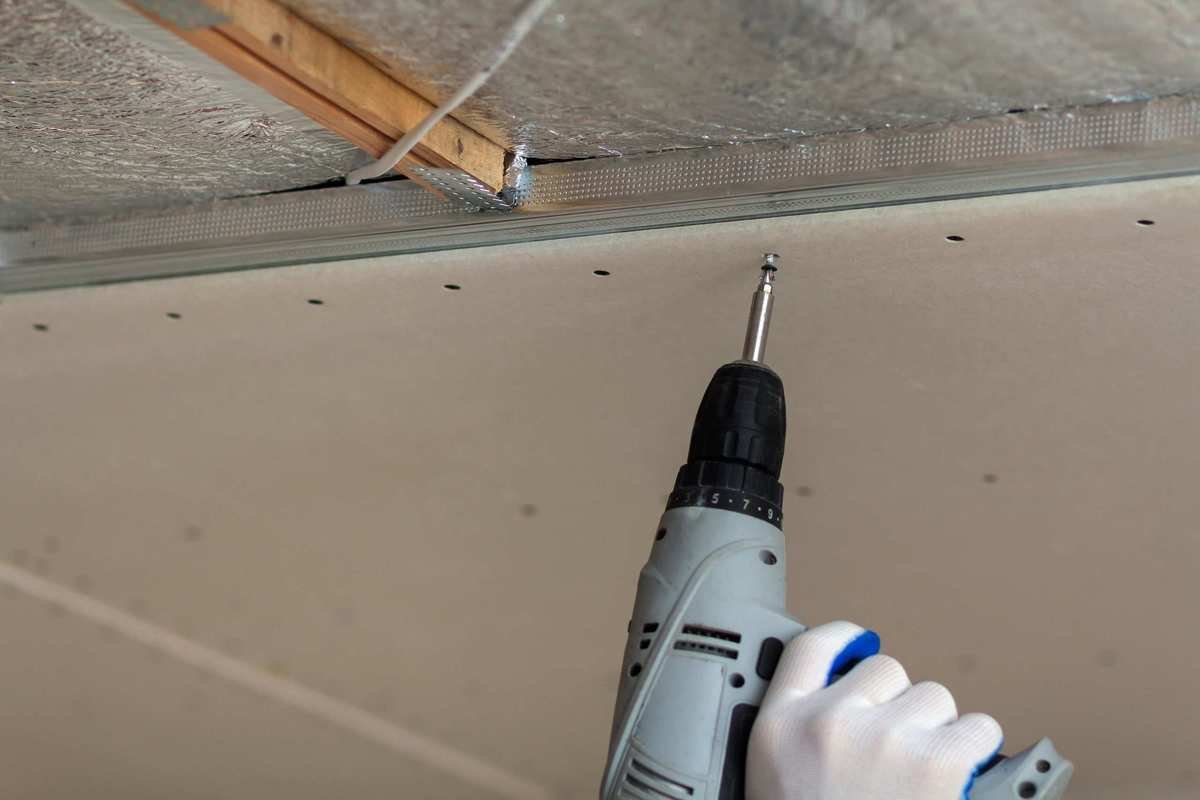
Drywall is a widely used and adaptable construction material, making it a valuable skill to learn how to hang drywall on ceilings for your DIY projects.
Typically employed for constructing walls and ceilings, drywall is a fundamental element in most buildings. It can also be utilized for crafting unique architectural features like eaves and arches. Often referred to as plasterboard, it consists mainly of gypsum plaster.
Although installing drywall may not rank as the most thrilling project on your home improvement list, successfully completing it will undoubtedly give you a sense of achievement.
Whether you're opting to hang drywall ceilings instead of removing a popcorn ceiling or replacing a damaged one, these expert tips will guide you to a successful installation.
Steps for Hanging Drywall Ceilings
To effectively execute your ceiling ideas, mastering the technique of hanging drywall is essential. Once you've done this, you can proceed to plaster the ceiling, add texture, or even install ceiling tiles.
Before you start, check for any existing issues, such as ceiling leaks, and address them. You may also want to repair any water-damaged areas before proceeding.
In some cases, you might only need to patch a drywall ceiling. However, if you require a complete installation, follow this detailed guide featuring advice from Nick Cryer, the founder of a high-end construction business, Berkeley Place.
You will need:
- Drywall sheets
- Drywall screws
- Drywall adhesive
- Safety gloves and goggles
- Electric or battery-powered screwdriver
- Utility knife
- Measuring tape
- Framing square
- T-square
- Drywall tape
- Putty
- Sandpaper
1. Start with the Ceiling
"If you're installing drywall, begin with the ceiling before tackling the walls," advises Nick.
Starting with the walls first can lead to unsupported ceiling drywall, making the installation more difficult. By installing wall panels afterwards, they will help provide support to the edges of the ceiling drywall.
2. Accurate Measurements
Measure the width of your walls and cut the drywall sheet to be about 1/4 inch shorter than that measurement.
Use a T-square and pencil to mark the precise dimensions on the drywall. Then, utilize a utility knife to score the line, bending the board to snap it as you cut.
3. Positioning the Drywall
Ensure that your drywall is installed perpendicular to the joists.
"Before attaching the drywall, make sure the first board aligns with the center of a stud, which is a vertical framing component of the wall," says Nick.
4. Secure with Adhesive and Screws
With the help of a partner, lift the drywall into position against the ceiling, starting from a corner.
Score the drywall with a utility knife and drywall square, snapping off the excess material along the scored line.
"Align the board with the studs so that one edge fits snugly against the ceiling board and the other against the adjacent wall," Nick advises. "Install screws into the center of the board at a manageable height. After securing the first screws, continue working from the center outwards." Ensure the boards are close to the walls, with all edges fastened to the ceiling studs. Two drywall boards should meet on the same stud, with screws secured in the center using your electric screwdriver.
As you attach your newly cut drywall boards, apply some drywall adhesive along the studs to reduce the number of screws needed.
According to Nick, "Using drywall adhesive will also improve the soundproofing of your walls."
5. Finish with Putty and Tape
For a polished appearance, use putty and drywall tape to finish the joints. Cover the screw heads and drywall board joints with a trowel, paper tape, and drywall putty.
Once the putty is applied, sand it down with medium-grit sandpaper.
Can I Hang Drywall Ceilings Alone?
While it is possible to install drywall ceilings by yourself, having an assistant makes the process easier and safer.
What Gap Should Be Left Between Drywall Sheets?
A gap of about 1/4 inch between drywall sheets is ideal.
Is it Better to Hang Drywall Vertically or Horizontally?
Hanging drywall horizontally is preferred as it reduces the amount of adhesive required.