Finding the right bra size can feel puzzling, especially if the size you believe you are doesn't fit as expected. If you're wearing a 40B or curious about its fit, rest assured, you’re not alone. Knowing your 40B bra size equivalent can prevent uncomfortable fits and excessive returns.
This guide covers everything about 40B sizing, including sister sizes, cup volume, and practical fitting advice. Whether you need help with a misfit bra or navigating different brands, you'll gain insights for finding your ideal fit.
Understanding the 40B Bra Size
A 40B bra size features a 40-inch band and a B cup. In the US, this typically accommodates someone with a snug underbust measurement of around 40 inches and a bust measurement of about 42 inches, which creates the 2-inch difference defining the B cup.
When searching for a "40B bra size equivalent," most are looking for sister sizes that maintain similar cup volume but vary in band length, or alternative sizes to try if 40B isn't fitting well.
Primary sister sizes include 38C (smaller band, larger cup) and 42A (larger band, smaller cup).
These sizes share approximately the same cup volume as 40B while providing different band fits.
A B cup on a 40 band differs from a B cup on a 34 band—this misconception is common.
Extended sister sizes such as 36D and 44AA exist, though they may be harder to find.
Remember: “Equivalent” means similar cup volume, not an exact match. It’s about finding a size that fits better.
Basics of Bra Sizing (Band and Cup)
Bra sizes consist of two measurements: band size (the number) and cup size (the letter). Understanding these measurements is crucial before exploring your options.
Measuring your band size involves wrapping a tape measure snugly around your ribcage, directly under your bust. Ensure the tape is parallel to the ground and note your measurement in inches. If you measure 40 inches, you're likely looking for a 40 band in US sizing.
Measuring your bust means wrapping the tape around the fullest part of your chest. For accuracy, wear a thin, non-padded bra and avoid pulling the tape too tight.
The difference between these two measurements determines cup size using the inch-difference method common in the US:
1-inch difference = A cup
2-inch difference = B cup
3-inch difference = C cup
4-inch difference = D cup
For example, if your underbust measures 40 inches and your bust measures 42 inches, that 2-inch difference corresponds to a 40B.

Keep in mind that sizing varies by country. US and UK sizes are generally similar for B cups, while EU sizes differ. Additionally, breast tissue distribution and shape can affect fit; identical measurements may not yield the same comfort.
40B Sister Sizes: Equivalent Options for Cup Volume
Sister sizes are different band and cup combinations that offer similar cup volume. This concept is handy when your current size isn't quite right.
The rule is simple: when you decrease one band size, increase one cup letter; when you increase one band size, decrease one cup letter. This keeps the cup volume consistent while adjusting the band length.
For 40B, the sister size relationships are:
38C ↔ 40B ↔ 42A
Going down: 38C has a tighter band and deeper cup. Going up: 42A has a looser band and shallower cup. Both sizes maintain similar cup volume to your 40B.
Extending the chain gives you 36D (down two band sizes, up two cup letters) and 44AA (up two band sizes, down two cup letters). These extended sizes may be harder to find, and fit differences become more noticeable as you move away from your original size.
As per underwire sizing guides, all sister sizes of 40B utilize the same size 40 underwire, confirming they share identical cup volumes.
Sister sizes can be practical: if your 40B cups fit well but the band feels tight, trying 42A might alleviate discomfort without altering cup fit. Conversely, if your band feels loose, 38C could provide better support while maintaining similar breast coverage.
Note: cup volume is similar across sister sizes, but brands can vary. Some bras may run small or large in the cups, so it's wise to try a few options.
Comparing 40B to Nearby Sizes (40A, 40C, 38C, 42A)
If 40B isn't fitting right, consider these common alternative sizes:
40A vs 40B
Both share the same band size, but 40A has about 1 inch less cup depth, fitting someone with around a 41-inch bust. If your bra cups gap at the top or feel too tall, 40A might be your answer.
40C vs 40B
Again, same band size, but 40C offers about 1 inch more cup depth, fitting approximately a 43-inch bust. If you're experiencing spillage, 40C is worth considering.
40B vs 38C (Sister Size)
Here’s where it gets interesting. The 38C is a sister size with a 2-inch smaller band and one cup size larger. This results in similar cup volume but a different band experience. If your 40B band rides up, 38C provides a snugger fit.
40B vs 42A (Sister Size)
On the flip side, 42A has a 2-inch larger band and a smaller cup letter. If your 40B band feels tight, 42A can offer relief while maintaining cup volume.
A key point: 40B isn't universally “larger” or “smaller” than 38C. The band is larger, but the cup letter is smaller, resulting in differences depending on whether you're assessing band fit or bust coverage.
Assessing If 40B Is Right for You
The tag number is less important than how the bra fits your body. Comfort, support, and shape are your main priorities. Here’s how to determine if your current bra is suitable.
Signs your 40 band fits well:
The band remains level around your body, without riding up.
You can comfortably fit two fingers under the band, but no more.
Initially, the bra feels snug on the loosest hook, allowing room to tighten as it stretches.
Signs the 40 band is too tight:
You feel painful pressure or have difficulty breathing.
Deep red marks appear on your skin post-wear.
Severe digging occurs even on the loosest hook.
Signs the B cups are too large:
Gaps appear at the top of the cups.
Fabric wrinkles.
The bra digs into your armpits due to tall cups.
Signs the B cups are too small:
Breast tissue spills over the top or sides.
The center gore doesn’t sit flat against your sternum.
The underwire rests on your breast tissue instead of your inframammary fold.

Based on your findings, here’s what to try:
Band OK, cups too large → try 40A
Band OK, cups too small → try 40C
Cups OK, band too tight → try 42A (sister size)
Cups OK, band too loose → try 38C (sister size)
Consider the “scoop and swoop” technique: lean forward, fasten your bra, then use your hand to position breast tissue into the cups. This ensures all tissue is contained before evaluating the fit. Sometimes, cups that seem too big are actually correct; the tissue just needs repositioning.
Variations of 40B Across Brands and Styles
Every savvy bra shopper knows that a 40B can feel entirely different depending on the brand or style. While the label may read the same, the fit can vary significantly.
Style differences in 40B:
Full-coverage bras in 40B typically offer more coverage compared to plunge or balconette styles. A seamless bra or bralette might fit looser than a structured underwire bra. Sports bras sometimes use different sizing altogether, opting for S/M/L categories.
Brand characteristics:
Some brands tend to have tighter bands. Many UK brands often feature firmer, less stretchy bands, so if you're transitioning from a UK brand, their 40B may feel snugger than expected. Conversely, some US brands utilize stretchier materials, potentially making their 40B feel looser.
Always check each retailer's bra size chart and customer reviews before making online purchases. A quick scan can save you from frustrating returns. For more supportive swimwear tips, check out white bathing suit tops for large busts.
Plus-size focused brands:
Brands specializing in larger sizes typically start around 38-40 bands. In these cases, 40B might be one of their smaller cup sizes, but the band construction usually offers better support than brands focusing on smaller sizes.
Practical advice: don’t assume your ideal size in one brand will translate to another. A 40B T-shirt bra does not fit the same as a 40B lace balconette or sports bra due to differences in fabric, construction, and purpose. When trying a new style, be open to exploring adjacent sizes.
Measuring Yourself If 40B Feels Off
If your 40B bras often feel too large, too small, or just uncomfortable, it's time to grab a measuring tape and reassess your measurements. Bodies change, and the size that worked previously may no longer be accurate.
Measure your underbust (band measurement)
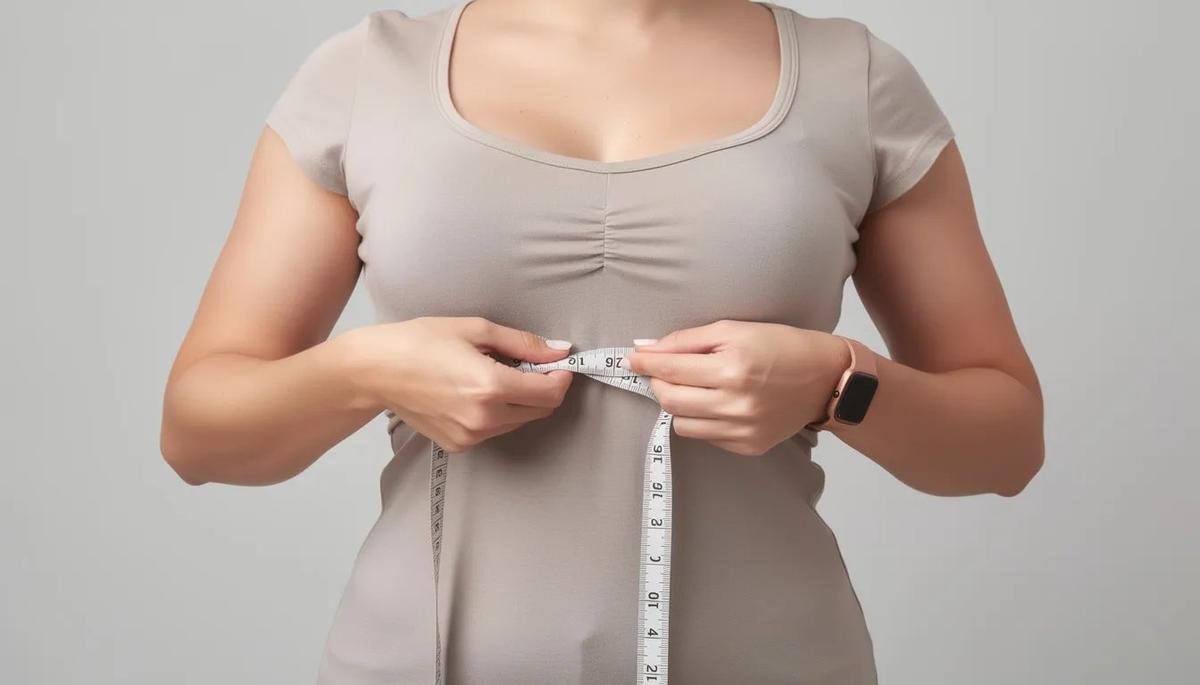
Stand straight and wrap a tape measure snugly around your ribcage, directly under your bust, ensuring the tape is parallel to the floor. Avoid holding your breath or sucking in—just breathe normally. Take note of the measurement in inches.
Step 2: Measure your bust
Wrap the tape measure around the fullest part of your bust, again ensuring the tape remains parallel to the floor. For accuracy, wear a thin, unpadded bra and don’t pull too tight. Make a note of this measurement.
Step 3: Calculate the difference
Subtract your band measurement from your bust measurement using the inch-difference chart:
1 inch = A cup
2 inches = B cup
3 inches = C cup
4 inches = D cup
Example:
If you measure 39 inches at the underbust and 41 inches at the bust, that indicates a 2-inch difference, suggesting a B cup. For band size, round to the nearest even number. If you prefer a snug fit, round down to 38, making your size 38B. Alternatively, if you prefer a looser band, round up to 40, giving you 40B. You might also consider trying 38C (the sister size) or 40A based on your typical fit.
Your calculated size serves as a starting point. From there, try on several options and use the fit criteria from earlier to narrow down your choices. Remember, factors like breast tissue softness, posture, and even your monthly cycle can influence what feels like the best fit. Expect to use one calculation as a starting point, not a definitive answer.
Consider utilizing an online bra size calculator for verification, but keep in mind that calculators rely on measurements and can't account for shape, tissue density, or personal preference.
Common Questions About 40B Equivalents
Is 40B equivalent to 38C?
Not precisely, but they’re close. 40B and 38C are sister sizes with similar cup volume. The difference lies in the band: 38C has a smaller band and larger cup letter, while 40B has a roomier band with a smaller cup letter. If your 40B band is loose, 38C may provide needed support while maintaining bust coverage.
Is 40B a big or small bra size?
It’s relative to body frame. A 40 band indicates a larger ribcage (around 40 inches underbust), while a B cup reflects moderate volume for that frame. Many women with broader shoulders or larger ribcages comfortably wear size 40 bands. Labeling sizes as “big” or “small” lacks context.
What if the calculator suggests 40B but the cups feel huge?
First, double-check your measurements; even a slight error can mislead. Second, ensure you’re using the scoop and swoop method to position breast tissue properly. If cups still gap or wrinkle, consider trying 40A for shallower cups or 38C for a firmer band.
Are 40B sizes equivalent in US and UK?
For B cups, US and UK sizing closely align. The band number (40) and cup letter (B) translate directly. Variations in sizing become more significant at larger cup sizes (DD, DDD, etc.), where letter progressions diverge. For 40B specifically, expect similar fit between US and UK.
What is the European equivalent of 40B?
In EU sizing, 40B converts to about 90B. European sizes use centimeter-based band numbers, so 40 becomes 90, but the cup letter remains unchanged. When shopping from a European brand, look for 90B as your equivalent size.
Final Thoughts
40B corresponds to a 40-inch underbust and a 42-inch bust (2-inch difference).
Primary sister sizes for 40B are 38C and 42A, both sharing cup volume but differing in band length.
Utilize fit signs (gaping, spillage, band riding) to determine whether to adjust cup size or band size.
Different brands and styles can cause the same 40B label to fit variably.
Reassess your measurements if your current size isn’t working, then try adjacent sizes.
Finding your ideal bra size isn’t about a magic number. It’s about understanding how band and cup sizes interact and knowing what adjustments to make when something feels off. Start with your measurements, explore sister sizes, and don’t hesitate to try various styles until you discover bras that fit your body perfectly.