
Finding your ideal bra size can be tricky, especially for larger sizes like 46 DDD. With various labeling systems and inconsistent stock, many women often end up with the wrong size.
Here's the silver lining: by understanding sister sizes and cup volume across different band measurements, you'll discover numerous options for achieving a great fit. This guide provides essential information on 46 DDD bra size equivalents, sister sizing basics, international conversions, and practical fitting advice. For ultimate comfort, explore these cozy pajamas made from soft, breathable materials perfect for lounging or sleep.
What Is 46 DDD Bra Size Equivalent?
A 46 DDD (US) generally equates to 46F in US sizing, with sister sizes being 44G (tighter band) and 48DD (looser band). Knowing these equivalents can enhance your shopping experience.
In many US brands, DDD and F indicate the same cup volume for the same band size. Therefore, 46DDD and 46F are essentially identical, differing only in manufacturer labeling.
Sister sizes maintain the same cup volume while varying the band size. The general rule is: moving to a tighter band increases the cup letter, while switching to a looser band decreases it, ensuring consistent cup volume across band sizes.
Main equivalents to note:
46DDD = 46F (US) — same size, different label
US sister sizes: 44G (tighter band), 48DD (looser band)
UK equivalents: 46E or 46F, depending on the brand
Remember that specific labels may differ by brand and country. Always check the sizing system of specific brands before purchasing, especially when buying internationally or trying a new manufacturer.
Understanding 46 DDD vs F, E and Other Cup Labels
Cup labels beyond D can be confusing due to inconsistent branding. Some brands follow the DD/DDD progression while others skip straight to E/F. Grasping these differences helps you navigate size charts confidently. If you're curious about what comes after DD, understanding these variations is crucial.
In most US systems, the cup progression is as follows:
D = D
DD = E
DDD = F
This means a 46DDD is often listed as 46F in brands that use the D-E-F system. They represent the same cup volume; it’s merely a labeling difference.
Conversely, UK sizing progresses differently: D, DD, E, F, FF, G, and so forth. Thus, a US 46DDD typically falls between a UK 46E and UK 46F, depending on brand and style.
Common conversions to keep in mind:
46DD (US) ≈ 46E in select US brands
46DDD (US) ≈ 46F in most US brands
46G (US) is one cup size larger than 46DDD
The letter is less important than the actual breast volume the cup holds. A 46DDD from one brand should have a similar volume to a 46F from another, although construction differences may affect fit.
46 DDD Sister Sizes: True Equivalents
Sister sizes share the same cup volume but differ in band length. They belong to the same size family and can be alternatives when your regular size isn’t available or the band fits differently.
For a 46DDD (US), your sister sizes include:
- One band size down: 44G (US)
- One band size up: 48DD (US)
- Same band, alternate label: 46F (US)
The “one step rule” simplifies this. When transitioning from a 46 to a 44 band, the cup letter rises from DDD to G. Conversely, moving to a 48 band lowers the cup letter from DDD to DD. This maintains consistent cup volume despite changes in numbers and letters.
Quick reference for 46DDD sister sizes:
Tighter band equivalent: 44G (US)
Original size: 46DDD / 46F (US)
Looser band equivalent: 48DD (US)
These size equivalents are particularly helpful when shopping if your exact size is out of stock. If a 46DDD fits well but isn’t available, trying a 44G or 48DD from the sister size chart provides solid alternatives. The 44G will feel tighter, while the 48DD will feel looser, but both should accommodate similar breast tissue volume.

How to Measure for a 46 DDD (or Its Equivalents)
Accurate measurements are essential for determining your current bra size or exploring sister sizes. Without them, you're just guessing, which rarely results in a proper fit.
Measuring Your Band Size
Wrap a flexible measuring tape snugly around your ribcage, directly beneath your bust. Ensure the tape remains parallel to the floor while breathing normally; avoid holding your breath.
For US sizing, round to the nearest whole number. If you measure an odd number like 45, adjust to the nearest even number (44 or 46) based on your band preference.
Measuring Your Bust Size
Stand straight and wrap the tape around the fullest part of your bust, keeping it parallel to the floor. The tape should rest gently against your skin without being overly tight.
Round this measurement to the nearest whole number.
Determining Your Cup Size
Subtract your band measurement from your bust measurement. The difference in inches corresponds to your cup letter.
For instance, if your underbust measures 46 inches and your bust measures 55 inches, the difference is 9 inches. In many US charts, a 9-10 inch difference on a 46 band indicates approximately a DDD/F cup.
Approximate cup size guide for 46 band:
5 inch difference =
C and D cup6 inch difference = D cup
7 inch difference = DD cup
8 inch difference = DDD/F cup
9 inch difference = G cup
Bear in mind that each size chart varies by brand. Some brands run large in the cup while others run small. Always check the specific brand's chart to confirm your size, especially for larger cup sizes where small variations can be significant.
How 46 DDD Bras Should Fit
Even with the correct number and cup letter, a bra can feel uncomfortable if fit elements are off. Knowing what proper fit looks like helps you address issues and decide if you need the same size in a different style or a different size altogether.
Band Fit
The bra band should sit level around your torso, parallel to the floor all the way around. When new, begin on the loosest hook, allowing for adjustments as the elastic stretches over time.
The band should feel snug, but not painfully tight. You should be able to slide two fingers under the back without much effort. If the band rides up in the back, it's likely too loose. Red marks or difficulty breathing suggest it’s too tight.
Cup Fit
All breast tissue should fit comfortably within the cups. Check for:
No spillage over the top
No tissue escaping at the sides or underarm
No gaping or wrinkling at the top
If the cups feel big with empty space at the top, consider a smaller cup or a different style that better suits your shape. If tissue spills out, the cups are likely too small and you might need to size up.
Gore and Underwire
In wired styles, the center gore (the piece between the cups) should sit flat against your sternum. If it floats away from your chest, the cups may be too small.
Underwires should follow the natural outer edge of your breasts without sitting on breast tissue or poking your ribs. Pain under the arms often indicates the wire is too narrow.
Straps
Straps should stay on your shoulders without frequent adjustments. They shouldn’t dig in and leave marks; if they do, you might be over-tightening them due to a loose band.
Most support for a 46DDD comes from the band, not from tightening the straps. If you find yourself adjusting straps too much, the band size is usually the real issue, not strap length.

When to Switch to a 46 DDD Sister Size
Signals like discomfort, a tight band, overflowing cups, or gaping often indicate it’s time to consider sister sizes as alternatives.
Scenario: Band Too Tight But Cups Fit Well
If you notice red marks around your ribcage or struggle to close the bra even on the loosest hook, try 48DD. This sister size offers the same cup volume with a looser band that feels more comfortable.
Signs you need a larger band include:
Difficult to fasten on any hook
Band digging in and leaving marks
Constant urge to pull it away from your body
Scenario: Band Too Loose But Cups Fit
If the band rides up in the back even after using the tightest hook, or the bra feels like it’s sliding, try 44G. This will provide the same cup volume with a tighter, more supportive band.
Signs you need a smaller band include:
Already on the tightest hook with a fairly new bra
Band shifting position during the day
Most support seems to come from the straps rather than the band
Scenario: Cups Too Small But Band Is Fine
If breast tissue spills out but the band fits well, increase the cup size while maintaining the band. Consider trying 46G or exploring nearby sister sizes like 48DDD based on availability.
Signs the cups are too small include:
Visible bulging over the top
Underwire resting on breast tissue
“Quad-boob” appearance under fitted clothing
Scenario: Cups Too Big But Band Is Fine
If there's gaping at the top or sides and the cups feel oversized, try 46DD. If you prefer a slightly tighter band, consider sister size 44DDD.
46 DDD in Different Countries and Size Systems
A “46DDD” tag may not be available in non-US stores, even when they offer the equivalent size. Being aware of international conversions helps you shop globally without sizing confusion.
Common International Mappings
US sizing: 46DDD ≈ 46F (same size, different label based on brand)
UK sizing: Generally falls between 46E and 46F. UK cup sizes progress differently, so what’s labeled DDD in the US doesn’t have a direct UK letter equivalent. Most UK brands would classify this as around 46E or 46F.
EU sizing: European brands use centimeters for band size and different cup letters. A 46 inch band converts to approximately 105 or 110 in EU sizing, with the cup typically labeled F or G based on the brand's chart.
For instance, if you wear US 46DDD and shop European brands, look for sizes like 105F or 105G as starting points. Keep in mind that this can vary significantly—some EU brands grade cups more generously than others.
When shopping international brands online, always refer to the retailer’s specific conversion chart. This is especially crucial for larger bands like 46, where sizing discrepancies can be more apparent.
Important note: Some brands skip DDD entirely and go from DD straight to E or F, even in the same country. This situation occurs in both US and UK markets. Don’t assume DDD will always be available; look for the equivalent F instead.
Finding Comfortable Styles in 46 DDD and Sister Sizes
Beyond finding the right size, the bra style you select significantly affects comfort. A 46DDD in a balconette style can feel entirely different from a 46DDD in a full-coverage style, even from the same brand.
Full Coverage and Minimizer Styles
These styles are excellent for daily support and creating a smooth silhouette under clothing. Check out must-have lingerie pieces for every wardrobe. Full coverage bras typically offer:
More fabric to contain the bust from various angles
Wider straps for comfortable weight distribution
Often easier availability in
extended band sizes like 46
Minimizers can reduce projection by about an inch, which some prefer under fitted tops. Ensure the minimizing effect comes from redistribution, not compression.
Sports Bras
For high-impact activities, opt for encapsulation styles that support each breast individually rather than compression styles that flatten everything.
Many sports bras use S-XL sizing instead of traditional bra sizing. Consult the specific brand’s size chart to find which letter corresponds to your 46DDD equivalent. A brand might label 46DDD as “2X” or “XXL” based on their sizing system.
Wireless and Bralettes
Wireless options in 46DDD exist, relying on wide bands, strong fabric, and thoughtful construction for support instead of underwire.
A seamless bra or bralette in this size may utilize various sizing conventions. Some brands use S-XXL, others use cup ranges like “D-F.” Check brand-specific guidelines carefully, as lettered cup accuracy can vary significantly in wireless styles.
Try Multiple Sizes Across Styles
Don't assume the perfect bra size in one style will work identically in another. A 46DDD might fit wonderfully in a full-coverage style but run small in a plunge from the same brand.
When trying new styles, test both your primary size and its sister sizes (44G, 48DD). Cut, fabric stretch, and construction details can alter how each size feels on your body.
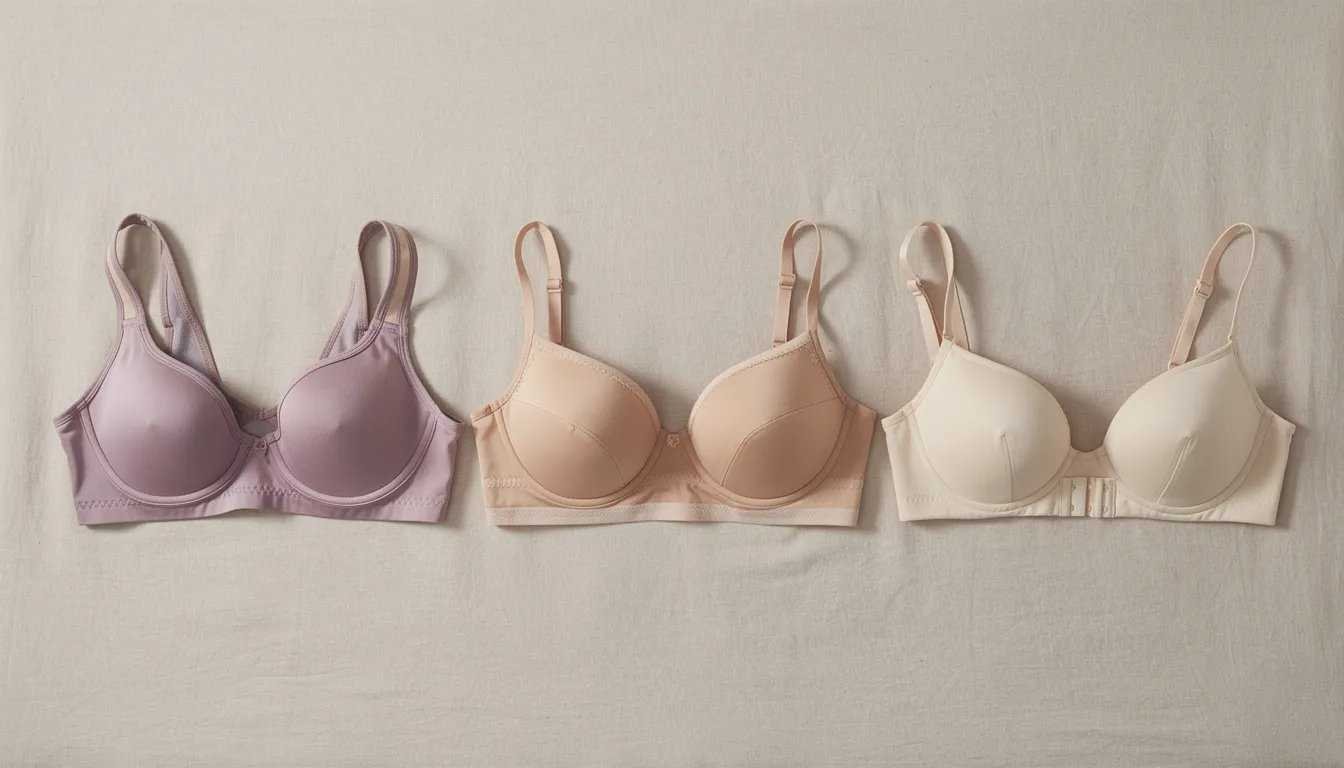
Key Takeaways
- 46DDD = 46F in most US sizing systems; they represent the same cup volume but different labels.
- Sister sizes for 46DDD: 44G (tighter band) and 48DD (looser band).
Sister sizes share the same cup volume, making them useful alternatives when your usual size isn't available.
- UK sizing varies: A US 46DDD roughly equals UK 46E or 46F based on the brand.
- Measure accurately using both underbust and full bust measurements before shopping.
Most support comes from the band, not the straps—prioritize getting the band size correct.
Different styles fit uniquely, so try your size and its sisters across various bra styles.
Conclusion
Understanding your 46 DDD bra size equivalent expands your shopping options and helps you find fitting bras. Whether your exact size is unavailable, you're exploring a new brand with different labeling, or you're shopping internationally, knowing that 44G and 48DD provide the same cup volume offers flexibility.
The perfect bra fit comes from accurate measurements combined with knowledge of sizing systems. Take time to measure yourself, comprehend your sister sizes as shown on sizing charts, and always consult brand-specific guides when trying something new.
Ready to discover your ideal fit? Start by measuring your current bra size, then apply the sister sizing principles outlined above. Your ideal bra might be labeled differently than you expect, and that’s perfectly okay once you know what to look for.