
Recently, I returned from a three-week adventure in Croatia and wanted to share insights on managing the current challenges of international travel. This guide offers practical tips and useful links to help you prepare. Remember, travel regulations can shift rapidly, so stay updated.
If you’re gearing up for a trip abroad, particularly to Europe, consider these important tips:
Booking my trip to Croatia using miles was a smart choice, as both miles and fees are refundable. This was crucial given the chaos in travel when I departed the U.S. in early September. Policies vary by airline, so verify details before booking. (I used miles through American Airlines.)
Keep in mind that a “refundable” ticket often means receiving a voucher rather than a cash refund. Most vouchers are valid for only a year, so book with airlines you frequently use. It's advisable to make reservations directly with airlines to handle any changes or cancellations without involving third-party sites.
2. Fly Direct and Skip Connections
I had a connecting flight in London on both legs of my journey, which turned into a hassle. Even with a brief layover, I had to comply with England’s COVID entry requirements. A direct flight from the U.S. would have simplified my requirements for Croatia, as I would just need to present my vaccine card. Fortunately, since I was in England for only a few hours, there were no complications.
3. Testing & VeriFLY App
Countries have varied testing requirements, with many still expecting tests even from vaccinated travelers. England has strict testing standards (≥97% specificity, ≥80% sensitivity for viral loads above 100,000 copies/ml). While most places require tests 72 hours before departure, Croatia needed one 48 hours before arrival due to my layover in England. I took four tests to ensure compliance and timely results.
For my flights with American Airlines and British Airways, I utilized the VeriFLY app to submit my test results and confirm I had completed the necessary passenger locator forms. (I didn’t need to book a Day 2 or 8 test for England since my stay was brief, but the app still required a placeholder for the test bookings, which I filled with zeros.) The app verified my results quickly, allowing for smoother check-in and boarding. In England and upon returning to the U.S., I didn't have to show any documentation, only in Croatia did I present my vaccine card. It appears that airlines are primarily responsible for enforcing testing and vaccination requirements at check-in and departure.)
The app can be a bit tricky at first and is compatible with select airlines—American, Alaska, British Airways, Aer Lingus, Iberia, Japan Airlines, and Royal Air Maroc.
If you're heading to Europe, I highly recommend checking the Reopen EU website for travel requirements based on your departure location: https://reopen.europa.eu
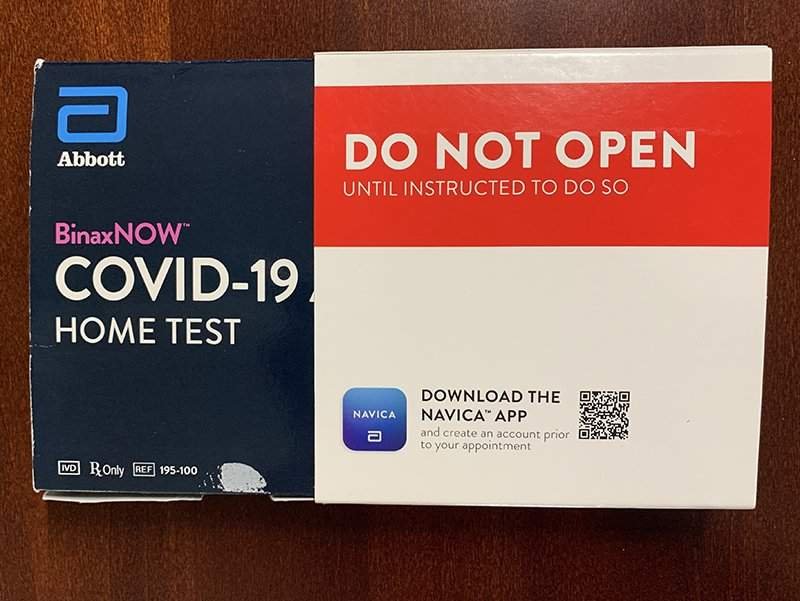 BinaxNOW home tests are compact for travel. They measure one inch thick, eight inches long, and four inches wide.
4. Utilize eMed & Abbott’s Rapid Home Tests
Abbott’s BinaxNOW™ COVID-19 Ag Card Home Test is FDA-approved and valid for entry into the U.S. The testing process is under 30 minutes and includes a video call to eMed for result certification. Results are emailed by the end of the call and are accessible in the Navica app. I submitted these results to the VeriFLY app, and they were accepted for my flights to England, Croatia, and back to the U.S. I traveled with three tests and even used one in Croatia before heading home. eMed recommends carrying an extra test for emergencies, which turned out to be wise; one of my tests had a defective bottle! Tests can be ordered directly through eMed, costing $150 for a pack of six—just $25 each. When I contacted eMed about the faulty test, they sent me a new pack of six immediately, which was impressive.
(I’ve also used PCR tests at CVS, which are free under the CARES Act. However, they take longer for results, with no guarantee of timely delivery, especially if your flight is on a Sunday night, which was my case.)
5. No Online Check-in or Luggage Transfers for Connected Flights
At JFK airport during my connection, they wouldn’t transfer my luggage, citing COVID protocols. I had to go to another terminal to check my bag, which was a hassle since I arrived late at night with an early flight the next morning. Due to security protocols, I couldn’t check my bag the day before, so I ended up sleeping in the terminal for two hours until I could check my bag and clear security to access the lounge. (Lounge access is finally returning!)
Additionally, I couldn’t check in online for any flights; it all had to be done at the airport to verify my documents and test results. This also meant I couldn’t choose my seats until the very end, which was frustrating.
6. Expect Short Staffing at Airports
Heathrow had such a shortage of staff that our flight was delayed an hour because no one from British Airways was available to handle boarding! At Heathrow, there were only two security lanes open, causing significant delays. Check-in was generally quick with minimal lines since many international flights were not fully booked. (This may change when the U.S. reopens to vaccinated travelers on November 1st.) Immigration was efficient in the UK and fast in Croatia.
Many airport restaurants and amenities remain closed, although lounges are beginning to reopen—finally!
7. Invest in Travel Medical Insurance*
One of my greatest concerns for my Croatia trip was the risk of a breakthrough case and subsequent quarantine. To ease this worry, I purchased travel insurance that covered quarantine through SafetyWing, which provides this coverage for policies lasting 28 days or more. Ensure your policy is active for the entire quarantine duration; if you test positive on the last day, you’ll be out of luck. I secured a SafetyWing policy that extended 10 days beyond my trip. (My trip lasted three weeks, making it over the 28-day minimum for this coverage. The cost was only $70, which was absolutely reasonable. Policies start at $40/month for those aged 18-39.)
In general, I always purchase travel medical insurance when traveling internationally, as most U.S. health plans offer little to no coverage abroad. For more information on travel insurance, check out my Travel Insurance 101 post. I also have case studies on travel insurance and insights on how credit card travel insurance can also be beneficial.
For additional resources, visit my travel resources page.
* Affiliate link. If you make a purchase, I earn a small commission at no cost to you, which helps cover my website expenses. Thank you for your support!