
Searching for "bra size V"? You're not alone. This term has surged in popularity, fueled by viral content poking fun at extreme sizes like 32V. However, knowing your true bra size doesn't involve decoding non-existent letters. This guide simplifies the process, providing practical measurements, international size conversions, and the confidence to discover your correct fit, even if you've been labeled "un-fittable."
What Does “Bra Size V” Mean and Its Importance
The interest in “bra size V” often arises from exaggerated social media portrayals or confusion regarding large cup size labels. In standard sizing systems—US, UK, or EU—there's no official V-cup designation.
When cup sizes go beyond A through D, UK sizes progress from DD, E, F, FF, G, GG, H, HH, J, JJ, to K. Each double letter indicates larger sizes for clarity. US sizes typically run D, DD, DDD (sometimes called F), G, H, I, J, and K. EU sizes use centimeter-based band numbers combined with letters, sometimes reaching L in specialty brands.
All sizing systems share a fundamental concept: bra size is a combination of two measurements. Your band size is based on your rib cage circumference just under your breasts, providing 80-90% of support. Your cup size is the difference between your bust measurement and band size, indicating relative volume. A 30G differs significantly in volume from a 40G, despite sharing a letter. This guide will concentrate on effective bust measurement techniques, accurate calculations, and international conversions to find a well-fitting bra.
Calculating Your Bra Size (Including Large Cups)
To accurately measure for a bra in 2026, you need three items: a soft tape measure, a non-padded or lightly lined bra, and a mirror to check your positioning. Take each measurement three times for consistency and to catch errors.
The key measurements are your snug under-bust (for band size) and your full bust at its most prominent point (for cup size). Here’s how to do it:

Stand straight before a mirror in an unpadded bra. First, measure your under-bust by firmly wrapping the tape around your torso at the inframammary fold (where your breasts meet your chest); exhale normally, allowing room for two fingers beneath the tape. Next, measure your bust by placing the tape across the fullest part of your breasts, ensuring it remains level. Round your under-bust to the nearest even number for US/UK bands (31 inches rounds to 32; 29.5 becomes 30). Finally, subtract your rounded band size from your bust measurement to determine the cup size.
For instance, if your under-bust is 31 inches (rounded to a 32 band) and your bust measures 41 inches, the difference is 9 inches. In UK sizes, this difference corresponds to a G cup, giving you a size of approximately 32G. For differences of 13-18 inches, often humorously referred to as “V-level,” cup sizes extend into J, JJ, and K ranges, which are legitimate sizes.
Bust Measurement: Getting It Right
Your bust measurement should be taken at the fullest part of your breasts while standing straight with arms relaxed by your sides. Wear a soft, lightly lined bra that provides gentle support without compressing your breasts.
Ensure the tape is flat across your nipples at maximum projection, parallel to the floor. Avoid common mistakes like measuring over a bulky sports bra, which can inflate your measurement by 2-4 inches. Holding your breath can tighten everything by about an inch, so breathe normally.
If you have heavier or pendulous breasts, lean forward at a 90-degree angle to let your breasts hang naturally. Measure around the fullest part in this position and average both readings to capture about 95% of your actual fullness, essential for different breast tissue distributions.
Under-Bust Measurement and Band Size
The band is crucial for support, which is especially important for larger cup sizes (what online culture often calls “V-range”). Accurate band sizing prevents strap digging and back strain common with poorly fitted bras.
Wrap the tape measure around your rib cage just below your breast tissue at the underwire base. Exhale, ensuring a snug fit but not painfully tight, allowing for two fingers underneath.
Modern fitting methods have discarded the outdated “+4 inches” rule. Instead, use your snug under-bust measurement directly, rounding to the nearest even number for band size. For example, 30.7 inches could be either a 30 or 32 band based on preferred fit. In metric, 79 cm translates to EU band 80. Research shows 70% of wearers actually need smaller bands than they assumed.
Cup Letters and Their Differences (Including Large Sizes)
Cup letters denote the inch difference between bust and band measurements, with each inch typically representing a cup size jump. However, the progression varies across sizing systems, leading to confusion when shopping internationally.
In UK sizing, the sequence is: AA (0 inches), A (1 inch), B (2), C (3), D (4), DD (5), E (6), F (7), FF (8), G (9), GG (10), H (11), HH (12), J (13), JJ (14), K (15), and KK (16). Double letters prevent confusion.
US sizing generally follows: AA, A, B, C, D, DD, DDD (or F), G, H, I, J, K, although brands vary after DDD.
The “V” misconception correlates with a 15-inch difference (UK K cup) representing around 2000-2500cc volume per breast. While substantial, it’s produced by specialty brands. A theoretical “V” would require differences of about 22 inches, outside standard production. Importantly, cup volume is always relative to band size; a 30K and 40G have similar volume despite different labels, emphasizing the importance of sister sizes.
International Bra Size Converter: US, UK, EU, FR/ES, AU/NZ
When shopping internationally for larger cup sizes, understanding different labeling systems is crucial. A size labeled H in one system may translate to a different letter elsewhere, making conversions vital for successful online shopping.
US Size | UK Size | EU Size | FR/ES Size | AU/NZ Size |
|---|---|---|---|---|
32DDD/F | 32E | 70F | 85F | 10E |
32G | 32F | 70G | 85G | 10F |
32H | 32FF | 70H | 85H | 10FF |
32I | 32G | 70I | 85I | 10G |
34J | 34GG | 75J | 90J | 12GG |
36K | 36H | 80K | 95K | 14H |
38L | 38HH | 85L | 100L | 16HH |
Key conversions: UK 32G is approximately US 32I, EU 70I, FR/ES 85I, and AU/NZ 10G. Beyond H cup, letters vary greatly between brands, so always check each manufacturer's specific size chart.
EU band numbers are in centimeters (EU 75 equals about UK/US 34), while France and Spain add 15 cm to the EU band number (EU 75 becomes FR 90). Australian and New Zealand sizes mirror UK cup letters but use numeric bands ranging from 8-16.
Converting UK Bra Sizes to EU and France/Spain
To convert from UK to EU sizes, subtract about 15 cm from the UK inch band converted to centimeters, then advance the cup letter 0-2 steps after F. For instance, UK 34F (band 34, 7-inch difference) converts to EU 75G. UK 38J (band 38, 13-inch difference) converts to EU 85L.
For EU to France/Spain: add 15 cm to the EU band number while retaining the same cup letter. EU 75G becomes FR/ES 90G, and EU 85L becomes FR 100L.
For sizes above G cup, letters may shift between systems; a UK HH can translate to EU J or K depending on the brand. For what’s informally labeled “V-size” (extreme differences over 15 inches), always compare both band and cup sizes when shopping across countries.
US vs. UK Cup Letters for Large Sizes
US and UK band numbers often align, leading to false confidence; however, cup letters reveal a different story beyond D. UK sizing systematically uses double letters: D, DD, E, F, FF, G, GG, H, HH, J, JJ, K, to avoid confusing letters like I (similar to 1) or O (similar to 0).
US sizing typically employs single letters: D, DD, DDD (sometimes F), G, H, I, J, K. Many US brands skip or compress letters after DDD.
Approximate equivalents: UK 34GG roughly equals US 34J, UK 30H roughly equals US 30K, and UK 32JJ approximately equals US 32M or N. These conversions are brand-dependent, as one manufacturer may label the same volume as H while another uses I, causing confusion and informal labels like “V cup” for anything beyond commonly available sizes.
Signs Your Bra Size Is Incorrect (From A to “V”)
Studies indicate that 80-85% of women wear incorrectly fitted bras. This misfit is even more pronounced with larger cup sizes, where the distinction between proper support and discomfort becomes significant.
Common signs of misfit include a band that rides up in the back (indicating a band that's too large or loose), straps that dig into shoulders (signifying inadequate band support), center gore lifting away from the sternum (suggesting cups are too small), underwire poking ribs or underarm (indicating incorrect cup width), overflow or “quad-boob” appearance (pointing to a cup that's too small), and gaping or wrinkling in the cup fabric (indicating oversized or improperly shaped cups).
For example, a person wearing 40C may experience chronic back pain and assume they need even larger sizes. A fitting session reveals that their true size is 34G, a smaller band providing adequate support and a larger cup for actual volume. The misfit issues resolved when they stopped compensating with band size.
This pattern is common: many opt for larger bands and smaller cups due to the intimidating nature of larger cup letters. Meanwhile, a perfectly fitted bra awaits in a size that exists but may seem “extreme.”
Band Issues
An incorrect band size compromises support regardless of cup size, but the impact intensifies for heavier breasts needing firm anchoring.
If the band rides up your back, it’s too loose; it should sit level from front to back, parallel to the floor. An upward riding band forces straps to bear the support burden, leading to shoulder pain and red marks. Conversely, a band that pinches painfully may mean it’s too tight or that your cup is too small, causing tissue displacement against the band.
Check with practical tests: the two-finger test (you should fit two fingers under the back band, not your whole hand), start on the loosest hook with a new bra (as elastic stretches, you’ll need to tighten), and ensure the bra’s center panel lies flat against your sternum.
Those who suspect they’re “V-size” due to spillage often just need a firmer band paired with a deeper cup in their actual measurements.
Cup and Underwire Issues
Overflow, known as “quad-boob,” and side spillage indicate cups that are too small, not evidence of an exotic size. When breast tissue escapes the cup boundaries, it simply means the bra cup can't contain your true volume.
Conversely, wrinkling or gaping in the cup fabric suggests cups are too large or not the right style for your breast shape. The distribution of fullness (whether your volume is concentrated at the top, bottom, or center) affects how different bra styles fit.
Underwire should follow the natural boundary where your breast root meets your rib cage, encircling all tissue without sitting directly on breast tissue. The wire shouldn't poke your sternum or dig into your underarm. For very large breasts (with 10+ inch cup differences), correct wire width and depth are critical; experts note that incorrect sizing here causes about 30% of chronic bra-related pain.
Bra Size “V” and Very Large Busts: Reality Check
Social media has popularized exaggerated sizes like “32V” through viral jokes about alphabetical progression. However, legitimate manufacturers use standardized letters that rarely reach V.
What’s casually referred to as “V” typically aligns with UK J, JJ, K, or higher, often combined with a smaller band for dramatic proportions. These sizes are available from specialty brands as of 2026.
The sister sizes concept clarifies much of the confusion. A 30K, 32JJ, and 34HH share similar cup volume despite differing letters. This happens because cup volume scales with band size; going down a band size while increasing a cup size maintains similar volume. For someone with a UK 32JJ (14-inch difference), equivalent sizes include EU 70M, with each breast volume nearing 2200cc. Real sizes exist, not “V.”
Health and Posture Concerns for Larger Sizes
Large breasts, regardless of size label, can lead to neck pain, shoulder strain, and upper back issues when poorly supported. Studies link breast volumes over 2000cc (about UK J+) to a 20-50% increase in musculoskeletal pain.
The solution begins with proper fit: a snug band offering 80% support, wide padded straps handling the remaining 20%, and full-coverage cups that shape and lift rather than compress. Wireless bras often lack the necessary structure for adequate support during daily activities.
When chronic pain persists despite a good fit, seeking medical advice may be worthwhile. Physiotherapists can help with posture patterns, and some individuals consider reduction surgery (approximately 20,000 procedures annually in the US for macromastia). However, many find that simply switching to a well-fitted bra can reduce pain by 40-60%, without surgery.
Finding Brands and Styles for Large Cups
When searching for large cups, look for specific construction details: multi-part seamed cups (3-5 sections provide better shape control than molded foam), side support panels to direct tissue forward, sturdy, wide underwires to distribute weight, and tall center gores that lie flat between breasts.
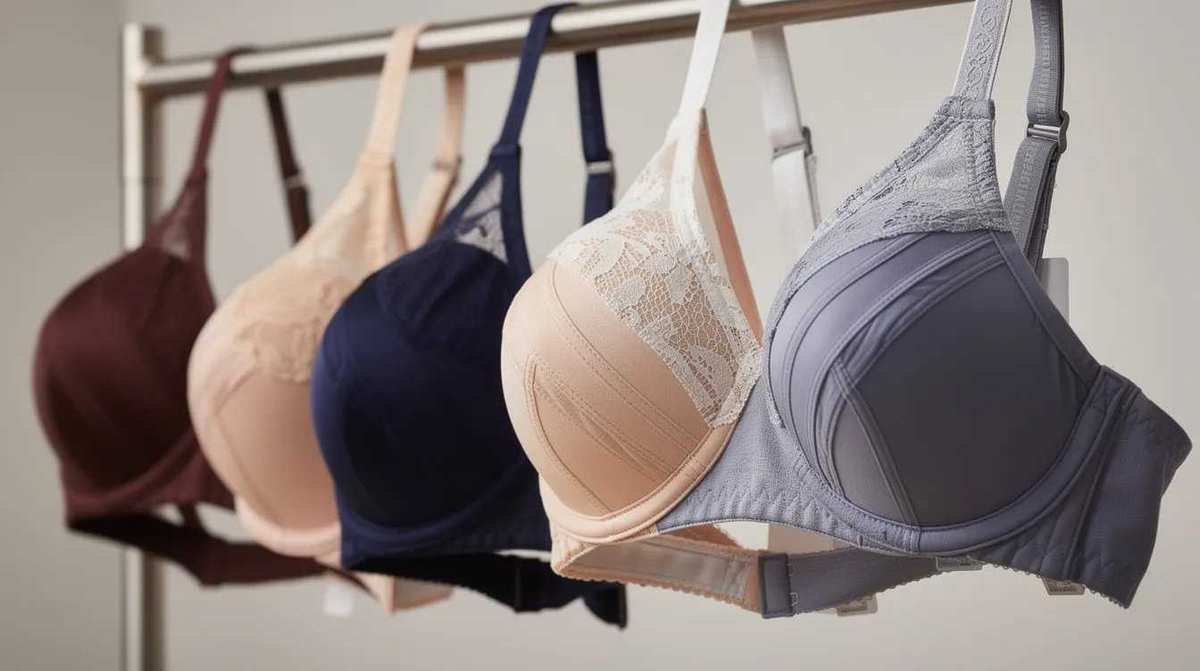
Some UK and European specialty brands offer sizes up to K, L, or more, which are often unavailable in mall stores due to demand focusing on mid-range sizes. Online shopping opens access to these manufacturers.
Practical shopping tips: filter by your size range immediately (why browse unavailable styles?), check return policies before ordering (expect to try 3-5 options), and order multiple sister sizes for comparison at home. The perfect bra is out there; it just takes some patience to find it.
Alpha Sizes (XS–XL) vs. Traditional Bra Sizes
Bralettes, sports bras, and lounge styles often use alpha sizing (XS to XXL) instead of traditional band and cup sizes. This simplification works for medium-range sizes but fails for those outside that range.
General alpha-to-traditional equivalences vary by brand, but roughly: XS covers 28-32 bands with A-B cups, S fits 32-34 bands with A-C cups, M accommodates 34-36 bands with B-D cups, L fits 36-38 bands with C-DD cups, and XL covers 38-40 bands with D-E cups.
Notice the issue? Someone in a 34G falls outside these ranges. The cup simply doesn’t exist in standard alpha sizing, even if the band fits. For those approaching the “V-range,” alpha sizes can be frustrating.
Always check brand-specific size charts instead of assuming XL means the same everywhere. Your body shape and measurements are more significant than clothing size labels.
What Bra Size Is L, XL, or XXL?
In most bralette brands, L corresponds to 36C or 36D, occasionally extending to accommodate 38B or 38C. XL generally covers 38C to 38DD or 40C to 40D. XXL may encompass 40DD, 42D, or equivalent, with significant variation between manufacturers.
For larger cup sizes, structured wired bras outperform stretchy bralettes in support and comfort. The band and cup system is essential because bodies don’t fit neatly into letter ranges.
If you think you’re “V-sized” due to alpha size failures, you might actually wear a well-fitting wired size like UK 32H or 34G. The issue lies not in your body but in the bralette design.
When shopping for alpha-sized items, pair them with your known traditional measurements for approximate fit predictions. A brand’s size chart comparing L to “fits 34D-36C” helps you determine whether their interpretation aligns with your body.
Rechecking Your Size Over Time
Breast size and shape can change throughout life. Weight fluctuations, pregnancy, hormonal changes, and aging affect your measurements.
Re-measure every 6-12 months as part of regular maintenance, or after significant changes like childbirth or gaining/losing over 10 pounds. Research indicates breast volume may fluctuate up to 20% during a menstrual cycle, which explains why the same bra may feel different on various days.
For practical maintenance, rotate between 3-5 bras to extend their lifespan, replace regularly worn bras every 9-18 months as elasticity declines, and check fit whenever a previously comfortable bra starts to feel wrong. If your band rides up when it didn’t before, your label size might no longer match your actual measurements.
Common Questions About Unusual or Extreme Sizes
Does a V cup exist? No recognized sizing system includes V as an option. The theoretical “V” would indicate differences around 22+ inches, far beyond current manufacturing capabilities. Extreme sizes usually max out around UK KK or beyond in specialty production.
Is 32V a real size? It’s a meme, not an actual product. The largest available sizes on a 32 band reach about UK K (15-inch difference), sometimes labeled differently across systems. “32V” is internet shorthand for “comically large,” not an actual bra you can buy.
Why can’t I find my size in stores? Retail economics dictate that mall stores stock sizes with the highest volume sales, which cluster in the 32-38 band, B-DD cup range. Larger cup sizes require specialty retailers, increasingly accessible online, due to lower demand in mainstream sizes.
When should I seek professional fitting versus calculator use? For very small bands (under 30), large cups (above UK G), asymmetrical breasts, or when calculators yield sizes that don’t feel right, professional fitters at specialty stores can offer guidance that algorithms can’t replicate.
Using a Bra Size V Calculator and Fit Tools
Online calculators allow users to input bust and under-bust measurements in inches or centimeters, providing size suggestions across multiple regional systems (US, UK, EU, FR/ES, AU/NZ). The best calculators also suggest sister sizes one band up and down from your primary result.
To use effectively: input your snug under-bust measurement, your standing bust measurement, select measurement units, and review the suggested sizes. Modern calculators handle conversions automatically, reducing manual errors.
However, calculators have limitations. They can’t account for breast shape, width, or asymmetry. They provide a solid starting point, but expect to try several sizes and styles before achieving the perfect fit. For those whose measurements suggest “extreme” cups, calculator results should guide initial orders rather than ensure success.
Step-by-Step: From Measurement to Purchase
Consider a realistic 2026 shopping situation. A person measures at home: 78 cm snug under-bust and 103 cm full bust. Converting: 78 cm rounds to EU band 80, equivalent to UK/US 36. The difference (103-78) equals 25 cm, or about 10 inches, indicating roughly UK FF or equivalent.
The calculator suggests: EU 80H / UK 36FF / FR 95H as the primary size, with sister sizes EU 75I / UK 34G (smaller band, larger cup) and EU 85G / UK 38F (larger band, smaller cup) for comparison.
This individual may have encountered “close to V” jokes online but now realizes their measurements fit well within existing ranges. They order three styles from a specialty retailer, test each at home using proper fit checks (band level, smooth cups, flat gore, comfortable movement), keep the one that meets all criteria, and return the others in accordance with the store’s exchange policy.
No “V.” Just confirmed measurements leading to real products.
Summary: Forget “V”, Focus on Verified Fit
Bra size is a practical tool for support and comfort, not a status symbol or label to fear. The “V cup” myth stems from social media exaggeration, not from any limitations in available sizing.
The process is straightforward: measure your snug under-bust and full bust, use a bra size calculator or chart for approximate fit, convert sizes for international shopping, and verify fit on your body.
Signs of a proper fit include: snug band sitting level without riding up, smooth cups without overflow or gaping, a flat gore against your sternum, comfortable straps that support without digging, and freedom of movement without pain.
Your measurements may point to letters you've never worn. Embrace those letters; they exist, and your comfort matters more than the label. Regularly re-check your size, try styles that suit your needs, and embrace whatever combination gives you the support you deserve.