
Getting your correct bra size can feel like piecing together a challenging puzzle, especially when you need a size not typically available in stores. If you’re curious about the M cup bra size—its meaning, how to measure for it, and where to find the right fit—you’re in the right spot. This guide provides insights into measurement methods and style suggestions, clarifying this unique size category.
Understanding M Cup Bra Size
The M cup bra signifies an exceptionally large cup size, far beyond what most women encounter in everyday shopping. While sizes like D, DD, or G may be more common, the M cup represents a significant increase in breast volume, standing high in the size hierarchy.
The term “M” specifically refers to the volume of the cup, not the overall body size. A 32M and a 42M both have large cups but fit different body frames. The 32M wearer has a smaller rib cage with a larger bust, while the 42M has a broader torso. The cup letter indicates the proportion between bust and band measurements, rather than a fixed amount of breast tissue.
In both UK and US sizing systems, cup letters follow an established order: DD, E, F, FF, G, GG, H, HH, J, JJ, K, KK, L, and finally M. Availability varies by brand, as most mainstream shops stop at K or earlier, pushing those needing an M cup to specialty retailers who cater to extended sizes.
Research indicates that 70-85% of women wear bras that don’t fit properly. Signs of a bad fit include bands that pinch or ride up, red marks, shoulder pain, or breast spillover from the edges. If shoulder straps leave marks or cause discomfort, the band might not be providing enough support. Conversely, if the band pinches or spills over, it’s likely too small. If you see creases or empty spaces in the cups, consider trying a smaller cup size. Professionals recommend women, especially those with D cups or larger, get fitted by a lingerie expert.
Being in the M cup range is not unusual; it simply reflects your breast volume in relation to your band size. Specialist brands understand the unique support requirements for these proportions.
Comparing M Cup Size to Other Sizes
Cup sizes denote increasing breast volume, with each letter indicating a larger capacity than the previous. There’s no universal fixed volume for any cup letter; cups scale based on the band size they accompany.
In the UK and US systems, each cup step generally represents about one inch (approximately 2.5 cm) of difference between bust and underbust measurements, as detailed in most bra size guides. By the time you reach M cups, the difference is typically around 13 inches (about 33 cm), although this can vary by brand. For example, a 34M would indicate a 13-inch difference between the underbust and bust measurements.
Cup volume increases with band size, which can be surprising for those new to extended sizing. A 34M will hold less volume than a 40M since the larger cup must distribute weight differently across a wider frame.
For context: a 34M has substantially more volume than a 34G, despite both being labeled as “large.” Transitioning from G to M involves passing through H, HH, J, JJ, K, KK, and L, with each size incrementally adding volume. Estimates from lingerie designers suggest an M cup may contain two to three times the breast tissue of a G cup at the same band size.
Measuring for an M Cup Bra at Home
Standard online bra calculators often stop before reaching M, making accurate manual measurements crucial for those likely needing larger cups. Measuring at home requires a soft measuring tape and a few minutes of careful technique, especially if you want to follow the most accurate methods.
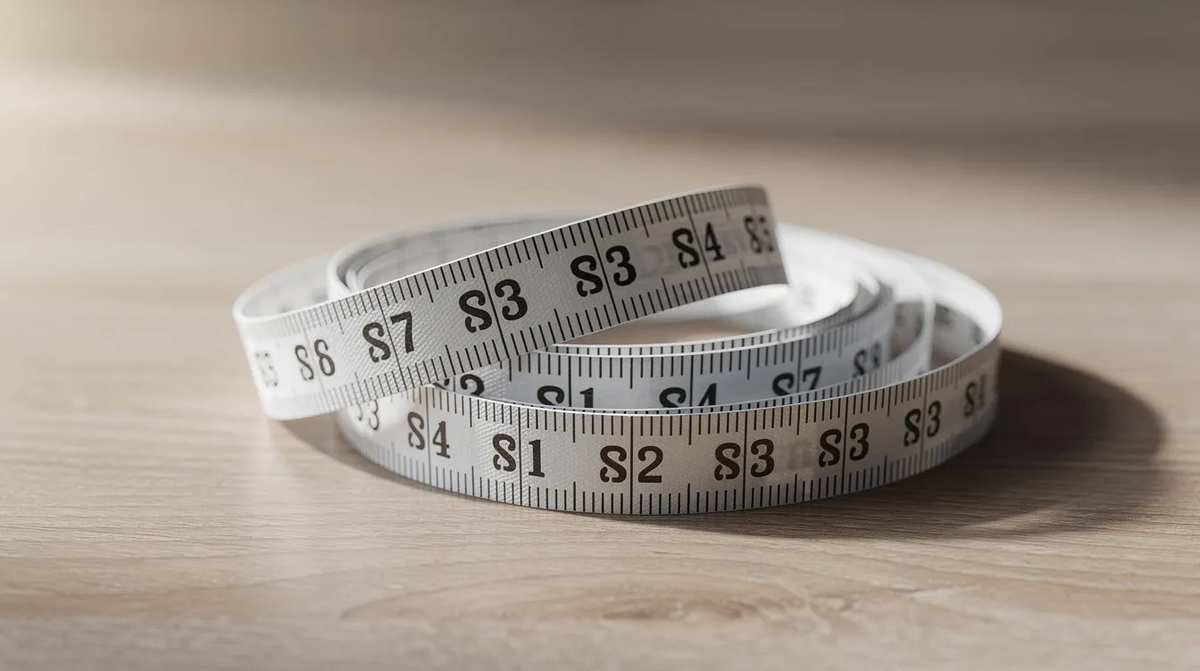
Step 1: Underbust Measurement
Stand with your arms at your sides and wrap the tape around your rib cage, positioning it right under your breasts. Ensure the tape is level and snug without digging into your skin. Record this measurement in both inches and centimeters, as it determines your band size; round to the nearest even number if needed, as suggested by experts.
Step 2: Bust Measurement
Wrap the tape around the fullest part of your bust, typically across the nipples. Keep the tape horizontal and measure loosely to capture your full bust size without compressing the tissue. Again, record in both inches and centimeters.
Step 3: Calculate the Difference
Subtract your underbust measurement from your bust measurement. Each inch difference typically corresponds to one cup step. Large differences, often 12 inches or more, may indicate sizes like J, K, L, or M, so it helps to compare against a detailed size chart.
To ensure accuracy, measure while wearing a well-fitting, lightly lined bra. You should be able to slip two fingers under the band when it’s fastened at the middle hooks.
Check your results against an extended-size chart from a specialist brand that includes cups up to M. Many general retailers stop at H or J, which won’t help if you measure larger. Repeat measurements three to five times for consistency, ideally at the end of the day when your bust is fullest.
Signs You Might Need an M Cup
Many women needing M cup sizes have spent years in smaller cups, often using larger bands to compensate for insufficient cup space. If your bras never feel right despite trying multiple sizes, certain signs may indicate that you’re wearing cups that are too small.
Common indicators of insufficient cup volume include:
- Spillage over the top or sides of the cup, also known as “quad-boob”
- Underwire pressing directly on breast tissue instead of encircling it
- The center panel of the bra (gore) not lying flat against your chest
- A double-boob effect visible through clothing
- Red marks or irritation where the cups press into your skin
Signs of a too-large band include the band riding up in the back, needing to use the tightest hook from the start, and feeling shoulder straps dig in. If the straps bear too much weight, they can create grooves in your shoulders while the band fails to anchor properly.
Someone thinking they wear a 40G but shows these signs might actually be closer to a 34K or 34M. Common mistakes include compensating for cup size by increasing the band size, which undermines support. Needing an M cup simply reflects your breast volume; embracing a better fit often improves posture and comfort.
International M Cup Size Conversions
Bra sizing lacks a universal standard, meaning an “M cup” can vary across UK, US, EU, and other systems. Understanding these discrepancies is vital when shopping from brands in different countries.
In many European nations using centimeter-based charts, large cups often employ single letters only and may not reach M. For example, where UK sizing shows 34M, an EU chart might approximate this as 75 with a high cup letter like L or K, depending on the brand. The difference in bust and band that constitutes each cup step can vary slightly between European and UK sizes, making direct conversions imprecise.
French and Spanish band sizes usually run 15 cm higher than standard EU bands; for instance, EU 75 corresponds to FR 90. In these systems, large cups may not use the M designation, opting for whatever highest single letter the brand reaches. Shopping for French lingerie often requires converting both band and cup sizes.
Australian and New Zealand brands may follow UK sizing or align more closely with EU conventions, making brand-specific conversion charts essential. Before ordering from international retailers, consult their size guide and measure yourself according to their specific instructions.
Sister Sizes and M Cup Bras
Sister sizes are different band and cup combinations that provide similar cup volumes. For example, 30M, 32L, and 34K might have comparable cup volumes, but each fits different body circumferences. This understanding is particularly useful for M cups.
For large sizes like M, sister sizing is often necessary since exact band-cup combinations are rarely available in stores. If you measure a 32M but find only 34L, you might try that sister size to maintain approximate volume while accommodating a slightly different fit.
This method works by moving one band size up and one cup letter down (or vice versa) to keep cup volume consistent. If your true size is 30M and it’s unavailable, trying 32L maintains similar capacity on a larger band. Conversely, moving to 28N would give a tighter band with the same volume.
However, sister sizes should be used strategically; a poorly fitting band cannot provide adequate support. The band should offer 70 to 90 percent of a bra’s support; when it’s too loose, weight shifts to the shoulder straps, causing discomfort. Prioritize finding your true band size, then explore sister sizing as needed.
Fit Challenges with M Cup Bras
Supporting heavy breasts presents significant engineering challenges, especially as cup sizes increase. Both band and cup designs must work together to manage the weight, which can exceed several kilograms per breast, and not all constructions succeed.
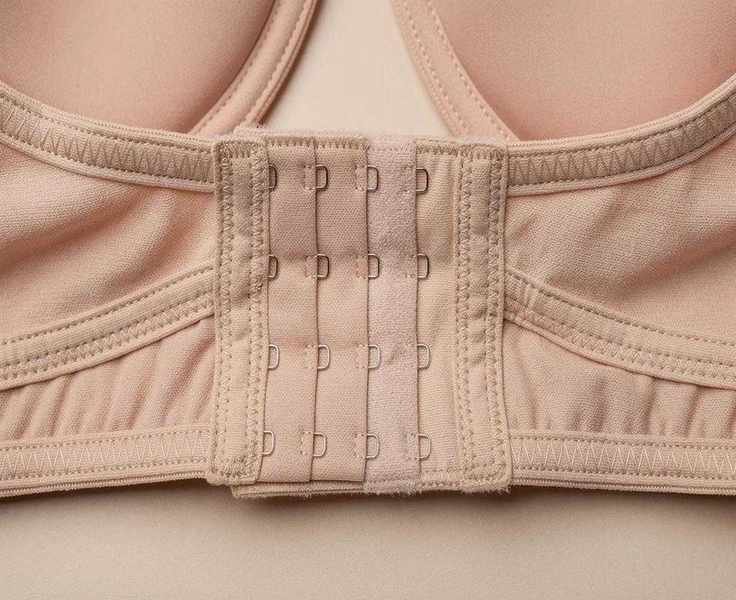
Common issues at M cup volumes include straps digging into shoulders despite adjustments, with grooves that can deepen over time. Underwires may distort or bow outward under the weight, losing shape and causing discomfort. The center gore may not lie flat against the sternum, particularly for women with closely-set breasts. Cups may wrinkle or fail to maintain shape throughout the day.
Breast shape is even more critical at M cup sizes than in smaller sizes. Whether you’re full on top, bottom-heavy, projected, or wide-set influences which brands and styles suit your body. A bra that fits one M cup wearer perfectly might not work for another due to these variations.
Manufacturing tolerances increase as sizes grow, so a 36M from one brand may not be the same as another’s 36M. Many women in this size range benefit from professional fittings at boutiques specializing in large cup bras or ordering multiple sizes online to find the best fit.
Selecting the Right M Cup Bra Style
Not every bra style offers the necessary support for M cup sizes. Certain designs manage heavy breasts better due to their construction.
Full-cup styles with firm side support panels are often the most stable choice for M cups. These designs encapsulate breast tissue fully, preventing lateral movement. Balconette styles can work if they feature strong underwire and reinforced lower cups, though very low-cut styles may lack coverage.
Plunge bras and low-coverage styles typically struggle with M cup sizes, as the reduced fabric fails to support heavy tissue adequately, leading to spillage. Similarly, bralettes and wire-free options rarely provide sufficient lift unless specifically designed for larger busts, though some women may prefer comfortable alternatives for lounging or low-impact activities.
For high-impact activities like running, an encapsulation sports bra designed for large cups is far superior to simple compression styles. Encapsulation supports each breast individually, reducing bounce significantly.
Look for features such as wide, firm bands with three or more hook closures, padded or wide straps that distribute pressure, strong underwire, reinforced seams, and non-stretch lower cups. These elements together manage the demands of M cup breasts.
Molded T-shirt bras in M sizes are less common due to the engineering complexities involved. Most specialist brands produce cut-and-sewn cups with seams that provide better lift and shape.
Where to Purchase M Cup Bras
Mainstream retail chains rarely carry M cups, forcing shoppers to rely on specialty retailers and online stores focused on extended sizes. While initially frustrating, this often leads to discovering higher-quality options than typical mall selections.
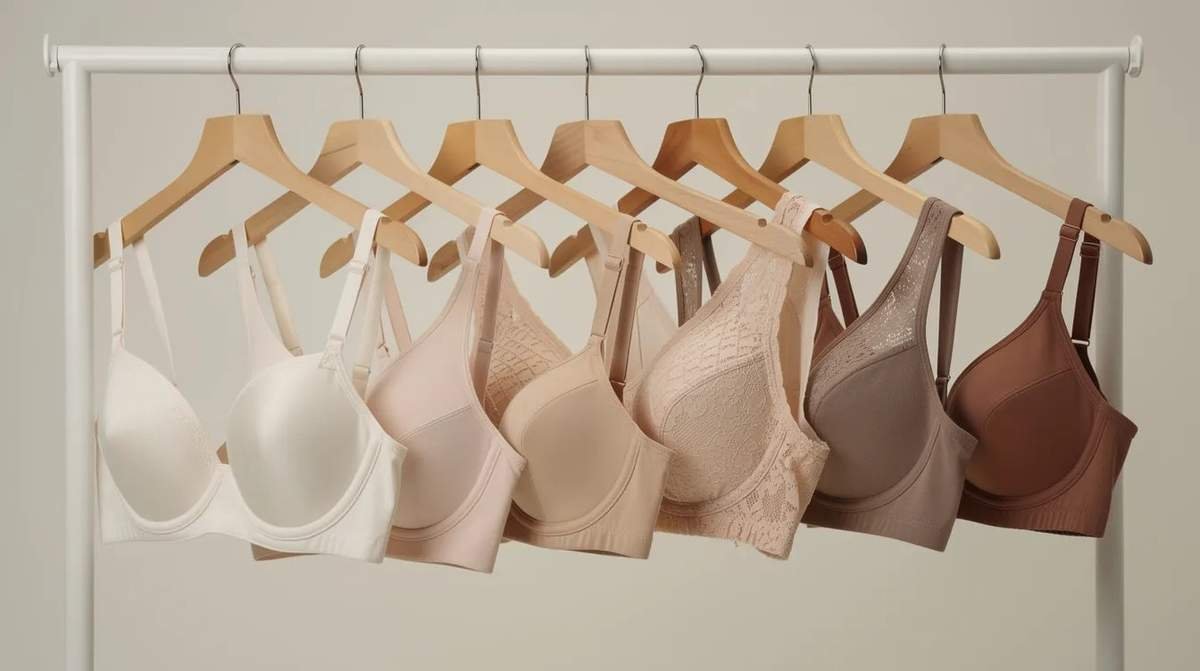
Dedicated large-cup lingerie boutiques exist in many urban areas, often carrying extended UK sizes up to at least K or M in select brands. These shops offer the advantage of hands-on fittings with knowledgeable staff familiar with the intricacies of very large cups. If you can find one nearby, visiting in person can save a lot of hassle.
Online retailers specializing in full-bust and plus-size bras typically have the widest range of M cup sizes across various band combinations. They often stock items that physical stores cannot due to space constraints. Look for retailers with clear size charts, as some use UK sizing while others apply EU or proprietary sizing for high cup letters.
Consider return policies carefully at this size range. Expect to order multiple sister sizes or variations to find your ideal fit, then return what doesn’t work. Retailers with generous return windows (30 to 60 days) and affordable return shipping make the process easier. Pay attention to fabric details and underwire styles noted in product descriptions, as these can affect comfort and durability.
Health and Comfort for M Cup Wearers
Unsupported large breasts can lead to discomfort, back pain, and shoulder strain over time. The weight affects posture and can result in compensatory changes in how you hold yourself throughout the day.
A well-fitted bra with a firm band redistributes weight from the shoulders to the torso, where larger muscle groups can better manage the load. When the band functions correctly, providing 70 to 90 percent of the support, straps only need to position rather than lift. This shift often enhances posture and reduces muscle fatigue during daily activities.
Common issues for M cup wearers include shoulder indentation from narrow or tight straps, skin irritation where skin contacts skin or damp fabric, and challenges when exercising without adequate support. Incorrectly fitting bras can worsen these problems.
While a bra can’t resolve structural spine or joint issues, improved support often makes movement more comfortable and encourages physical activity, benefiting overall health. Women who’ve worn improper sizes for years frequently report significant relief upon switching to properly fitting bras, whether they wear an M cup or a more common size like a D cup.
If discomfort persists despite improved fit, consider consulting a physiotherapist or medical professional, as chronic pain may stem from various factors beyond lingerie.
Common Questions About M Cup Size
Is M cup size rare?
M cups are generally uncommon in retail, but they do exist. Estimates suggest that only 0.5 to 2 percent of women fall into the J through M range worldwide. Specialist brands specifically create these sizes, so while they’re not found in typical department stores, they are available.
Can my size change from K to M over time?
Yes, bra sizes can fluctuate due to weight changes, hormonal shifts, pregnancy, breastfeeding, and aging. A change of one to three cup sizes over a lifetime is normal. Significant weight fluctuations (around 10 pounds or more) often alter cup sizes by at least one letter. Regularly measuring yourself helps ensure you’re wearing the correct size.
Why might one brand’s M cup feel smaller than another’s?
Differences in standardization mean brands use varied pattern scaling and cup depth calculations. Tolerances can vary between manufacturers, so a 36M from one brand may differ from another’s 36M. Always consult specific brand charts and anticipate some variation.
What if I can’t find an M cup anywhere?
If your size isn’t available, sister sizing is a good alternative; try moving one band size up and one cup size down (or vice versa) to maintain volume. Semi-custom or custom options are available from some specialist manufacturers who can adjust wire length, band width, or cup depth. Online communities focused on full-bust fitting can help you find lesser-known options. Flexibility in both band and cup sizes can significantly broaden your available choices.
How do I know if my bra band size is correct?
Your band should sit level around your torso without riding up in the back. You should be able to slip two fingers comfortably under the band, but no more. A new bra should be fastened on the loosest hook, allowing tighter hooks for when the elastic stretches over time. If you need the tightest hook right away or if the band rides up during wear, consider going down a band size.