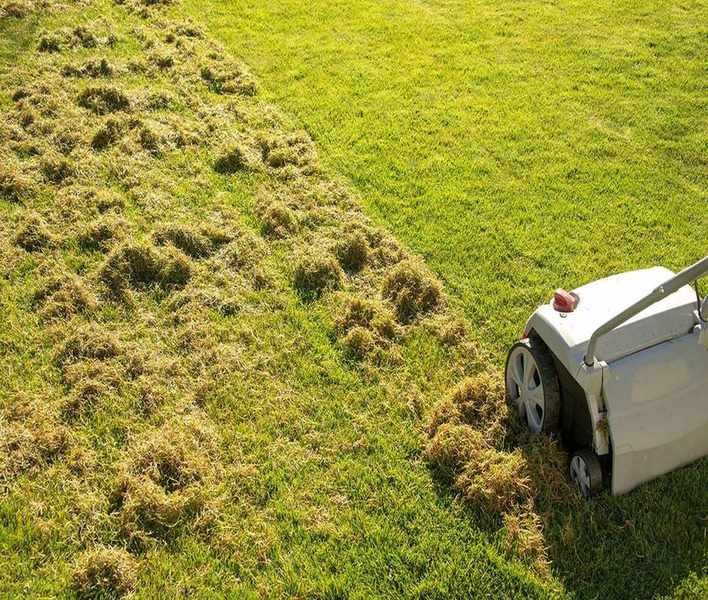
Scarifying and dethatching are both beneficial practices that enhance the health and appearance of your lawn. However, understanding the differences between these two methods is crucial for selecting the right one at the right time.
Both techniques involve removing organic material from the lawn, but they differ in their approach. You might see groundskeepers using large machines to perform these tasks in sports fields and parks, leading to the misconception that they are complex and time-consuming. In reality, they are just as significant for smaller residential lawns.
Before starting either scarifying or dethatching, it's wise to gather insights from experts to determine the level of intervention needed to rejuvenate your lawn. Their advice, based on extensive experience, can help you achieve a lush and vibrant lawn.
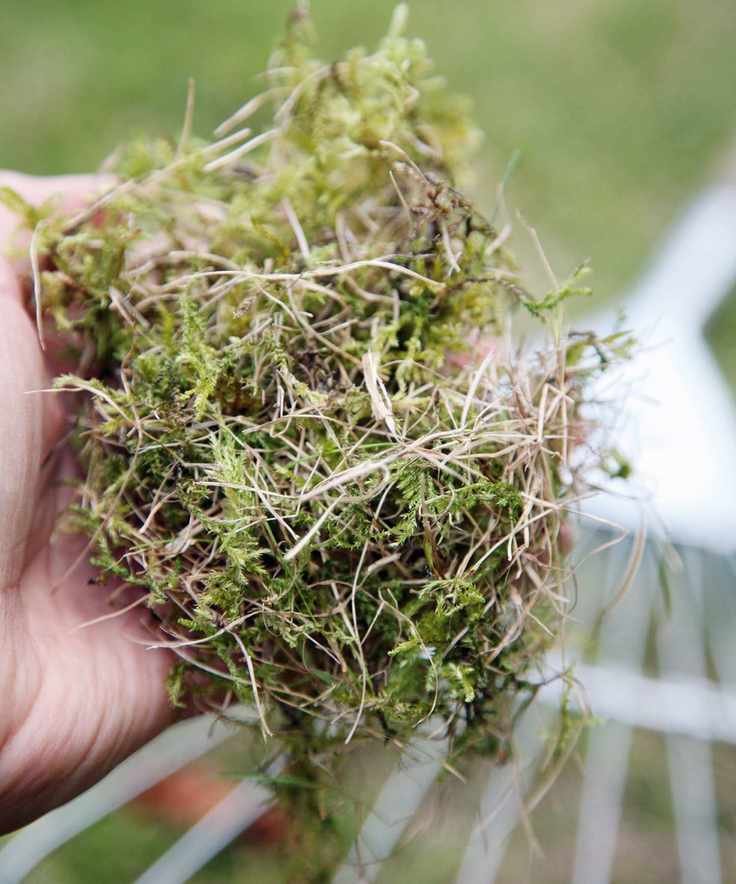
Scarifying and dethatching effectively eliminate debris like moss from your lawn's surface.
How Do Scarifying and Dethatching Differ?
According to Stacie Krljanovic, a head groundskeeper in Houston, TX, "Scarifying and dethatching are common lawn care techniques aimed at eliminating dead grass, thatch, and other debris from your lawn." She notes that while both methods remove organic material, key distinctions exist between them.
Peter Chaloner, Managing Director of Cobra, explains, "Scarifying involves cutting into the grass to lift thatch, moss, and accumulated debris, thereby improving airflow to the grass roots and enhancing drainage for healthier growth. In contrast, dethatching primarily focuses on removing surface debris that has settled on the lawn."
Stacie concurs and elaborates: "Dethatching uses a machine or tool to remove just the top layer of thatch. This method is less aggressive than scarifying and is generally recommended for lawns with moderate thatch buildup."
Despite the straightforward nature of these processes, Eric DeBoer, an agronomist at Simple Lawn Solutions, cautions that homeowners and professionals sometimes confuse the terminology. "These terms can vary in meaning across different regions. Ultimately, they all refer to similar concepts: scarification, dethatching, power raking, verticutting, and vertical mowing — all of which involve equipment with vertical blades that penetrate the lawn canopy and root zone."
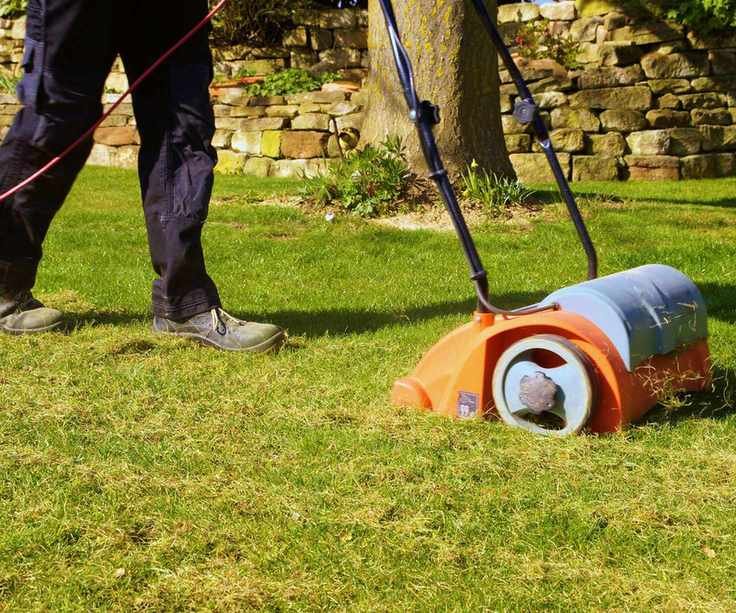
A lawn dethatcher efficiently removes moss and other debris from your lawn.
What Are the Benefits of Each Process?
The primary goal of both scarifying and dethatching is to eliminate thatch, which is the layer of organic debris that accumulates at the base of grass blades, covering the soil surface.
This thatch comprises dead grass, decomposing leaves, pinecones, and roots, forming a mat-like layer that can appear yellow. If left untreated, this buildup deprives grass of necessary light, moisture, and nutrients. Both methods are also effective in removing moss from lawns.
As Michael Deaton, Turf Agronomist at Pennington Seed, points out, "Certain grass types are more susceptible to thatch accumulation. Fast-growing varieties like Kentucky bluegrass, Bermudagrass, and creeping fescues may require regular dethatching, while clump-forming species like tall fescue or perennial ryegrass typically face fewer thatch issues."
Both dethatching and scarifying remove thatch to varying extents. "Both practices allow water, light, and nutrients to penetrate the soil," explains Peter Chaloner. "However, scarifying provides deeper penetration, yielding longer-term benefits and enhancing root health by promoting airflow."
"Scarifying is also a great workout, as it helps eliminate other dead plant materials at the grass blades' base, improving ventilation and allowing rainwater to reach the roots," says gardening expert Ruth Hayes. "Whether using a lawn rake or machine, scarifying reduces thatch (dead grass, moss, and debris) that could hinder feeding and watering, thereby enhancing ventilation and drainage. Just be cautious not to rake too deeply to avoid damaging the turf."

As a gardening editor, Ruth is trained in horticulture and holds qualifications from the Royal Horticultural Society. She spends her days researching and photographing gardening tasks for readers, while also testing new products that enter the market. Regularly, she employs both dethatching and scarifying techniques on her own lawn to keep it in optimal condition.
Which Method Is Best for Your Lawn?
So, which method should you choose for your lawn? "The answer hinges on your lawn's condition and the extent of thatch buildup," states Stacie Krljanovic. "If your lawn has a thick thatch layer, scarifying may be necessary to clear out the excess organic matter and promote healthy grass growth. For lawns with only moderate thatch, dethatching might be the better route."
While determining the appropriate method, it's essential to note that scarifying tends to be more invasive.
"The intensity of scarifying or dethatching depends on the thatch layer's thickness, your willingness to disrupt the lawn, and the time available for recovery," advises Eric DeBoer.
A well-maintained lawn achieves a balance between thatch buildup and decomposition, requiring no more than one dethatching per year. However, if thatch has accumulated due to poor soil conditions and over-fertilization, it may be time for a more aggressive approach, involving deep, thorough scarification.
Both scarifying and dethatching are crucial to maintaining a healthy and vibrant lawn. "By adhering to expert guidelines on timing, frequency, and techniques, you can cultivate a lush, thriving lawn that stands out in your neighborhood," states Jonathan, a lead designer at an online landscape design company, Bacqyard. "Be sure to monitor your lawn's health and adjust your care routine as needed to achieve the best results."
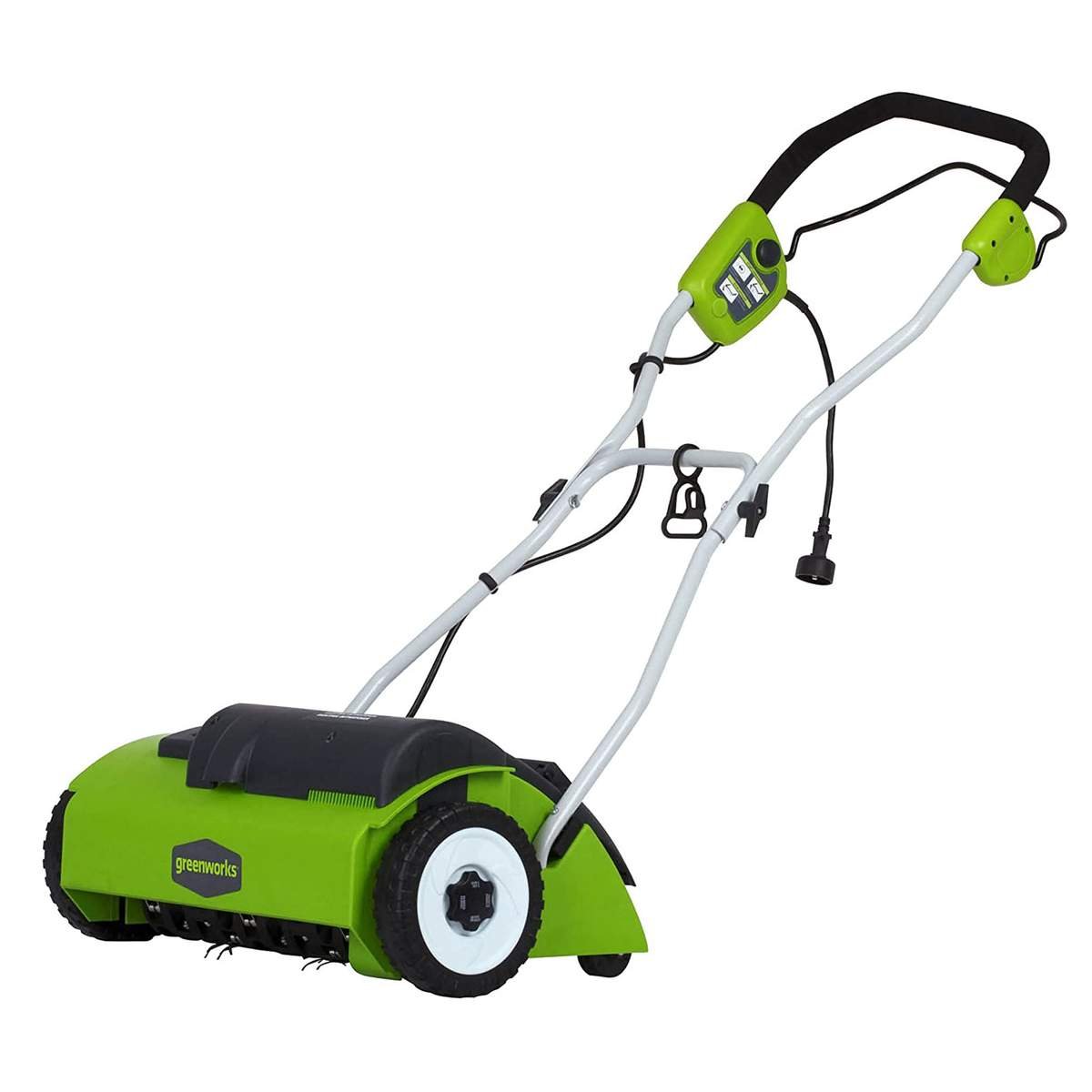
Greenworks Corded Electric Dethatcher
This dethatcher features 18 stainless-steel tines that effectively cut through lawn debris. With a 10A motor and a 14-inch dethatching path, it offers three height settings for optimum customization and folds for easy storage.
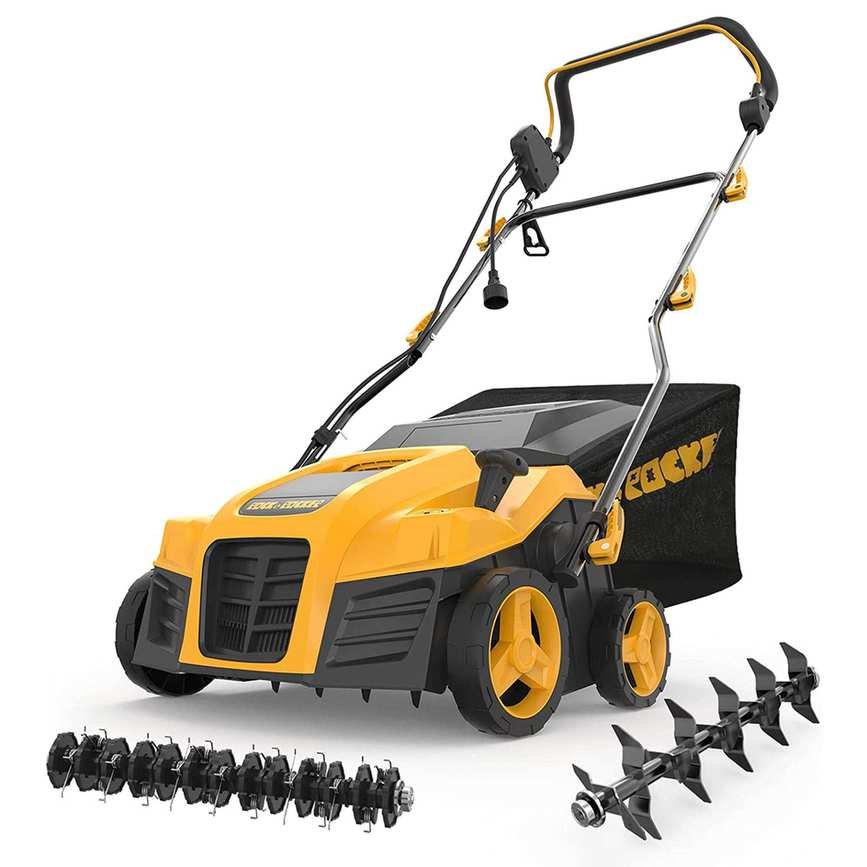
Rock&Rocker Electric Dethatcher Scarifier
This powerful machine boasts a 15A motor, making it suitable for both dethatching and scarifying tasks. With five raking height options and a 16-inch cutting path, it quickly covers large areas. The large 55L grass box collects debris, eliminating the need for manual raking, and the handle can be folded for easy storage.
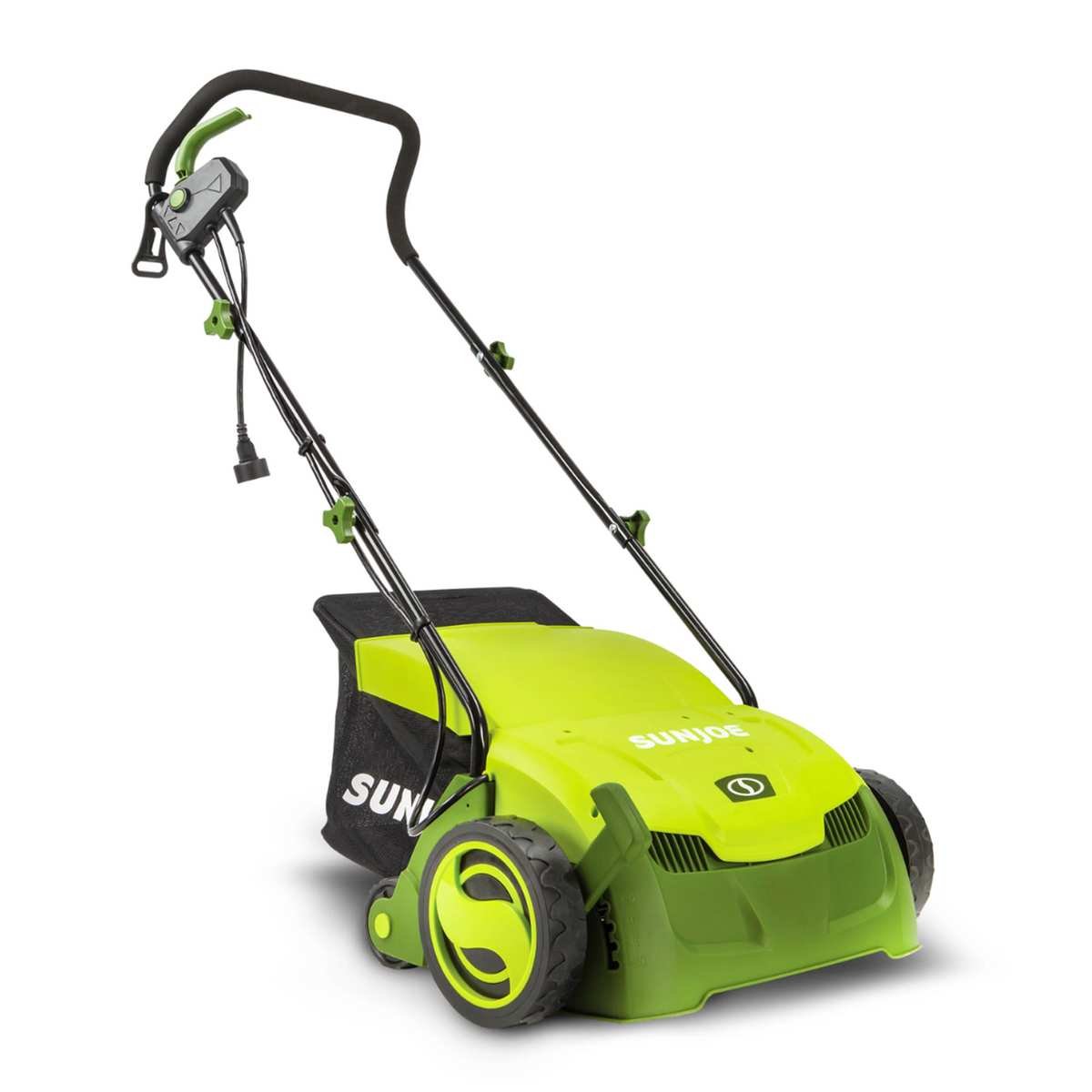
Sun Joe Electric Lawn Dethatcher + Scarifier
This model features a 13-inch cutting path, a 12A motor, and steel tines for effective lawn care. With five raking height settings from -0.4 inches to 0.4 inches, the thatch collection bag is easily removable for quick waste disposal. It also includes a two-year warranty.
FAQs
Should I scarify or dethatch a new lawn?
In short, neither! Newly planted grass seed or a newly laid lawn needs time to establish properly. For the first couple of years, new lawns won't develop significant thatch. Scarifying too early can harm the grass, pulling it up and exposing the soil.
Your choice between scarifying and dethatching will largely depend on your lawn's condition and the work required to restore its health. Once you've made your decision, familiarize yourself with the best times to dethatch and scarify to ensure you carry out these valuable lawn care tasks at the right times of the year.