As I travel throughout 2018, I've decided to document my journey with a journal series, starting with the South America Adventures. You'll see monthly entries about my experiences on the continent for the next few months, along with other exciting content. Discover Volume 1 here!
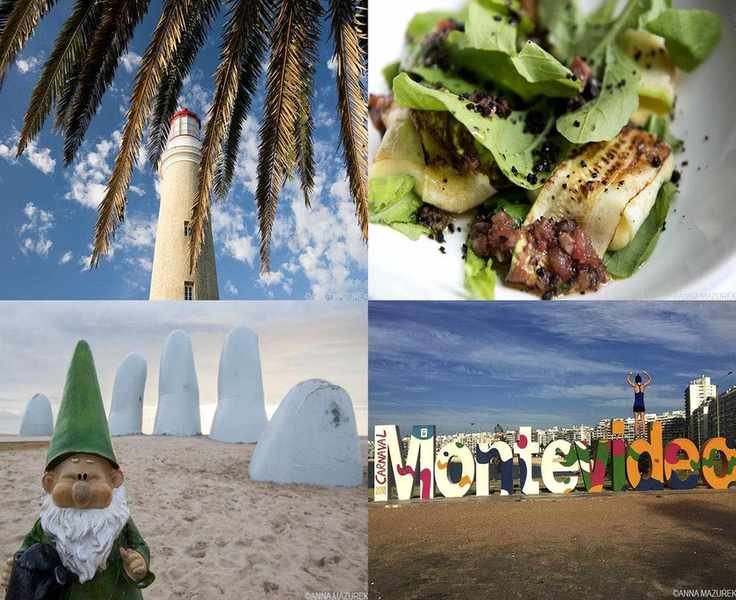
Highlights from Uruguay (clockwise from left): Punta del Este lighthouse; delicious food at Toledo Bar del Tapas in Montevideo; the vibrant Montevideo sign along the la Rambla, and Alfred, the adventurous gnome at la mano del Punta del Este (the hand statue on the beach).
It's tricky to remember what day it is while traveling full-time. Tuesdays often feel like Mondays, and really, every day feels like Saturday. I’m still working but also embracing fun adventures.
Two weeks ago, I bid farewell to Buenos Aires and my new friends. Goodbyes can be tough; the connections made while traveling often run deep. Even if we’ve just met for a short time, they often understand me better than those I've known for years. We share similar perspectives on life, and they don't think I'm crazy for traveling.
Next up was Uruguay. This safe and stable country may be overshadowed by its more flamboyant neighbors, yet it’s a gem in South America. This progressive nation, often referred to as the Switzerland of the Southern Hemisphere, boasts fantastic restaurants and beautiful beaches. While it is pricier than Argentina, the government offers a sweet deal for tourists: if you use a foreign credit card for food or lodging, the roughly 22% VAT is waived. (Stay tuned for my upcoming post about Uruguay!)
Traveling brings a human touch to global issues. Over the past six weeks in Argentina and Chile, I’ve met many Venezuelans who left their country for economic reasons. Their kindness and optimism, despite challenging political and economic conditions, remind me of the humble spirits I encountered in Cuba and Burma. One night in a San Telmo bus stop in Buenos Aires, a Venezuelan man shared his story with my friend and me. When she expressed hope for improvement, his poignant reply resonated with me: “That’s what everyone said about Cuba.”
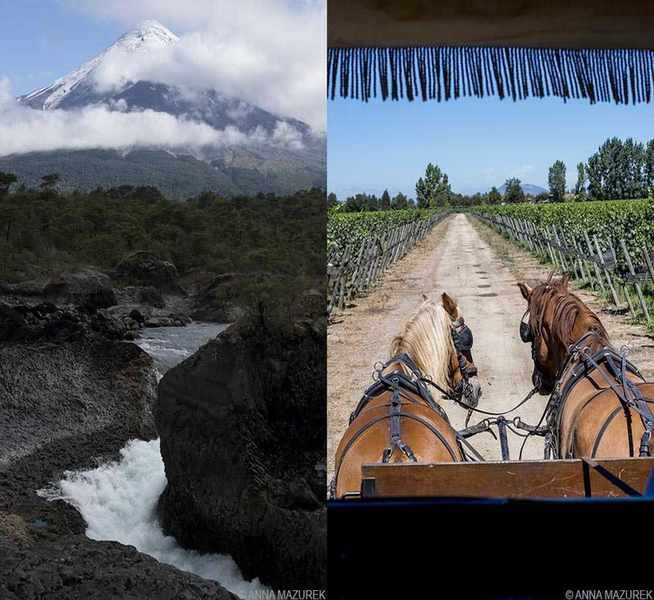
Left: View of Volcano Osorno from Saltos de Petrohué (waterfall) near Puerto Varas in Chile’s Lakes District; Right: Carriage tour of Viña Viu Manent in Santa Cruz, Chile
After Uruguay, I flew to Chile to explore parts I'd missed previously. We began in Puerto Varas in the Lakes District before heading to wine country in Santa Cruz. After a long 14-hour bus ride that landed us at 7 a.m. in a sleepy town called San Fernando, we faced a nearly empty bus station. We waited 30 minutes for the bathroom to open and then another half hour for a full bus ride to Santa Cruz, where we stood in the aisle. While dragging our bags, we serendipitously stumbled upon a wine harvest festival in the main square, which was a delightful surprise. We spent the afternoon tasting wine, enjoying wine-flavored ice cream, and grilling meat on sticks. Outside of the festival, Chile hasn't captivated me like Uruguay and Argentina did. Maybe I'm visiting the wrong spots or feeling jaded from previous travels in similar landscapes in Argentina three years ago. Nonetheless, Santiago has pleasantly surprised me with great healthy food options and low-sugar yogurt, which is quite rare in South America!
Tomorrow, I head to Easter Island. Following that, I'll explore more of Santiago and nearby Valparaiso before traveling to Colombia in April. Excitingly, I've also added a trip to the GALAPAGOS Islands in early April! Thanks to a last-minute deal from a friend, it's still a splurge, but at a third of the normal price!
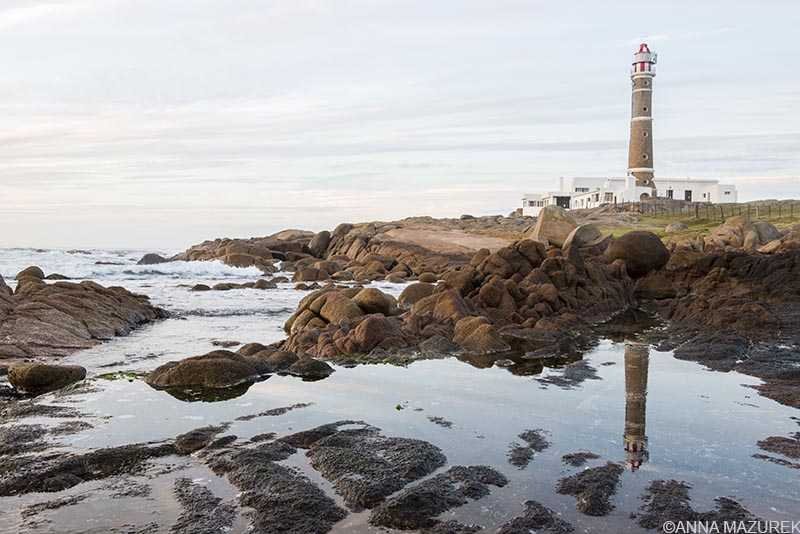
Faro de Cabo Polonio // Cabo Polonio is a secluded beach town situated in a national park, accessible only by 4WD vehicle in northeastern Uruguay.
What are the costs involved?
Now, let's get into finances, as that's likely what you want to know.
Since starting my journey on January 20th, I've spent $2,587, averaging about $55 a day. This is $9 higher than my daily average during my South America trip in 2014/15. You can find a comprehensive breakdown of my expenses for that trip here, complete with charts. The costs are elevated for several reasons—general inflation and my occasional splurges. (I’ve been dining out quite a bit.) Plus, Chile, Argentina, and Uruguay aren't the cheapest travel destinations. I used miles for my one-way flight to Argentina. In Buenos Aires, I went all out on a luxurious apartment for a month with a friend, complete with a pool and gym for $750 each, the highest rent I've paid in over five years. The goal was to kick off my first book project and adjust to working while traveling full-time. Typically, I aim for $30 a day, but that’s tough in South America, as hostels can cost $20-25 a night. The cheapest meals at restaurants hover around $10-15, which feels pricey to me. It’s cheaper than the U.S. but more than I prefer to spend while traveling. I anticipated this coming into the trip but aim to cut back a bit. Now that I've booked my Galapagos trip, I'm preparing most of my meals to lower my daily expenses.
__________________________________________
UP NEXT
Packing Essentials
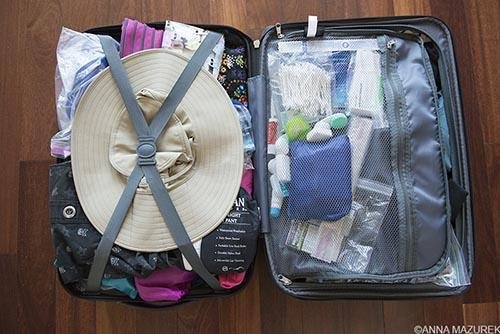
In my next entry, I'll share what I packed for this four-month journey, complete with plenty of photos, a detailed packing list, and tips on what to leave behind! What are your top three packing essentials? Share your thoughts in the comments!