During my two-month safari journey in Africa, I captured thousands of photographs, resulting in 600 GB of images even after removing my less successful shots!
I couldn't let these visuals linger on my hard drive, so I decided to showcase some of my favorite captures along with the stories they tell!
Capturing wildlife on safari is a thrilling challenge. It's exhilarating as you bounce around in an open-air jeep, trying to keep your camera steady to snap the perfect moment before the animals move or hide.
These photos were taken across four primary parks: Kruger National Park in South Africa, Etosha National Park in Namibia, Okavango Delta in Botswana, and Chobe National Park in Botswana. Here are my top 16 images from my Southern Africa safari, along with the camera settings I used for each shot:
Best Photography Gear for Safari in Africa
Almost all these images were shot with my Sony A7Rv camera and an f/4 100-400 lens. The only exception is the rainbow image, which I took using a 24-70 mm lens. I carried two identical camera bodies to avoid the risk of changing lenses in the jeep, which could cause dust on the sensor or make me miss a shot.
I primarily used my zoom lens. Honestly, I could have taken wide-angle shots with my phone without any issue. (Some photographers bring just a phone and a DSLR with a long lens.) I used a 1.4x teleconverter only a couple of times because I found it challenging to keep steady while shooting from the jeep. Instead, I relied on the 100-400mm lens and had a circular polarizing filter on each lens.
Optimal Camera Settings for African Safari
I typically used a wide aperture (between f/5.6 and f/7.1) to create a blurred background for tight animal shots, but I switched to a smaller aperture for landscapes. I maintained a fast shutter speed (at least 1/500, often closer to 1/1000) to compensate for any movement from the animals or the vehicle. Plus, the 100-400mm lens can get heavy, so the fast shutter speed was essential. I kept my ISO between 400 and 800 most of the time, except for a few low-light situations. (And yes, I mistakenly changed the ISO during an elephant shot in my rush to capture it! Haha!)
Also, I always shoot in full manual mode by habit, but shutter priority could be beneficial for safari. Below are my exposure settings for reference. Keep in mind, these settings worked for me at the time the animals appeared, and changing them quickly can be tough!
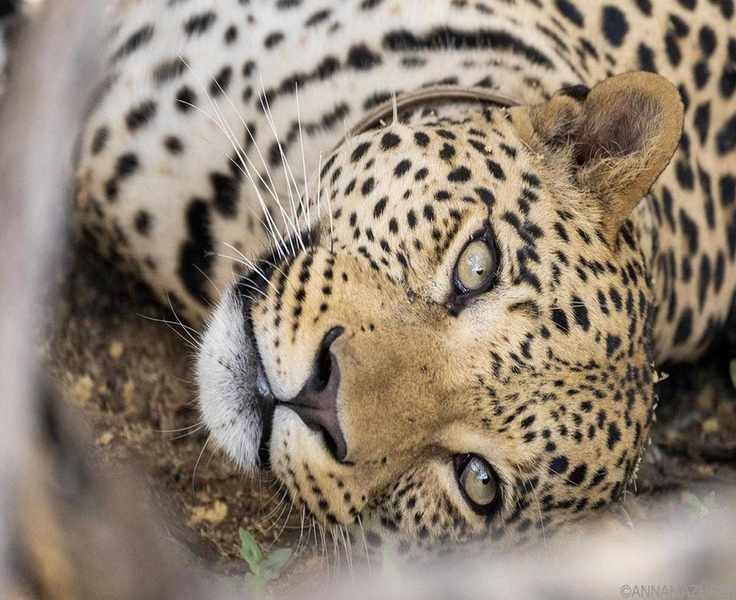
We spent a night at a private game reserve near Etosha National Park, famous for its leopards. Private reserves operate differently from national parks. Guides use devices resembling 1980s antennas to track leopards, making leopard safaris unique experiences. We spotted three leopards lounging and relaxing at the reserve. (We also saw one in the wild at Kruger National Park.) Typically, they prefer trees, so seeing them on the ground was special.
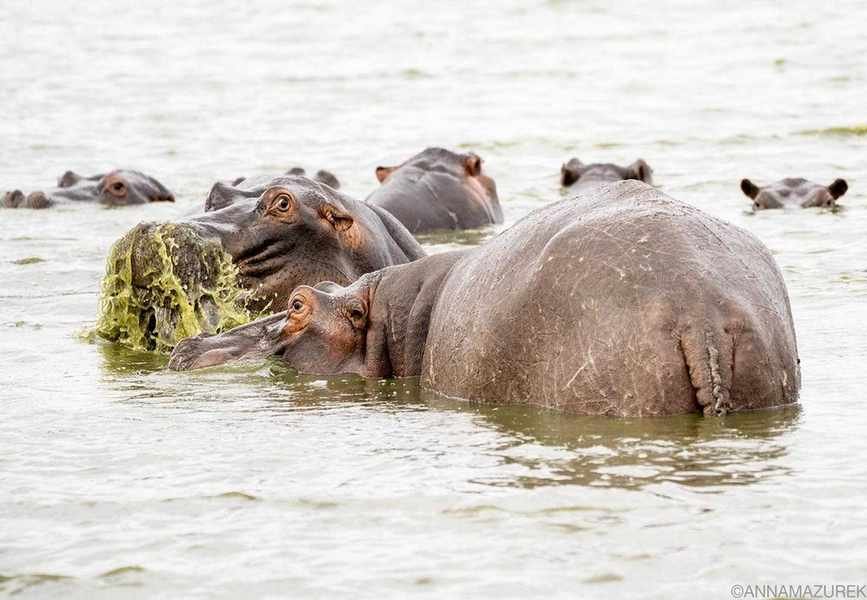
Did you know that a group of hippos is called a bloat? We encountered this group in Kruger National Park on our last day, with two splashing around in murky green water. Hippos are among Africa's most dangerous animals, so I shot every hippo photograph with my 100-400 lens for safety. (If you're a hippo fan, check out my gallery of Moo Deng, the famous sassy pygmy hippo in
Thailand.)

During every safari, our guide would shout out names of The Lion King characters whenever we spotted an animal. Pumba! Rafiki! Simba! It became one of the trip's highlights. This Pumba posed perfectly by a tree, looking like he was ready for a date.
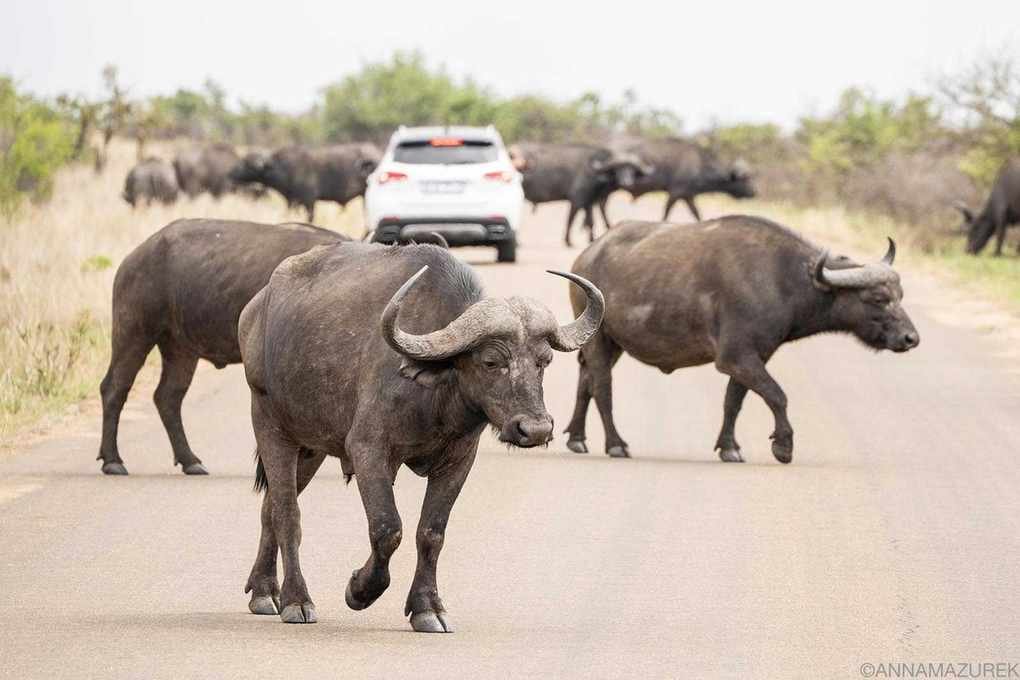
In Kruger National Park, you can choose to self-drive or opt for guided safari drives. Regardless, you must stay on the roads, but wildlife crossings are common. We experienced numerous crossings with giraffes, elephants, impalas, and even a rhino (not in Kruger). If you self-drive, I recommend at least one guided safari drive since guides know the best locations and communicate about animal sightings.
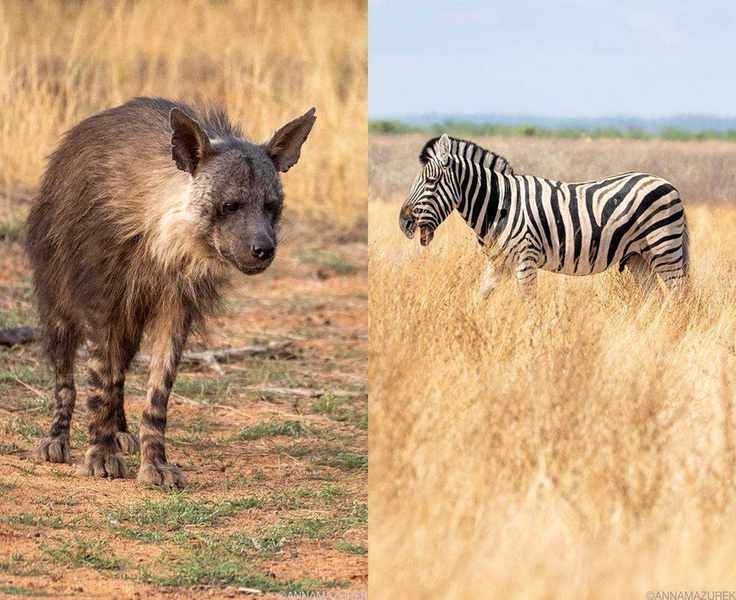
Brown hyenas are among the rarest species, and we were fortunate to spot one at the private reserve. It approached two leopards resting together at sunset. As it got dark, I was unsure if I could capture a clear image, so I increased the ISO to 3200. (Sony cameras handle high ISO with minimal noise!) The second image captured a zebra making a funny face at Etosha National Park. The park features a salt pan with flat areas, making wildlife photography easier with a nicely blurred foreground of grass. (Fun fact: Etosha has only four of the Big Five; it's too salty for Cape Buffalo.)
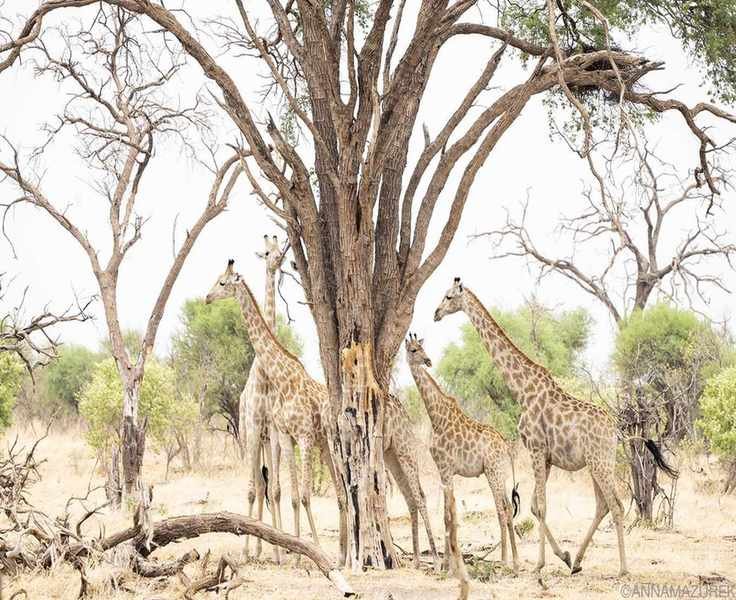
We were lucky to have cloudy skies in the Okavango Delta, which helped with both heat and lighting. I loved shooting without harsh shadows. The giraffes' tones blended beautifully with the landscape. Safari photography is challenging because you must stay in the jeep for safety and can't easily change angles.
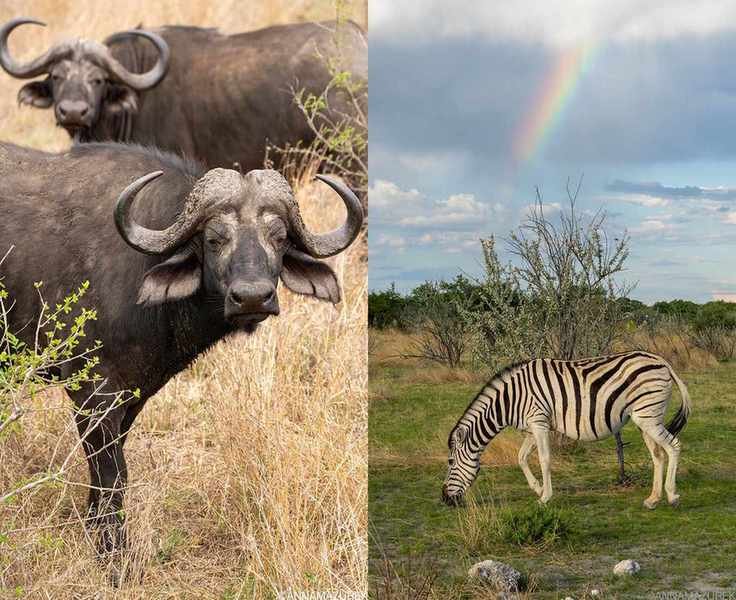
In this photo of the Cape Buffalo, the light and composition worked out perfectly. I had struggled to capture clear shots of their faces in past encounters due to branches and grass. Getting two lined up was a dream!
We spent quite a while chasing a full rainbow in Etosha National Park but struggled to find the right foreground until we discovered a few zebras grazing. We kept adjusting the car to frame the shot with the zebra beneath the rainbow.
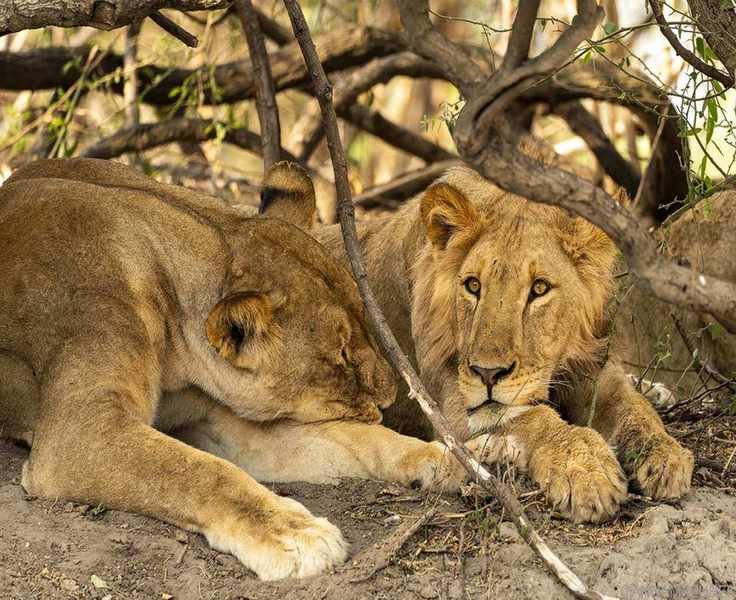
A young male lion napped with a pride of females in Chobe National Park along the Chobe River. Nearby, a Cape Buffalo carcass lay under a tree, with one lion still cleaning the bones. These lions seemed unfazed by our presence. The male lion glanced at us curiously, but they're accustomed to safari vehicles. Just remember not to lean out!
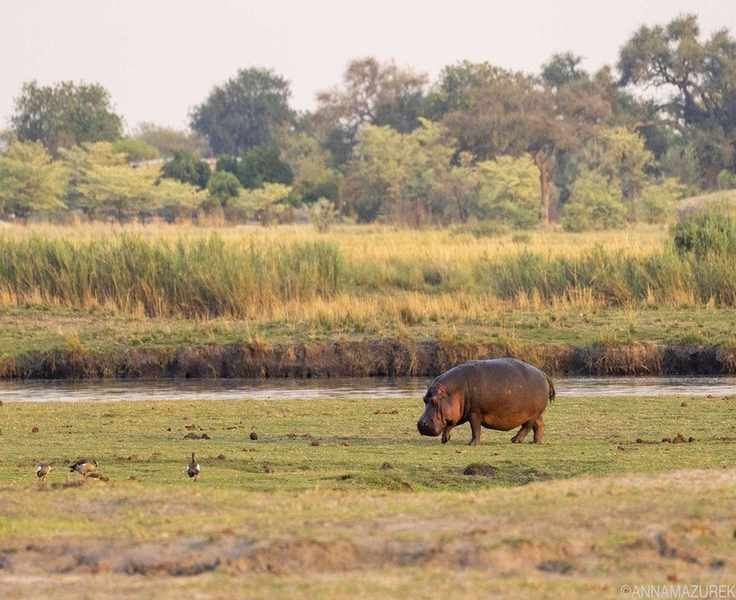
Hippos can spend up to 16 hours in the water but often graze at dusk. We saw this one wandering along the Chobe River area at sunset. Since hippos are territorial, we kept a safe distance—my hippo shots were all taken with a 100-400mm lens. I wanted to frame him against the landscape.

While in Kruger National Park, we spotted two lions mating in a field. Later, I captured a shot of the male yawning widely. The image on the left shows two young males strolling together along a roadside in Namibia's Etosha National Park (this was taken at a high ISO due to the darkness at sunrise). The key to these shots is waiting for the right moment and composition to come together. I was limited by angles because we were in the jeep, so I made the best of it. A lower angle for the yawning shot would have been ideal, but safety took priority.
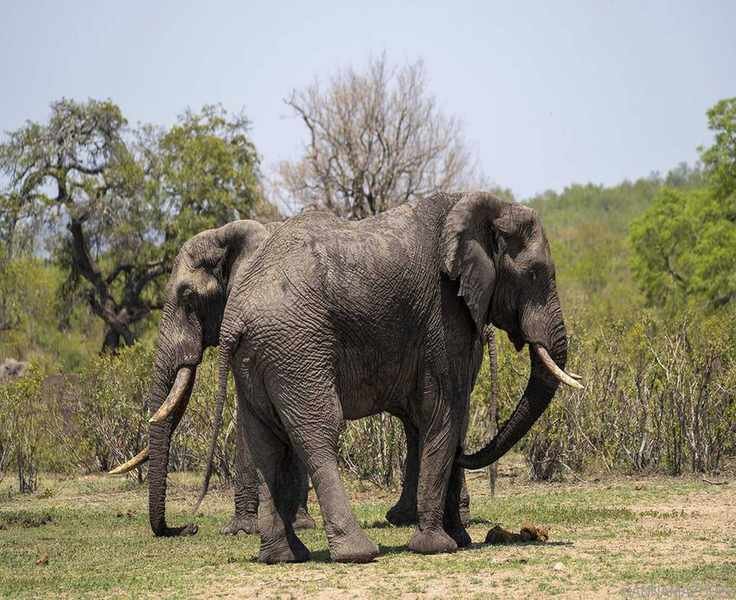
These two elephants entertained us in Kruger National Park. While we were focused on one, the other emerged from the bushes. It seemed they might fight, but instead, they walked around each other. When they crossed paths, I captured this frame, loving the contrast in their tusk lengths. The one with longer tusks is older and has a broken tusk that doesn't grow back. (I chuckled when I realized I accidentally shot this at ISO 3200, but that's what excitement does!)
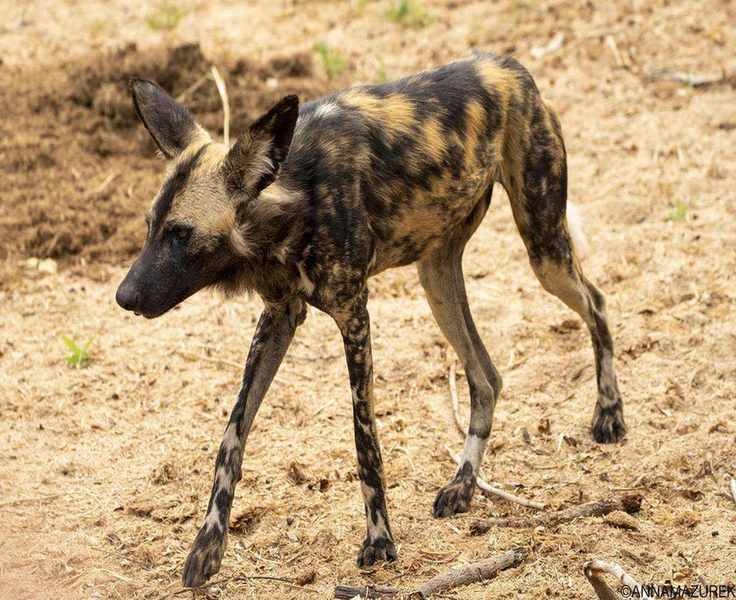
Painted dogs, also known as African wild dogs, are quite rare in Kruger National Park. We were fortunate to encounter a pack of at least 15, including some pups. It was our only sighting, but it was incredibly special. This image showcases their distinct fur pattern.
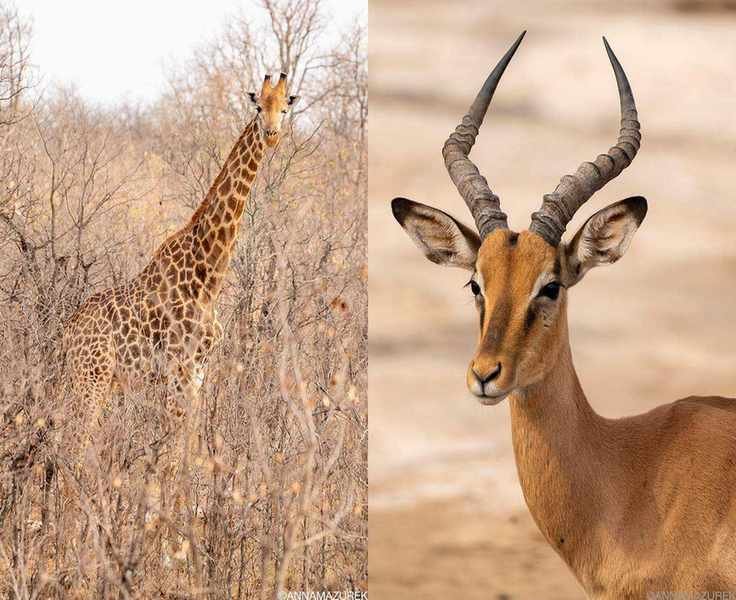
This giraffe shot is one of my favorites because its spots almost blend into the tree branches at the bottom. I love the texture of the trees and the quirky expression on its face. Giraffes are fantastic at posing for photos. Impalas (right image) were among the most frequently seen animals during our safari. We joked that whenever a jeep stopped to photograph them, it must be their first day in the park. They're stunning creatures worthy of admiration!

I enjoyed watching elephants cool off in the heat at Kruger National Park. We visited in early October, just before the rainy season began. One elephant used its trunk to cover itself in mud, while others dipped their trunks into water reservoirs. Elephants are always found near water!