Looking for effective space heaters to keep your home cozy? Let's explore the options and their cost-effectiveness.
Different kinds of space heaters operate uniquely, impacting both their heating efficiency and running costs. It's essential to evaluate each type to find the best fit for your needs.
This guide reviews the pros and cons of various space heaters, helping you choose the right one for your specific room.
Best Space Heaters for Warmth and Efficiency
Several key factors determine the ideal space heater for your home, including the heater's size (to ensure a good fit in your space), portability (for easy movement between rooms), and purchase price.
Use our insights to make an informed choice for your residence.
Ceramic Space Heaters
Powered by electricity, ceramic space heaters utilize a ceramic heating element that efficiently radiates warmth. These heaters are available with or without fans, with fan models distributing heat more rapidly.
One significant advantage of ceramic heaters is their quick heating capability. They're also portable and come in various designs, including compact towers that save floor space.
Ideal for spot heating, ceramic heaters can effectively warm cold corners, especially models with oscillation features for broader coverage. Digital thermostats and timers with auto shut-off are valuable extras.
While ceramic heaters are efficient for small spaces, they may not be suitable for larger areas requiring prolonged heating, as they rely on continuous electricity.
Keep in mind that fan operation can generate noise, so ensure the sound level is acceptable for your intended use, particularly in quiet settings.
Ceramic heaters generally range from $25 to $100 and higher.
Fan Heaters
Fan heaters work by blowing air across a heating element, effectively warming a room. They are an economical heating option, starting around $15 for desk-friendly models, and reaching upwards of $100.
Lightweight and portable, fan heaters can easily transition from room to room or between different homes.
Like ceramic heaters, fan heaters provide immediate warmth but must remain on for continuous heating, which can increase energy costs. They are most effective in smaller, enclosed spaces and require careful placement to avoid obstruction of heat flow.
Opt for models with adjustable heat settings for added flexibility.
Infrared Space Heaters
Infrared heaters operate differently than ceramic or fan models, using electromagnetic radiation to transfer heat directly to people and objects rather than warming the air. This means you won't have to worry about items obstructing warmth.
Another perk is that heat persists even after the heater is turned off, making them suitable for larger spaces and basements.
Infrared heaters are particularly effective in poorly insulated homes, as they heat surfaces directly, minimizing heat loss from drafts. They generally consume less electricity than traditional radiators but may require longer operation time in larger or less insulated areas.
Infrared heaters typically cost between $70 and over $200.
Oil-Filled Space Heaters
Oil-filled heaters are excellent choices for medium to large rooms. They operate quietly, making them suitable for bedrooms or other quiet areas.
These heaters resemble traditional radiators and can be bulky, so look for models with wheels for easier mobility.
Though filled with oil, they are powered by electricity: heating elements warm the oil, which radiates heat. Their design allows them to provide warmth even after being switched off, leading to potential cost savings.
However, they represent a higher upfront investment, typically starting around $60 and exceeding $1,000.
Be cautious, as the surfaces can become hot, posing a risk in homes with young children.
Oil-filled heaters take longer to heat up compared to other types.
Panel Space Heaters
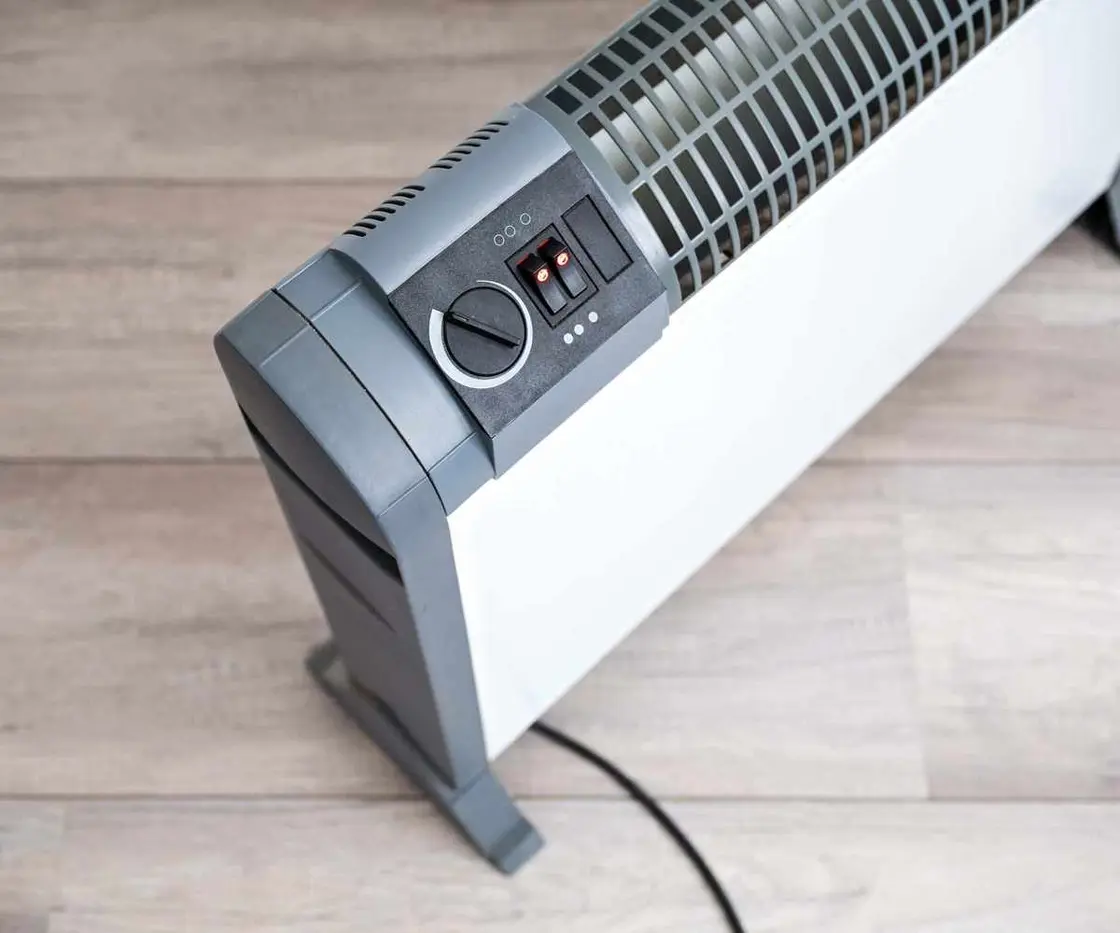
Panel heaters offer a stylish way to heat a room using electricity without occupying much floor space; they can even be mounted on walls. Although options are limited, expect to invest around $120 or more.
Which is Better: Infrared or Ceramic Space Heaters?
Your choice between infrared and ceramic heaters will depend on your heating needs, noise preferences, surface temperature, and purchase cost.
Ceramic heaters warm the air, while infrared models heat surfaces directly, including people.
If noise is a concern, opt for an infrared heater, especially in poorly insulated spaces. These units are energy-efficient, potentially lowering electricity bills.
Conversely, ceramic heaters are often less expensive initially and are easily movable, providing instant heat.
What is the Safest Space Heater Style?
Electric space heaters mitigate risks associated with combustion. However, safety considerations remain crucial to prevent burn or fire hazards.
Experts advise plugging electric heaters directly into wall outlets. If using an extension cord, choose the shortest heavy-duty cord of at least 14-gauge wire. Always adhere to manufacturer guidelines regarding extension cord usage.
Investing in a unit with a tip-over safety switch is wise, as it automatically shuts off the heater if tipped.
Next, avoid common space heater mistakes to ensure safe operation.