
Shopping for bras online can seem like deciphering a new language, particularly with sizes like "90" lacking context. If you've encountered "breast size 90" while exploring European lingerie, you're not alone in your curiosity.
This article clarifies the 90 band size, guiding you through accurate measurements, size conversions, and common fitting issues. By the end, you'll confidently select bras that fit and feel great.
What Does Breast Size 90 Mean?
The term "size 90" indicates the band size in French and Spanish bra sizing systems. This number reflects the measurement around your torso just below your breasts, not your bust measurement.
Key points to remember:
- French size 90 is roughly equivalent to EU 75 and UK/US 34 in band size.
- A complete bra size includes both band and cup: for example, 90B, 90C, and 90D.
- "Breast size 90" is not sufficient alone; both band size (90) and cup letter (A, B, C, etc.) are necessary to determine the proper fit.
- The 90 band fits an underbust measurement between 88–92 cm.
- Cup letters (A to F) signify how much larger your bust is compared to your underbust.
This guide will detail how to measure yourself, interpret size charts, convert 90 sizes internationally, and select a well-fitting bra.
Measuring for a 90-Size Bra
To find out if size 90 is right for you, take two measurements in centimeters: your underbust and your bust measurement.
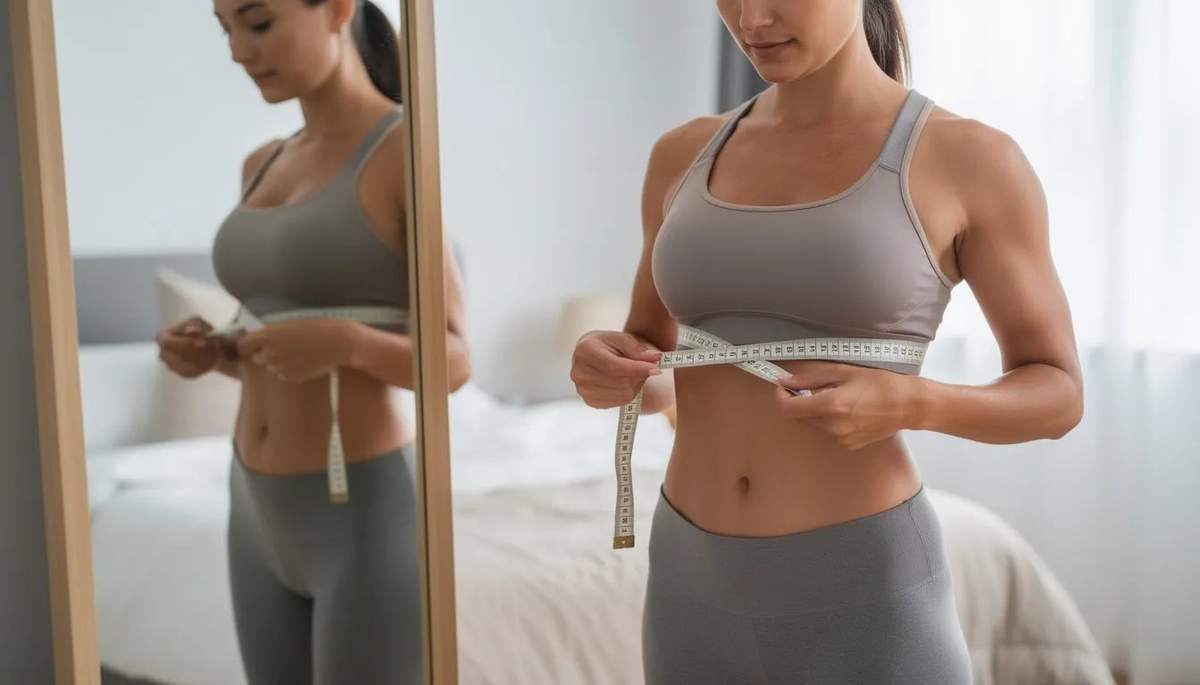
How to Measure Your Underbust
- Stand straight with your arms relaxed.
- Wrap a soft measuring tape snugly around your ribcage, just below your breasts.
- Ensure the tape is parallel to the floor.
- Breathe normally; don't hold your breath or suck in.
- Record the measurement in cm.
In the French/European method, an underbust measurement of 88–92 cm typically corresponds to band size 90. If your underbust measures 83–87 cm, you may need an 85 band; if it's 93–97 cm, a 95 band is likely more appropriate.
Measuring Your Bust
- Wrap the tape around the fullest part of your breasts (usually across the nipples).
- Keep it level, not compressing the breast tissue.
- Record this measurement in cm.
Example Calculation
Measurement | Value |
Underbust | 89 cm |
Bust | 102 cm |
Difference | ~13 cm |
The difference between bust and underbust measurements determines your cup size, which we'll explore next.
Bra Size Grid for Size 90
After confirming your underbust fits a 90 band, match your bust measurement to find the correct cup size. Most European sizing charts use the difference between bust and underbust, increasing by approximately 2 cm per cup size.
Size Table for Band 90
Bust Measurement (cm) | Bust–Underbust Difference | Cup Size for Band 90 |
98 cm | ~8 cm | 90A |
100 cm | ~10 cm | 90B |
102 cm | ~12 cm | 90C |
104 cm | ~14 cm | 90D |
106 cm | ~16 cm | 90E |
108 cm | ~18 cm | 90F |
Note: Exact increments may vary slightly by brand.
Using the Size Grid
- Locate your bust measurement in the left column.
- Find the corresponding cup letter.
- Your complete size is the combination: e.g., 90C.
For further details, refer to the most accurate way to measure bra size.
Once you determine your exact 90 size (e.g., 90C), you can filter bras online for more precise results, helping to save time and reduce returns.
Example: If your underbust is 90 cm and your bust is 98 cm, the difference is 8 cm. According to many charts, this corresponds to 90A. If brand-specific charts yield different results, always trust that particular brand's size guide.
Converting 90 Bra Sizes to General Sizes (XS, S, M, L, XL, XXL)
Many non-wired bras and bralettes use general sizes (S, M, L) instead of numeric sizes like 90B, which can complicate shopping. However, there's a basic mapping to follow.
Typical Size Mapping for European Brands
Band Size | Cup Range | General Size |
85 | A–C | S |
90 | A–C | M |
90 | D–E | M or L |
95 | A–C | L |
95 | D–E F | L or XL |
100+ | C+ | XL–XXL |
Example: A person who typically wears a 90C in underwired bras would likely choose M in a stretchy sports bra from mainstream EU brands in 2024.
Important Notes
- Non-wired bras typically offer more flexibility due to their stretch.
- A size 90 wearer may fit two different lettered sizes depending on the style and fabric.
- Always verify each brand's specific size chart, as there's no universal standard for S/M/L sizing.
- If you're between sizes, consider your shape: fuller cups may require a larger size for proper coverage.
International Size Conversion for 90 (France, EU, UK, US)
The "90" band size is used in France and Spain. When shopping from UK or US sites, you'll need to convert this number to find your correct size.
Quick Conversion Table
France/Spain | EU | UK | US |
85 | 70 | 32 | 32 |
90 | 75 | 34 | 34 |
95 | 80 | 36 | 36 |
100 | 85 | 38 | 38 |
Cup Letter Conversion with Band 90
French Size | EU Equivalent | UK Equivalent | US Equivalent |
90B | 75B | 34B | 34B |
90C | 75C | 34C | 34C |
90D | 75D | 34D | 34D |
90E | 75E | 34DD/E | 34DD/DDD |
Shopping scenario: A customer measured as 90C in Paris should opt for 34C when ordering from a major US retailer, as the bands and cup letters translate directly.
Key Reminders
- Cup letters (A, B, C, D) tend to align across sizing systems for standard sizes.
- For larger cup sizes (E, F and above), UK and US systems diverge; US brands often use DD, DDD notations while EU systems use E, F.
- Even with correct conversions, fit may vary by manufacturer due to different cup shapes and band tightness.
- When uncertain, always check the specific size chart of the brand rather than relying solely on conversions.
Choosing the Right 90 Size Bra for Comfort
Getting your bra size (like 90C vs 90D) is just half the story. The style and shape of the bra are equally important for ensuring a comfortable fit.
Fit Guidelines for a 90-Band Bra
- Band positioning: Should fit level and snug around the ribcage, without riding up.
- Center gore: Should rest flat against your sternum without gaps.
- Cup fit: Should encompass the breast fully, without cutting in or gaping.
- No red marks: The band should feel secure but not leave deep impressions on your skin.
Common Mistakes Women Make
Research indicates that 70–85% of women wear bras that don't fit correctly. Often, they choose bands that are too loose (like 95 instead of 90) and cups that are too small (like B instead of C or D).
If your 90C band rides up even on the tightest hook, consider trying 85D. If the cups cut in, opt for 90D while keeping the same band size.
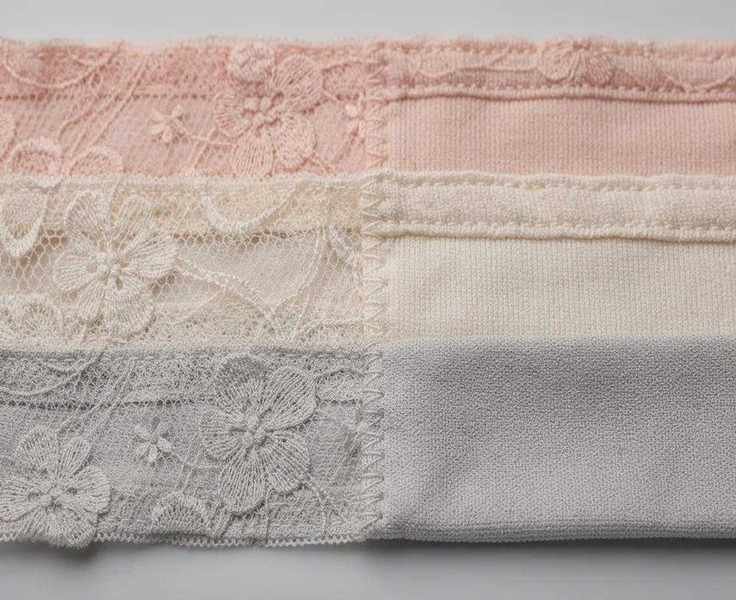
Material Choices
For daily wear in 2024, consider these fabrics:
- Breathable microfibre is excellent for warmer climates.
- Cotton-lined cups help reduce irritation for sensitive skin.
- Padded styles may trap heat; choose lighter options for comfort.
- Mesh details provide ventilation without compromising support.
Fitting Your 90 Bra Step by Step
- Start on the loosest hook: New bras should fit comfortably on the loosest setting to allow for tightening over time.
- Check the back: The back of a 90 band should remain horizontal, not creeping up when you raise your arms.
- Use the two-finger rule: You should fit two fingers comfortably under the band at the back, and one under each strap.
- Let the band do the work: 80–90% of support should come from the band, not the straps.
Adjusting Straps and Clasps on a 90 Bra
- Strap length: If you're a 90C or 90D, shorter straps may be needed for a fuller bust; adjust to prevent digging.
- Clasp position: The middle hook is a reference point for a good fitting band; if a new bra needs the tightest hook, the band might be too large.
- Troubleshooting example: If someone in a 90B has a band that rides up on the loosest hook, they should try the middle hook; if it still rides up, they likely need an 85C instead.
- For larger cups (90E+): Wider, padded straps help distribute pressure, alleviating neck and shoulder strain.
Does This Bra Model Fit Your Bust Shape?
Even with accurate measurements, not all bra styles suit every body. Breast shape significantly influences how well a 90-size bra fits.
Common bust shapes and recommended styles:
Bust Shape | Description | Recommended Styles for 90 Band |
Full on top | More tissue above the nipple | Full-cup, balconette |
Full on bottom | More tissue below the nipple | Plunge, push-up |
Shallow | Less projection, wider root | Half-cup, T-shirt bras |
Projected | Significant forward projection | Full-cup, unlined styles |
Example: A shopper with 90C and shallow breasts found that a balconette style gaped at the top. Switching to a 90C half-cup from the same brand resolved the issue, same measurements but a different style that matched their shape.
Body types (apple, pear, hourglass) can also influence how strap placement and gore height appear. A higher gore may suit closely-set breasts better, while a plunge style is ideal for wider-set breasts in the same 90 band.
Addressing Common Fit Problems with 90-Size Bras
Even with the correct "90" band, you might face fit challenges: the band rides up, cups wrinkle, underwire pokes, or straps dig into your shoulders. Here's how to troubleshoot these issues.
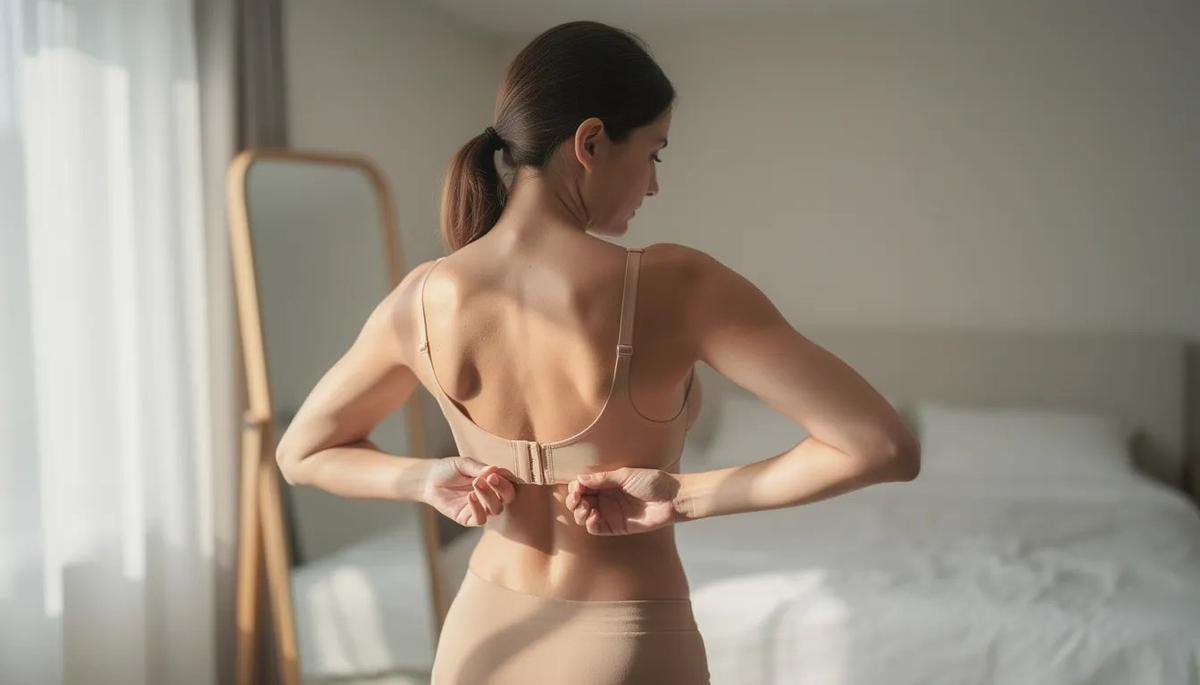
When the 90 Band Rides Up
Symptom: The back of your bra moves upward toward your neck during the day.
Likely causes:
- The band size may be too loose (true size could be 85).
- Straps might be too tight, pulling the back up.
Solution:
- Loosen the straps slightly.
- If the band continues to ride up, consider moving from 90C to 85D (smaller band, larger cup to maintain volume).
- The band should remain level when lifting your arms.
Example: A person with a measured underbust of 89 cm wearing 90C may find better support in an 85D, as the tighter band helps it stay in place while the sister size cup maintains a similar fit.
Loose or Wrinkled Cups
Symptom: The top of the cup stands away from the breast, creating gaps or wrinkles.
Likely causes:
- The cup may be too large for your bust volume.
- The style may not match your breast shape (e.g., too much upper coverage for full-on-bottom shapes).
Solution:
- Try a smaller cup size, such as fitting to the smaller side for asymmetrical breasts.
- Switch to a different cut (plunge or push-up) if gaping occurs only at the top.
Example: A person with a bust of 98 cm experiencing wrinkling in a 90C might be better suited to 90B in the same model or a different 90C in a half-cup style instead of a full-cup.
Discomfort from Underwire
Symptom: The wire digs into breast tissue, pokes the sternum, or causes pain near the armpit.
Likely causes:
- The cup might be too small, forcing the wire to sit on tissue.
- The wire shape may not match your breast root width.
Solution:
- The wire should fully encircle the breast without pressing on any tissue.
- If side pain occurs, opt for styles with wider underwire curves.
Example: A user switched from a painful 90C half-cup to a 90D T-shirt bra with a wider wire curve. This change eliminated poking.
Straps Digging into Shoulders
Symptom: Deep grooves or red marks on shoulders, even with a correctly fitting 90 band.
Likely causes:
- Straps may carry too much weight (the band could be loose).
- Straps might be too narrow for your cup size.
- Straps may need adjusting.
Solution:
- Ensure the band is snug enough to support 80–90% of the bra's weight.
- For sizes 90D and above, opt for wider, padded straps that distribute pressure.
- Adjust strap length so they're snug but not tight.
Understanding Bra Sizing and the 90 Band
Grasping how bra sizing works simplifies shopping. Every size comprises a band size (like 90) and a cup size (A, B, C, etc.).
- Band size is determined by your underbust measurement.
- Cup size is derived from the difference between your bust and band measurements.
- Different regions employ different systems: France/Spain use a 15 cm offset from EU sizes, EU uses 5 cm band steps, while UK/US use inches.
Example: French 90 translates to EU 75 and UK/US 34, all representing the same torso circumference in various units.
Band Measurement Systems and 90's Position
Three primary systems describe the same body size differently:
System | Band Size | Underbust Range |
French/Spanish | 90 | 88–92 cm |
European (EU) | 75 | 88–92 cm |
UK/US | 34 | ~35 inches |
More equivalences:
- 85 FR = 70 EU = 32 UK/US
- 90 FR = 75 EU = 34 UK/US
- 95 FR = 80 EU = 36 UK/US
This is why "breast size 90" in France appears as "34" on many UK and US labels—the European size number is another way to express the same measurement.
Combining Cup Letters with Band 90
Cup letters (A, B, C, D, E, F, etc.) indicate how much larger your bust is compared to your underbust. For band size 90, the increments typically follow a 2 cm rule in EU metric systems.
Example sequence for a 90 band:
- Bust 94 cm → difference ~4 cm → 90AA
- Bust 96 cm → difference ~6 cm → 90A
- Bust 98 cm → difference ~8 cm → 90B
- Bust 100 cm → difference ~10 cm → 90C
- Bust 102 cm → difference ~12 cm → 90D
Understanding Sister Sizes
Cup volume changes with band size. A 90C cup has the same volume as an 85D or a 95B; these are considered sister sizes.
Your Size | Sister Size (Smaller Band) | Sister Size (Larger Band) |
90B | 85C | 95A |
90C | 85D | 95B |
90D | 85E | 95C |
Scenario: If a 90C bra is out of stock, you might find an 85D that fits, although expect a tighter band. Conversely, if your usual 90C feels tight, try a 95B for a looser band but equivalent cup volume.
Importance of Getting Breast Size 90 Right
Wearing the wrong size, like 95B instead of 90C, can affect more than appearance. Poorly fitted bras can lead to discomfort and health concerns.
Physical impacts of incorrect sizing:
- Red marks and irritation from tight bands or underwires.
- Neck and shoulder pain from overly burdened straps.
- Poor posture from inadequate support.
- Back pain, especially for larger cups (90D and above).
Studies in lingerie fitting literature suggest that the right band fit can help prevent 20–30% of upper back issues for D+ cup sizes. A well-fitted bra should distribute weight across the band rather than focusing it on the straps.
Benefits of Proper Bra Fit
- Enhances posture throughout the day.
- Minimizes breast movement during activities (essential for active individuals).
- Prevents digging or pinching.
- Improves clothing appearance.
- Boosts confidence in your look and feel.
For active individuals or those with larger cups (90D and above), a properly fitted 90 band can reduce breast bounce by up to 75% compared to a loose band.
When to Reassess Your 90 Bra Size
Your bust size can change. Certain life events and timelines may warrant re-measurement:
- Post-pregnancy and breastfeeding: Breast size often shifts significantly.
- Major weight fluctuations: Gaining or losing 5+ kg can alter your band or cup sizes.
- Hormonal changes: Including menopause (typically between ages 45–55).
- Every 6–12 months: Even without major changes, gradual shifts in body shape can occur.
Example: A person wearing 90B at age 22 may transition to 90C or 90D by age 30 due to weight or hormonal changes.
Quick self-check: If you can pull your 90 band more than 5 cm away from your back, the elastic may be worn out; it's time to replace or resize.
Signs Your 90 Bra Needs Replacement
- Band feels loose even on the tightest hook.
- Straps won't stay up despite adjustments.
- Underwire is poking through the fabric.
- Cups have lost their shape.
- You've been using it consistently for 12–18 months.
Breast size 90 indicates a French/Spanish band size, which equals EU 75 and UK/US 34. To determine your complete bra size, both underbust and bust measurements are essential. The difference between these measurements helps identify your cup size (with 2 cm increments for EU sizing). Sister sizes (90C = 85D = 95B) assist when your specific size is unavailable. Research shows that over 70% of women wear the wrong bra size, often a band that's too large and a cup that's too small. It's advisable to re-measure at least once a year and after any significant body changes.
Final Thoughts
Finding your right 90-size bra doesn't require extensive calculations, just a tape measure and a few moments. Whether browsing French, EU, or UK/US brands, you now possess the knowledge to convert sizes, assess fit, and tackle common issues.
The distinction between a well-fitting bra and one that doesn't is evident in your posture, comfort, and overall confidence. Spend a few minutes measuring yourself using the methods outlined, and compare your findings to your current bras. You may realize you've been wearing the wrong size, which is the first step towards discovering lingerie that truly suits your body.
Keep this guide handy for your next bra shopping adventure, and remember: when in doubt, explore sister sizes.