
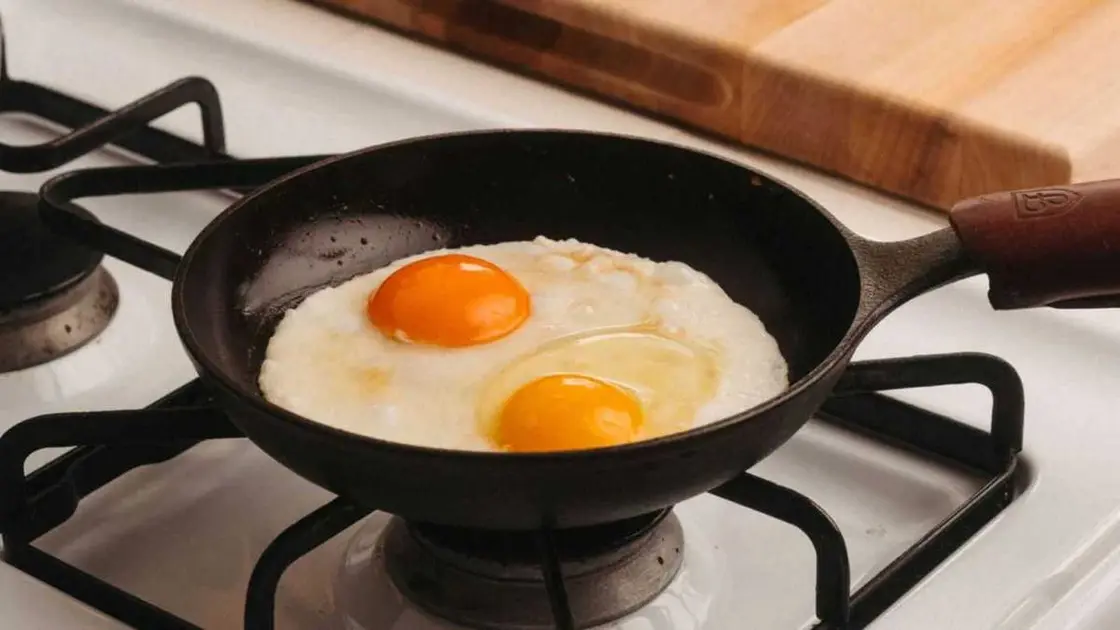
Few pans beat cast iron for achieving stunning sears. Known for its superior heat retention and durability, cast iron is a kitchen workhorse.
However, newcomers to cast iron cookware may confuse its toughness with the ability to withstand all cooking errors. Overheating can create a “heat ring”—a hot spot leading to uneven cooking, sticking, and potentially damaging the pan.
Fortunately, experts have a straightforward solution that reduces sticking and enhances searing. Here's how to avoid the issue.
Preventing a Cast Iron 'Heat Ring' for Uniform Searing
A heat ring on your cast iron skillet typically manifests as a discolored circle in the center of the pan, where it sits directly over the burner.
This discoloration indicates that the essential seasoning has burned away, exposing the metal underneath, which causes food to stick.
Laura Ascher, a recipe developer, explains that in severe instances, or when the seasoning thins, flaking can occur, causing the seasoning to lift off. However, this is less common.
Overheating the skillet is a major factor, Laura notes. Regardless of how well you care for your cast iron, using excessive heat can compromise its surface.
“This often occurs during preheating,” Laura points out. “I've seen cases where people leave their skillets on the stove and forget them, resulting in overheating. The center heats up significantly faster than the rest of the pan. While cast iron holds heat well, it doesn’t distribute it immediately.”
This leads to the seasoning breaking down first in the center, resulting in uneven cooking.

This advice is relevant, regardless of your skillet's age or cost.
To prevent this, exercise patience. Rather than placing your skillet on a scorching hot burner, preheat it gradually on medium heat, allowing the heat to distribute evenly through the metal. This not only protects your seasoning but also ensures a more even sear.
“Additionally, I recommend adding a bit of oil to the skillet during preheating,” Laura suggests. “This keeps the surface smooth and, in my view, preserves the seasoning. While many advise against oiling skillets before heating, I find that as long as you use oil with a high smoke point, it’s perfectly fine.”
Refined avocado oil, available at Walmart, is an excellent choice for this purpose.
Repairing an Existing Heat Ring
If your pan already has a heat ring, don’t worry. It’s easy to fix.
Laura advises, “If you notice burn rings or flaking, there’s a straightforward solution. Ensure your skillet is cool before cleaning, then scrub with coarse salt or a chainmail scrubber [available at Walmart] to remove any loose seasoning.
“Then, re-season your cast iron. Lightly coat the skillet with seasoning oil, wipe off excess, and place it upside down in the oven at 400°F for an hour. Don’t forget to place a cookie sheet on the oven rack below to catch drips.
“You may notice the skillet’s surface is a bit uneven due to the flaked-off pieces,” she adds, “but with regular use, it’ll smooth out.”
Recommended Shopping
With proper care, cast iron pans can last a lifetime. However, knowing how to clean and maintain your cookware requires more than just avoiding soap and gentle heating.
Here are six essential cast iron tools and accessories to help you maximize your cooking experience with this versatile cookware for years to come.
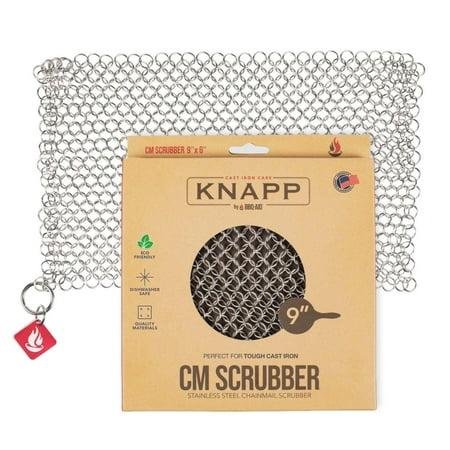 Cleaning stubborn residues
Chainmail scrubbers effectively remove tough, stuck-on food without harming the seasoning layer, unlike steel wool. Crafted from durable stainless steel, they're dishwasher safe and resist trapping food particles and bacteria like sponges.
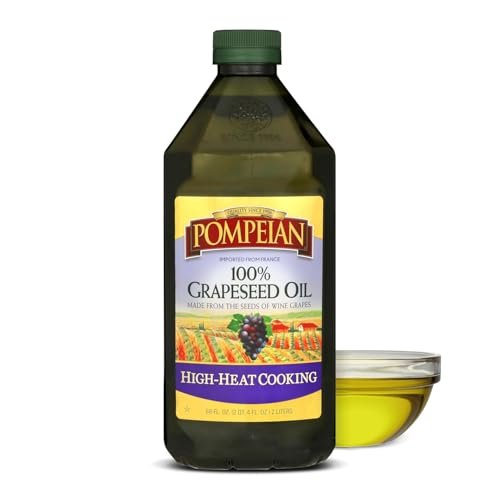 Perfect for seasoning
This oil is highly recommended for seasoning cast iron due to its high smoke point (it won’t burn onto your pan), neutral flavor, and affordability.
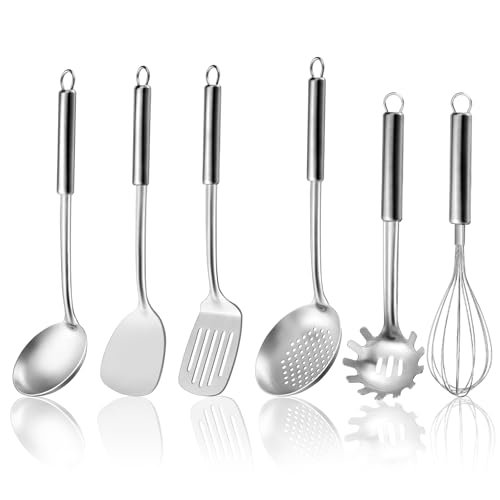 Ideal for cast iron cooking
While metal utensils are often discouraged for non-stick cookware, they’re perfect for cast iron and won’t harm the seasoning when used carefully, ensuring food remains intact in the pan.
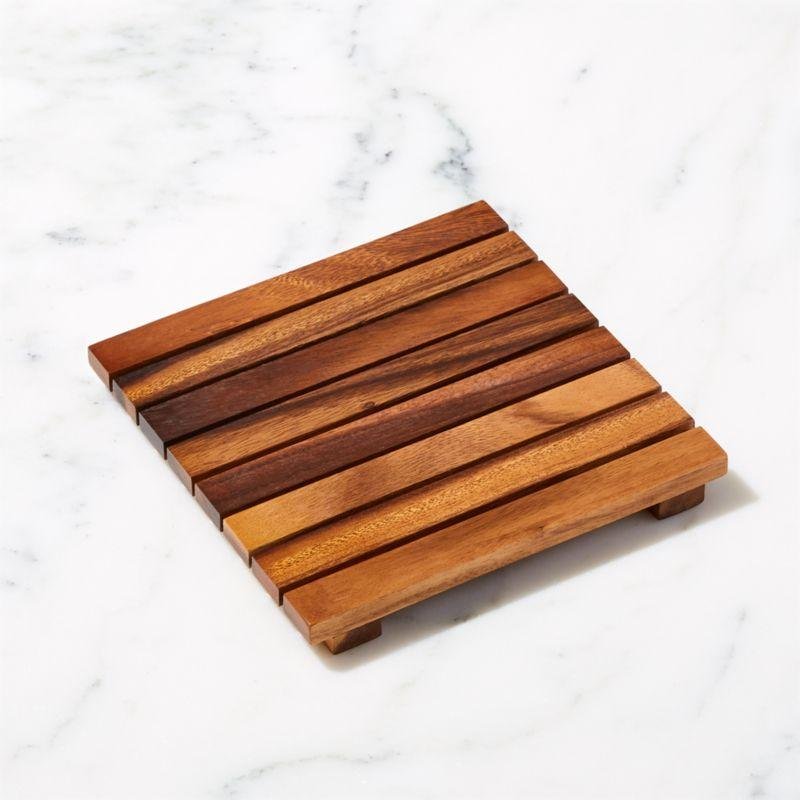 Protect your surfaces
Due to cast iron's heat retention, the base can damage your countertop when serving. Use a quality trivet to place your pan on once removed from the stove. This raised trivet also helps cool the pan after use.
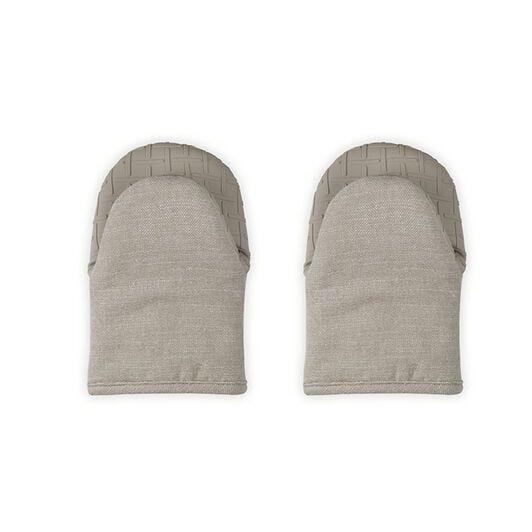 Available in three colors
Handles of cast iron pans can become extremely hot, especially after oven use. These silicone-lined cotton mitts from Le Creuset protect your hands while being easy to maneuver.
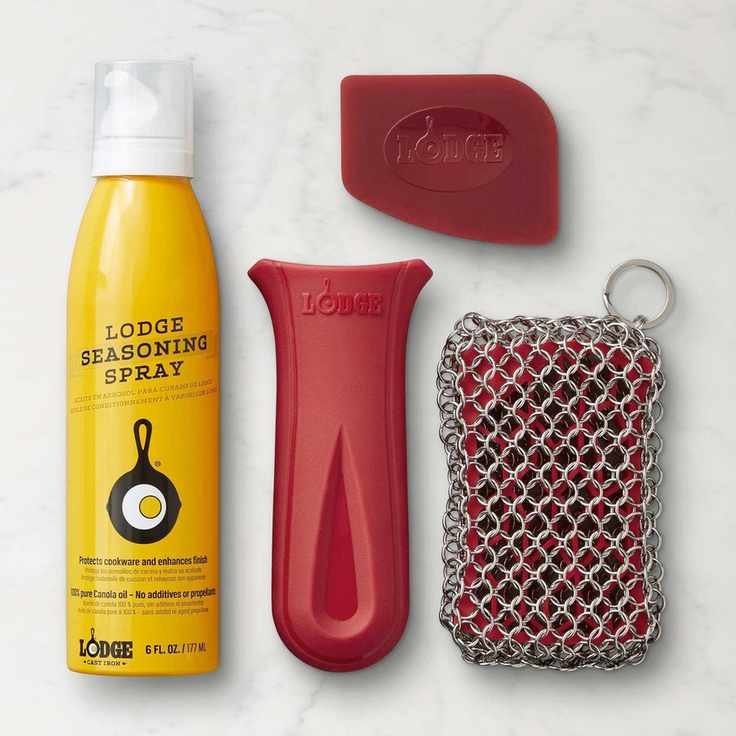 Perfect for beginners
If you’re new to cast iron cooking, this Lodge care kit is an excellent starting point for seasoning and maintaining your pan. It includes a scraper, scrubber, handle cover, and 100% canola oil seasoning spray.



