
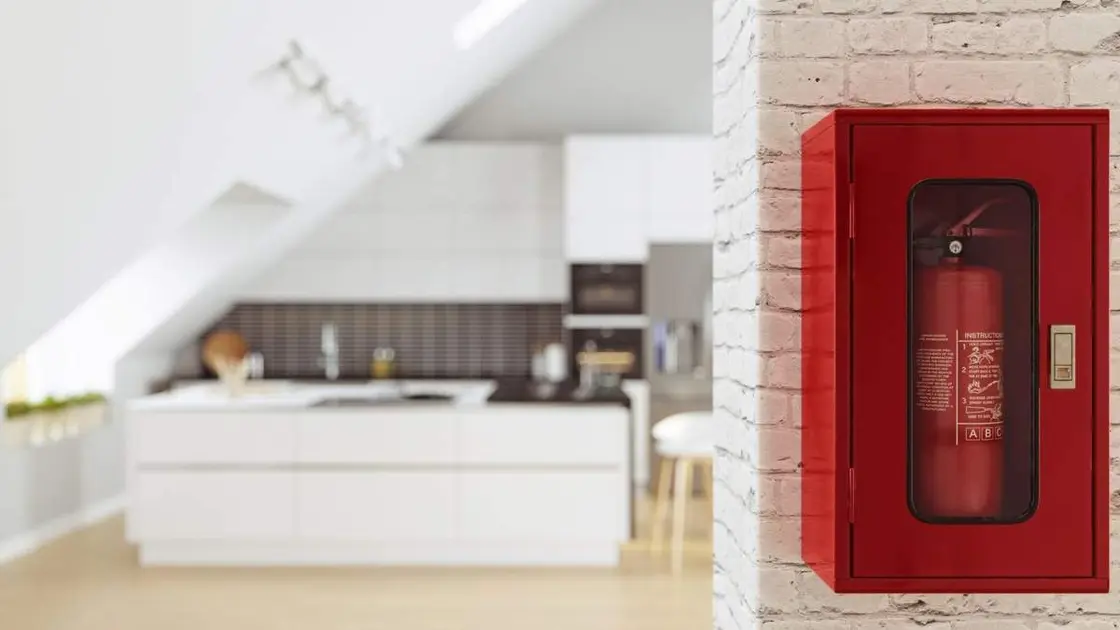
Fire extinguishers play a vital role in safeguarding your home from potentially devastating damage. Do you know how to select the ideal extinguisher for your needs?
In emergencies, using the right type of fire extinguisher correctly can mean the difference between a small, manageable fire and a raging inferno.
With five types of extinguishers and several fire classes to consider, our safety specialists provide guidance on choosing the correct extinguisher for common fire hazards.
What types of fire extinguishers are available?
Whether you enjoy lighting the best candles or tend to be clumsy in the kitchen, every residence should be equipped with fire extinguishers. A moment of carelessness is all it takes for a fire to ignite.
Forrest Webber, owner of Fireplace Distributor, notes the five main types of fire extinguishers:
- Water extinguishers: Ideal for fires involving paper, wood, straw, rubber, plastics, and soft furnishings. They disperse water from a nozzle to cover larger areas and are straightforward, common, and budget-friendly. Some include additives for better performance, though they come at a higher price. These extinguishers are only suitable for class A fires. Purchase water extinguishers on Amazon.
- Dry powder extinguishers: Versatile for fires involving solids, liquids, and gases. Special extinguishers for Type D fires are formulated with metals like lithium and magnesium. The powder smothers the flames and prevents spreading. They can handle class A, B, C, and D fires. Find dry powder extinguishers on Amazon, and baking soda can serve as an eco-friendly fire suppressor.
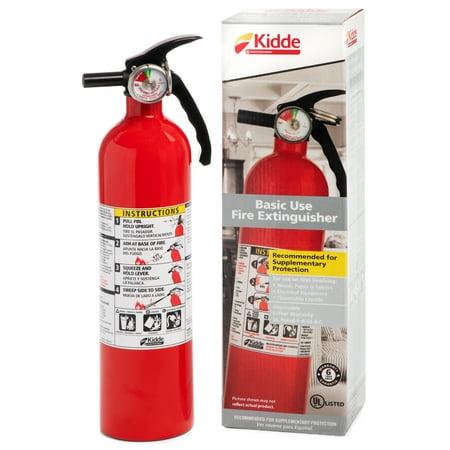 All-purpose extinguisher
Kidde Multipurpose Home Fire Extinguisher
This versatile dry chemical extinguisher has a UL rating of 1-A, 10-B:C (indicating it can manage a small Class A fire and can extinguish a Class B fire up to 10 square feet) and suits the majority of household fires.
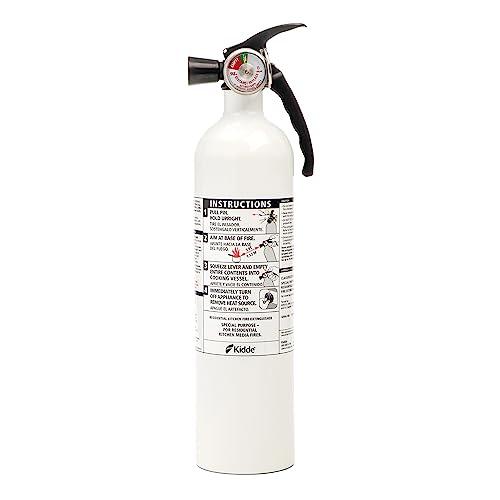 For grease fires
Kidde Kitchen Fire Extinguisher
Designed specifically for grease fires, this extinguisher features a flared nozzle to minimize oil splatter.
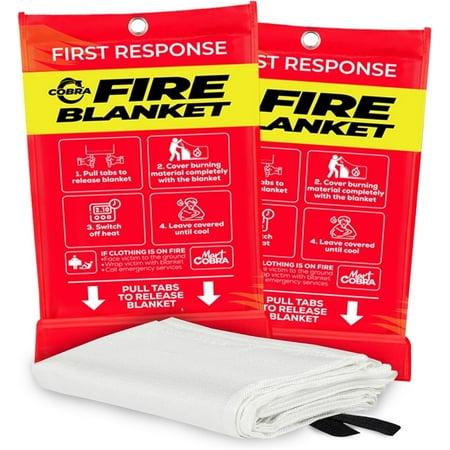 Pack of two
Mart Cobra Emergency Fire Blanket
Fire blankets can quickly extinguish various fires, including those on individuals.
These extinguishers are less frequent in homes but are common in businesses:
- Foam fire extinguishers: Effective on solid and liquid fires, but unsafe for cooking oils or fats. They are typically used for fires involving petrol, paint, or turpentine. Some may work on electrical fires if used from a distance of one meter. Cleanup can be messy, and they are pricier than water extinguishers. Suitable for class A and B fires.
- Carbon dioxide extinguishers: Commonly found in offices, they tackle flammable liquids and electrical fires, like those involving large computer setups. These extinguishers release pressurized carbon dioxide, leaving no residue. They do not damage electrical devices or cause system failures; they work by suffocating the fire. Designed for class B and E fires only.
- Wet chemical extinguishers: Tailored for kitchen fires involving cooking oils and fats. They emit a fine mist that reacts with the oils, forming a barrier that cools and extinguishes the fire. Critical for deep-fat fryers and similar equipment. Meant for class A and F fires only.
Understanding fire classes and their significance
Your choice of extinguisher hinges on the fire type you're confronting. Fires are categorized into six distinct 'classes', which dictate the appropriate extinguishing method. Using the wrong extinguisher can worsen the situation, as Daniel Cabrera, founder and CEO of Fire Damage House Buyer, indicates.
He explains, 'Utilizing the incorrect category of extinguisher can enlarge a fire's size. Employing a Class A water extinguisher on a grease or electrical fire may spread the flames or create electrical hazards. Knowing the right extinguisher type ensures effective and safe fire control.'
Typically, extinguishers indicate their safe usage type through a prominent lettering system. The fire classes are as follows:
- Class A: Fires involving organic materials like paper or coal.
- Class B: Flammable liquids, including petrol and paint.
- Class C: Flammable gases, such as those from gas stoves and heaters.
- Class D: Flammable metals like lithium and magnesium, usually found in batteries (such as in phones or e-bikes).
- Class E: Electrical devices like computers, TVs, and gaming consoles.
- Class K (or Class F outside the USA): Cooking oils, including fats, vegetable oils, and seed oils.
Optimal extinguisher placement in your home

Owning fire extinguishers is great, but if they're hard to access when needed, they lose their value.
According to Daniel Cabrera, 'In kitchens, mount extinguishers away from the stove but ensure they're accessible. In bedrooms, place them near exits or centrally for quick access. In garages and workshops, position extinguishers by entrances or workbenches. In basement/utility rooms, locate them near electrical panels or equipment.'
Forrest Webber adds, 'We can't predict when fires will strike. To stay prepared, it's wise to have an extinguisher on every level. I recommend multipurpose fire extinguishers (ABC-rated) to manage fires involving common combustibles, flammable liquids, and electrical devices.'
For 5lb-10lb extinguishers, Amerex Fork Style Wall Mount is ideal.
Mounting extinguishers near common fire hazards ensures they're easily accessible during emergencies.
Fire extinguisher maintenance

Fire extinguishers are an investment that requires ongoing attention. They should be integrated into your home maintenance routine.
Forrest Webber advises, 'Disposable extinguishers need replacement every 12 years from their manufacture date, while rechargeable ones can last longer with maintenance. Hydro-static testing is required every six years, with full replacements every 12 years if issues are found.
'For water, foam, and dry powder extinguishers, discharge testing and refilling or replacement are due every five years. For carbon dioxide extinguishers, high pressure necessitates hydro-static testing and internal inspection every 10 years.'
Common Questions
Can an ABC fire extinguisher be used in the kitchen?
Yes, an ABC fire extinguisher is suitable for kitchen use, as it can tackle fires from flammable liquids, electrical fires, and combustible materials like wood and paper.
However, it may not be effective against fires caused by cooking oils and fats (such as those from deep fat fryers). For those specific cases, you'll need a Class K fire extinguisher, available on Amazon (Class F outside the USA).
What to do if a fire extinguisher isn't available?
Addressing a household fire without an extinguisher can be dangerous. For very minor fires, you might extinguish them with a thick layer of baking soda. This is particularly useful for small pan fires, unlike water, which can exacerbate the situation. You can also utilize fire blankets, available at Walmart, made from thick, flame-resistant material, to smother flames and eliminate their oxygen supply.
If a fire escalates, always call for the fire service and evacuate the premises immediately.
Fires can ignite anywhere, from electrical malfunctions to storms and unattended candles, presenting a common fire hazard. This emphasizes the importance of having your HVAC systems professionally serviced and ensuring your attic is secure to prevent leaks that might trigger an electrical fire, along with other essential safety measures.



