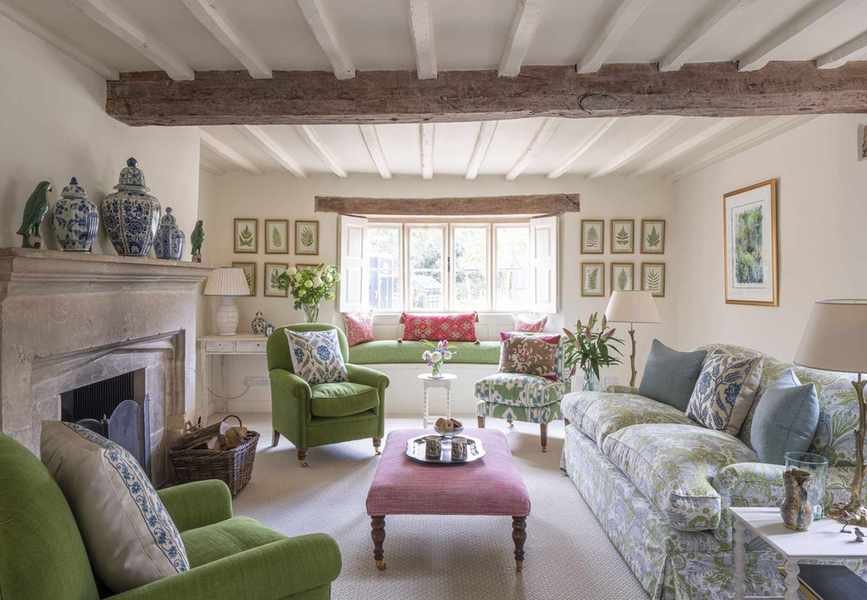
Understanding how to commission upholstery and soft furnishings helps create unique spaces that reflect your style and ensure durability.
From curtains and shades to seating and pillows, the selected fabrics must balance functionality with aesthetic appeal, ensuring they withstand daily use while enhancing the overall look.
Experts share their insights on how to successfully commission upholstery and soft furnishings throughout your home.
Commissioning Upholstery and Soft Furnishings
Investing in custom window treatments, upholstery, headboards, and cushions is worthwhile. Consider both the function and style for results that endure over time. Follow these tips for commissioning upholstery and soft furnishings.
Commissioning Curtains
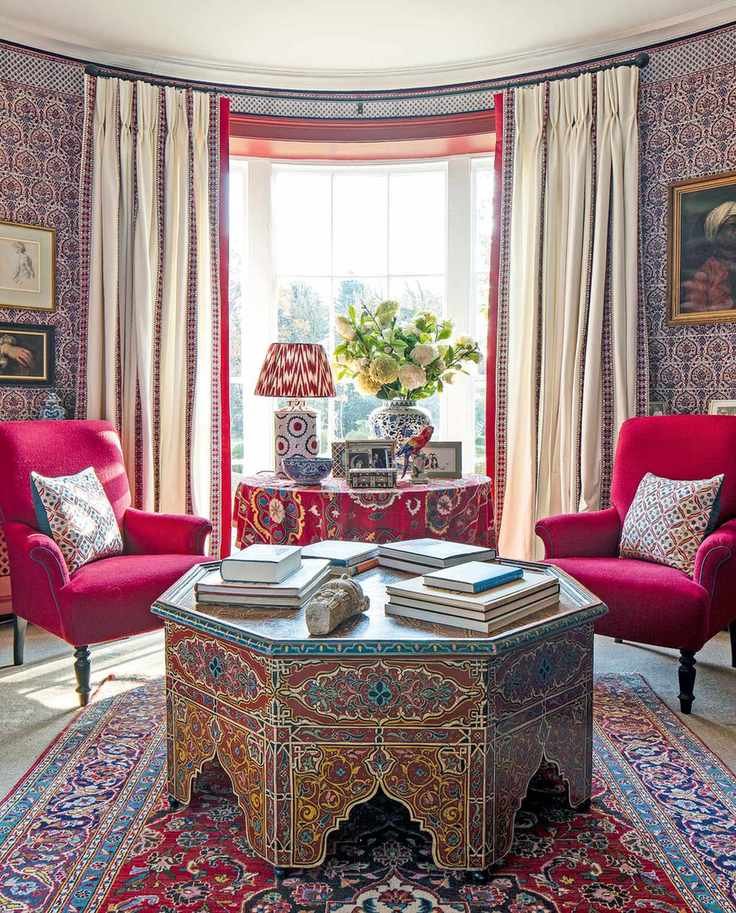
Interior decorator and fabric designer Susan Deliss added a fabric trim to the edges and bases of these curtains, accommodating the needs of pets.
Window treatment ideas can be challenging to commission. Start with a wish list outlining both the functional needs and your visual goals for the space. Combine this with a Pinterest mood board to present to your selected curtain maker.
'Keep an open mind and evaluate the window shape and surrounding area,' suggests Kathryn Seidl from a bespoke soft furnishing supplier. 'If you have a wide but short window, a Roman blind may highlight this. Opting for floor-length curtains can create a more balanced look.'
For bulky radiators beneath windows, long curtains may need adjusting; consider alternatives like blinds, shutters, or fixed dress curtains paired with a functional blind.
'Explore various mounting options for curtains, like covered tracks or pelmets, especially if deep radiators are present. Custom-made timber boards can create the right projection for your curtains.'
Commissioning Privacy and Blackout Solutions
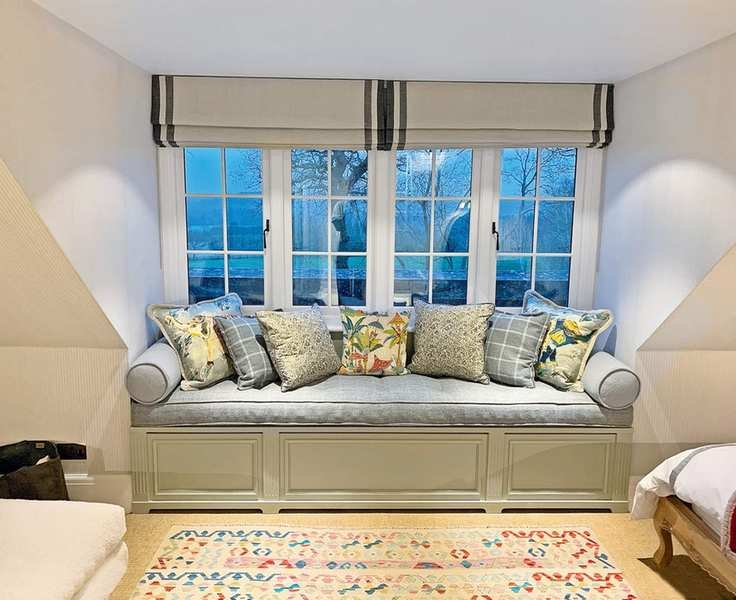
High-quality curtains and blinds can provide insulation, particularly beneficial in period homes with large single-glazed windows, like this window seat design.
In nurseries, it's crucial to ensure complete blackout. For this, consider layering a blackout roller blind under curtains, as suggested by experts. Address privacy concerns early in the process, advise designers Ali Johnson and Alex Keith.
'Solutions should cater to varying daylight needs. Roman and sheer blinds are versatile options; sheer curtains soften any space, especially in rooms that face strong sunlight.'
Natural materials like linen, wool, cotton, and silk lend themselves well to softer looks, particularly in older homes with uneven elements. Lucy Bathurst, an interior designer and curtain maker, specializes in antique textiles and suggests that natural fabrics can beautifully catch light when draped.
For a relaxed style, ask your curtain maker to add an extra 2 inches (5 cm) to the curtain drop for a pooling effect.
Budgeting for Curtains and Blinds
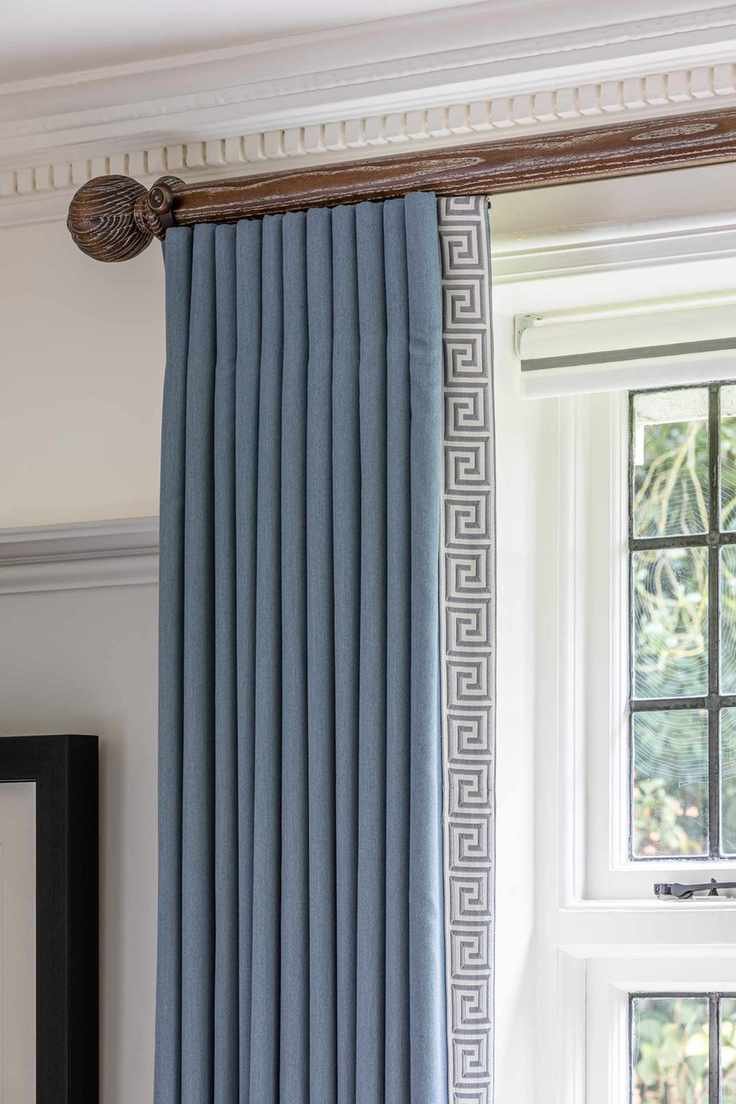
Plain Roman blinds or curtains can be enhanced by adding a pelmet or embroidered trim, as seen in this project by Otta Design.
To save on fabric costs, ask the curtain maker to use an extra-wide border of a more expensive fabric along the leading edge, with a simpler main section. This approach can also help conceal sun-bleached areas.
'A covered lathe and fascia can be a cost-effective alternative to a corded pole, especially for bay windows,' notes Ali. 'Pelmets or trims can elevate basic Roman blinds as well.'
Commissioning Upholstery
'Comfort is key when upholstering new or vintage seating,' states interior designer Fran Hickman. 'Practicality should not compromise aesthetics, so consider details like the location, surrounding elements, and intended use.'
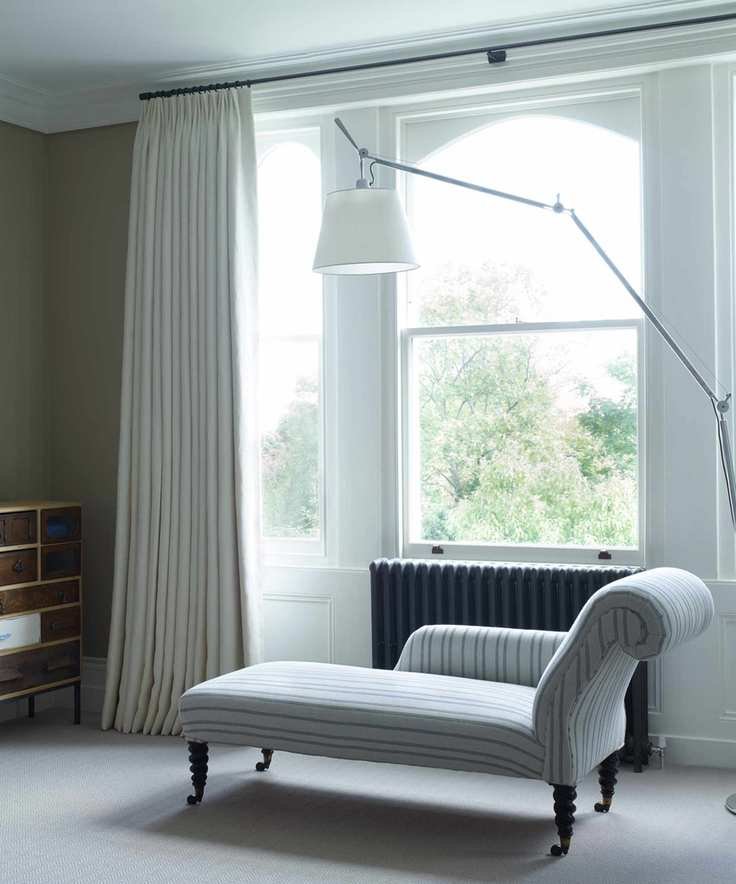
'For seating upholstery, think about the room and its users, especially if kids are involved. Determine what parts of the seating will be visible and which will endure more wear. For example, a banquette might feature different fabrics for the seat and back, with diverse scatter cushion designs.'
'Be creative with upholstery choices. You can energize a space by using different colors for each chair or selecting varying shades of a single color for a cohesive yet dynamic look.'
'It's wise to use industry bodies, such as the AMUSF, to connect with qualified upholsterers,' she adds. In the U.S., check for local professionals through the National Upholstery Association.
'I often incorporate restored antique seating into my designs. Online auctions are a fantastic way to find unique pieces at better prices. We collaborate with restorers like Titian Studios to rejuvenate these treasures.'
Commissioning Ottomans
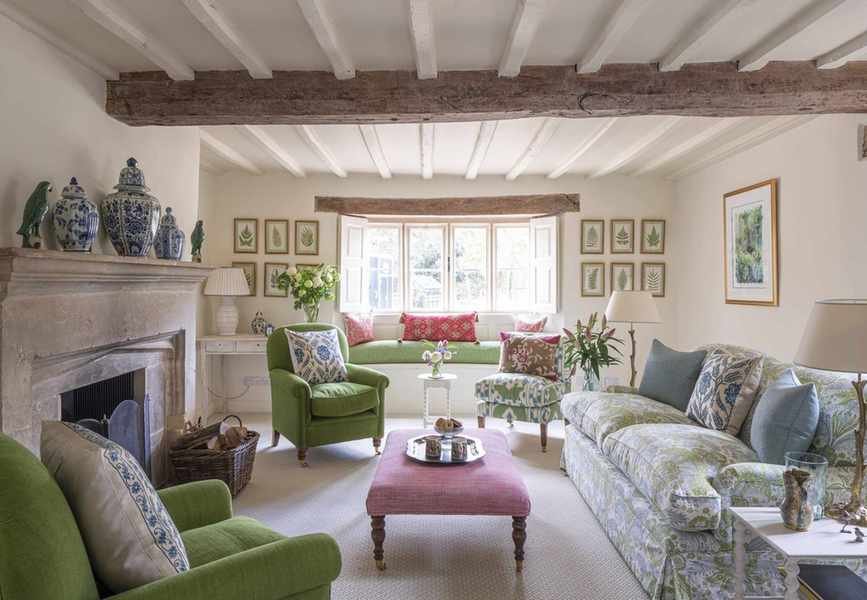
Choose generous cushion sizes and different shapes to add character to your room, as shown in this living area designed by Susan Deliss.
A frequent mistake in ottoman specifications involves size, says Susan Deliss. Careful planning is essential.
'If uncertain about the ottoman's size, fold a sheet to your desired dimensions and place it in front of your furniture. Check if you can walk comfortably around it and if your feet can reach it when seated.'
Commissioning Headboards
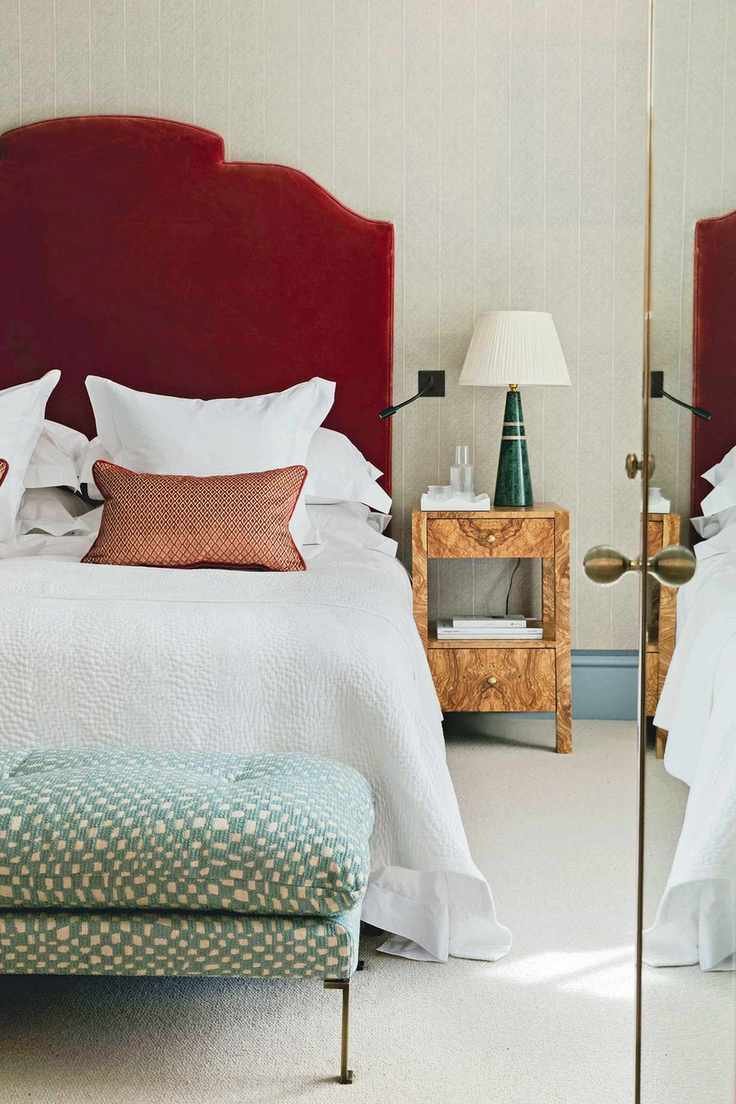
For headboard designs, mimic architectural shapes in the room and add padding for a more sculptural appearance, advises Tiffany Duggan.
Whether opting for a bold or low-profile headboard, the design significantly influences the bedroom's ambiance. Tiffany suggests looking at architectural features for inspiration and emphasizes the importance of scale sketches to communicate your vision to the upholsterer.
Measure the room's height and include a pillow stop for a neat finish at the mattress junction. 'Aim for symmetry with two smaller fabric panels beside a larger center panel,' Tiffany advises, recommending against overly thin, square headboards; adding padding can create a softer, more inviting look.
Commissioning Pillows
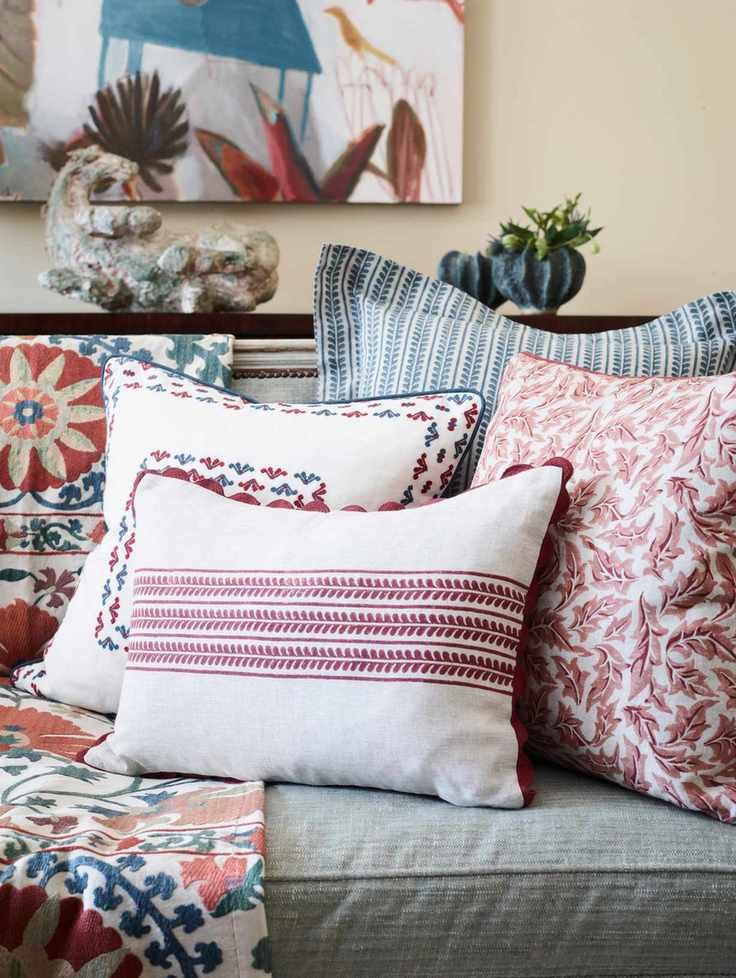
When selecting pillow sizes, avoid the temptation to go too small. 'Opt for larger sizes,' advise Audrey Carden and Eleanora Cunietti. 'Standard sizes like 45cm x 45cm (18 x 18in) can limit the impact of patterned fabric.'
Where to Source Fabrics
'I frequently work with textile companies like Turnell & Gigon, Holland and Sherry, Kvadrat, Pierre Frey, and Décors Barbares for upholstery needs,' shares Fran. 'For higher-end projects, I collaborate with textile designer Merry Mullings in France for stunning rugs and fabrics.
To stay updated on fabric trends, I enjoy visiting fabric houses in Paris with my team. Although there are showrooms in the UK, the experience of exploring the charming streets of Paris while browsing different shops is truly delightful.'