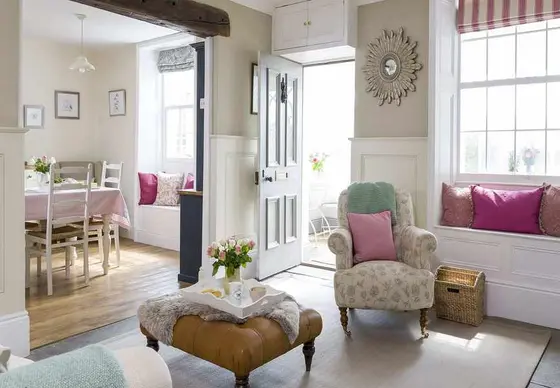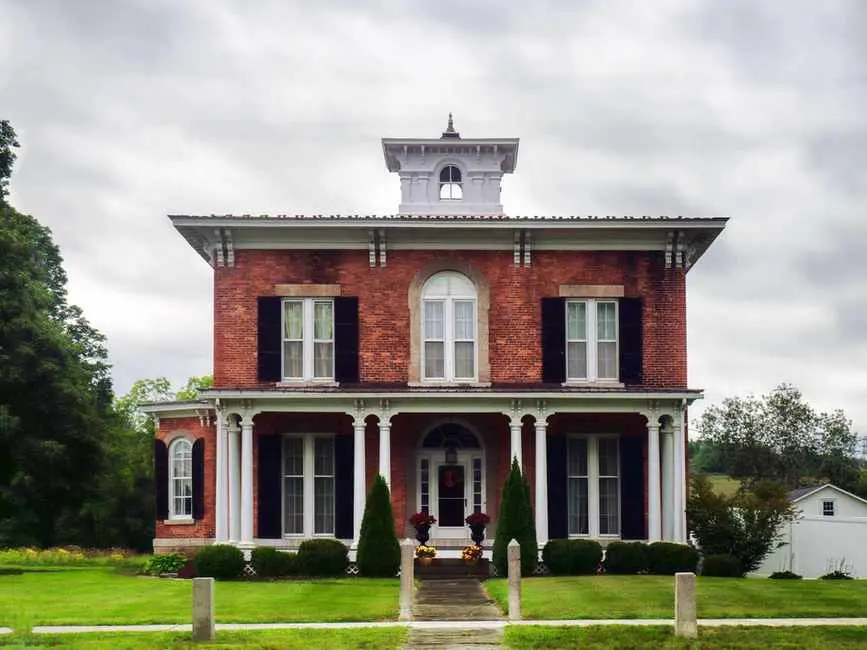
American Foursquare houses are designed for working and middle-class families, prevalent throughout the United States. While variations exist regionally, they typically showcase broad porches and well-arranged rooms, often with multiple bedrooms and located in suburban areas.
If the Foursquare style intrigues you, you're not alone; notable figures like Bill Clinton, Diana Ross, and Ernest Hemingway were all raised in these homes.
Let's explore the defining features of this iconic house style.
What Defines an American Foursquare?
This architectural style is a two-story, cube-shaped dwelling characterized by a full or partial front porch, a hipped roof, double-hung wooden windows, and dormer windows in the attic.
Both the overall structure and individual rooms are square, earning it the name, though it's sometimes referred to as the Prairie Box. This cubic design maximizes every square foot.
When Were Foursquare Houses Built?
‘The American Foursquare gained popularity at the end of the 19th century and into the early 20th century, spanning roughly from the mid-1890s to the 1930s,’ explains Christina Dikas, an architectural historian.
‘Influenced by styles like Queen Anne and Classical Revival, it shares features with the contemporary Prairie School and Craftsman bungalows. For instance, the porch posts on Foursquares may feature Classical columns, Craftsman-style tapered posts, or simple square posts.’
Where Are These Homes Located in the US?
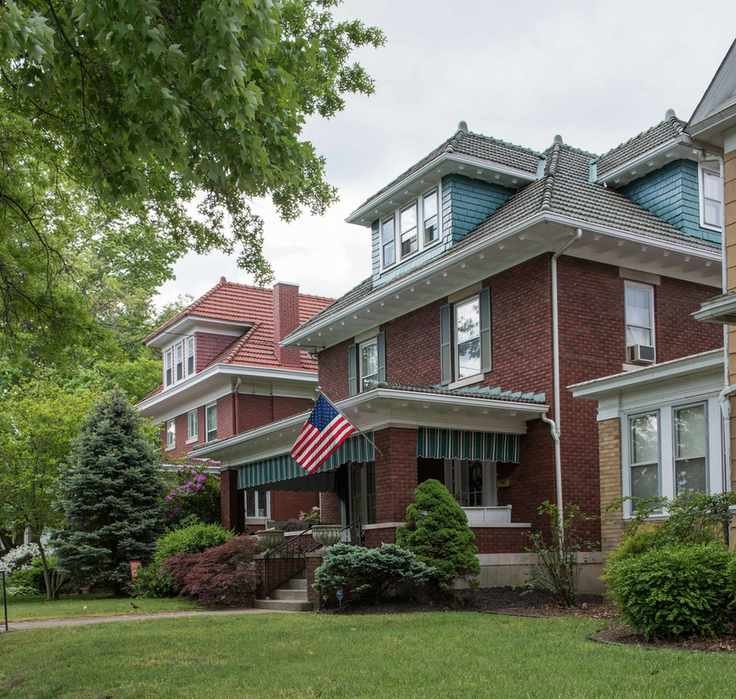
American Foursquare Homes were constructed nationwide. Christina notes that this is partially due to their availability as kits.
‘Much like Craftsman bungalows, these compact and straightforward designs were marketed as kit homes through mail-order catalogs, including Sears-Roebuck and Aladdin,’ she says. ‘Their popularity coincided with the emergence of streetcar suburbs, making them common in neighborhoods just outside urban centers, although they also appear in rural areas.’
What Materials Were Used and Are There Regional Variations?
‘Typically, American Foursquare houses are built from wood or brick, with some wood-frame options clad in stucco,’ Christina explains. ‘Less commonly, some Foursquares are constructed from concrete block.'
‘The materials often reflect the region where these houses were built. For example, brick is more prevalent in the Eastern, Southern, and Midwestern states than in the West, where wood is the primary material. Many feature rear enclosed sunrooms or enclosed front porches, especially in areas with severe winters.’
In the South, fine examples of Foursquare homes are abundant. ‘They usually boast spacious rooms, generous window areas, and the quintessential Southern feature: a porch that extends across the front,’ says Kareena Gray, a renovation director. ‘Charlotte is home to many neighborhoods showcasing this style, and these Foursquares are truly impressive.’
What Makes Foursquare Homes Popular Today?
‘These houses embody a classic American architectural style, characterized by their detached single-family design and front porch culture,’ Christina states.
‘Often situated in charming early 20th-century neighborhoods with tree-lined streets, their locations in streetcar suburbs provide easy access to urban employment and amenities.’
How to Modernize Foursquares While Preserving Their Character?
‘Like many homes from this time, Foursquare kitchens were often small, dimly lit, and tucked away,’ Kareena explains. ‘In one of our projects, we merged two parlors into a spacious butler’s pantry, kitchen, and family room, adding a rear expansion. The cabinetry was designed to mimic built-in furniture, maintaining the original aesthetic, and we incorporated hand-painted florals onto the refinished flooring to enhance the home's character.
‘Not every client desires to recreate all the historical charm, but there's a way to respect the past while introducing modern elements.
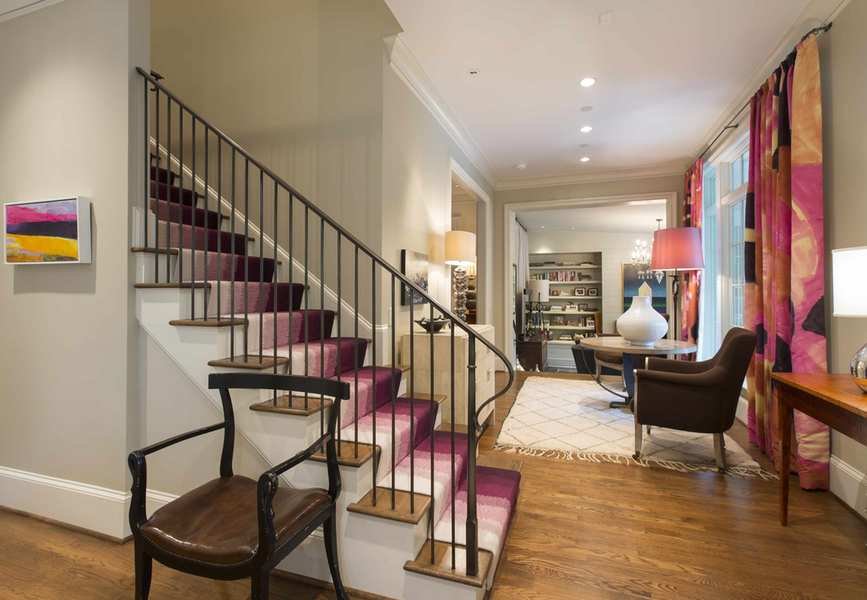
‘We've noticed a trend towards sleek iron railings instead of bulky balusters and newel posts. These contemporary designs offer a fresh take on stair railings. To maintain balance with modern touches, consider retaining or adding picture molding in the stairwell. Attention to detail is key to thoughtfully modernizing while honoring the home’s history.’
What to Consider When Buying an American Foursquare Home
‘The term “Foursquare” not only refers to its cubic shape but also its floor plan, which typically includes four rooms—one in each corner,’ says Christina. ‘This often consists of three square rooms—living room, dining room, and kitchen—on the ground floor, with a stair hall in the fourth corner, and stairs discreetly placed to the side.
‘The upper level usually contains three bedrooms and a bathroom in one corner, although some homes feature a bathroom near the stairwell on the ground floor or between two bedrooms for additional space. While some designs include a central entrance and hallway, this layout is less space-efficient than those with side stairs.
‘Buyers should look for appealing front porches, spacious entry stair halls, and fireplaces. Well-preserved Foursquares often feature hardwood floors and quality woodwork, including window and door frames, paneled doors, turned stair newel posts, and wainscoting. Leaded glass windows and built-in cabinets were also common in early 20th-century homes.’