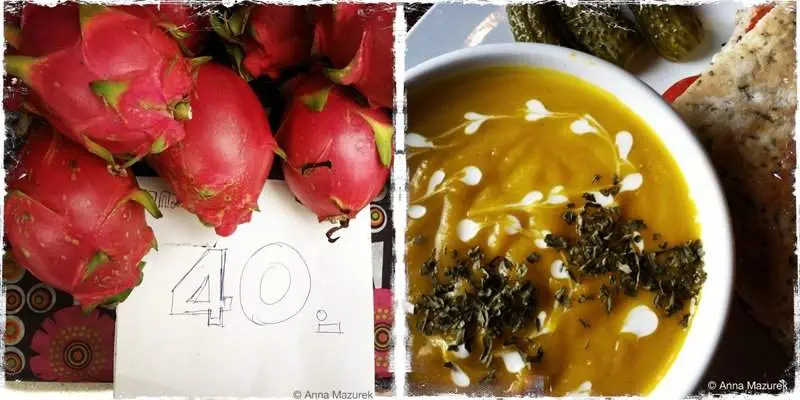
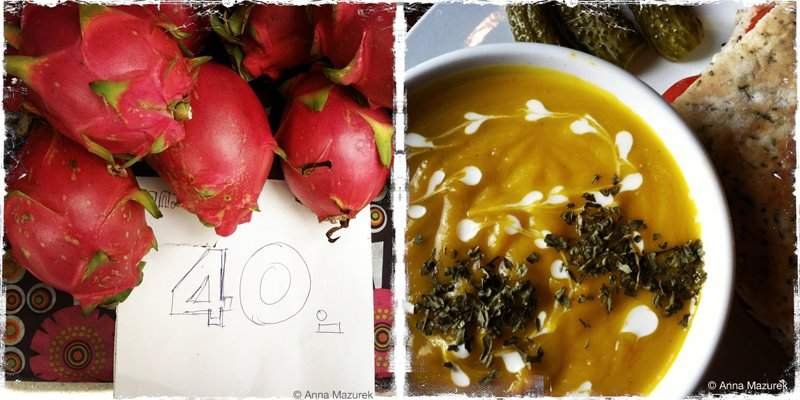
Left: Dragon fruit is a bargain in Thailand's street markets. Right: Pumpkin soup at JOMA Bakery, my go-to cafe in Laos!
Food is often my largest expense when traveling. I might pay $4 for a night's stay and then $15 for breakfast. I'm passionate about good food. Fortunately, fresh, high-quality ingredients are often cheaper abroad since they're sourced locally rather than shipped long distances.
Dine Where the Locals Eat
If a restaurant is packed with tourists, chances are it won't be budget-friendly. Local eateries and street food joints typically offer the best meals at lower prices. For example, you can enjoy a meal at a street market in Thailand for just a couple of dollars. In Mexico, a street quesadilla is only $1.50. Seek out vendors with crowds of locals — that's usually a good sign! (Street food is generally safe, but exercise caution in India.) Ask your accommodation for recommendations on where locals dine.
Explore Food Courts
Fancy malls in Bangkok feature amazing food courts filled with delicious stalls, with meals priced under $2. Steer clear of the sit-down restaurants surrounding these areas. Even in upscale Singapore, large hawker centers allow you to enjoy meals for under $5 and refreshing juices for $1.50.
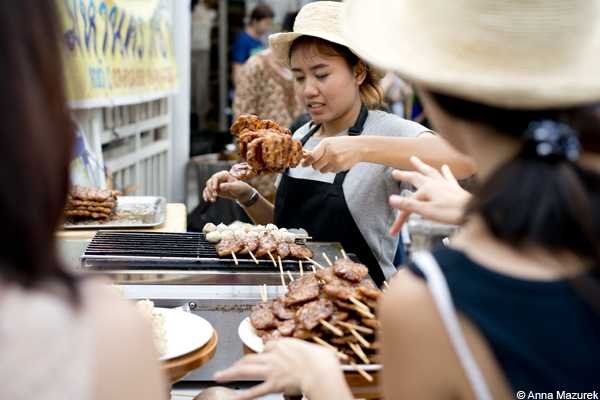
My favorite Thai street food includes chicken and pork skewers drizzled with sweet coconut sauce, costing only 30 cents each! I usually have two skewers and two bags of sticky rice for dinner, totaling just $1.
Opt for Water Instead of Soda
Choose water or fresh juice over soda for a healthier and more economical choice. Fresh juice typically costs around $1 per glass in Asia and Latin America.
Bring a Water Filter
Invest in a water filter and avoid the cost of single-use plastic bottles, which harm the environment. I recommend Sawyer's Mini Filter — it's compact, affordable, and user-friendly. I've relied on it for months while traveling in Central and South America. Pair it with a quality insulated reusable water bottle like Klean Kanteen. Stick to BPA-free or aluminum options, as stainless steel is easy to clean and keeps drinks colder for longer.
Both the filter and bottle can save you a lot in airports. In Mexico, bottled water at the airport was five times the cost of filtered tap water.
Take Advantage of Free Breakfast
Seek accommodations that provide complimentary breakfast. Always check what's included. I recently emailed two hostels in Medellin, Colombia, to ask about their breakfast offerings. The one with the best options will get my booking. Hostel reviews often highlight breakfast quality, so read them carefully.
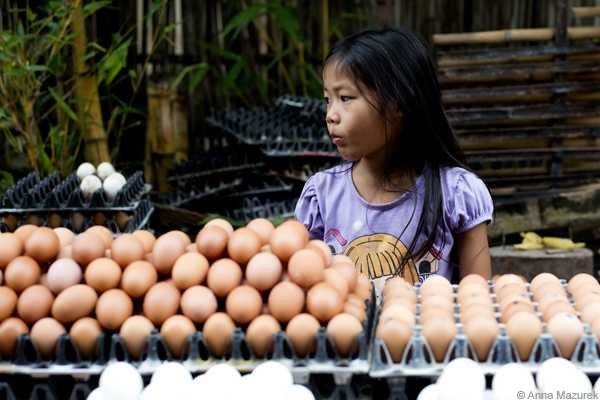
I love that street markets worldwide sell eggs individually. This is from the morning market in Luang Prabang, Laos.
Cook Your Own Meals
Many hostels are equipped with full kitchens. I cooked dinner every night for a week in Oaxaca, Mexico, with friends from the hostel. Each of us spent only $2 per night on local market ingredients, enjoying hearty meals packed with fresh vegetables and homemade tortillas. One of the joys of traveling is being able to buy just what you need!
Peanut Butter for the Road
Peanut butter is a lifesaver for long bus rides or early mornings. Food at transit stations can be overpriced and unappetizing, often leading to foodborne illnesses. Prepare a peanut butter sandwich for your journey, and treat yourself to a nice meal upon arrival. Purchase a jar of natural peanut butter at Trader Joe's or Whole Foods for around $3. Look for local honey and bananas at street markets for added flavor. I grab local bread for sandwiches on the train. Skip the ramen — it's unhealthy and unappetizing.
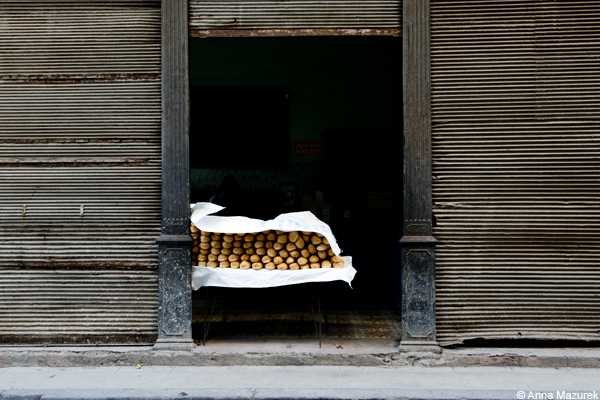
There's always a local bakery nearby for fresh bread.
Tip Generously
Being on a budget doesn't mean skimping on tips. Factor tipping into your dining budget. Guidebooks provide insights into appropriate tipping customs for restaurants and taxis. Many people rely on tips for their livelihood, especially in regions with less stable economies.