

Explore the potential of a white garden, where various greens and grays complement a spectrum of white blooms—from ivory to subtle blues. This monochromatic scheme offers a calming, timeless elegance suitable for both modern and traditional settings.
When planning a white garden, consider the flower types and evergreen shrubs needed for year-round interest. This scheme shines in small or narrow gardens, where the reflective qualities of white flowers can brighten shaded areas.
White Garden Inspirations

Key elements of a white garden include thoughtful flower bed arrangements and evergreen structures. A white palette can create a striking effect in a smaller space.
1. Create a Strong Layout

A solid layout is essential for a successful white garden. At Sissinghurst, designed by Vita Sackville-West, the formal arrangement features paths and box hedges that maintain structure throughout the year, regardless of flower bloom.
White flowers are harmoniously integrated with evergreen borders in this landscape. Topiary can add distinctive shapes and contrasts among the blooms.
2. Vary Texture and Form

Prevent monotony by mixing plant heights and forms. Tall flowers create visual impact, while lush blooms, like peonies, add depth. Planting in groups enhances the overall effect.
3. Dense Planting
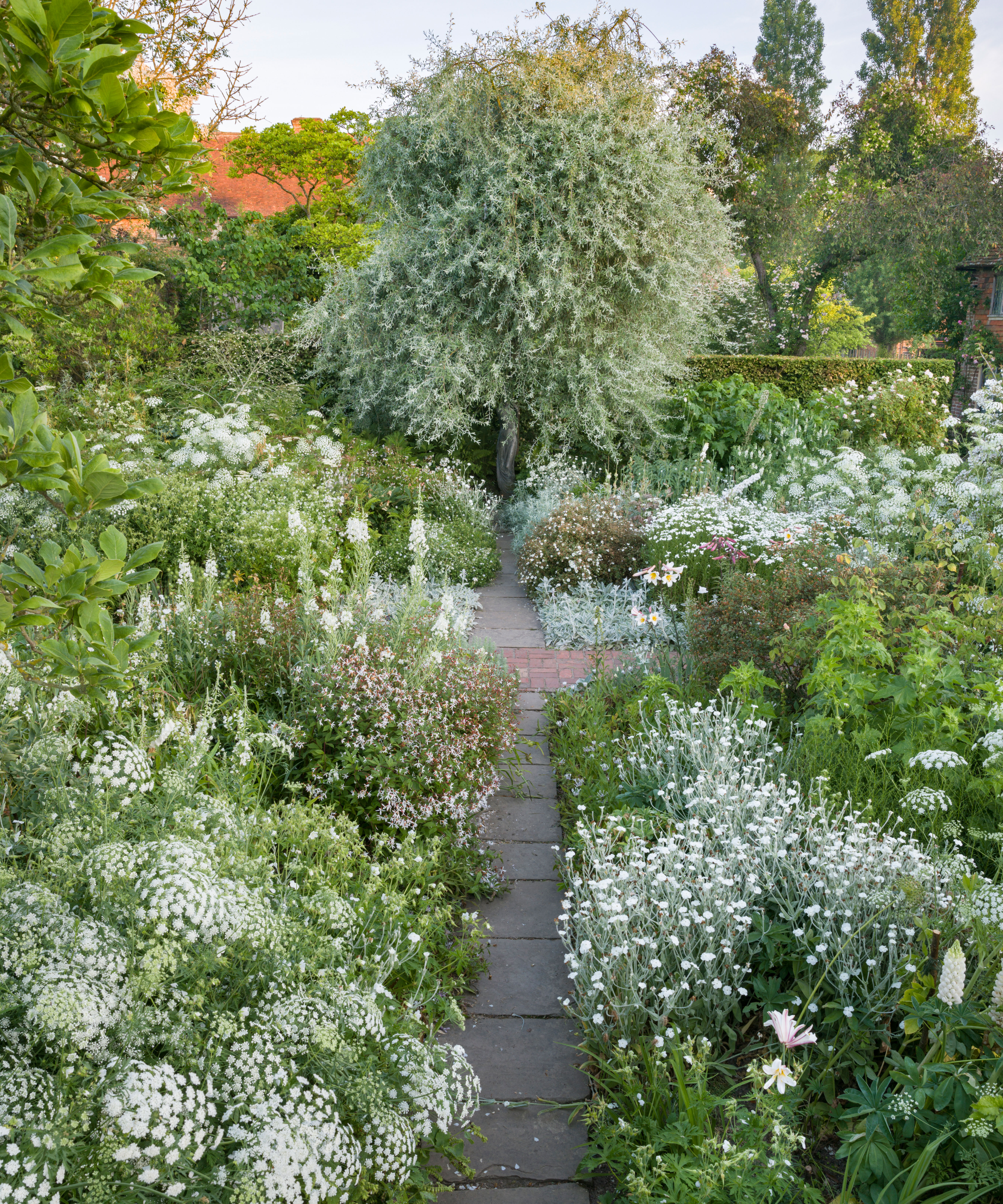
For a striking presence, densely plant flowers. Following the philosophy of “cram, cram, cram,” ensure plants complement rather than compete. This approach creates a rhythm and visual interest across the garden.
4. Establish a Mood

Utilize white flowers to foster a clean and soothing atmosphere. Incorporating plants like cow parsley can enhance tranquility. Consider the emotional impact of whites, which can shift from cold to warm with subtle color variations.
5. Incorporate Foliage

Foliage is crucial in a white garden. Dark-leaved shrubs and evergreen topiary provide contrast and depth. Variegated plants can illuminate darker corners, enhancing the garden's overall appearance.
6. Utilize Walls

Vertical space can be maximized with tall flowers and climbing plants. Incorporate climbers like wisteria and clematis to create drama against brickwork and add dimension to your garden.
7. Ensure Year-Round Interest
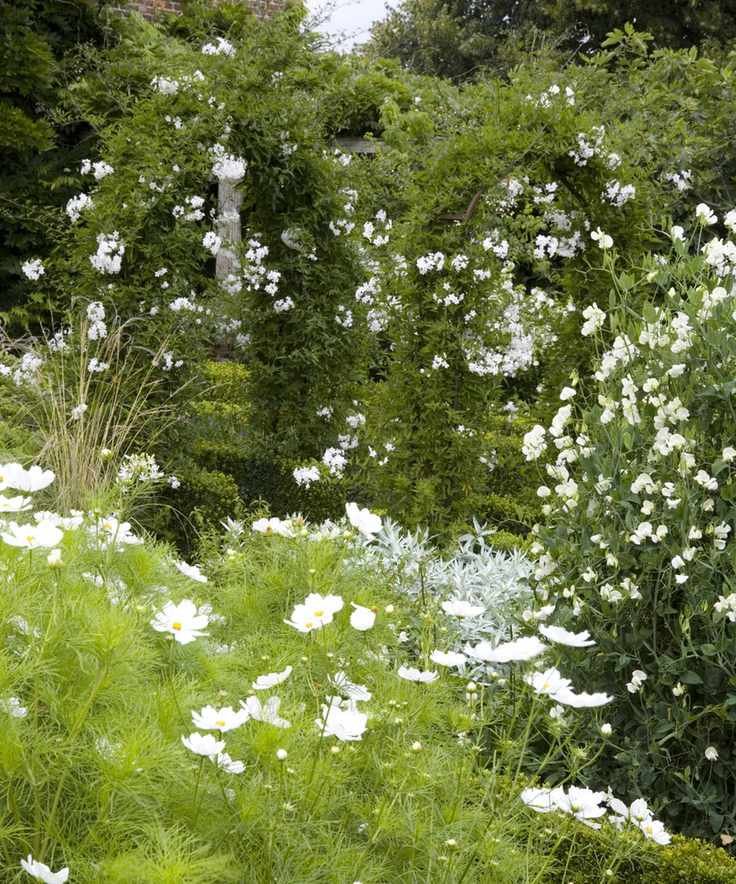
Plan for continuous blooms by staggering plantings. Start with early spring bulbs and intersperse with repeat-flowering roses for enduring color across seasons.
8. Mix White Shades

Combining shades of white can create depth. Ensure contrasting foliage allows for seamless integration of various white blooms without appearing mismatched.
9. Surround Seating Areas

White flowers shine when planted near outdoor dining areas, enhancing the evening ambiance. Strategically placing blooms around patios can elevate the overall outdoor experience.
10. Choose for Sun and Shade

Understanding sunlight patterns is vital for selecting white flowers. Some varieties thrive in full sun, while others prefer dappled light, ensuring a harmonious garden palette.
How to Design a White Garden?
To create a white garden, plan for various white flowers that bloom throughout the year, focusing on different textures and heights.
How to Form a White Border?
Mix different heights and forms of white flowers for a cohesive border. For shaded areas, consider:
- Dicentra spectabilis ‘Alba’
- Astrantia major ‘Large White’
- Digitalis purpurea ‘Alba’
- Galanthus
- Hosta ‘Fire and Ice’
- Helleborus ‘Niger'
- Hydrangea arborescens 'Annabelle’
- Aquilegia vulgaris 'Nivea'
- Anemone x hybrida ‘Honorine Jobert’
For sunnier spots, consider:
- Agapanthus africanus ‘Albus’
- Anemone Wild Swan
- Lychnis coronaria ‘Alba’
- Dianthus ‘Mrs Sinkins’
- Allium stipitatum ‘Mount Everest'
- Echinacea purpurea ‘White Swan’
- Penstemon ‘White Bedder’
- Cistus x hybridus
- Centranthus ruber ‘Albus’



