

A woman in her early 60s entered my office, anxious about her retirement savings. Preparing for a difficult discussion, I glanced at my screen. The retirement balance appeared, and I was shocked. I informed her of the amount, indicating it was sufficient for multiple retirements given her income. Her expression changed to one of joy and disbelief. Beneath her balance was a savings rate: 15%. Curious, I asked when she selected that rate and why. She had no clue. Had she ever felt the absence of that 15%? No, she had never noticed it leaving her paycheck.
This is the outcome I envision for every woman—to choose to save 10% (or more) for retirement and one day find herself ready to retire.
Sadly, this isn't the reality for many across the nation. We're facing a retirement crisis that seems unending for several generations. For every story about accidental savers, there are likely fifty who are unintentional under-savers. I was among them. When I enrolled in my first job's retirement plan right out of grad school, I was unsure how much to contribute. In a rush, I noted down 5%, thinking I'd change it later.
As Thaler and Sunstein discuss in Nudge: Improving Decisions About Health, Wealth, and Happiness (Penguin, 2009), I fell into the 90% of individuals who never alter their election, for better or worse.
Many believe retirement saving is reserved for finance experts or those with advanced education. I stand to challenge this misconception; my decision-making came even with a Harvard master’s degree and coursework in equity analysis at MIT.
What should I have chosen? 10%. In my haste and excitement of starting my first job, I should have instinctively selected 10%, the figure that every new professional in their early 20s should aim for (with some adjustments for those tackling debt or those earning above average).
Countless women in our retirement initiatives share that no one ever advised them about this. If only we had informed them at the start of their careers, when saving 10% would have sufficed. Now, to catch up, they must save 20% to 30% or more, necessitating significant lifestyle adjustments.
And for younger women? It’s simple—just ask, and they’ll fill in the blank with 10%. Just. Like. That.
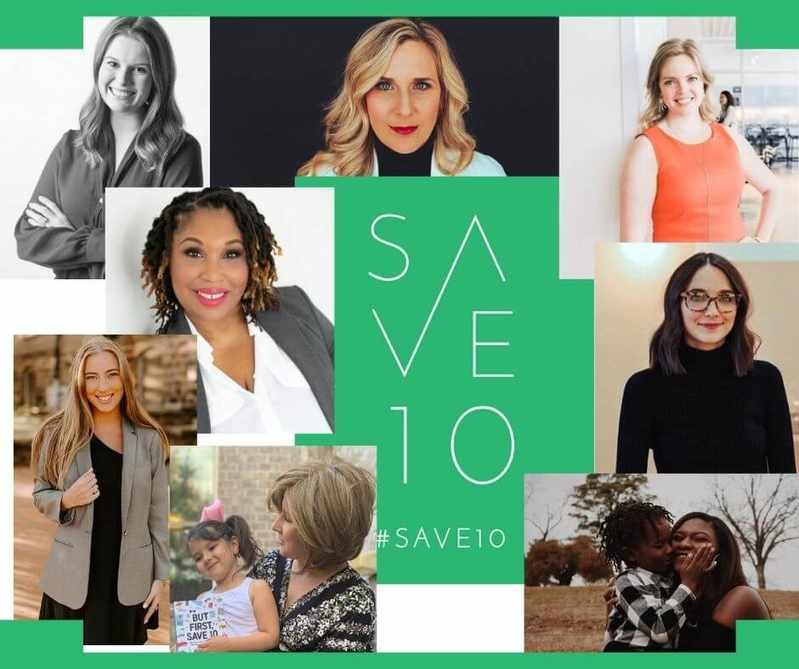
This inspired the movement encouraging women to commit to saving 10%. In 2019, my co-founder and I partnered with a local women’s foundation to create a plan—let's personally encourage 10,000 women to save 10% for their futures.
Our ambitions are grand. The foundation quickly agreed to support this initiative, and we set an official launch date of October 10—when we would invite women across the state to pledge to save 10% in their retirement accounts.
We encourage women to participate in the Save10 challenge, committing to save 10% for life, primarily through group presentations led by dedicated volunteers. They are also encouraged to share their commitment on social media with badges displaying their participation and join a Facebook group named Save10 to discuss financial matters.
At its essence, Save10 is about education. Ryder Buttry, age 25 and badge #34, shared, “Thanks to Save10, I’ll be saving 10% of my income from the moment I’m eligible. Those years I could have wasted contributing less will cost me dearly when I retire.”
Every Save10 session includes a call to action, which is the key to our success. Shana Graves, age 37 and badge #120, achieved 10% and opted to automatically raise her contribution by 1% each year, opened an IRA for additional savings, and continues to build her emergency fund. She stated, “Having a community of women discussing saving made a difference. It’s something we’re often not encouraged to do, especially in the south. For black southern women, talking about money isn’t seen as acceptable.”
Then there's Ashley Jeffrey, age 27 and badge #463. After attending a Save10 keynote at a conference, she approached our team, eager to raise her contribution from 2% to 10%. Several months later, I was pleased to hear she hardly felt the impact. “During the talk, I realized how often women prioritize everything but themselves. We can’t afford to neglect our retirement savings.”
Our network of savers fosters positive accountability. Maddie Brodell, age 24, badge #177, noted, “Women are stronger together. If we can motivate each other to stick to diet or fitness goals, why shouldn’t we do the same for our financial aspirations?”
Kate Pendergast, age 22, badge #462, emphasized, “Most people my age feel anxious and uncertain about investing and retirement savings, but they’re open to discussions. Once we break the financial ice, it becomes a regular part of our conversations—right alongside new engagements and restaurant recommendations.”
My co-founder, Stephanie Matthews, badge #1, shared what makes Save10 effective: “Women want to discuss money, not in conventional manners but in ways that inspire action that changes our lives. Save10 will transform how women approach their finances for generations.”
Anna Beth Gorman, executive director of the foundation, badge #112, has highlighted the Save10 mission within the broader context of addressing the gender wealth gap. “This gap won’t resolve itself. We need strategic solutions to dismantle the economic barriers women face in achieving financial security.”
In essence, together, women can guide us through this crisis, starting with the 10% pledge. I challenge every reader to embrace the Save10 initiative. If you’re already saving 10% or more, share your success and earn your badge. If not, commit to saving 10% and join this swelling movement of women supporting one another.
In July, my book But First, Save 10: The One Simple Money Move That Will Change Your Life was published. I’m thrilled that this book will allow us to reach more women and inspire them to make this transformative choice. Ten percent of my royalties will support the Save10 movement.
It’s time to address our national retirement crisis. Will you join us? Together, we can pave the way.
- 6 Important Factors to Consider Before Filing for Social Security
- Essential Steps: Where to Open an IRA and How to Set Up an IRA
- Utilizing an HSA to Enhance Your Retirement Savings
- Ensure Your 401(k) is on Track



