
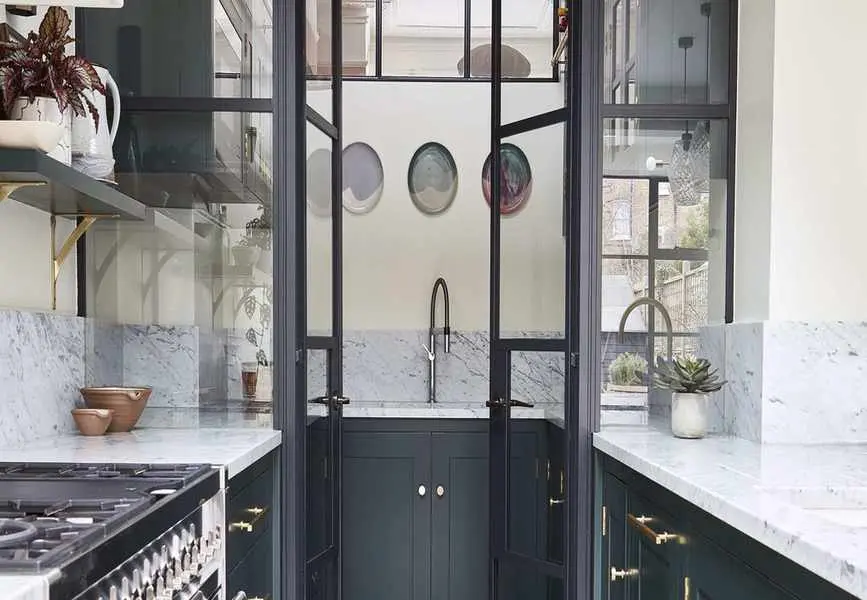
A back kitchen refers to a traditional kitchen layout, akin to a scullery or a chef's kitchen. It's a separate space adjacent to or below the main kitchen, designed for practical tasks.
This area often handles meal preparation and cleaning dishes, keeping the main dining area organized and inviting.
Though it's gaining popularity again, the back kitchen is not just for grand homes with staff. Nowadays, it functions like an enhanced pantry, offering extra storage, a sink, and a place for larger appliances such as a second fridge or a microwave. It's a luxurious yet functional addition.
We consulted designers to uncover the essentials of a back kitchen, its advantages, and the space required to incorporate it into your home.
Understanding the Back Kitchen
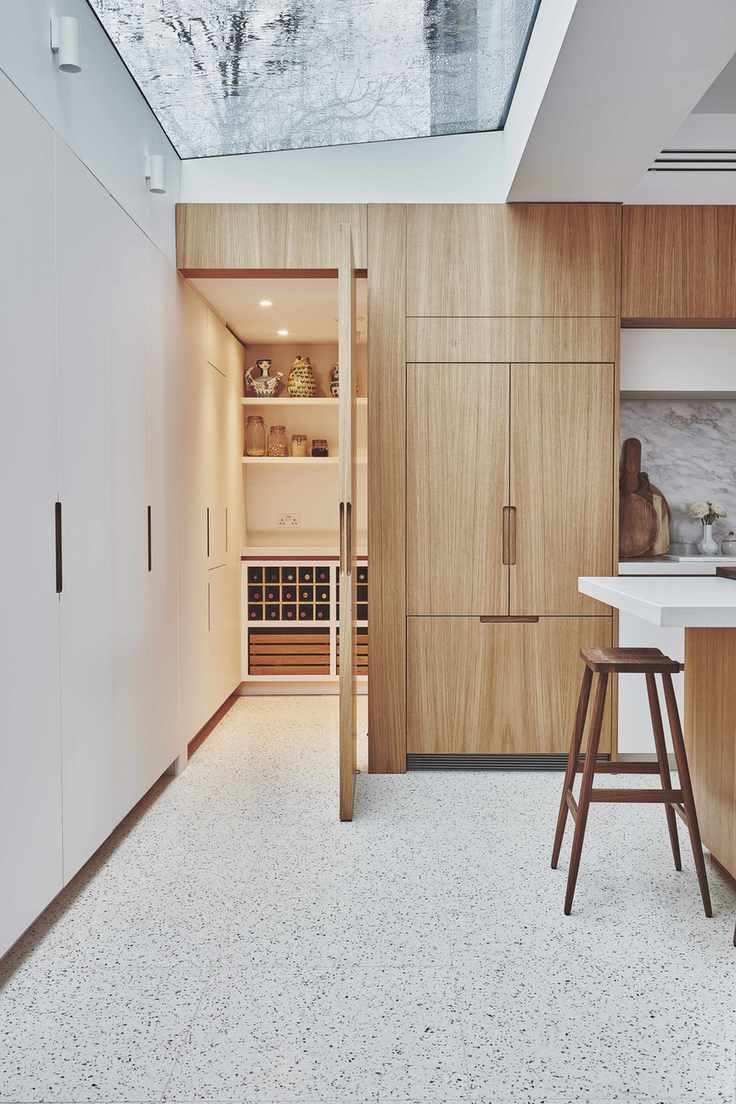
Rhiannon Phenis, Head of Design, explains, "The back kitchen's primary role is to manage tasks like washing dirty dishes and messy cooking. It's versatile, serving as a pantry, meal prep area, or snack preparation space."
Although this concept is quite traditional, designer Kathy Kuo notes that recently it has gained traction, especially in new homes. She states, "A back kitchen allows you to focus on making your main kitchen aesthetically pleasing while keeping practical elements out of sight."
Similar to a butler's pantry, a back kitchen often stores food and kitchen appliances, while also managing less glamorous food prep tasks. You can also include an extra fridge or wine cooler here.
This space can double as a utility room, accommodating laundry appliances too.
Julia Brown, Design Director, emphasizes, "Having an adjoining room for laundry and storage keeps the main kitchen organized, which is especially valuable in open-plan designs. This arrangement simplifies daily family life and entertaining."
Benefits of a Back Kitchen
Even mid-sized kitchens can gain from this layout.
1. Conceals Kitchen Clutter

The rise of open-plan kitchens has fueled interest in back kitchens. They offer a dedicated space for practical kitchen tasks, keeping less visually appealing appliances hidden.
Charlie Smallbone, founder of Ledbury Studio, points out, "Clients in open-plan homes prefer back kitchens to maintain a seamless blend between the kitchen and living area. These spaces are essential for hosting and entertaining."
Reuben Ward, Lead Designer at Blakes London, agrees, noting that back kitchens are now popular across various home sizes. They create harmony within open living spaces by keeping the main kitchen tidy and organized.
2. Extra Storage and Prep Space

Back kitchens provide ample storage for bulky pots and less frequently used appliances.
Rhiannon emphasizes that they offer extensive space for kitchen items, typically featuring floor-to-ceiling cabinetry and open shelving.
Having a back kitchen facilitates meal prep without cluttering the main kitchen, making hosting and cleanup easier.
3. Multiple Users at Once
This is a practical luxury. A back kitchen allows multiple people to cook simultaneously, which is especially beneficial during gatherings.
Brani notes, "It's perfect for accommodating diverse dietary needs and gives independence to family members or help. Kids can manage snacks and drinks without disrupting the main kitchen."
4. More Relaxed Main Kitchen
Today's trend leans towards kitchens that feel less like cooking spaces. A back kitchen supports this aesthetic by hiding appliances, allowing a more relaxed design in the main area.
William Durrant from Herringbone adds, "A back kitchen can shift the focus away from traditional kitchen elements, enabling a more inviting space."
Key Features of a Back Kitchen

Consider your back kitchen's purpose before design. Will it serve as additional storage, a utility room, or a space for specialized cooking?
Richard Davonport, Managing Director at Davonport, stresses the importance of including a large sink, fridge, and prep area. Adding a hob can enhance its cooking capability.
Brani suggests, "For those cooking aromatic dishes, a venting hob is ideal to keep odors contained."
If using it as a utility room, include essential appliances, but avoid overloading the space with too many functions to maintain efficiency.
Durability is key. Materials should be easy to clean, keeping costs in check. Composite countertops and stainless-steel sinks are practical choices.
Space Requirements for a Back Kitchen
Space needed varies by function. For simple storage, aim for around 7 feet. For cooking and cleaning, you'll likely need nearly double that for ease of movement and use.
A back kitchen can blend various functions, acting as a mini kitchen while accommodating utility needs.



