
Exploring the Wedding Garter Tradition: History and Modern Practices
The wedding garter tradition is a fascinating custom that has enchanted couples worldwide for centuries. With origins tracing back to medieval times, this delicate accessory is steeped in cultural meaning, symbolism, and celebratory practices. Let’s explore the roots of the wedding garter, its evolution, and its place in contemporary ceremonies.
Origins of the Wedding Garter Tradition
This tradition has its beginnings in medieval Europe, where it formed part of marriage and fertility customs. During the Middle Ages, garters symbolized consummation and good fortune. Originally, garters were meant to keep up women’s stockings, which were essential to bridal attire. Guests believed that obtaining a piece of the bride’s clothing would bring luck. To deter this chaotic practice, brides began wearing a garter that could be easily removed and given away as a good luck token.
The garter transitioned from a practical garment to a bridal accessory, akin to garter belts that support stockings. The garter also held significant symbolism, often made from materials like silk and lace that represented purity and prosperity. The ritual typically involved the bride’s garter being taken from her leg while seated, marking the shift from maidenhood to marriage. Throughout time, garters have served both practical and symbolic purposes.
The Evolution of the Wedding Garter Tradition
As societal norms shifted, so did the garter tradition. By the Victorian era, modesty influenced its design. Brides began to wear intricate garters as hidden adornments, often incorporating “something blue” to adhere to the famous rhyme: “Something old, something new, something borrowed, something blue.”
In contemporary weddings, the garter toss has gained popularity, especially in Western cultures. This playful ritual involves the groom removing the bride’s garter, often in a humorous fashion, and tossing it to a group of single male guests. The man who catches it is believed to be the next to marry, paralleling the bridal bouquet toss. Some brides opt to wear two garters: one to keep as a memento and another for the toss. While the toss is a fun element, it also acknowledges the tradition’s historical roots.
Significance of the Wedding Garter Tradition Today
Today, couples embrace the garter tradition in various forms, reflecting the diversity of modern weddings. For many, it honors their heritage and celebrates tradition, while others enjoy the playful aspect of the festivities. Some brides cherish the garter as a personal heirloom passed down through generations.
Most brides select garters that complement their gowns and personal style. No longer just for holding up stockings, garters symbolize love and commitment. Ranging from vintage lace to vibrant options, these accessories allow brides to showcase their uniqueness. Additionally, many brides choose to have a keepsake garter and a toss garter, preserving a cherished piece while still engaging in the toss.
In recent years, couples have reinvented or skipped the garter toss, opting for traditions that align more closely with their values. Some may replace it with a heartfelt toast or a special dance, ensuring their celebration feels genuine and inclusive.
Types of Wedding Garters
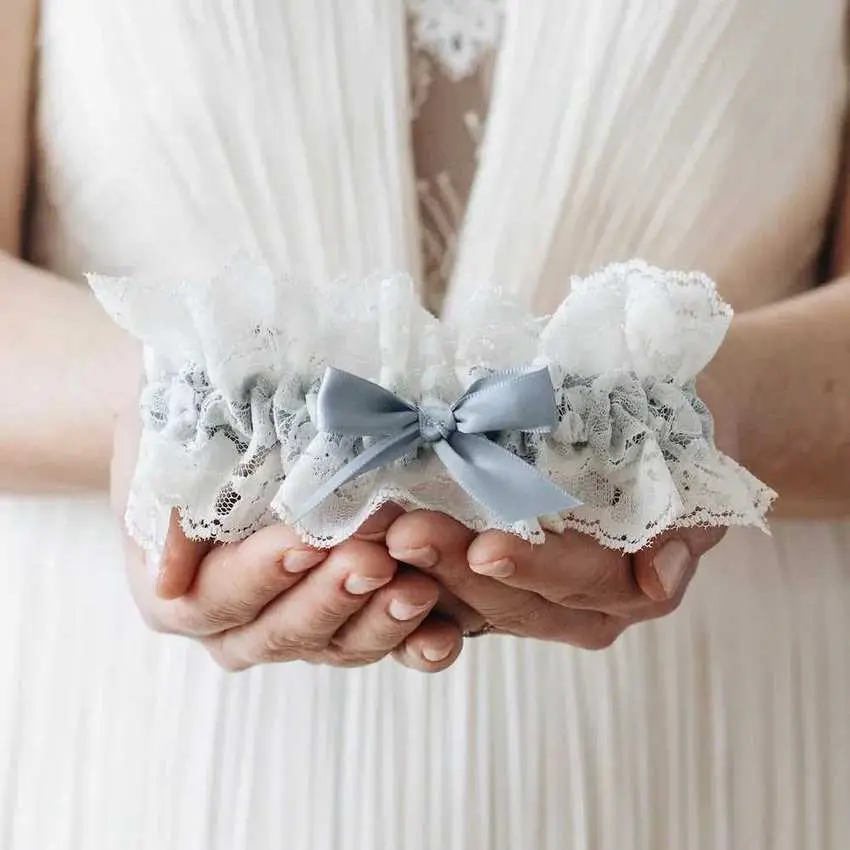
Wedding garters come in a stunning variety of styles, ensuring every bride finds a perfect match. Lace garters offer timeless elegance and romance, making them a popular choice for traditional celebrations. Satin garters provide a luxurious feel, ideal for modern bridal wear.
For those wishing to incorporate luck into their day, blue garters are a favored choice, symbolizing fidelity and love. Custom garters, made from materials such as lace from a mother’s wedding dress, create unique and meaningful pieces that connect generations.
Modern creativity has inspired garters embellished with charms, bows, pearls, or personalized embroidery, allowing brides to express their individuality. Whether opting for classic lace or bold custom designs, the wedding garter remains a cherished symbol of love and commitment.
Alternatives to Traditional Wedding Garters
While the garter tradition holds significance, many couples are discovering new ways to adapt or forgo it entirely. Some brides choose non-traditional materials for their garters, like fabric from their wedding dress or family heirlooms, turning the garter into a personal keepsake.
Another option is a “toss garter” specifically for the toss, allowing brides to keep their sentimental garter intact. This method is popular among modern couples who wish to preserve the value of their bridal garter while enjoying the toss.
Couples are reimagining the toss tradition, sometimes having both partners toss garters or inviting all single guests to join the fun. Others may skip the toss in favor of other meaningful activities such as a bouquet toss or toast, ensuring inclusivity in their celebrations.
Ultimately, whether opting for a traditional garter, a modern twist, or skipping the tradition, the key is that the choice feels authentic. With endless ways to personalize the garter tradition, each couple can create memorable moments on their special day.
Modern Trends and Tips for Incorporating the Garter Tradition
If you're planning to include the wedding garter tradition in your ceremony, consider these tips and trends:
Personalization: Select a garter featuring meaningful details like wedding colors, initials, or a charm symbolizing your relationship.
Dual Garters: Use one garter as a keepsake and another for tossing during the reception.
Alternative Toss Ideas: Get creative by involving all guests in the toss or replacing it with an activity reflecting your personalities.
Cultural Variations: Explore how different cultures celebrate the garter tradition and incorporate elements that resonate with your heritage.
Photography Opportunities: Work with your photographer to capture this special moment in a tasteful way.
Final Thoughts
The wedding garter tradition blends history and celebration beautifully. Whether honoring its origins, enjoying the toss, or customizing it to fit modern tastes, the garter remains a cherished wedding element. Understanding its significance can add depth and meaning to your special day, creating lasting memories.



