

Growing an apple tree means aiming for the best possible harvest, whether it's for fresh eating, baking, or storage.
Regular fertilization is crucial to maintain the health of apple trees, leading to a rewarding harvest of tasty apples year after year.
If you've yet to feed your trees, you might be curious about the right timing and methods. This guide will clarify the best seasons for fertilization and provide expert insights on suitable fertilizers.

Proper fertilization leads to a fruitful harvest
Importance of Fertilizing Apple Trees
Fruit trees need ample nutrients throughout their lives to thrive and produce an excellent yield. Each year, trees require significant energy and nutrients for new growth, flowering, and fruit maturation.
A well-nourished apple tree is not only more productive but also better equipped to fend off pests and diseases. Therefore, regular feeding is vital for encouraging healthy development, blooming, and fruiting.
Optimal Times for Fertilizing Apple Trees

Feeding the soil promotes healthier apple trees
Established apple trees thrive when fertilized in early spring, coinciding with the onset of new growth. This is the ideal moment to provide essential nutrients. Watch for bud break as a sign to fertilize, noting that the exact timing may vary based on your local climate.
A seasoned gardener mentions that many opt for multiple feedings, typically one in April and another in May. A third application can be helpful in mid-to-late summer to support fruit production. However, avoid fertilizing after July unless addressing specific micronutrient deficiencies, which can be rectified with a targeted autumn feed.
When planting apple trees, it's advisable to wait a year before fertilizing. This delay allows the young trees to establish a robust root system, which is crucial for nutrient and water uptake.
Establishing a solid root system enables the trees to anchor themselves better in the soil and efficiently absorb nutrients, ultimately leading to higher quality fruit yields.

Techniques for Fertilizing Apple Trees

Fertilizing apple trees ensures their health and productivity
Choosing the right fertilizer type is essential, with options including organic and synthetic varieties. Each has advantages and disadvantages.
Synthetic fertilizers provide a quick nutrient boost but can deplete rapidly, necessitating frequent applications. Organic fertilizers, on the other hand, offer a broader nutrient spectrum and enhance soil health.
Experts suggest that organic options are preferable for apple trees, despite their lower nutrient concentrations. They may take longer to work but offer lasting benefits for both the tree and the soil.
Organic fertilizers release nutrients slowly as they break down, leading to fewer required applications and improved soil structure over time. They also enhance water retention in the soil and promote microbial health.
To nourish apple trees effectively, apply fertilizer evenly across an area as wide as the tree's canopy, known as the drip line. This area is where rainwater collects, and feeding here maximizes nutrient absorption.
Alongside fertilization, annual mulching is beneficial for apple trees. It retains moisture, supports soil health, and releases nutrients over time. Applying materials like compost, leaf mold, or straw in winter will enrich the soil throughout the year.

Choosing the Right Fertilizer for Apple Trees
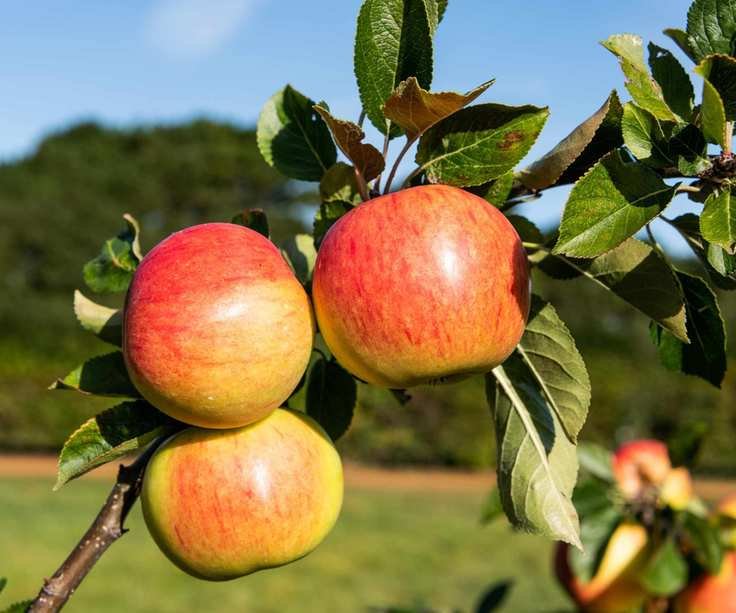
Both fertilizers and mulches are crucial for apple tree care
The best fertilizer for apple trees is a balanced, all-purpose option with a 10-10-10 ratio of nitrogen, phosphorus, and potassium. Fertilizers tailored for fruit trees are also excellent choices, ensuring an even nutrient supply to support foliage, flowers, and root growth.
Conducting a soil test before planting apple trees is critical to identify any nutrient deficiencies. Regular testing can also help monitor soil health and inform future fertilization needs.
For young apple trees (under three years), adjust the fertilizer type to cater to their rapid growth rate. At this stage, they require a higher nitrogen intake unless the soil is already rich in it.
As trees mature and start bearing fruit, the focus shifts to a balanced fertilizer that meets all macronutrient requirements.
If your apple trees are potted, they will need more frequent fertilization compared to those planted in the ground. Granular fertilizers can be supplemented with liquid feeds during the summer to boost nutrient levels.
Recommended Fertilizers for Apple Trees
All Purpose Plant Fertilizer
This multi-purpose balanced feed with a 10-10-10 NPK ratio is perfect for spring feeding of apple trees.
Organic Fruit Tree Fertilizer
This organic option with a 5-5-2 NPK ratio is ideal for actively growing fruit trees, including apples.
Liquid Apple Tree Fertilizer
This liquid formulation is suitable for potted apple trees, applied every 2-3 weeks during the summer.
Frequently Asked Questions
Can tomato feed be used on apple trees?
A liquid fertilizer designed for tomatoes can work well for potted apple trees in late spring and early summer. While a balanced feed is best for early spring, tomato feed, rich in phosphorus and potassium, can aid in fruit production during summer. Look for products like Miracle Gro Tomato Plant Food, available at Amazon, and apply it every few weeks throughout summer.
Is bone meal beneficial for apple trees?
Bone meal serves as an organic fertilizer rich in phosphorus, making it an excellent choice when planting apple trees. Incorporating bone meal into the planting hole can foster strong root development, especially if soil tests reveal phosphorus deficiencies. Purchase bone meal from Burpee.
Don't forget to include fertilization in your spring gardening checklist. It's important not just for fruit trees, but also for soft fruits. Be sure to fertilize raspberries, strawberries, blueberries, and other soft fruit bushes to ensure a productive berry season.



