
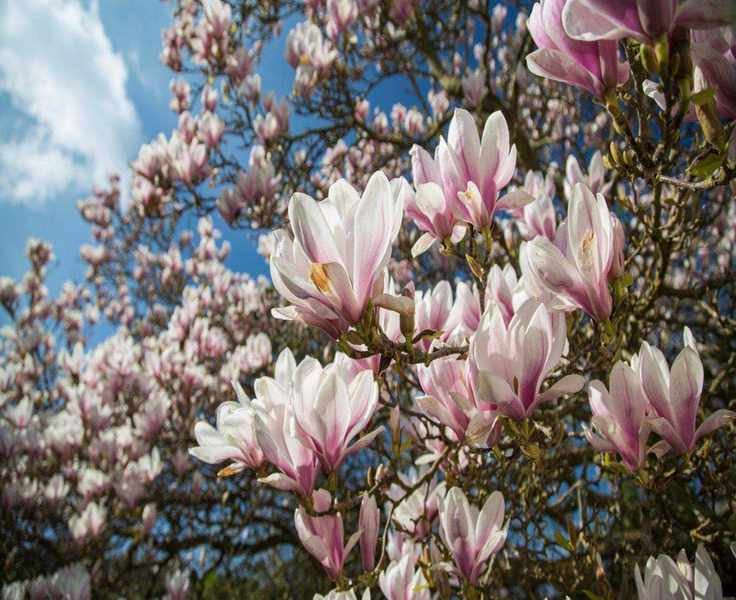
Magnolias are striking, hardy trees and shrubs that add flair to any garden. They thrive best in lime-free soils, featuring large oval or elliptical leaves that emerge after blooming. Some varieties boast vibrant fall foliage, while others are suited for warmer climates.
The blooms of deciduous magnolias come in hues from deep purple and red to pink, white, and even yellow. Many also provide delightful fragrances, enhancing their appeal.
Evergreen magnolias, spanning from bushy shrubs to expansive trees, display large glossy leaves but are generally less hardy, making them unsuitable for colder regions. Their creamy white flowers often emit a lemony scent, and after flowering, they produce fruits resembling small cucumbers, bursting with red seeds.
Magnolias serve as stunning focal points among front yard trees.
Magnolia Tree Care: Key Considerations

Magnolia trees are categorized into evergreen and deciduous types. Their mature heights can range from 15 to 60 feet. Here are the essential care elements:
Soil type: Rich, well-drained.
Soil pH: Acidic and rich alkaline soils.
Light: Prefers bright, indirect light.
Planting time: Spring.
Flowering season: Spring and summer.
Flower colors: White, pink, purple, yellow.
Hardiness zones: USDA Zones 2-7.
Common names: Magnolia, sweetbay, lily tree.
Caring for Evergreen Magnolias
The southern magnolia, Magnolia grandiflora (USDA Zone 7), is well-known in southern landscapes, reaching heights of up to 80 feet. Its 10 to 12-inch lemon-scented flowers bloom in midsummer, though shorter varieties exist.
The sweetbay magnolia, Magnolia virginiana (Zones 3-6), grows to 20-60 feet, showcasing smaller blooms throughout spring and summer.
Chinese magnolia, Magnolia delavayi (Zone 7), has fragrant creamy flowers that often bloom at night and smaller varieties like those in the Fairy Series (Zone 7) reach about 10 feet, making excellent hedges.
Caring for Deciduous Magnolias
Deciduous magnolias are typically hardier, offering a stunning spring display with flowers in shades of white, pink, purple, and yellow. They can flourish as shrubs or small trees in various yard sizes.
Star magnolia, Magnolia stellata (Zone 4), grows into a bushy shrub or small tree, reaching 20 feet or less with 4-inch flowers in white or pink.
Magnolia x soulangeana (Zone 4) is recognized for its prolific blooms, featuring goblet-shaped flowers in various shades.
Magnolia sieboldii (Zone 5) produces fragrant white flowers with crimson centers that hang down in late spring.
Magnolia salicifolia (Zone 4) showcases upright growth with early-opening white flowers.
Nurturing Native Magnolias
North America is home to eight native magnolia species, critical to local ecosystems.
The cucumber tree, Magnolia acuminata, ranges from Ontario to Florida, recognized for its yellow flowers and unique cucumber-like fruits.
Fraser's magnolia, Magnolia fraseri, thrives from Virginia to Alabama, characterized by its bold foliage and yellow fall color. The southern magnolia is also native to this region.
Bigleaf magnolia, Magnolia macrophylla, native from Ohio to Louisiana, features large, silver-backed leaves and flowers reaching up to 18 inches across.
Sweetbay magnolia, Magnolia virginiana, flourishes along the coastal arc from New York to Texas, producing small creamy flowers in late spring.
Choosing the Right Magnolia
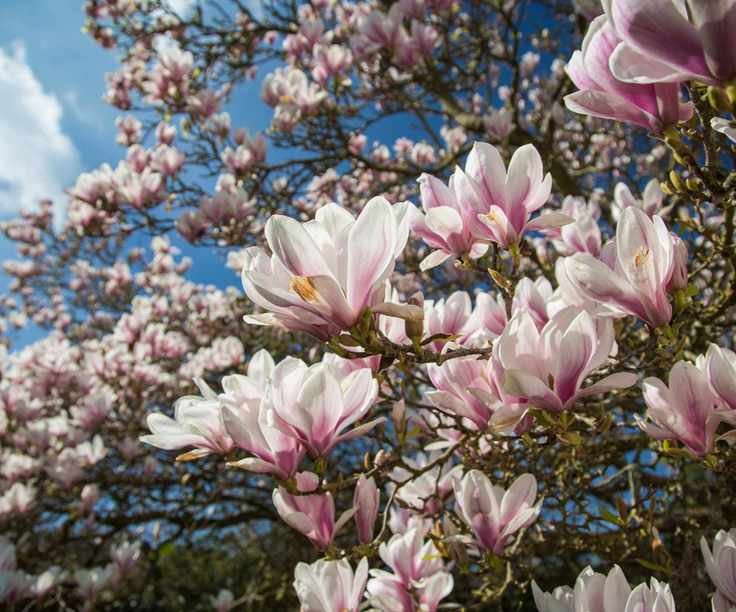
Magnolias come in diverse varieties, with some evergreen and others deciduous. Flower sizes and colors vary, with many exhibiting lovely fragrances. Some types can be container-grown, while others need ample space. Be mindful of hardiness; some deciduous types thrive in USDA Zone 2, while most evergreens prefer Zone 7.
Frost can damage blossoming flowers, but buds may remain unharmed, opening after the frost.
Ideal Planting Locations for Magnolias
Most magnolias flourish in slightly acidic soils, much like azaleas and rhododendrons. They can adapt to neutral or slightly alkaline soils, particularly star and saucer magnolias, which tolerate alkaline conditions better. Conduct a soil test if unsure.
Magnolias prefer good drainage and dislike prolonged dry spells, so irrigation may be necessary. Sweetbay magnolias thrive in consistently wet soils.
While most magnolias enjoy sunlight, they can still bloom well with partial shade. Avoid planting in windy areas or east-facing sites.
Planting Techniques for Magnolias
Dig a hole as deep as your spade and at least twice the pot's width—three to four times is ideal, as roots tend to grow close to the surface. Amend soil with compost or organic material.
Gently remove the plant from its pot, loosening any tight roots. Ensure the top of the potting soil is level with the surrounding earth. Water thoroughly and continue weekly watering for the first year, excluding winter.
For larger balled and burlapped plants, dig a hole larger than the root ball, allowing a foot all around. Mix lime-free soil into the bottom of the hole, ensuring the top of the root ball is level with the ground. Cut the burlap away from the top and fill in with soil, firming it down before watering and mulching.
Keep mulch away from the tree trunk and stake larger magnolias in windy areas.
Optimal Times for Planting Magnolias
In mild climates, plant deciduous varieties in fall or winter when the ground is workable. In colder regions, plant in early spring. Evergreens should also be planted in early spring.
Caring for Your Magnolia Tree
Magnolias are relatively low-maintenance.
Irrigation: Ensure adequate watering during dry summers, renewing mulch annually.
In their first year, prevent newly planted magnolias from drying out.
Fertilization: Generally unnecessary, but spring applications of rhododendron food can be beneficial, especially for new plants. Consider a liquid fertilizer until establishment.
Pest Control: Watch for pests like slugs that can harm new growth, using organic treatments like Natria Neem Oil Spray.
For deer protection, consider a fence or deterrent, as they can damage trees while rubbing their antlers. A wire cage can be effective. Andwarmth tree protectors can help deter deer.
Magnolias usually have few pests or diseases, though scale can affect weak plants, and grey mold may appear during wet seasons, particularly on star magnolia and saucer magnolia. Ensure good air circulation by spacing plants adequately and removing crowded branches.
Leaf Cleanup: Rake up fallen leaves regularly. Evergreen varieties may shed leaves gradually throughout the year.
Pruning: Pruning is minimal. Trim damaged shoots when planting and correct uneven shapes as needed. Visualize a balanced shape to guide your cuts.
Propagating Magnolia Trees
To propagate magnolias, take cuttings in spring from the latest growth, about 6 inches long. Snip the tip above a leaf and the base below a leaf joint, removing lower leaves.
Fill a 6-inch pot with moist seed starting mix, inserting the cuttings so the lowest leaf is just above the soil. Water well, cover the pot in a plastic bag, and place in a warm, bright area, avoiding direct sunlight. Once roots form, transfer cuttings to individual pots for fall planting.
Where to Purchase Magnolia Trees
Magnolia trees are available at Burpee and Fast Growing Trees.
Online nurseries offer a wide selection, from tube plants to larger options. Remember that larger plants may incur higher costs for both purchase and shipping.
Visit local nurseries for larger container plants or balled and burlapped varieties. These come with dirt wrapped in burlap but can be heavy and pricey. It's wise to have your local nursery handle delivery and planting for larger specimens.
Common Questions
What can I plant beneath my magnolia tree?
Evergreen magnolias can create dry, shaded areas as they mature. To improve light access, consider removing some low branches carefully. Hiring a skilled arborist is advisable for this task.
Avoid adding deep soil layers under the tree, as this can suffocate roots. Instead, consider planting ground cover like ivies and periwinkles that thrive in dry shade, guiding their growth towards the tree's edge.
Can I grow a magnolia in a pot on my deck?
Yes, container-growing magnolias can be stunning, but select naturally small varieties. Great options include star magnolias and some dwarf southern magnolias like 'Baby Grand' and 'Kay Parris.'
Use the largest container possible, avoiding plastic pots. Plant in moist rhododendron soil and place in bright areas with partial shade. Ensure consistent moisture and feed in spring with rhododendron fertilizer. Container magnolias may need winter protection, as they can be less hardy than those in the ground.
With the right variety, magnolias can thrive in small gardens, providing a breathtaking focal point with their stunning blooms.



