

Transforming an outdoor area into a living room is no longer exclusive to large properties or warm climates. This design concept recognizes that your outdoor space deserves the same care and creativity as any interior room.
The distinction between a simple outdoor area and a functional living room lies in the same elements that elevate any indoor space: intentional layout, furniture that balances function and style, and a unified design that harmonizes the entire area.
This guide will cover each aspect of creating an outdoor living room, from defining its purpose and planning the layout to selecting ideal outdoor furnishings, lighting, protective structures, plants, and final touches that complete the look. Whether starting anew or refining an existing space, we have everything you need to succeed.
Define the Purpose: How Will You Use Your Outdoor Space?

Before making aesthetic choices or ordering furniture, clarify how you intend to use the space.
Answers to these questions will guide everything from your furniture selection to the lighting design and necessary shade or privacy features.
‘Consider the function of the area. Will you lounge, dine, or entertain? Is it for all-day use or just specific times?’ asks Justine Sterling of Justine Sterling Design.
If you plan to entertain at night near neighbors, adding privacy features or arranging furniture for seclusion may be wise. For areas where kids play in the sun, incorporating shade structures is essential.
The clearer your use-case answers are from the start, the better the design can accommodate them.
Layout and Flow: Crafting the Space

When planning your outdoor living room layout, consider how people will move between indoor and outdoor spaces, where conversations will happen, and how the area integrates with the surrounding landscape.
‘A true outdoor living space encourages both conversation and connection to nature,’ explains Samantha Arak of Samantha Carey Interiors. ‘Outdoor seating should face the view or focal point, whether it’s a garden, fire pit, or body of water. Be intentional about directing the view from each angle for a cohesive experience.’
In larger areas with multiple focal points, consider creating distinct zones. This could include a seating area focused on a fire pit or a dining space surrounded by plants. Zoning can be done without strict barriers; changing flooring or adjusting furniture can define each area.
If visualizing your layout is challenging, try a designer's trick.
‘To see if a 10-seater table fits, mark its dimensions on the floor with blue tape. If it feels cramped with chairs, consider smaller options,’ suggests Sterling.
Selecting the Right Furniture

The perfect outdoor furniture balances aesthetics with practical considerations such as size, durability, and maintenance.
‘Outdoor furnishings endure harsher conditions than anything inside, so be prepared to clean and maintain them,’ says Justine Sterling. ‘Invest in quality pieces and take care of them.’
Choosing the appropriate materials is vital, considering how furniture will withstand your climate and your willingness to maintain it.
‘Always keep your environment in mind,’ she advises. ‘Is freeze/thaw an issue or is humidity high? Ensure materials can endure the elements, both during and off-seasons.’
For easy upkeep, Sterling prefers low-maintenance materials. ‘Aluminum is a favorite for dining tables and sofa frames due to its durability, even in New England where we live.’
While woods like teak and cedar are beautiful, they require consistent care, especially in extreme weather conditions when covers or indoor storage is necessary.
Designer Kathleen Walsh from Kathleen Walsh Interiors emphasizes storage considerations first.
‘We prioritize storage solutions. Can furniture be kept in a temperature-controlled area during the off-season? If not, we choose materials accordingly,’ she explains.
For regions with severe weather, she recommends materials like aluminum, iron, resin, stone, and plastics that can handle temperature extremes. ‘We reserve teak and fabrics for items that can be stored during cold months and shielded from intense heat and sunlight.’
For windy areas, like coastal patios or city rooftops, opt for heavier furniture that won’t blow away easily.
Lighting: Setting the Mood
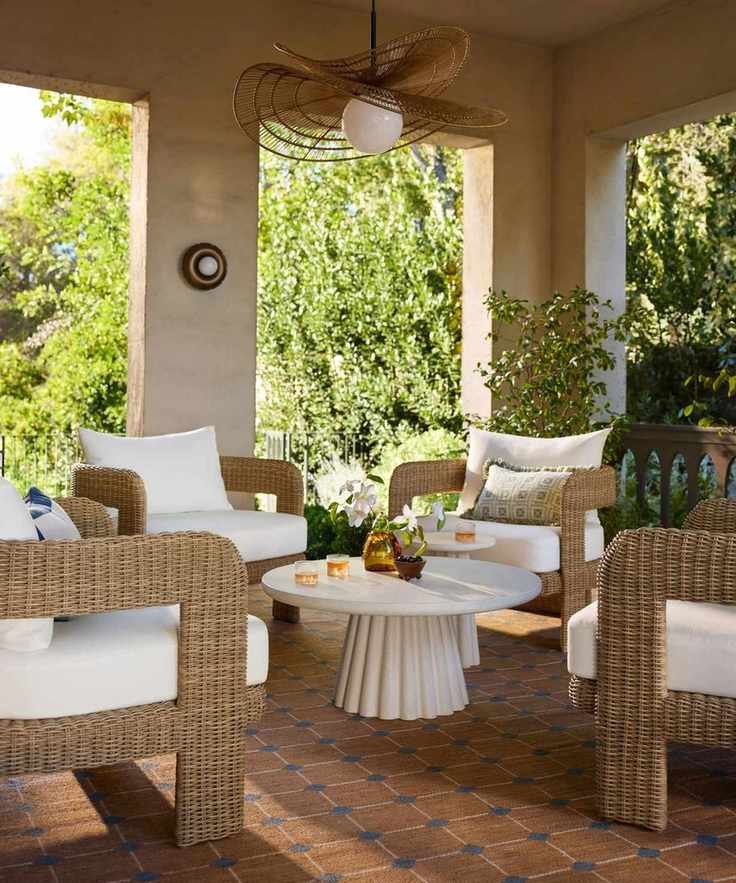
Effective lighting can radically enhance an outdoor living area, making it feel magical instead of uninviting.
Homeowners often overestimate the light needed outside, so moderation is crucial. ‘Choose fixtures that limit light pollution while ensuring enough illumination for conversations,’ advises Kathleen.
Many outdoor spaces shine during the day but fall flat after sunset. Layered lighting—ambient, task, and accent—is essential for a welcoming ambiance at night. Kathleen combines accent lighting, like rechargeable string lights, with hardwired task lighting for pathways and safety.
Choosing the right bulb temperature is also key to creating intimacy. ‘Stick to 3000 or 2700K for a warm glow,’ she recommends.
Shade Solutions

Shade is crucial for a comfortable outdoor living area, but the appropriate solution depends on sun exposure, house orientation, and how any structure affects indoor lighting. Consider options like patio umbrellas, pergolas, or full roofs.
‘This deck receives full sun in summer, but the kitchen wanted some sunlight in winter, so we chose a pergola rather than a solid roof,’ explains Caitlin Struble of Winslow Design. ‘This design offers summer shade while allowing winter light to enter the kitchen.’
Materials and Flooring

The materials and flooring you choose significantly impact both the style and functionality of your outdoor area. Spaces designed for low maintenance will require different materials than those focused on aesthetics.
Natural or ‘living’ materials like wood, iron, unsealed stone, and marble demand more upkeep than engineered options like powder-coated aluminum, high-density polyethylene, quartz, and brick.
Materials also affect safety and usability. ‘IPE decking is ideal for summer barefoot walking, as it avoids splinters and doesn’t heat up as much as some composites,’ says Caitlin.
Styling and Decor: Merging Indoor and Outdoor

Just like indoors, the right finishing details—such as side tables, planters, and cushions—bring character and depth to your outdoor living room, making it feel more inviting.
However, outdoor design must balance style and practicality. ‘I love adding hurricane candle stands and accent lights but prefer to limit small decor items since they need to be stored away at night,’ explains Kristine Irving of Koo de Kir Architectural Interiors.
Accessories that combine form and function are best, such as an outdoor rug that enhances the seating while anchoring the space, or a patio umbrella that not only unifies the look but also provides shade.
Kristine loves incorporating small side tables or garden stools that serve as both surfaces and extra seating. ‘I find pull-up tables and side tables essential because an outdoor living room is meant to be used, meaning you need a place for drinks or a laptop,’ she shares.
Heating and Year-Round Enjoyment

Once you invest in creating an outdoor living room, you’ll want to enjoy it beyond the peak season. Fortunately, there are many ways to extend the usability of a well-planned outdoor area, regardless of the climate.
Heating options are essential. ‘Fireplaces, fire pits, pergolas, outdoor heaters, retractable screens, and layered lighting can all make outdoor spaces more usable,’ says Trevor from Trevor Fulmer Design.
Design choices also matter. ‘In colder climates, planning for shoulder seasons is crucial,’ Trevor emphasizes. ‘Adding wind protection or movable panels can enhance comfort throughout the year.’
Beyond practicality, the materials you select can impact how inviting the space feels in colder months. Textured items like stone, wood, rich fabrics, and warm lighting contribute to a cozy atmosphere that encourages year-round use.
Greenery and Planting
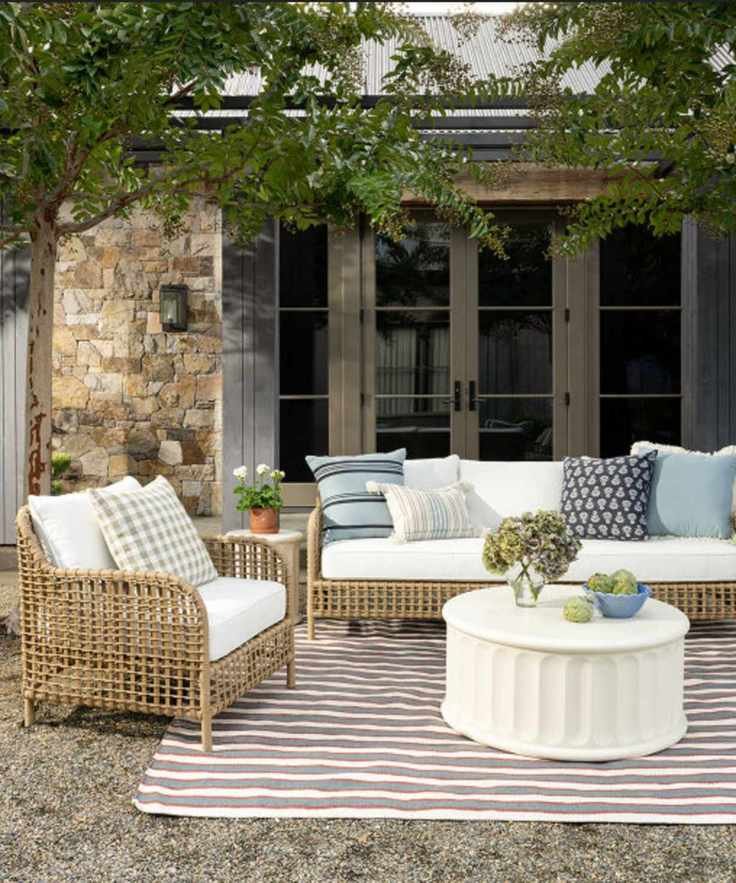
While greenery is a natural choice for outdoor spaces, don’t limit your thinking to just planters and hanging baskets. Thoughtfully selected plants can anchor the area, create focal points, ensure privacy, and enhance the overall ambiance.
‘Landscaping softens hard architectural elements and enhances the feeling of being outdoors,’ says Trevor Fulmer. ‘Plants contribute to privacy, motion, texture, and atmosphere, shaping how the space feels. A courtyard surrounded by greenery is far more inviting than one enclosed by fences.’
Choose plants based on specific conditions like exposure and climate. For sunny spots, drought-resistant plants and succulents are often ideal, providing structure year-round without requiring constant care.
Common Mistakes in Outdoor Living Rooms
Neglecting Practicality
All outdoor furniture requires upkeep, so select wisely. ‘Prioritize practicality and maintenance when choosing pieces. Even with covers, the elements can damage even the toughest fabrics,’ warns Samantha Arak. ‘I prefer natural, low-maintenance materials that withstand time.’
Avoiding Over-Theming
Due to its seasonal nature, outdoor decor can quickly become overly kitschy. Opt for accessories with subtlety. ‘Steer clear of themed decor,’ cautions Trevor Fulmer. ‘No one needs a pillow reading “Rosé All Day” next to a beautiful custom fireplace.’
Overdecorating
A few accent items can enhance an outdoor area, but too many become burdensome. ‘Wind can easily scatter pillows, and umbrellas must be secured,’ Kristine points out.
Designer Insights and Tips
Design with Intention
Resist the temptation to buy the first outdoor set you see. ‘An outdoor living room should be treated similarly to an indoor space, adhering to design principles like scale, texture, and purpose,’ advises Trevor Fulmer.
Plan for Storage
Before making purchases, Kathleen Walsh emphasizes the importance of considering furniture storage options. ‘We reserve teak and fabrics for items that can be safely stored in colder months and protected from harsh sunlight,’ she explains.
Connect Indoors and Outdoors, but Embrace Creativity
‘Your outdoor area should resonate with the home, but don’t hesitate to experiment. Most outdoor spaces aren’t used throughout the year, allowing for more creative design choices,’ Fulmer adds.
Add Functional Luxuries
The most luxurious elements in outdoor rooms often enhance comfort and usability, helping manage climate, deter pests, and minimize maintenance needs.
For example, ‘Retractable screens in a pergola can effectively address areas prone to flies and insects,’ suggests Kathleen.
Make Greenery a Focal Point
‘Plants are a balm for our fast-paced lives. They are crucial to an outdoor room,’ emphasizes Kathleen. ‘They provide shade and beauty while reminding us to slow down and appreciate nature.’
Key Elements for an Outdoor Living Room
With careful consideration, your outdoor area can be as welcoming as a family room. A city balcony can become a serene retreat, and your garden can host gatherings just as comfortably as your indoor spaces.
Explore our library for timeless design insights. Each guide combines expert knowledge to help you master the fundamentals of design, ensuring your home is beautiful and functional.


