One of my fondest memories of antipasti comes from childhood, helping my mother and brothers create mini meatball sandwiches. We set up an assembly line with soft bread, creamy butter, and a big bowl of filling. Together, we laughed and worked, producing bags of sandwiches that would go into the freezer for the holidays.
The Antipasti Tradition
This tradition runs deep. During my research for my cookbook Mother Sauce: Italian American Family Recipes and the Story of the Women Who Created Them (Artisan), I explored classic Italian American regions—New Jersey, South Philly, Boston, Chicago, Rhode Island, and San Francisco—to see how antipasti transformed in the New World. Early immigrants may have been poor but knew how to make the most of their ingredients.
Nibbles were always present: taralli, the savory rings once hydrated with seawater; cured salami from the whole pig; preserved peppers and tomatoes; dried nuts and fruits. A piece of bread, a scrap of sausage, or a few olives could serve as a snack, light meal, or prelude to a feast. The core idea was simple: if you're waiting for a meal, you're eating.

When to Serve Antipasti
During Thanksgiving or Christmas, those crispy bites always come first—simple yet special. To this day, my family argues over which grandmother 'created' them, a testament to our Italian American pride. Claiming a recipe is our way of saying: this is ours; this is our identity.
My mom called the time between lunch and dinner 'the betwixt and between time.' In our home, this period was never empty. There was always something to snack on—little sandwiches, tomato pie, olives, or cheese—something to tide us over, often paired with a glass of wine and good conversation.
In Italian American households, mealtimes are important, but antipasti creates the atmosphere. While Sunday sauce simmers or the soup is served, a small spread appears almost instinctively—salumi, cheeses, pickled vegetables, and perhaps a family favorite.
The Instagram Influence
What we now call an antipasti platter has evolved into a full meal. The current charcuterie board trend is just a modern manifestation of what Italian families have been doing for generations: displaying what you have, making it appealing, and letting guests serve themselves.
Antipasti at Home, in the Modern Kitchen
In my New York kitchen, antipasti has become my favorite way to host. I adore a large surface—whether a wooden board, a tray, or a marble slab—filled with grab-and-go items: roasted peppers drizzled with olive oil, marinated mushrooms, fennel wedges, tinned fish with lemon, slices of salami, and a dollop of fresh ricotta for spreading on bread.
I often mix homemade items with store-bought. I might have my preserved mushrooms or peppers alongside quality olives, a tin of sardines, crackers, and a chunk of Parmesan. Sometimes, I create a seafood platter for the Feast of the Seven Fishes; other times, it's meat, or a mix of vegetables and beans. It's not about perfection; it's about generosity.
And yes, those mini meatball sandwiches still make an appearance during the holidays. I prepare them in advance, freeze them, and serve them as guests arrive.
It's All About Abundance, no Matter Your Means
Antipasti once marked holidays and celebrations, but now I see it as an everyday expression of abundance. It can be simple—just a few olives and cheese—or elaborate, overflowing before a feast.
Whichever way you choose, the message remains: there's always something to eat here, and there's always room for everyone.

How to Build an Antipasti Platter
To be the one who whips up antipasti effortlessly, start with a stocked pantry and freezer. I keep jars of relishes, tinned fish, olives, caper berries, nuts, and crackers handy. I also organize the freezer with wrapped packages of sliced cured meats and, when possible, a slab of tomato pie.
If I prep antipasti beforehand, I ensure it warms to room temperature for about 30 minutes before serving—cold cheese and tomatoes lack flavor compared to their room-temp counterparts.
I also make fresh ricotta whenever I can. It's just milk, acid, and salt, and once you realize how simple it is, you'll want to use it as a substitute for butter—spread on toasted bread, under roasted peppers, or alongside those mini meatball sandwiches.
When arranging antipasti, I think like an architect and a cook—everything should taste great and work well together.
- Flavors: Aim for a mix of tangy, briny, sweet, spicy, salty, and buttery. Pair hot cherry peppers with creamy ricotta, marinated mushrooms with nutty Parmesan, and olives to cut through richness.
- Textures: Combine crunchy with smooth and creamy. Use crackers or toasted bread with something soft to spread, chewy items, and juicy elements.
- Colors and shapes: Incorporate a variety of colors—red, yellow, green—and shapes—round, flat, rolled, cubed. Use small bowls to create visual interest and add citrus wedges for brightness.
- Seasonality: In tomato season, a bowl of fresh cherry tomatoes with basil, salt, bread, and olive oil suffices. In winter, focus on preserved items like caponata and pickled peppers.
Recipes For Your Antipasti Platter
Mini Meatball Sandwiches

Ingredients (Makes sixty 1½-inch squares)
- 1 loaf (about 30 slices) very thin sliced soft white bread, such as Pepperidge Farm
- 1 pound (455 g) ground pork, or a combination of pork and beef
- ¼ cup (25 g) grated Romano cheese
- ¼ cup (25 g) grated Parmesan cheese
- ¼ cup (15 g) finely chopped fresh flat-leaf parsley leaves and tender stems
- 2 teaspoons extra virgin olive oil
- 1 large egg
- 1 garlic clove, minced
- ½ teaspoon dried oregano
- ½ teaspoon dried thyme
- ½ teaspoon kosher salt
- Freshly ground black pepper
- 8 tablespoons (1 stick/115 g) unsalted butter, at room temperature
Method
- Preheat the oven to 350°F (175°C).
- Process the end slices of the loaf into fine crumbs, about ½ cup (28 g). In a large bowl, combine the crumbs with the meat, cheeses, parsley, olive oil, egg, garlic, oregano, thyme, salt, and pepper. Mix until well combined.
- Moisten your hands with cold water and form the mixture into 1-inch (2.5 cm) balls; place them on a baking sheet. Line another sheet with parchment or a silicone mat.
- Butter one side of two slices of bread. Place four meatballs on one slice, top with the second slice buttered side down, and press together. Use a serrated knife to remove the crusts, saving them for a 'cook's treat.'
- Repeat with the remaining bread and filling, cutting each sandwich into four squares before transferring them to the lined baking sheet. This can be done assembly-line style.
- Bake until golden brown, 15 to 20 minutes. Cool slightly on a rack before serving warm.
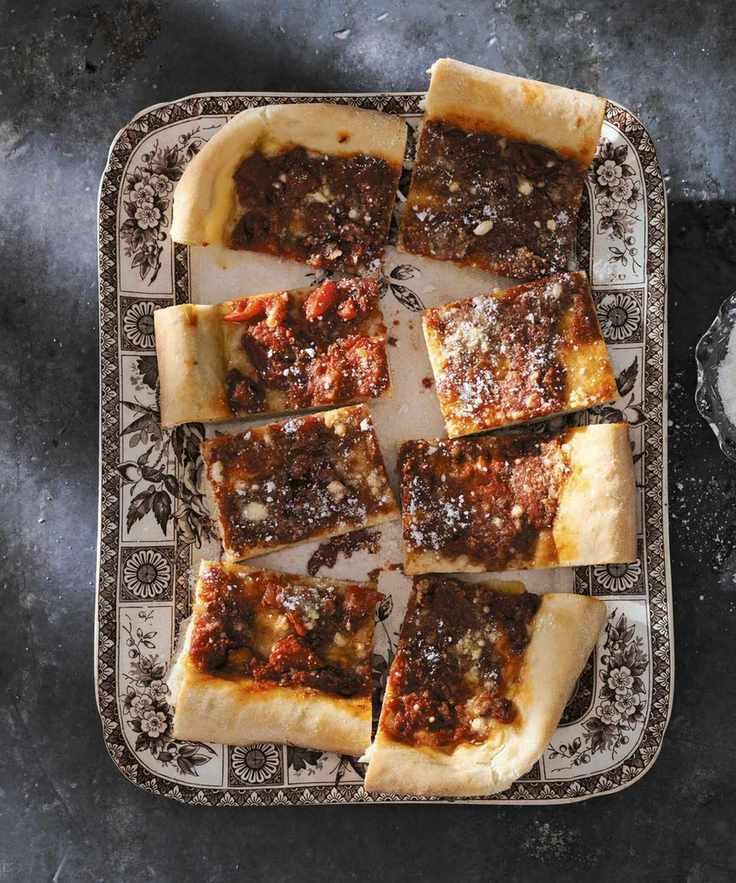
Tomato Pie
Ingredients (makes 12 servings)
- FOR THE DOUGH
- 5 cups (625 g) all-purpose or bread flour, plus more for kneading
- 1 tablespoon kosher salt
- 2¼ teaspoons (7 g) active dry yeast (from a ¼-ounce packet)
- 2 teaspoons sugar
- 2 cups (475 ml) water
- 2 tablespoons extra virgin olive oil
- FOR THE SAUCE
- 3 tablespoons extra virgin olive oil
- 2 garlic cloves, minced
- 2 tablespoons tomato paste
- One 28-ounce (800 g) can whole tomatoes
- 1 teaspoon kosher salt
- 1 teaspoon sugar
- 1 teaspoon dried oregano (optional)
- ½ teaspoon dried thyme (optional)
- ½ teaspoon red pepper flakes (optional)
- Olive oil for brushing
- ½ cup (50 g) grated Romano cheese (optional), plus more for serving
Method
- MAKE THE DOUGH
- In a large bowl, whisk together flour, salt, yeast, and sugar. Add water and olive oil, mixing to combine. Knead until soft and smooth, about 5 minutes (more if kneading by hand).
- Shape the dough into a tight ball, dusting with flour as needed. Place in an oiled bowl, cover, and let rise in a warm spot until almost doubled, about 3 to 4 hours.
- MAKE THE SAUCE
- In a medium pot, combine olive oil and garlic, stirring over medium-high heat until sizzling, about 1 minute. Stir in tomato paste and cook for 1 to 2 minutes.
- Add whole tomatoes with juices, salt, sugar, and optional seasonings. Simmer, smashing tomatoes until slightly chunky, about 30 minutes. Let cool (sauce can be refrigerated for up to 5 days).
- MAKE THE PIE
- About 1 to 1.5 hours before baking, oil an 11-by-17-inch (28 by 43 cm) baking sheet. Roll out dough to fit the pan, pressing into corners. Brush with olive oil and let rise until puffy, about 60 to 90 minutes.
- Preheat the oven to 500°F (260°C). Press dimples into the dough, spread sauce evenly, and sprinkle cheese if desired. Bake until golden brown, 15 to 20 minutes. Let cool before cutting into squares or rectangles, serving with extra cheese on the side.
Fresh Ricotta

Ingredients (makes 1 cup / 227g)
- 4 cups (950 ml) whole milk
- ½ teaspoon kosher salt
- 2 tablespoons fresh lemon juice
Method
- Line a small colander with cheesecloth or a paper towel over a bowl.
- In a saucepan, combine milk and salt; bring to a boil over high heat.
- Add lemon juice, lower heat, and stir until curds separate from whey, 1 to 2 minutes.
- Pour into the strainer and let drain for about 1 hour.
- Cover and refrigerate for up to 3 days if not using immediately.
A Cook's Legacy is our six-part series with award-winning cookbook author, Lucinda Scala Quinn, exploring the family, food, and cultural memory that inspired her latest cookbook, Mother Sauce, through her beloved culinary voice.