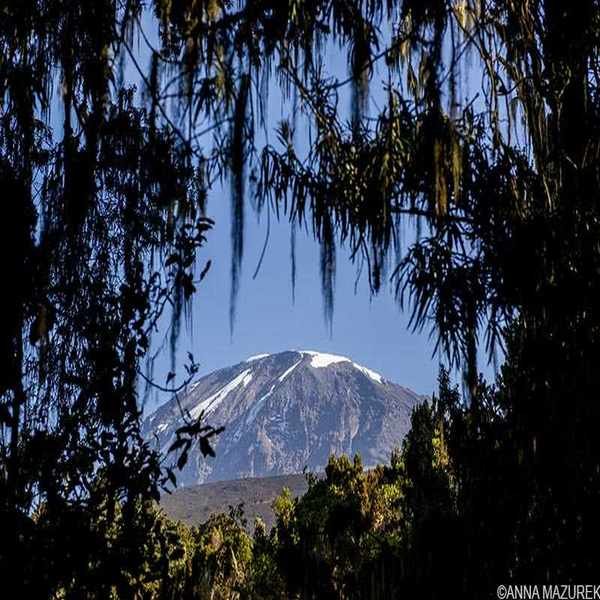
Recently, I completed the Lemosho Route to the summit of Kilimanjaro. I've gathered key details about the trek, including optimal times to visit, route selections, packing essentials, and cost breakdowns.
Optimal Climbing Seasons for Kilimanjaro
There are two primary trekking periods: January to March, which tends to be cooler and less crowded, and June to October, typically the busiest due to holiday travelers from Europe and North America. The heaviest snowfall occurs from November to May, with December being quite cold, though increasingly popular. The rainy season spans March to May, making it the least favorable for climbing, along with November.
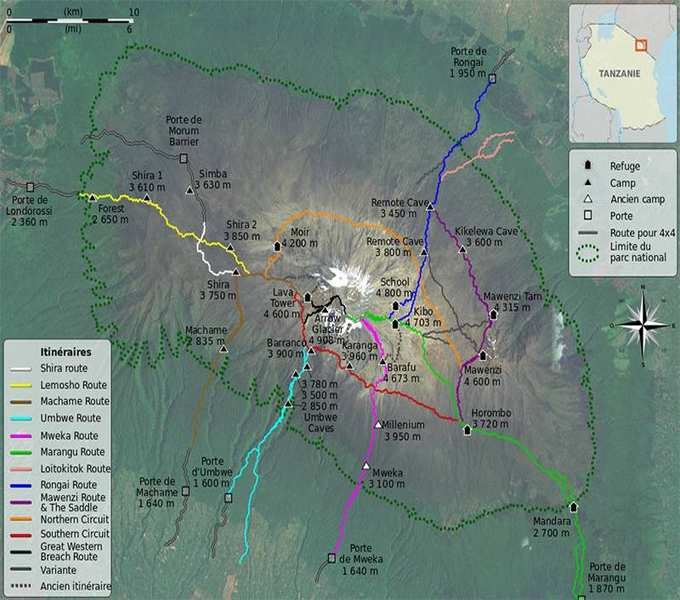
Kilimanjaro Route Map courtesy of WikiMedia Commons
Choosing the Best Route for Kilimanjaro
One night, I had an insightful conversation with my guide, who had summited the mountain 150 times. He highlighted preferred routes, especially Lemosho and Macheme, known for their favorable weather and stunning vistas. The easiest routes to the summit are Shira, Lemosho, Macheme, and Umbwe, all converging at the same endpoint. Many paths offer an option for an additional day to aid acclimatization.
The Seven Main Routes to Summit Kilimanjaro
1. Lemosho Route (6-7 days)
This route, along with Macheme, boasts the highest success rate thanks to its length and ample acclimatization opportunities. The descent on the final day is notably easy (3 hours) compared to Macheme.
2. Macheme Route (5-7 days)
Similar to Lemosho, this route has longer first and last days but provides equal acclimatization. The final day requires a full day of hiking.
3. Shira Route (6-7 days)
This is a more straightforward route as it begins with a drive to Shira I camp. Although the hike to Shira I is steep, it pales compared to summit day.
4. Umbwe Route (5-7 days)
This is the most challenging route with steep inclines, especially in the initial days. However, it offers breathtaking views of Baranco camp, a major attraction.
5. Marangu Route (5-6 days)
Features huts instead of camping. It has restrooms but lacks showers. You can acclimatize effectively over the six-day trek, though conditions aren't optimal, and the summit path is tougher. The route to Keebo Hut tends to be quite dusty, making it suitable for those who prefer not to camp.
6. Rongai Route (5-7 days)
This is the easiest route located near the Kenya border. It poses risks due to wildlife presence (lions, elephants, buffalo). It follows a similar summit route as Marangu, with daily walks lasting only 2-3 hours, except for summit day, which is more strenuous.
7. Mweka Route – Descent Only
This is a one-way route starting from Barfu High Camp, featuring two camps – Mweka Hut Camp and High Camp (Millennium Camp on some maps).
Other options: The Northern Circuit Route is the newest and longest, initially following the Lemosho Route before wrapping around the serene northern side of the mountain.
The Western Breach is the most perilous route and should be avoided. Many reputable tour operators do not offer this path due to its steepness and rockfall risks, having tragically resulted in fatalities in the past. Climbing this route requires a government waiver, and guides generally disapprove of it.
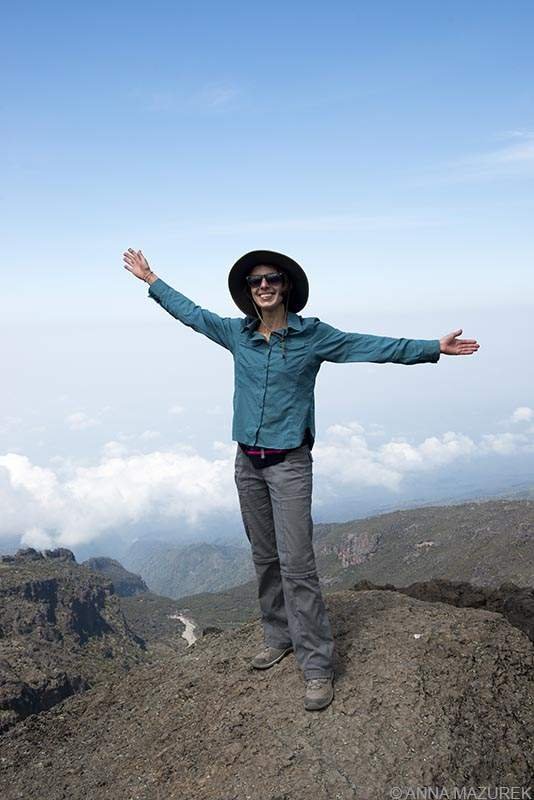
Here I am sporting my wide-brimmed hat, an excellent SPF wicking shirt, Prana pants, Keen hiking boots, and the SPIbelt waist belt for my phone, captured at the top of Baranco Wall on the fourth day.
Kilimanjaro Packing Essentials*
Clothing
- 2 long-sleeve thermal tops (I prefer zip-neck thermals.)
- 2 thermal pants (merino wool or Capilene)
- 1-2 short-sleeve shirts OR 1 long-sleeve wicking SPF shirt
- Heavy fleece or down jacket
- Fleece pants
- 2 trekking pants (My top choice is Prana pants.)
- Waterproof jacket/raincoat
- Waterproof pants (Consider insulated options.)
- Underwear (one for each day of the trek)
Headwear & Gloves
- Wide-brimmed hat
- Wool hat covering ears
- Ski mask or balaclava
- Lightweight gloves
- Wool or down mittens for layering over gloves (This affordable pair was perfect.)
Footwear
- Ankle-covering hiking boots (I loved my Keen Terradoras.)
- Camp shoes (I brought my old Nikes.)
- Shoe bag for carrying spare footwear
- Hiking socks (7 pairs)
- Gaiters (These were invaluable on summit day.)
Sleeping Bag
While most tours provide sleeping bags, I suggest bringing an extra one for added warmth. Nights can get chilly, and I wore nearly all my layers to sleep. A travel pillow is also essential!
On the Trail
- 20- to 30-liter daypack for essentials (I recommend Osprey Packs for their lifetime warranty.)
- Rain cover for the daypack
- 1.5 to 2-liter CamelBak (It may freeze on summit day but is fantastic otherwise.)
- CamelBak bite valve cover (It's worth the investment.)
- 2 Nalgene bottles (32 ounces)
- Sunglasses
- Headlamp with extra batteries
- Trekking poles (available for rent in Moshi)
- Snacks
Additional Items:
- Waist belt for phone (This SPIbelt was a game-changer! It kept my phone accessible without digging through my pack.)
- Hand & Foot Warmers
- Electrolytes (Nuun tablets are fantastic! They taste great with only 1g sugar! Lemon lime is my favorite.)
- Moleskin and Band-Aids for blisters
- Journal and pen
- Extra batteries and phone charger
- Packing cubes
- Ibuprofen
- Antibiotics for diarrhea and altitude sickness (Consult a doctor before your trip.)
- Wet wipes & hand sanitizer
- Basic toiletries
- Hand towel
- Protein powder
- Passport and money (Keep it with you at all times!)
- Dry bags and laundry bag for dirty clothes
- Sunscreen (I recommend a natural stick SPF like Bare Republic.)
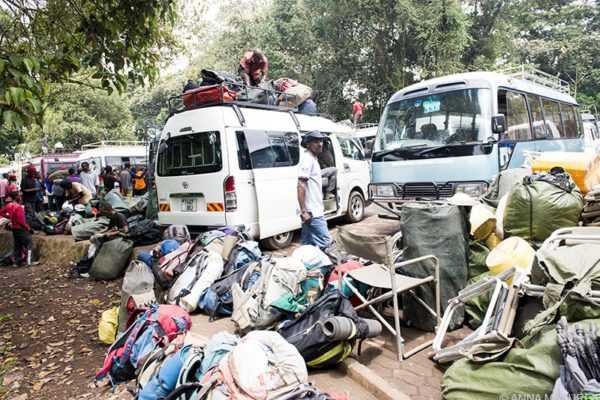
Packing Strategies for Kilimanjaro
- Keep items easily accessible without removing your daypack. Investing in a 1.5-liter CamelBak was a smart move. I also recommend a bite valve cover to keep it clean. I packed two 32-ounce Nalgene bottles for summit day since the CamelBak would freeze.
- I avoided sunburn thanks to a large-brimmed hat I bought and my Columbia Silver Ridge Lite wicking/SPF shirt, which I wore almost daily.
- Using packing cubes helped me organize my bag. Trekking companies provide waterproof duffel bags, making it easier to have cubes for socks, top layers, medications, etc.
- I purchased vanilla hemp protein powder for energy during long days and especially summit day. It was a big help.
- Every afternoon, I dissolved Nuun electrolyte tablets in water for rehydration. They were lifesavers; one to two tubes sufficed for the trek.
- Consult a doctor about bringing antibiotics for altitude sickness and diarrhea. (I had food poisoning before my flight home, and antibiotics were crucial. I also took a low dose of Diamox for altitude.)
- For easy access to my phone for photos, a SPIbelt was fantastic. I borrowed one and it made a difference.
- Most tours provide sleeping bags, but bringing your own for extra warmth is wise. It gets very cold, and I often slept in all my layers.
- Ensure all your thermals are merino wool or Patagonia's synthetic Capilene. Choose merino wool socks. I bought various socks on clearance from REI.
- Bring a trash or shoe bag for your hiking boots after the trek. You'll want a bag for your camp shoes during the hike as well. Your shoes will be quite dirty!
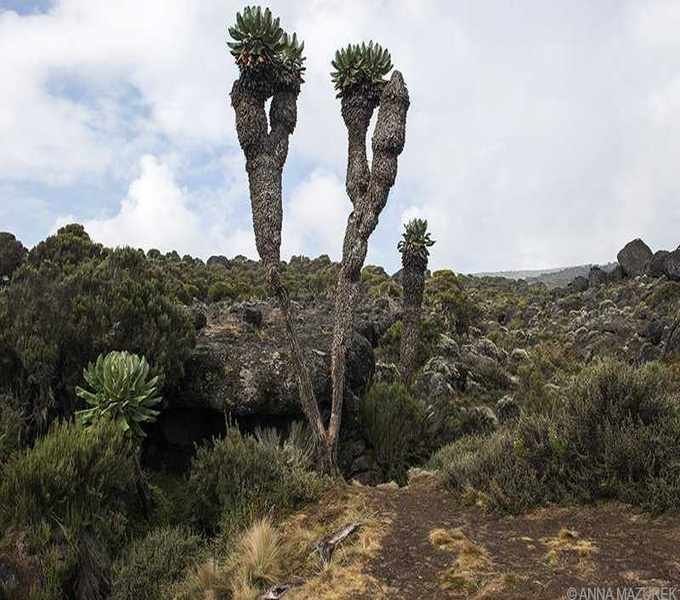
The route to Baranco Camp is adorned with stunning giant groundsel trees.
What is the Cost of Climbing Kilimanjaro?
Trek: $1,850
Tips: $300
Flight: $1,150
Visa: $100
Gear: $284.12
Total Cost: $3,584.12 USD
- Trek Cost: Most routes range from $1,600 to $2,000. All treks include transport, guides, porters, and cooks. Climbing requires a guide. Accommodation before and after is usually included, along with airport transfers. We paid $1,850 for our Lemosho Route, typically advertised for about $2,100, due to discounts for group size and past usage of the company.
- TIPS: We were advised to bring $250 to tip guides, porters, and staff. I tipped porters carrying my camera and gnome a bit extra, arranged in advance.
- VISA: A Tanzanian visa cost $100 for me as an American, while it's $50 for most other countries.
- Flight Cost: My roundtrip flight from Houston to Kilimanjaro on Turkish Airlines was $1,150, with a layover in Istanbul. It was the most direct option from Texas with only one stop. Turkish Airlines offers great service.
- Gear: I borrowed as much gear as possible. I bought two pairs of thermals, numerous socks, electrolytes, a CamelBak, a wide-brimmed hat, and a Columbia long-sleeve SPF shirt. I took advantage of tax-free holidays and sales for great deals. The gear quality in Moshi is poor, so purchase items beforehand; trekking poles and gaiters are exceptions.
For further information on climbing Kilimanjaro, check my previous post detailing a day-by-day rundown of the Lemosho Trek!
____________________________________________________
*P.S. I am not affiliated with any brands or products mentioned. I have personally used everything and found it helpful. Some links may be affiliate links; if you click and purchase, I may earn a small commission at no extra cost to you. Your support is appreciated. For inquiries, please reach out.