
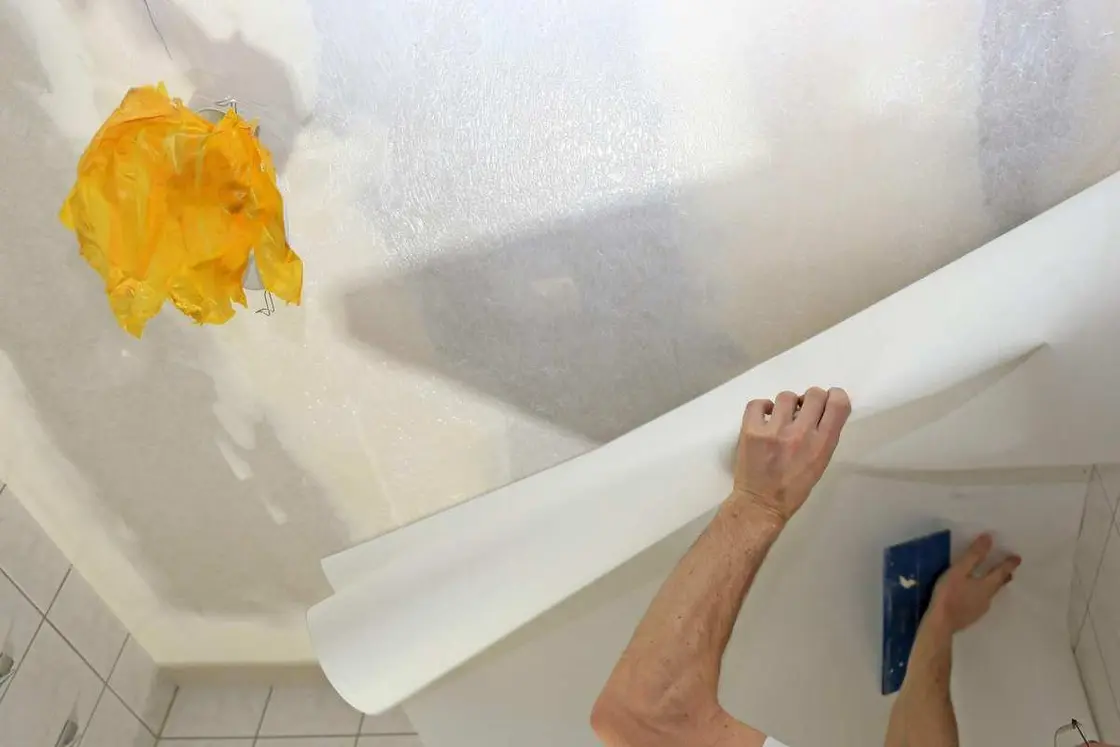
Those who love DIY projects should learn the art of ceiling wallpapering. Wallpaper isn't just for walls anymore; it's making a stunning statement on ceilings. If you're new to this, starting with a solid color might be wise before diving into patterns.
Here's a straightforward guide for achieving professional-looking results when wallpapering your ceiling.
Steps for Wallpapering a Ceiling
Applying wallpaper to a ceiling is a bit different from walls. Your main hurdle is working against gravity, which can complicate surface preparation. You might need to strip old wallpaper before applying new. While pros can manage solo, having a helper is a great advantage. Follow these steps to ensure success right from the start.
Begin by gathering your materials and measuring for wallpaper to confirm you have everything you need.
Necessary tools:
- Wallpaper
- Adhesive
- Pasting brush
- Smoothing tool or paper hanging brush
- Seam roller
- Pasting table
- Bucket
- Sponge
- Damp cloth
- Sharp scissors
- Tape measure
- Tacks
- String and pencil or chalkline
- Dust sheets
- Trestles or ladders with scaffolding
1. Prepare Your Ceiling
Lay down dust sheets and set up a stable work platform. A scaffolding board on two trestles or ladders works best. To achieve a smooth finish, fill any holes or cracks and seal any stains. Clean the surface with detergent, then apply a coat of size (diluted wallpaper paste) to create a good grip for the wallpaper. Let it dry thoroughly.
2. Establish a Guideline
Begin at the window and work away from it. For rooms with complex shapes, start with the longest length of wallpaper. Centering patterned paper on the ceiling will yield the best results.
For your first strip, mark a guideline on the ceiling, one roll-width away from the wall, minus ½ inch (12 mm) to allow overlap. Use tacks or drawing pins with a string to create a straight line, marking it with a pencil or using a chalkline.
3. Hang the Wallpaper
Measure your paper, adding 2 inches (5 cm) to each end, then cut. Once pasted, fold the paper in concertina style without creasing. If you're solo, use a cardboard tube or spare roll to support the weight. If you have help, they can hold the folds with an upturned broom.
Standing to the right of your support, position the paper against your marks on the ceiling. Use your hands and the smoothing brush to secure it. Release the next fold, smoothing it into place, and continue this process. Trim excess paper at the edges where it meets the walls and clean up any paste spills with your sponge or cloth. Proceed with additional lengths, ensuring edges are butted together and smooth with a seam roller.
4. Navigating Ceiling Light Fixtures
Before you start, turn off the electricity and remove the light fitting. Hang the wallpaper over the fixture, making cuts from the center outward to create a space for it. If necessary, trim around the edges for a snug fit when reattaching the light. For larger ceiling roses, apply the same cutting technique before pressing the paper into place.
5. Consider Alternative Wallpaper Types
For paste-the-wall wallpaper, apply adhesive an inch wider than the paper on the ceiling. This allows you to hang subsequent lengths without needing to reapply paste. Use a small paintbrush for tricky areas like the top of the wall or around light fixtures to ensure thorough coverage.
Peel-and-stick wallpaper is also a beginner-friendly option as it's easier to reposition. However, ensure the surface is prepped accordingly, as some varieties may need a coat of gloss or satin paint before application.
Where to Begin When Wallpapering a Ceiling
Always start hanging the wallpaper at the window and work towards the opposite side to minimize shadows. If you're also wallpapering the walls, complete the ceiling first.
Why Choose to Wallpaper a Ceiling?
There are several benefits to wallpapering a ceiling. It can effectively conceal imperfections while offering a unique aesthetic. You might also consider painting over wallpaper to achieve a flawless finish, but be aware that ceiling painting has its own nuances compared to walls.
Ceilings adorned with striking designs are currently trending, adding a cozy feel to bedrooms. Using wallpaper on ceilings can transform an otherwise plain room into a stunning space.



