

Curtains enhance a space when they hang beautifully and filter light effectively. Once you've chosen your desired style, precise measurements are key to achieving an elegant look.
From light, airy sheers to heavy, cozy drapes, each type serves a purpose. Accurate measurements lead to a design that aligns with your aesthetic while meeting functional needs.
A proper fit is vital for any curtain choice. Insufficient width can hide fabric beauty, while inadequate length can appear outdated. Here's a straightforward approach to measuring curtains for a flawless appearance in your home.
Measuring Curtains

When measuring for curtains, your approach will vary based on whether you're ordering custom-made drapes or purchasing ready-made options.
Typically, standard widths at retail stores are around 48 inches, but always verify this in the product details, as it can differ by brand. Standard lengths are available in sizes like 63, 84, 96, 108, and 120 inches—double-check before placing your order.
For custom designs, there are more elements to consider, but we'll cover the essentials here.
Accuracy is crucial in measuring for curtains. Using a steel tape measure from Amazon is recommended, as fabric ones can stretch and lead to errors. A sturdy step ladder and a notebook for recording measurements may also be handy.
1. Choose Between a Pole or Track
Poppy Ashworth, a soft furnishings expert, suggests that your first decision should be whether to hang curtains from a pole or a track, as this impacts both style and measurements. The type of curtain you choose will dictate the hanging method.
Poles are decorative and visible, suited for various styles, while tracks are often concealed. Always measure after the installation of your chosen method, as the curtain's width depends on this rather than the window itself.
Also, think about the type of curtains you'll use—eyelets, pencil pleats, pinch pleats, or waves—as that will influence your choice of rod or track.
2. Determine Rod Positioning
The placement of your rod or track is crucial for accurate measurements. Curtains should ideally be hung higher and wider than the window to create an illusion of space and allow maximum light.
For rods, position them approximately 8 to 10 inches above the window, extending 10 to 12 inches on either side. In rooms with high ceilings, consider placing the rod 12 to 24 inches above the window or just below the crown molding.
3. Measure Width
Always ensure curtains are wider than the window they cover. Use the width of your pole to guide your measurements.
Curtains should pull back beyond the window frame to let in light and enhance the window's proportions while appearing full when closed.
Measure the full length of the curtain rod from finial to finial to provide to your curtain maker. Custom drapes will require a fullness that ranges from 1.5 to 3 times the pole's width.
For a fuller look, aim for at least double the width of your rod or track. If using sheer fabrics, consider going even wider, as lighter materials don't hang flat.
4. Measure Length
Decide where you'd like your curtains to end before you measure their length. The most common lengths include:
1. At the bottom of the window (sill length)
This length suits kitchen windows or spaces where curtains shouldn't obstruct daily activities, like bathrooms. For this style, measure from the rod to the sill (or slightly below).
2. Just above the floor (the 'kiss' length)
Floor-length curtains are a popular choice for living rooms. Measure from the rod to the floor, allowing for a small gap—about 3/8 of an inch—for a tailored look. Add 1 to 3 inches for a gentle brush against the floor.
Consider multiple measurements to account for uneven flooring. A Scandinavian textile company suggests measuring from the floor to your rod or track, adding half an inch for a soft effect.
3. Puddled length
Puddled curtains create a luxurious feel and are ideal for bedrooms. To achieve this, add 6 to 12 inches to the rod-to-floor measurement for a dramatic puddle, or 1 to 4 inches for a subtler look.
Keep in mind that puddled curtains can be more challenging to open and may require more maintenance to keep dust at bay.
Don't forget to account for your chosen header type, as some styles will affect the overall length. Generally, curtains should always be floor-length or longer to provide a generous appearance, even if they hang behind furniture.
Common Questions
What Width Should Curtain Panels Be?
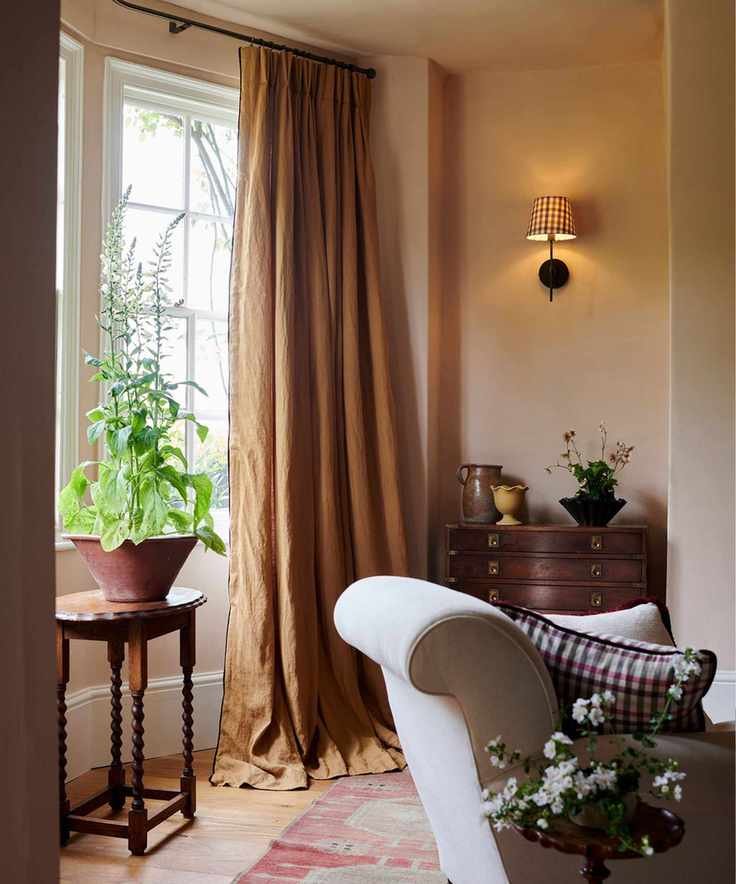
As a rule of thumb, curtain panels should have a combined width of two to two-and-a-half times the window width for an ample look when closed.
Industry experts suggest that for a 6-foot window, you should specify fabric that is 12 feet wide for ideal fullness.
For sheer panels, consider even wider options. Experts recommend a combined width of three to three-and-a-half times for sheers.
How Far Beyond the Window Should Curtains Extend?
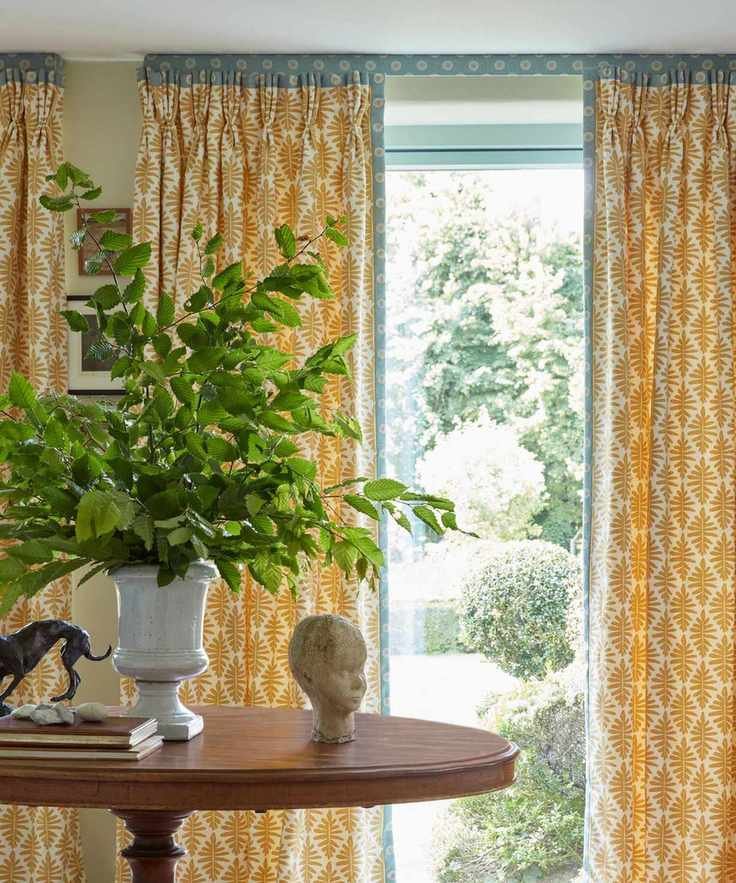
Aim to extend the curtain rod by at least four inches on each side of the window, up to 12 inches for a grander effect. This allows for maximum light when the curtains are open and creates an illusion of a wider window.
Not all windows will allow for this, depending on the wall space, but it's definitely worth considering for a brighter room.
Measuring for curtains can be intricate, with several factors to consider. For custom drapes, consulting with designers can simplify the process, as they often measure for you. For store-bought curtains, take your time and measure carefully. Using your pole or track as a guide will simplify the task considerably.



