
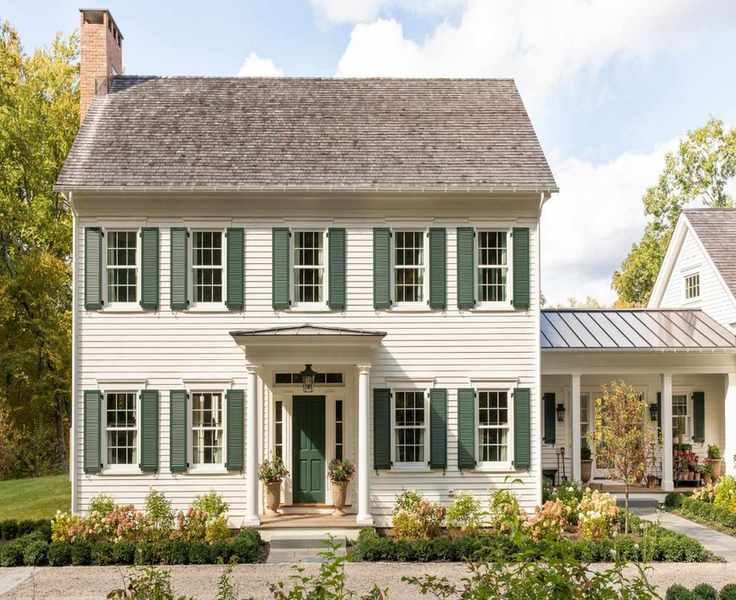
Selecting the right exterior paint colors is crucial for ensuring your house looks appealing and stands the test of time.
It's not just about reflecting your style; the best exterior colors should harmonize with existing materials, architectural styles, and the surrounding environment.
We've compiled everything you need to know, from popular paint pairings for 2026 to tips on selecting the ideal colors for your home. Here's what the experts suggest.
Exterior Paint Ideas
From classic white with black accents to bold colors that make a statement, here are the top exterior paint inspirations.
1. White Exterior With Dark Green Accents
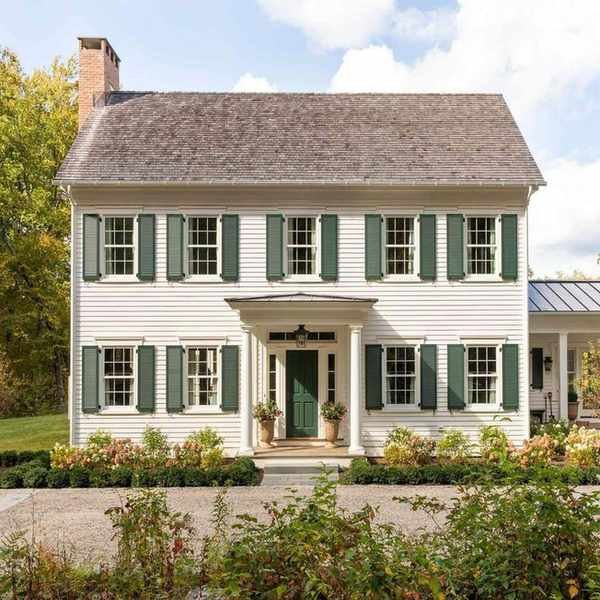
Farrow & Ball's Carriage Green accents this home beautifully.
Combining classic white with rich dark green creates a timeless aesthetic.
Designer Jennifer Hunter emphasizes the warm white siding that changes subtly with the light, providing a clean backdrop that highlights the architecture.
Choosing deep green accents rather than black adds richness and depth.
2. Modern Gray With a Touch of Red
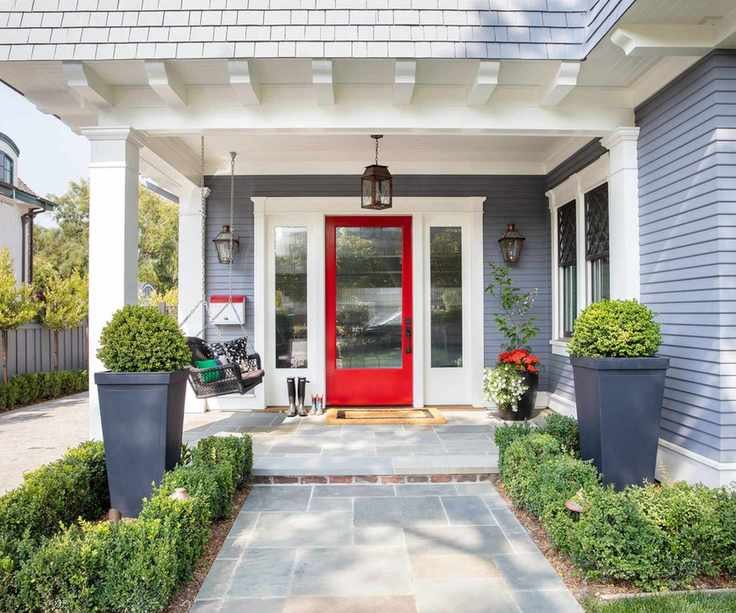
A bold red front door, like Benjamin Moore's Heritage Red, adds vibrancy to a gray exterior.
A gray exterior offers a modern touch, but a pop of color enhances interest. A glossy red front door provides a striking contrast.
As Emilie Munroe from Studio Munroe states, a classic red like Heritage Red never fails to make a statement.
3. Classic White With a Black Front Door
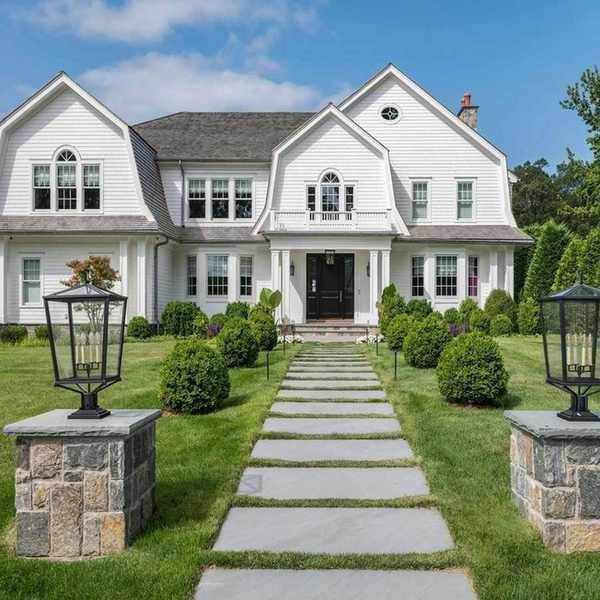
Complementing Benjamin Moore White Dove with a lacquered black door adds depth.
While color can inject personality, the classic white and black combo keeps it timeless.
Kerith Flynn of Margali & Flynn Designs shares that White Dove provides a seamless look, letting the architecture shine.
A lacquered black door introduces a striking focal point without overwhelming the calm palette.
4. Soft Neutrals With Bronze Touches
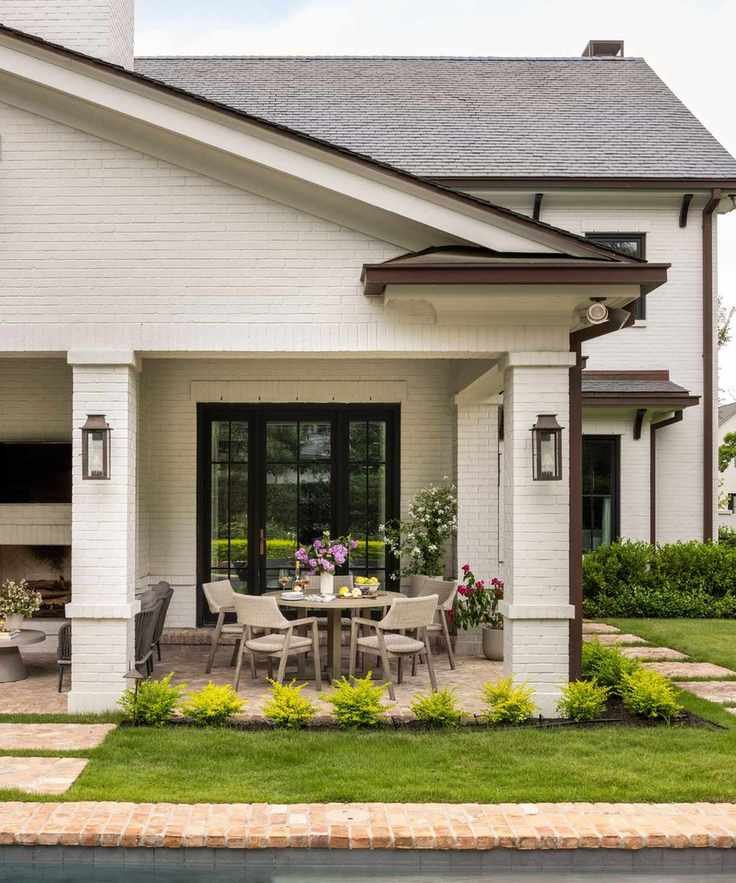
This home uses subtle bronze details for depth.
Your exterior paint should enhance non-painted materials like windows and doors. In this case, warm white pairs beautifully with bronze accents, reflecting the latest trends focused on earthy palettes.
Catherine Brooks Giuffre of CBG Interiors explains how these tones create a warm, inviting setting.
5. Creamy Whites With Red Brick
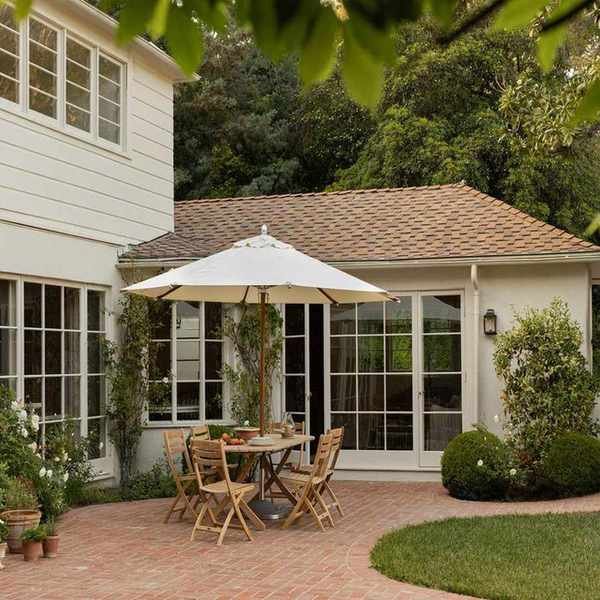
Farrow & Ball's Shadow White complements this traditional home.
Warm whites harmonize with red brick roofs, creating a classic neutral palette.
Alex Yeske notes that Shadow White provides a soft backdrop that works beautifully with the surrounding greenery.
6. Muted Greens
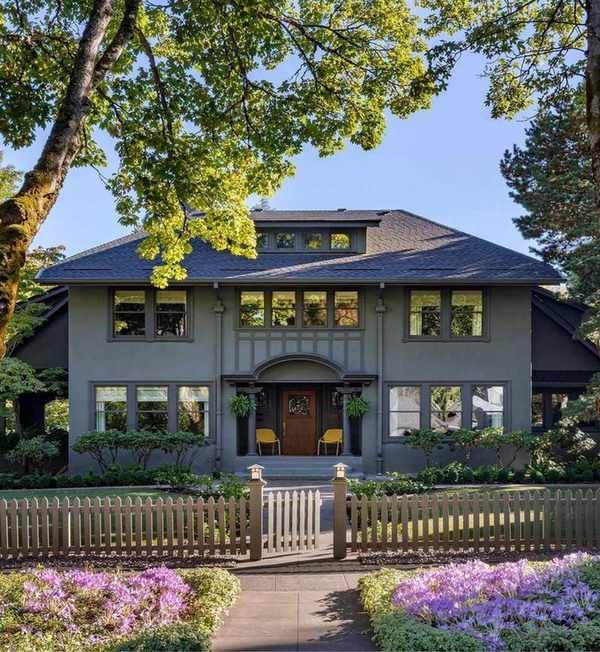
A custom shade echoes Sherwin-Williams' Retreat with darker accents.
This home's layered green tones avoid harsh contrasts, creating a softer look while respecting its historical context.
Joelle Nesen from Maison Inc. emphasizes that homes of this era often featured tone-on-tone trim, adding to the timeless appeal.
7. Mid-Tone Blue With White
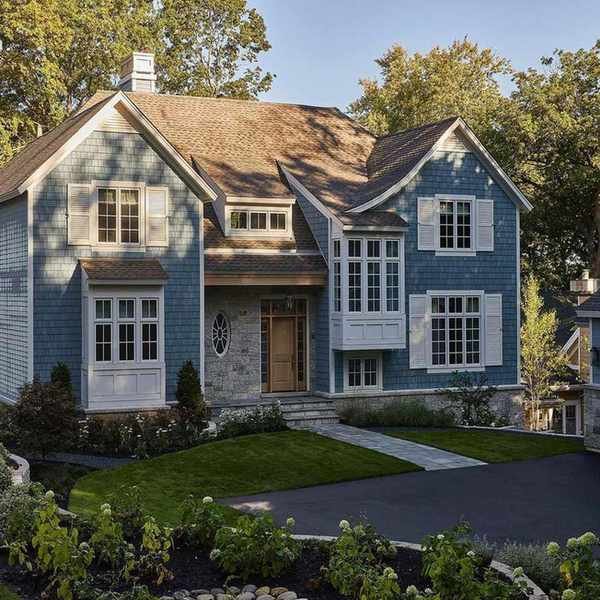
The blue used here is Benjamin Moore's Water's Edge.
Blue and white is a classic combination. Opt for earthy, muted blues for a sophisticated look.
Elizabeth Taich describes how this soft blue-gray mirrors water, creating harmony with nature.
8. Pale Blue Accents With White
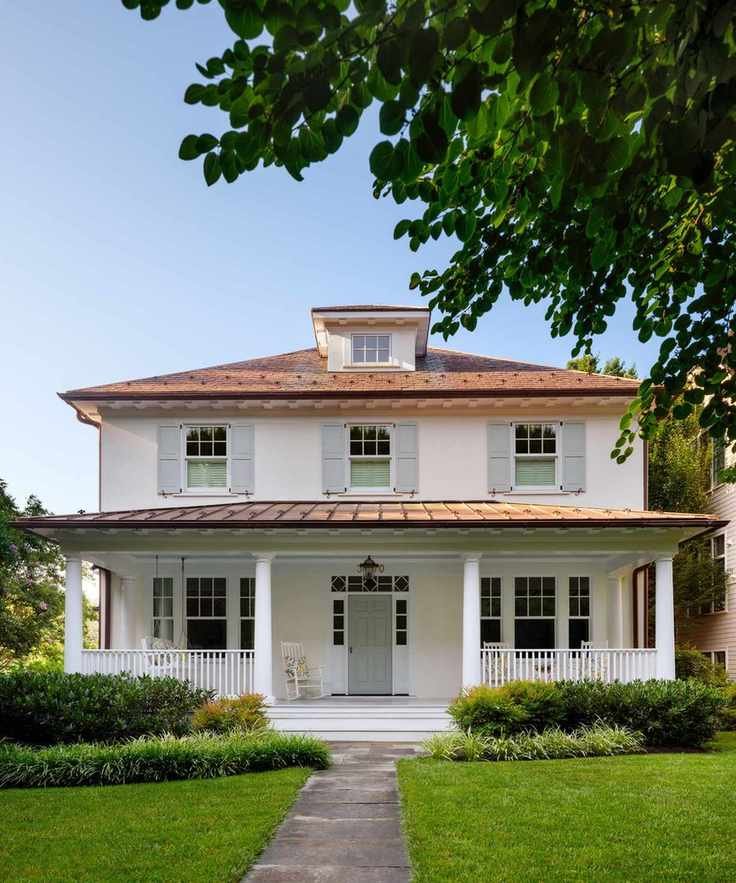
Farrow & Ball's Wimborne White pairs beautifully with Benjamin Moore's Beach Glass.
This lighter blue creates a fresh, neutral combination with white.
Michelle Vassallo of MV Architects believes this classic pairing never goes out of style, maintaining versatility across architectural styles.
9. Warm White With Light Brown
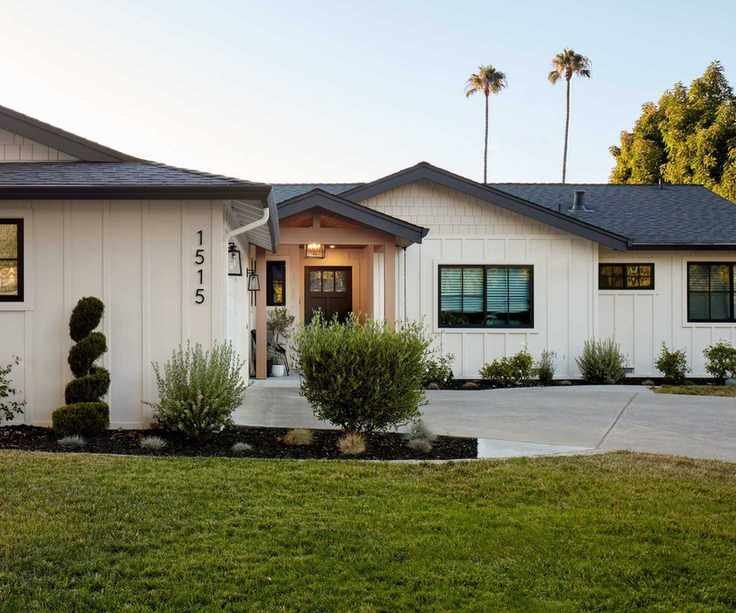
Combining warm white with varying browns creates a timeless tonal look.
This home's warm white exterior paired with light and dark browns provides a cohesive appearance.
Katelyn Gilmour from KBG Design chose Dunn-Edwards' Birch White for body color and Dunn-Edwards' Stucco Tan for accents.
10. Dark Green With Charcoal
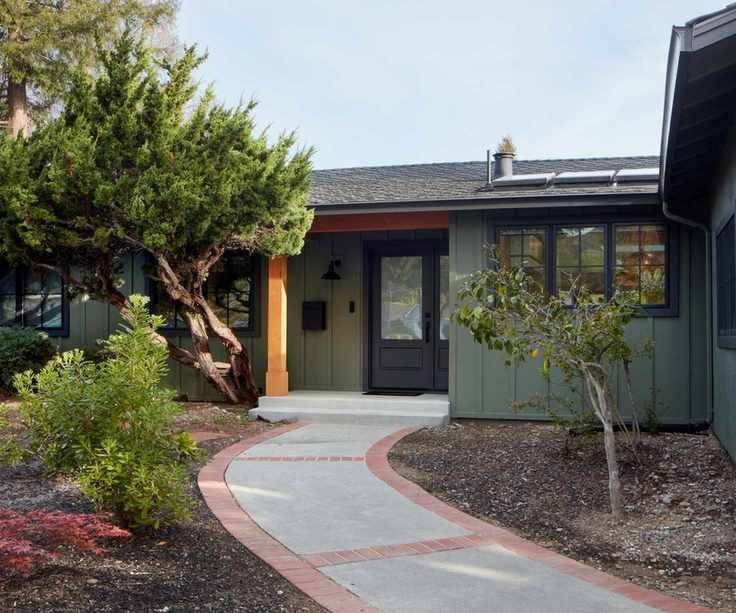
This earthy green pairs well with charcoal accents.
This combination of dark green and charcoal creates a natural, harmonious look.
Katelyn Gilmour notes that the green shade was intensified for a bolder appearance.
Selecting Your Exterior Color Scheme
Choosing an exterior color scheme can be daunting. Experts offer key considerations to simplify the process.

Consider your home's setting and sunlight exposure when selecting colors.
Start by considering your environment. Designer Jessica Whitely suggests using existing elements like stone or brick as a guide to create a grounded design.
Limit your palette to two or three primary colors to maintain cohesion and let the architecture shine.
For intricate styles, such as Craftsman or Victorian, four to six colors may suit the detailing. For simpler styles like Colonial, one to three colors often work best.
Contrast can add interest but should feel natural. Opt for muted, earth tones that enhance depth without starkness.
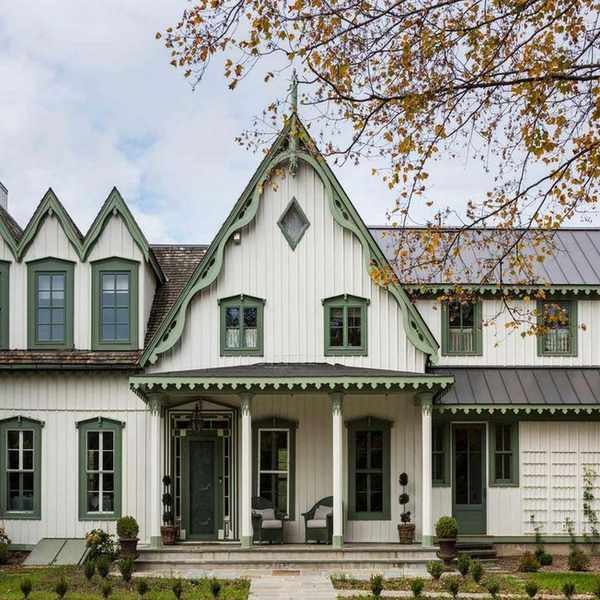
Ensure the undertones of your chosen colors complement each other.
Ensure color undertones harmonize. Colors with similar warmth create a balanced effect. Test samples in natural light to see how they respond to the environment.
Lastly, consider sunlight exposure as it can alter how colors appear throughout the day. Testing samples on various sides of your home is crucial.
For more inspiration, explore stylish color palettes for different home styles.
Coordinating Trim and Doors
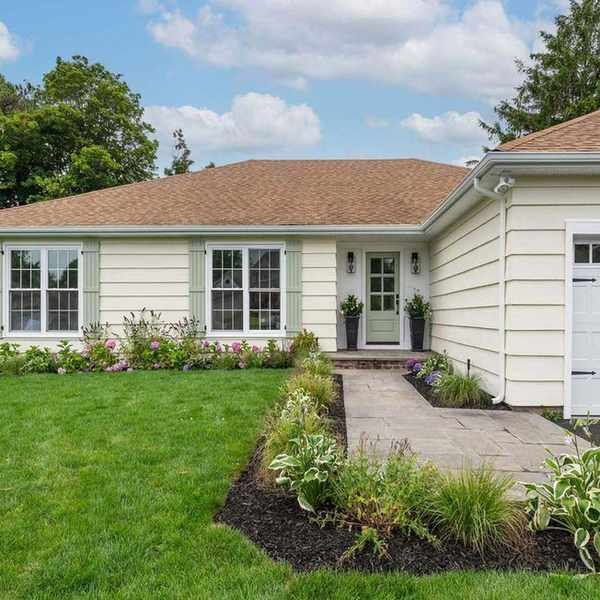
Sherwin-Williams' Creamy pairs with Benjamin Moore's October Mist on the door and shutters.
Your front door and trim don't need to match, but using similar colors can create a cohesive look.
For this home, a palette of warm colors complements the roofing, with October Mist adding a subtle contrast.
Louise Copeland often matches door and shutter colors, warning against tonal mismatches that can clutter the facade.
Paint Colors for Red Brick Homes
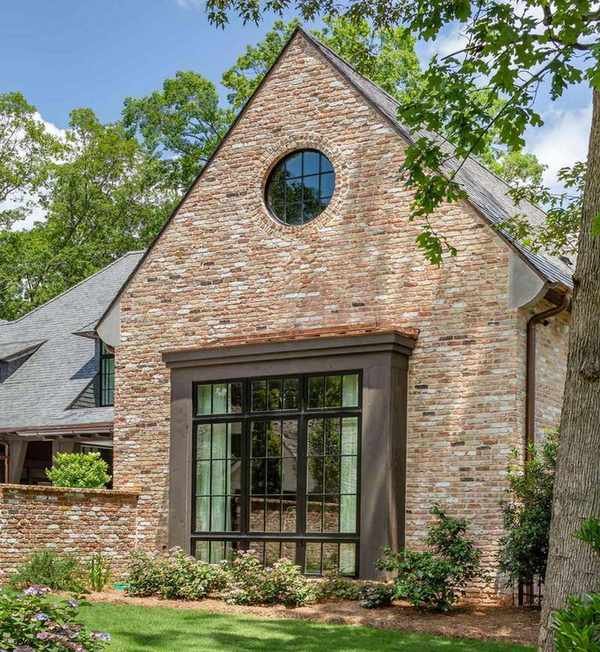
For a red brick home, Benjamin Moore's Spanish Moss serves well as an accent color.
For red brick exteriors, embrace the warm tones while selecting darker trim colors for balance.
Jessica Whitley advises using muted greens and warm charcoals to harmonize with the brick's warmth.
Paint Colors for Stone Homes
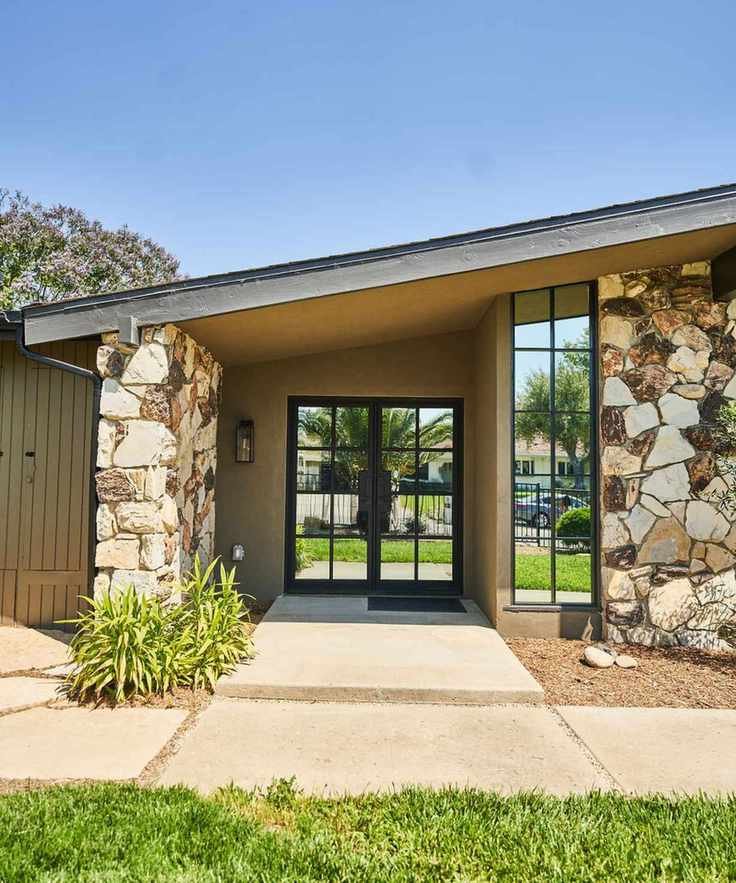
Choose paint colors that echo the tones in your stone for a cohesive look.
For stone homes, choose a palette that complements the existing tones for a natural appearance.
Sophia deDomenico from Et Sal Interiors recommends using a tertiary undertone present in the stone for a seamless design.
Paint Colors for Modern Renders
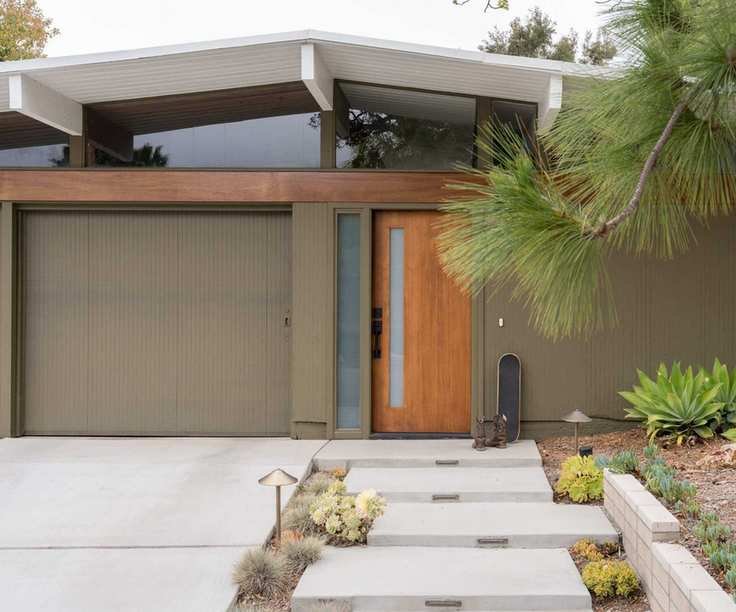
This modern home uses a custom color similar to Aegean Olive by Benjamin Moore.
For modern homes, base color choices on the surrounding landscape.
Sophia notes that muted tones support the architecture while harmonizing with the environment.
Avoiding Exterior Paint Mistakes
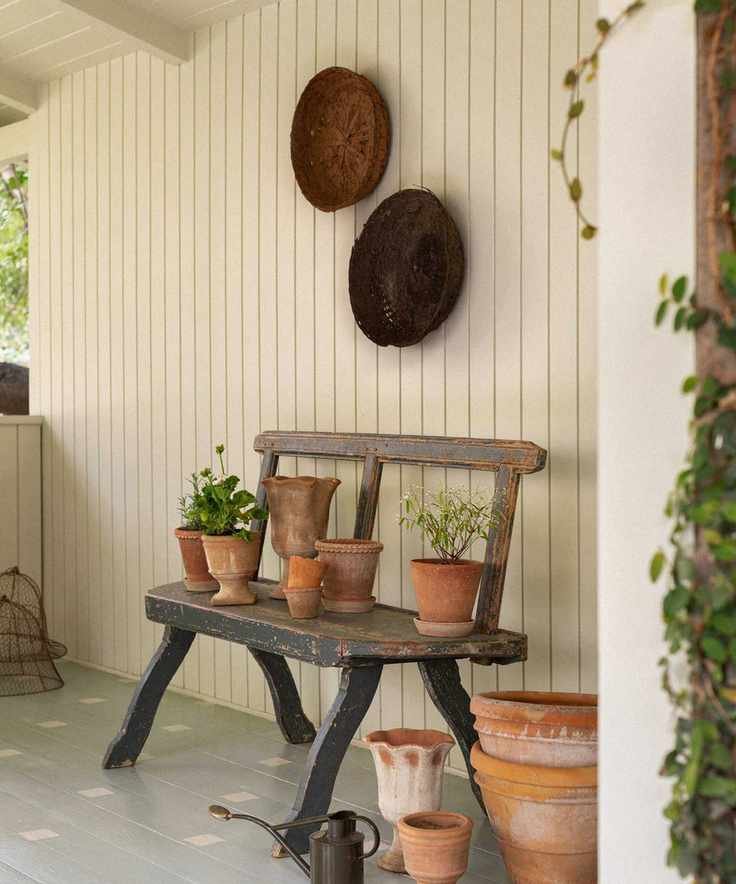
Avoid bright whites that appear stark; instead, opt for soft neutrals.
To maintain a timeless appearance, steer clear of common exterior paint pitfalls.
- Chasing trends: Trends can quickly date your home, warns Jessica Whitely.
- Neglecting samples: Always test paint in different areas to see how it looks in varying light, suggests Louise Copeland.
- Choosing harsh whites: Stark whites can clash with the environment, creating a disjointed look.
- Ignoring surroundings: Colors should respect the neighborhood context while still allowing your home to stand out.
- Overlooking undertones: Mismatched undertones can ruin a well-designed palette.
- Forgetting about durability: Consider how sunlight will affect your paint over time.
Exterior Paint FAQs
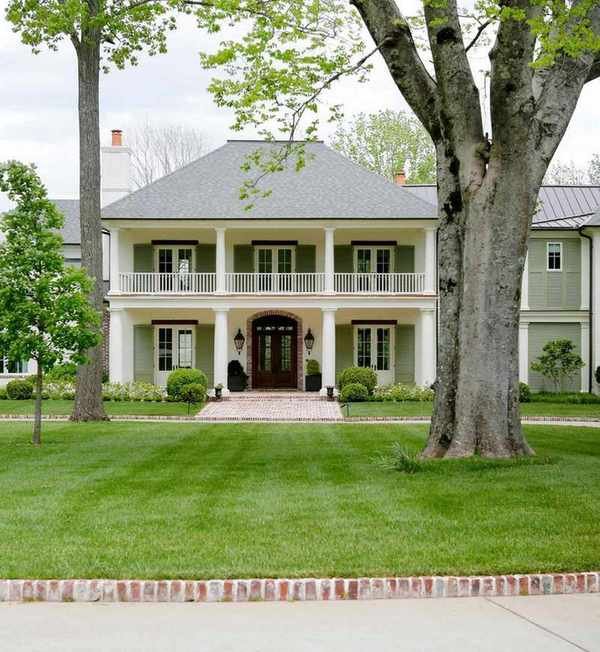
Soft whites and greens create a timeless aesthetic for traditional homes.
What are the trending exterior paint colors for 2026?
According to color expert Lauren Hoferkamp, 2026 trends lean towards warmth and natural tones, with creamy whites and soft taupes leading the way.
Hannah Yeo from Benjamin Moore notes a strong preference for muted greens that provide a timeless yet fresh feel.
Which colors make a house look more expensive?
Timeless colors like warm neutrals and creamy whites exude luxury, according to Lauren.
Complementing existing materials is also key for an elevated appearance, Hannah adds.
When is the best time to paint the exterior of a house?
The ideal painting season is late spring through early fall, as per David Underwood from Benjamin Moore.
Make sure the air and surface temperatures are suitable for application, typically between 35°F and 100°F.
Moderate humidity is vital to prevent drying issues.
How much does it cost to repaint a house?
Cost varies based on home size, paint type, and preparation needs, says Lauren Hoferkamp.
Proper prep work is essential for durability and often included in professional estimates.
When considering exterior paint ideas, focus on existing elements. By selecting colors that complement these features and the environment, your home will appear timeless and sophisticated. According to Jessica Whitely, the most successful designs are those that harmonize with the landscape.



