
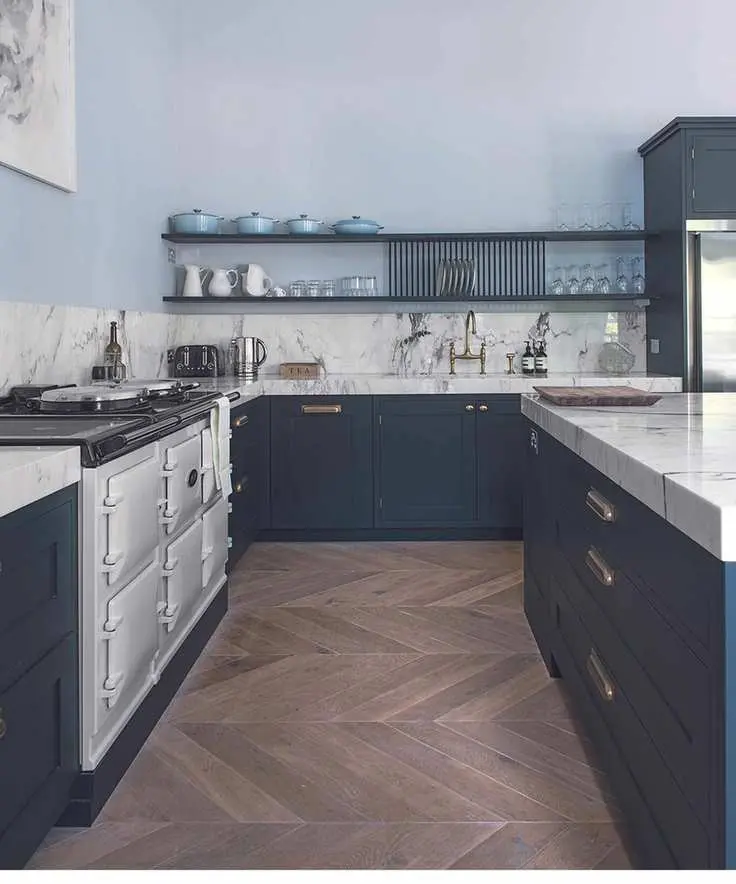
Selecting the ideal kitchen flooring involves balancing functionality with visual appeal. Both aspects are crucial for creating a beautiful and efficient space.
Fortunately, there's a wide variety of flooring types available to complement numerous kitchen styles.
Top Kitchen Flooring Choices
With so many options, knowing how to select the right kitchen flooring is vital. Each choice has its unique benefits and maintenance needs, making some options better suited for specific households.
Here's a breakdown of the best flooring selections for your kitchen.
Kitchen Floor Tile

Tile is a hygienic, visually appealing, and simple-to-clean flooring solution. While it falls under a single category, various materials are available, each with distinct characteristics:
Ceramic tile is a budget-friendly option. With an extensive array of colors and patterns, achieving your desired aesthetic is straightforward. You can select from various finishes, like matte or glossy, and it can mimic the appearance of wood or stone.
However, you might consider alternatives to ceramic kitchen tile ideas if durability is a priority, especially in busy homes. Additionally, ceramic is generally more porous than porcelain, which can lead to staining.
Porcelain tile is another reasonably priced kitchen tile option, potentially costing more than ceramic. It also offers a vast selection of colors and styles to achieve your desired look. Porcelain is durable, easy to clean, and resistant to damage.
Its only drawbacks are its hardness, which may not be forgiving for dropped items, and it can feel chilly underfoot without underfloor heating.
Natural stone tile is a chic and resilient choice for kitchen flooring. Options like granite, limestone, travertine, marble, and slate bring unique colors and patterns to your space. Natural stone exudes a character that synthetic materials cannot replicate.
While it's easy to clean and hygienic, natural stone requires more maintenance than ceramic or porcelain. Because it varies in porosity, sealing is necessary to avoid stains, and it will need resealing over time.
Like other tiles, natural stone is hard, which can be a downside for dropped items, and it can feel cool underfoot in certain climates.
Wood Kitchen Floors

Wood flooring adds warmth and charm. You can choose from solid timber or engineered varieties, both available at various price points.
Engineered wood flooring is often the better option due to its stability in changing temperatures and humidity from cooking.
Solid wood flooring is an option too, although some manufacturers advise against it for kitchens. If you opt for solid wood, ensure the kitchen is well-ventilated and check the warranty before buying.
While wood floors can scratch or stain, they can be sanded and refinished. Promptly cleaning spills and regular maintenance can help prevent damage.
Wood is generally more comfortable underfoot compared to tiles, providing a naturally warmer feel.
Vinyl Kitchen Floors

Vinyl flooring ideas combine practicality with style, offering a great choice for various settings. Made from PVC, vinyl is durable, water-resistant, and easy to maintain. It's especially suitable for family homes, as it provides a softer, warmer surface than tile or wood, and it's quieter to walk on.
Luxury vinyl tile (LVT) convincingly mimics wood and stone, allowing you to enjoy its benefits without sacrificing aesthetics. You can also find plain-colored options in soothing neutrals or vibrant hues for diverse design choices. LVT tiles can be replaced individually if damaged.
In terms of cost, high-quality LVT is a mid-range option. Avoid inexpensive sheet vinyl, as it tends to be thinner and less durable.
Linoleum and Cork Kitchen Floors

If you're seeking eco-friendly alternatives to traditional tile or wood, consider linoleum or cork flooring.
Linoleum is crafted from natural materials like linseed oil, wood flour, and pigments. It's durable, easy to clean, and resists water and stains. Available in various colors and finishes, it's also softer underfoot, making it a great choice for households with children.
However, be cautious with high heels, as they can mark linoleum, and excessive humidity may cause issues.
Cork flooring is another green option, made from tree bark. It's moisture-resistant, durable, and comfortable to walk on. Cork also absorbs sound and provides natural insulation. While many cork options are natural shades, colored varieties are available for striking designs.
Cleaning cork floors is straightforward, but spills should be addressed quickly. It may not be ideal for pet owners since claws can scratch its surface, though cork can be refinished to refresh its look.
Laminate Kitchen Flooring

Laminate flooring is a cost-effective method for achieving the appearance of more luxurious materials such as wood or stone. A high-quality laminate is durable and easy to maintain. While it's water-resistant, selecting a version with a water-repellent coating is wise if spills are a concern.
Like wood and tile, laminate is harder and noisier than vinyl, linoleum, or cork, and cannot be refinished if damaged.
Polished Concrete Kitchen Floors

Polished concrete flooring is an excellent choice for a modern kitchen. It offers various colors and finishes, making it a versatile option for contemporary designs.
This flooring is incredibly durable, perfect for high foot traffic and pet-friendly homes, and easy to maintain. Despite its sheen, polished concrete is non-slip. However, it's hard, so dropped items may suffer damage, and it lacks cushioning underfoot.
Pairing polished concrete with underfloor heating is beneficial, as it retains warmth in sunny spaces.



