

If you've ever been confused in a fitting room, you're not alone. Bra sizing can be perplexing, especially when sizes seem virtually identical. The distinction between 34AA and 34A may appear minor, but it significantly impacts comfort and fit.
In this article, we’ll explore the differences between these two sizes, guide you in selecting the right one for your needs, and show you how to measure accurately.
Quick Comparison: 34AA vs 34A
Both sizes share the same band measurement, wrapping around a 34-inch underbust. The difference lies solely in the cup size. A 34AA accommodates a bust measurement of 0 to 0.5 inches larger than the underbust, while a 34A fits a bust that is about 1 inch larger.
In essence, 34AA has a smaller volume and shallower cup projection. If your 34A cups gap or don’t fully fill out, 34AA might provide the snug fit you seek. Conversely, if you find yourself spilling over in 34A, consider moving up a size rather than down.
| Feature | 34AA | 34A |
|---|---|---|
| Band Size | 34 inches | 34 inches |
| Cup Volume | Smaller (~0-0.5” difference) | Larger (~1” difference) |
| Best For | Very shallow bust, minimal projection | Slightly fuller A-cup bust |
| Common Issue | Hard to find in stores | Widely available |
Use this for a quick reference, then continue reading to discover why these sizes fit differently.
Understanding Bra Sizes: The Meaning Behind 34AA and 34A
A bra size consists of two measurements: a band number and a cup letter. The number (34) indicates your ribcage circumference, while the letter (AA or A) reflects how much your bust extends beyond your underbust.
The 34 band typically corresponds to an underbust measurement of about 31 to 33 inches, varying by brand. Some sizing methods may add inches to the raw measurement, which explains why you might wear different band sizes across brands.
The cup size is interesting. It’s not a fixed volume; instead, it’s determined by the difference between your bust measurement at its fullest and your snug underbust measurement:
- 34AA→ 0 to 0.5 inch difference
- 34A→ approximately 1 inch difference
- 34B→ approximately 2 inch difference
This means a 34A cup does not have the same volume as a 30A or 38A. The cup size scales with the band size, so a 30A holds less volume than a 34A.
Example: If your underbust measures 32 inches and your bust measures 32.5 inches, that’s a 0.5-inch difference, placing you in the 34AA category if you prefer a looser band, or 32AA for a snug fit.
Many women in the 34A range find they’re better suited to a smaller band with a larger cup once they measure correctly. For instance, a 30C or 32B could fit much better than a 34A if your underbust is closer to 28-30 inches. The right cup size depends on both measurements.
Fit, Shape, and Comfort: 34AA vs 34A
While both sizes cater to smaller cup volumes, they fit quite differently. Knowing what a proper fit looks like for each size is key to determining which one works for you.
How a Properly Fitting 34A Should Look
A correctly fitting 34A should have cups lying flat against your chest without overflow at the top or sides. A little space at the very top of the cup is normal, but you shouldn’t see gaping that’s visible through your clothing.
The band should remain level around your torso without riding up your back. If it creeps towards your shoulders when you raise your arms, it’s likely too loose. The straps should remain in place without constant adjustment.
How a Properly Fitting 34AA Should Look
A well-fitted 34AA should have cups fully filled without wrinkles or creases. This size is perfect for those with a bust-underbust difference under 1 inch or for women whose 34A cups often appear slightly empty.
The fit should feel snug yet comfortable, with the underwire, if present, resting behind the breast tissue.
Signs Your 34A Cup Is Too Big
If you notice any of these issues, consider trying 34AA or a different size:
- Gaping at the top of the cup, even when standing straight
- Creasing or folding inside the cup
- Straps that require constant tightening
- A feeling of the bra “floating” away from your figure
Signs Your 34A Cup Is Too Small
If you observe any of the following, you may need a larger cup size:
- Breast tissue spilling over the edges (often called “quad boob”)
- Underwire resting on breast tissue instead of behind it
- Cups feeling shallow or cutting into your shape
- Visible lines under fitted clothing from spillage
Take a moment to evaluate your current bra in the mirror. Comparing your fit to these cues will reveal whether you should size up, size down, or remain with your current size.
Sister Sizes: Understanding 32B and 36AA in Relation to 34A
Sister sizes are a vital concept in bra shopping that many women overlook. These sizes adjust the band while maintaining a similar cup volume.
For 34A, the common sister sizes include:
- 32B— tighter band, one cup letter larger, similar cup volume
- 36AA— looser band, one cup letter smaller, similar cup volume
It’s important to note that 34AA is NOT a sister size to 34A. It keeps the same band but has a smaller cup volume. Transitioning from 34A to 34AA means reducing cup space.
Examples of Sister Size Equivalents
| Smaller Band | Your Size | Larger Band |
|---|---|---|
| 32B | 36AA | |
| 32A | 36AAA (if available) |
When should you consider sister sizes instead of immediately switching to 34AA?
- Choose 32B if your 34A band feels loose but the cups fit well. A tighter band with the same volume often provides better support.
- Choose 36AA if your 34AA cups fit well but the band feels too tight.
In many cases, sister sizing is more beneficial than jumping straight to 34AA if your main concern is the band size.
Measuring Yourself at Home: Confirming Your Size
Guessing your size based on past purchases often leads to incorrect fittings. Accurate measurements, not assumptions, are key to determining if 34AA or 34A is right for you.
Step-by-Step Measuring Instructions
Grab a soft measuring tape and follow these simple steps:
1. Measure your snug underbust
- Remove your bra or wear a non-padded one
- Wrap the tape around your rib cage, just beneath your breasts
- Keep the tape snug, not tight, and breathe normally
- Record this measurement in inches
2. Measure your bust at its fullest
- While standing straight, wrap the tape around the fullest part of your bust
- Ensure the tape is parallel to the floor
- Don’t pull tight; let it rest naturally
- Record this measurement in inches
3. Calculate the difference
- Subtract your underbust measurement from your bust measurement
- This difference determines your cup size
Converting Underbust to Band Size
Typical US sizing works like this:
| Underbust Measurement | Typical Band Size |
|---|---|
| 28–29 inches | 30 |
| 30–31 inches | 32 |
| 32–33 inches | 34 |
| 34–35 inches | 36 |
Some brands may still use the “+4 method,” adding 4 inches to your underbust, while others size more directly. Prioritize fit and comfort over formulas.
Understanding Your Bust-Band Difference
| Difference | Cup Range |
|---|---|
| 0–0.5 inches | AA cup |
| ~1 inch | A cup |
| ~2 inches | B cup |
| ~3 inches | C cup |
| ~4 inches | D cup |
Example Calculation
For instance, if you measure 28 inches at the underbust and 32 inches at the bust, that’s a 4-inch difference, indicating a D cup. On a 30 band (closest to your underbust), you’d be a 30D, rather than 34A or 34AA.
This highlights the importance of accurate measurement. Many women wearing 34A might find a much better fit in 30C, 30D, or 32B based on their actual measurements.
For a quick check, utilize a reputable online bra size calculator. Treat 34AA or 34A as test sizes if the calculator suggests you’re in that range.

Choosing Between 34AA, 34A, or Other Sizes
Determining your ideal size depends on measurements, breast shapes, and how your bras perform in reality. Here’s how to refine your options.
When 34AA Is Appropriate
Consider 34AA if:
- Your underbust measurement aligns with a 34 band (31–33 inches) and your bust is 34 inches or less, resulting in a less than 1-inch difference
- Your 34A bras consistently gap or wrinkle, regardless of padding
- You prefer a snugger, more fitted cup
- You have a narrow, shallow breast shape
When 34A Is Likely Right
Stick with 34A if:
- Your underbust is around 31–33 inches and your bust is about 35 inches (1–2 inch difference)
- Your current 34A bras fit mostly flat with minor, unnoticeable gaping
- You don’t experience overflow at the top or sides
- The band stays level without riding up
When to Consider Alternatives to 34AA and 34A
Sometimes neither size is correct. Consider exploring other sizes if:
- Your underbust is under 30 inches— You may need a 28 or 30 band with larger cup sizes like 30C, 30D, or 28DD.
- Your underbust exceeds 34 inches— A 36+ band with the right cup adjustment will likely fit better.
- You experience spillage or “quad boob” in 34A— This often indicates a need for a larger cup, possibly in a smaller band.
When shopping, try on at least two band sizes and two adjacent cup volumes (like 32B, 32C, 34AA, and 34A) for comparison. Minor variations between brands and styles are normal; sizes serve as a starting point.
Shopping Tips for 34AA and 34A: Styles and Expectations
Finding smaller cup sizes used to be challenging, but options have broadened significantly. Here’s what to expect when shopping.
Where to Find 34AA and 34A
34AA is a different story. This size is more commonly available at:
- Specialty brands focusing on petite sizes
- Online retailers with extended size ranges
- Brands prioritizing accurate cup sizing
- UK and European brands (mind size conversion differences)
If you can’t locate 34AA in stores, online shopping with free returns can be a great option.
Styles Suited for Smaller Busts
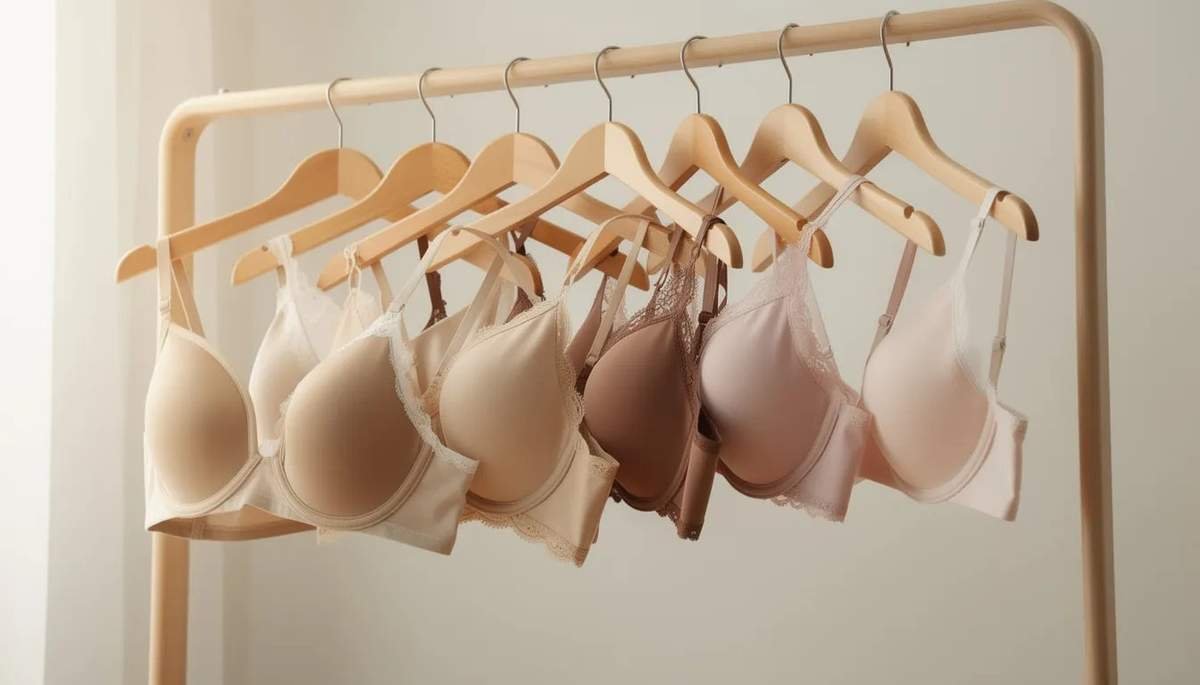
- Lightly lined T-shirt bras— Offer a smooth silhouette without unnecessary bulk
- Bralettes and wireless bras— Comfortable for all-day wear, especially in precise sizes
- Removable padding options— Allow you to customize your shape based on your outfit
Common Fit Mistakes to Avoid
- Molded cups that are too tall— Can cause gaping at the top, even if the volume is accurate
- Deep plunge styles— May not sit flush against your chest if the cup size is slightly too large
- Heavily structured push-up bras— Can create an odd shape if there isn’t enough breast tissue
Maximize Your Shopping Experience
- Check size charts for each brand— A 34A in one brand may feel like a 32B or 34AA in another due to variations in construction.
- Read reviews from similar shoppers— Look for those mentioning 34AA or 34A, or who share measurements similar to yours.
- Order multiple sizes online— If you're unsure between 34AA and 34A, or want to try 32B as a sister size, order both and return what doesn’t fit.
- Start on the loosest hook— A new bra should fit snugly on the loosest hook, allowing for adjustments as the band stretches.
Final Thoughts
Both 34AA and 34A are valid sizes that cater to real women's bodies. The AA cup isn't an anomaly; it exists because some women genuinely require it for a fitting bra. Likewise, there’s nothing aspirational about a larger cup if it doesn’t match your actual measurements.
What truly matters is your comfort in your bra. The right fit should seamlessly integrate into your day, free of pulling, adjusting, or pinching. Take the time to measure accurately, and don’t hesitate to try a size you haven’t considered before. Your next shopping trip could lead to the perfect fit.



