Your bra cup size indicates breast volume in relation to band size, not just a standalone letter. For instance, a 34C and 38C represent different volumes, as the cup letter relies on the band number.
Cup size is determined by the difference between your bust measurement (the fullest part of your breasts) and your underbust measurement (snug around the ribcage). Each inch of difference corresponds to a cup letter in US and UK sizing.
Here’s a quick breakdown:
Underbust measurement: 32 inches
Bust measurement: 36 inches
Difference: 4 inches
Result: 32D in US sizing
This guide aims to clarify bra sizing for 2026 shopping, whether you're purchasing online, switching brands, or adjusting to changes in fit.
What Does Cup Size Mean?
Cup size denotes a “volume category” based on the difference between bust and band measurements. It's always relative to the accompanying band size. For more on support and bra replacement timing, check out our guide on bra failure.
The inch-based method in US and UK sizing is as follows:
1-inch difference = A cup
2-inch difference = B cup
3-inch difference = C cup
4-inch difference = D cup
5-inch difference = DD or E cup
6-inch difference = DDD or F cup
7-inch difference = G cup
To better visualize cup volume for a 32 band:
32A: Bust measures 33 inches (1-inch difference)
32B: Bust measures 34 inches (2-inch difference)
32C: Bust measures 35 inches (3-inch difference)
32D: Bust measures 36 inches (4-inch difference)
32DD: Bust measures 37 inches (5-inch difference)
32F: Bust measures 38 inches (6-inch difference)
32G: Bust measures 39 inches (7-inch difference)
Double letters like DD and FF in UK sizing are interim steps, not “twice as big” as single letters. Some brands use E instead of DD, so always check specific sizing charts before purchasing.
How to Measure for Accurate Cup Size
Measuring at home is more reliable than outdated “+4 inches” rules. Modern brands recommend the “+0” method for a more accurate fit. Each inch of difference between bust and underbust measurements indicates an increase of one letter in cup size.
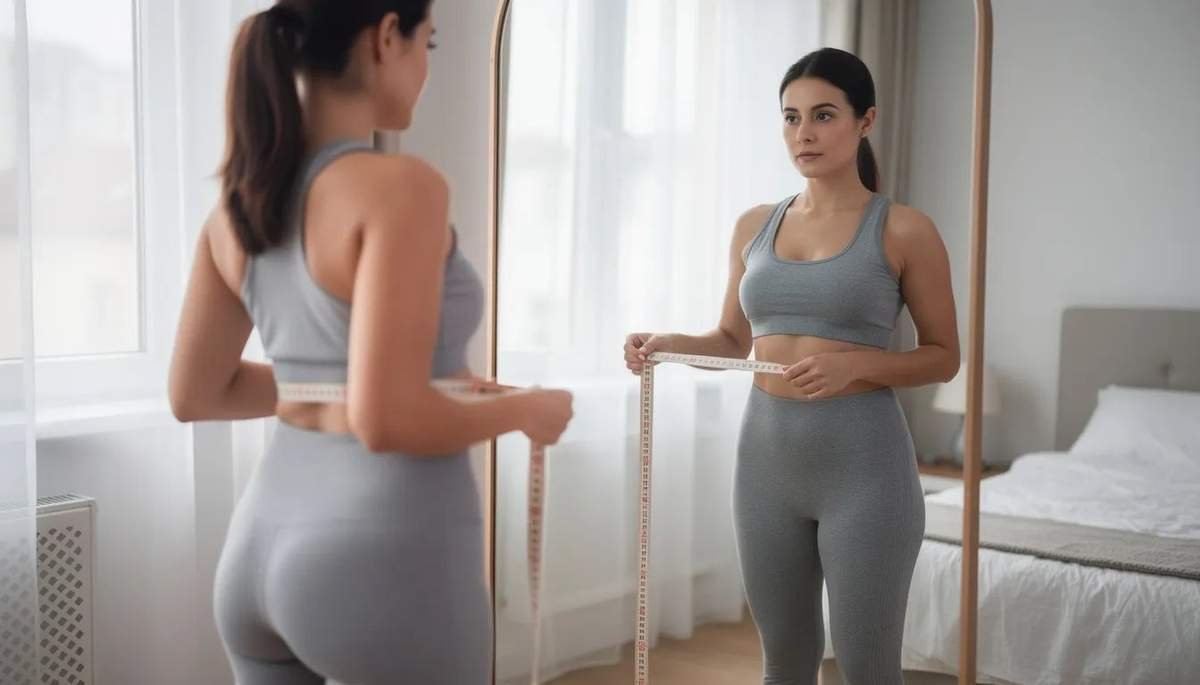
What you’ll need:
Soft tape measure (inches or cm)
A mirror
A non-padded or lightly lined bra (or measure braless)
Step 1: Measure Your Band/Underbust
Wrap the tape measure snugly under your bust at the inframammary fold
Ensure the tape is level
Exhale before taking the measurement
It should be tight enough for one finger to fit underneath
Step 2: Measure Your Bust/Overbust
Wrap the tape around the fullest part of your breasts
Keep the tape level while your arms are relaxed
Ensure the tape is loose enough to avoid compressing breast tissue
For fuller cups (D+), lean forward while measuring for better accuracy
Step 3: Round Your Measurements
In inches: round to the nearest whole number
In cm: round to the nearest 0.5 or 1 cm
Round underbust to the nearest even number for band size
Step 4: Calculate Your Cup Size
Convert underbust to band size (e.g., 31 inches → 32 band)
Subtract band from bust measurement
Match the difference to the corresponding cup letter
Example:
Underbust: 29.5 inches → rounds to 30 band
Bust: 35.5 inches → rounds to 36 inches
Difference: 36 - 30 = 6 inches
Result: 30DDD/F
For very soft or heavy breasts, averaging both standing and lying down measurements can yield a more realistic estimate.
Cup Size Progression from AA to H in 2026
Cup volume increases incrementally, but the perceived change intensifies from DD through H cup sizes. Each step adds a similar volume for a fixed band, yet the overall impact grows.
Sister sizes change the band size while maintaining cup volume (e.g., 34C to 36B). Common starting sizes include AAA, AA, A, B, C, D, DD+, with variations in US and UK sizing for larger sizes. Some brands offer half sizes to accommodate overflow. Regular re-measurement is vital as body sizes fluctuate.
Bra sizing systems differ globally, leading to consumer confusion. The U.S. uses a system where cup sizes increase by 1 inch, while many European systems add 2 centimeters. For example, in the UK, sizes range from A to LL, whereas in the U.S., they generally go from A to G, with some brands offering larger options.
Typical progression in US/UK systems is:
AA → A → B → C → D → DD/E → DDD/F → G → H
On a 32 band, moving from A to H represents a 10-12x increase in total breast volume. Here’s a rough volume range per breast for industry standards in 2026:
32A: 150-200 cc
32C: 350-450 cc
32DD: 600-750 cc
32G: 1100-1300 cc
32H: 1500-1800 cc
The same cup letter on a larger band spreads volume over a broader chest. A 38D appears less projected than a 32D, despite sharing the letter, highlighting the need to consider both band and cup sizes together.
For larger cup sizes (G cup, H, and above), specialized designs are crucial, typically featuring:
Wider underwire spans
Stronger side wings for stability
Structured, multi-part cups
Reinforced fabric with minimal stretch in load-bearing areas
Proper support for sizes D and above often requires wider bands and reinforced structures. Signs of improper fit include discomfort, marks, or overflow. If the band rides up, it's too large. A well-fitted bra should feel comfortable and supportive without noticeable pressure.
Visualizing Cup Sizes: Examples
Letters can be misleading without context. A “D cup” varies significantly between a 30 band and a 40 band. The examples below utilize a 32 band for comparison.
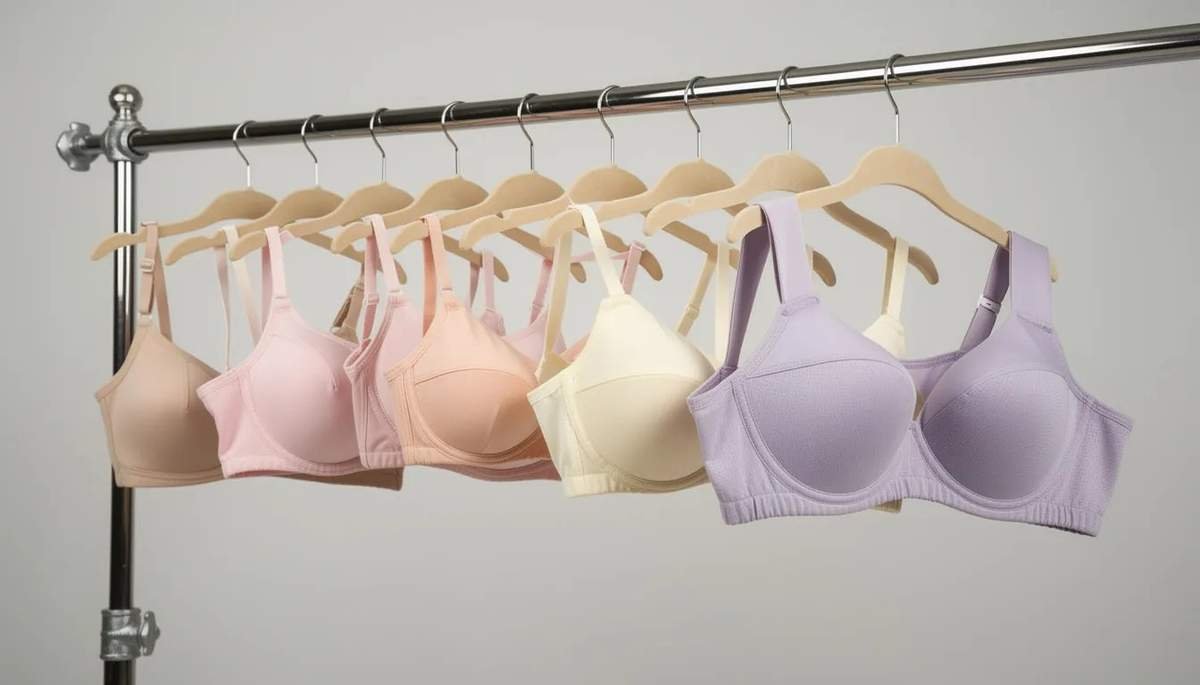
32A: Minimal volume, ideal for bralettes or lightly lined bras.
32C: Moderate volume, common for women in their 20s and 30s, suitable for classic T-shirt bras.
32DD/E: Fuller bust needing a firm band and well-shaped underwire for support.
32G: Significant volume requiring bras designed for fuller busts, such as those with wide straps and side support.
32H: High volume needing wide bands and strong side wings for proper weight distribution.
These variations influence clothing fit. Women in DD+ sizes often face issues like gaping button-up shirts or needing to size up for tops.
International Cup Sizes & Conversions
Cup letters don’t translate uniformly across countries, especially above a D cup. Know these differences to avoid costly mistakes when shopping abroad.
Main systems include:
US/UK: Inch-based with double letters for intermediate sizes
EU: Centimeter-based with cups increasing every 2 cm
FR/ES: Add 15 cm to EU band sizing
AU/NZ: Use dress-size-based band labels
At smaller sizes (A through C), letters typically match across systems. From D upwards, names diverge.
Conversion examples:
34DD (US) ≈ 34E (UK) ≈ 75E (EU)
FR 90C = EU 75C = UK 34C
AU 12D ≈ UK 34D
US DDD = UK F
A European size uses a different band number; a UK 32D translates to EU 70D, where 70 is centimeters.
Always consult a size chart when shopping internationally, especially for D+ cups, as some brands simplify labels, skipping double letters.
Understanding Sister Sizes
Sister sizes are different band and cup combinations sharing the same volume, useful for fine-tuning fit when you fall between standard sizes.
The principle: going down one band size and up one cup letter keeps volume similar, while going up one band size and down one cup letter loosens the band without losing volume.
Sister size chain example:
30D = 32C = 34B = 36A
All combinations maintain similar cup volume across different band sizes.
Another example:
32G = 34FF = 36F = 38E
These also share similar cup volume despite different labels.
Using sister sizes:
If your size feels tight in the band but cups fit well, try one size up in band and one down in cup.
If you need more support but cups are right, go one size down in band and one up in cup.
Use sister sizes when a brand lacks your exact size.
However, sister sizes are a fine-tuning tool, not a substitute for your base size. If you're off by more than one sister size, the fit may suffer.
Fit Check: Is Your Cup Size Right?
Studies indicate that 70-85% of women wear incorrect cup and band sizes. A correctly fitted bra should be comfortable and supportive under clothing.

Signs your cup is too small:
Breast tissue spills over the cup’s edge
The center panel floats away from the breastbone
Underwire rests on breast tissue instead of the inframammary fold
Visible lines from “quad-boob” under clothing
Red marks from underwire pressure
Signs your cup is too big:
Wrinkling or gaping at the cup’s top
Cup edges don’t lie flat against the breast
Excessive strap tightening needed for fullness
Cups pucker when moving
Cup issues often relate to band problems. A loose band can cause the bra to ride up, mimicking a too-small cup, while a tight band can force tissue out of properly sized cups.
At-home fit test:
Wear your bra, do the “scoop and swoop,” lean forward, then straighten up.
Ensure the center gore lies flat against the breastbone.
Check that the underwire follows your breast root without sitting on tissue.
Ensure the band is level and parallel to the floor.
Verify that straps support without digging.
About 20-25% of women experience asymmetry, so fit the larger breast and use padding for the smaller side.
Cup Sizes by Body Changes
Cup size varies over time. Most women undergo significant changes from ages 18 to 50+, making re-measurement crucial.
Menstrual cycle fluctuations:
Some women experience monthly volume changes up to 20%, particularly in D+ cups.
Tenderness and swelling are common pre-menstruation.
Stretch lace cups better accommodate these changes than rigid designs.
Pregnancy and breastfeeding:
Women may go up 1-3 cup sizes from first trimester to postpartum.
Band sizes often increase by 1-2 sizes as the ribcage expands.
Breast volume can fluctuate significantly during nursing.
Post-weaning, some may return to pre-pregnancy size, while others may not.
Weight changes:
Gaining or losing 5-10 kg usually alters both band and cup size.
Breast tissue responds to overall body changes.
Changes vary; some see significant bust changes, others less so.
Hormonal factors:
Hormonal contraceptives can increase cup size by 1-2 sizes.
Hormone replacement therapy affects tissue density and volume.
Gender-affirming hormones can change breast volume over months.
Re-measure every 6-12 months or after major life changes. A bra size calculator can help track these variations.
Cup Size, Styles & Support
Cup letter alone doesn't determine the best bra style. Breast shape, tissue firmness, and personal preferences influence choices.
Common breast shapes:
Full on top: Works well with balconette and plunge styles.
Full on bottom: Benefits from full-cup and side-support designs.
Projected: Needs depth in cups for effective support.
Shallow: Fits well in demi-cups and bralettes.
Wide set: Suited for plunge styles with narrow center gores.
Style guidance by cup range:
A-B cups: Bralettes, plunge styles, and light lining for comfort.
C-DD cups: T-shirt bras and lightly padded options work well.
F-H+ cups: Full cup designs and structured bras for support.
Push-up bras can visually increase cup size, distorting perceptions of “true” size. For accurate measurements, use a non-padded bra.
For larger sizes, prioritize designs that distribute weight across the band, relieving strain on straps.
Common Cup Size Myths vs Facts
Myths about cup sizes are prevalent. Here’s what the evidence shows.
Myth 1: “D cup is huge.”
Fact: On a smaller band, a D cup is relatively modest. Average sizes have shifted toward D-DD due to better fitting awareness.
Myth 2: “Same letter means same size.”
Fact: A 32D and 38D represent different volumes; both must be considered together.
Myth 3: “You can eyeball cup size from photos.”
Fact: Camera angles and padding make visual estimation unreliable.
Myth 4: “Once you know your size, it’s universal.”
Fact: Size variations exist across brands and countries; treat your size as a starting point.
Myth 5: “Incorrectly fitted bras are just uncomfortable.”
Fact: Poorly fitted bras can lead to pain and posture issues; proper fit distributes weight correctly.
Focus on measurements and fit checks instead of relying on labels or social media claims. Your body knows best, not the tag.
Cup size reflects volume relative to band size, and a letter alone lacks meaning without its band number. Use the modern “+0” method for measuring accurately and adjust as necessary. Sister sizes can fine-tune fit. International sizing varies significantly above D cup; always refer to specific brand charts. Remeasure regularly to account for body changes, ensuring a properly fitting bra provides the right support and comfort.
Finding your ideal cup size is a journey. Use this guide as a starting point, try multiple sizes, and trust what feels right. A professional fitting can offer valuable insights if you've been in the wrong size for a long time.