
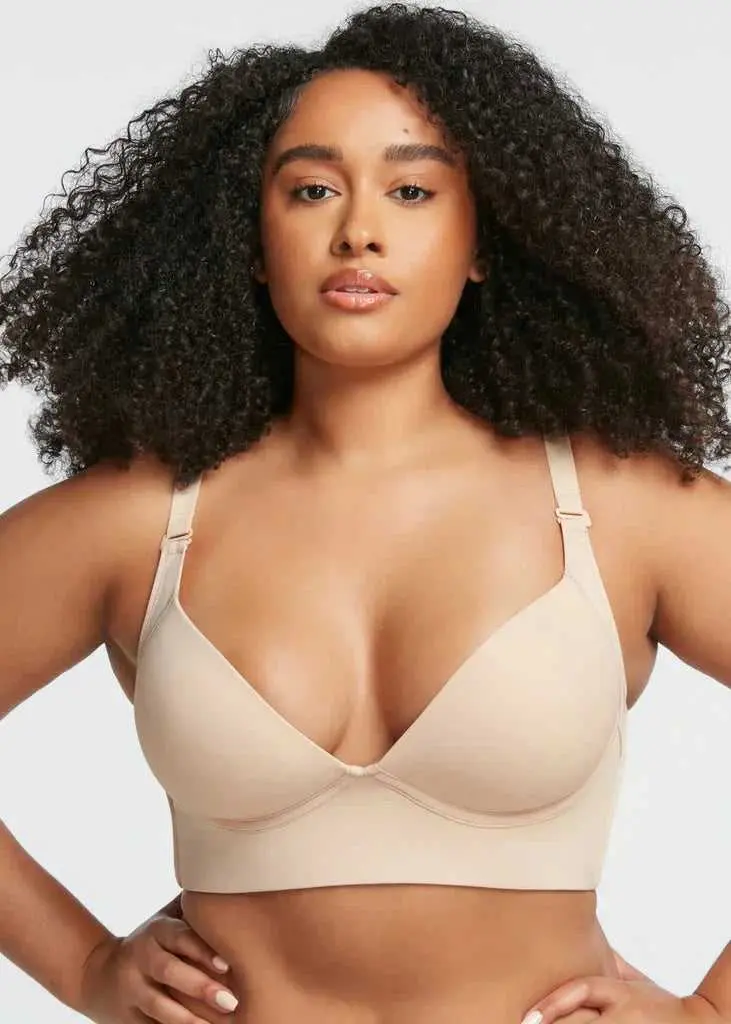
Is a D cup considered big? This common question regarding bra sizing lacks a straightforward answer. Breast size varies significantly depending on individual factors like body frame, band size, and personal perception. The bra measurement system can be perplexing, as it differs by region, complicating the determination of whether a D cup is indeed ‘big’. Cup sizes can only offer an approximate fit due to inconsistent standards among manufacturers, making it tough to find a bra that fits well across different brands. Let’s clarify what a D cup signifies, exploring the intricacies of cup sizes and their impact on fit, comfort, and appearance.
Bra cup sizes were introduced in 1932, while band sizes gained popularity in the 1940s. The term 'cup' was officially used in 1916 following two patent filings. Different countries have their own bra size labeling systems due to the absence of global standards. Research has shown that the label often does not match the actual size. Initially, cup sizes A to D were not designed for larger-breasted women. The current sizing system is frequently inaccurate, prompting Jockey International in 2013 to propose a new measurement method.
Basics of Cup Sizes
Cup size, like a D cup, denotes the difference between measurements of the bust's fullest part and the underbust area. This volume is essential for sizing, as it indicates how much space the bra is meant to accommodate. The lettered designations, A, B, C, D, etc., were created to standardize breast volume measurements.
The difference between bust and underbust measurements is critical: each inch of difference corresponds to a cup size, making a D cup represent a 4-inch difference. While some guides suggest rounding this difference to the nearest whole number, this core rule can vary by country and brand, affecting fit and comfort. Many assume consistent sizing across brands or countries, leading to poor fit and discomfort.
It's important to note that the size of the cup itself is not uniform. For instance, a D cup on a 32 band size will differ significantly from a D cup on a 38 band size. Here’s why:
- Cup Size Variation by Band Size: A “D cup” changes in volume based on its associated band size. This situation is known as sister sizes, where different band and cup combinations yield similar volumes. For example, a 32D contains much less volume (300-400ml) than a 38D (700-900ml). Sizes like 30DD, 32D, 34C, and 36B can share the same cup volume despite differing in numbers. On a standard 34 band, a D cup typically holds around 380cc–450cc of breast tissue, showcasing actual breast volume, which traditional sizing may not reflect. Some women may need to try on multiple sizes to accommodate asymmetry or brand variations.
- Proportionality and Body Frame: What appears “big” on one person may seem proportional on another, depending on body shape. A D cup on a petite figure may seem more pronounced than on someone with a larger frame. A common misconception is that D cup bras equate to very large breasts; in reality, a 30D differs significantly in appearance and volume from a 36D.
Bra companies produce a variety of sizes to cater to different bust and underbust measurements. However, the lack of standardization makes fitting challenging, especially as cup sizes increase. Professional fitting is crucial for comfort and support, taking into account not just the label but also actual breast volume and individual measurements. Even the same person might receive different size recommendations depending on the fitter or brand.
Finding Your Perfect Bra Size
Determining your correct bra size is essential for a comfortable fit, regardless of cup size. Many women wear the wrong size due to inaccurate measurements or misunderstanding how cup and band sizes work together. Here’s how to measure your bra size at home confidently.
Research shows that about 80% of women wear the wrong bra size, which can lead to discomfort and health issues. A proper fit can help prevent skin irritation and chafing from bras that are either too tight or poorly fitted. Approximately 25% of women struggle to find a well-fitting bra. Experts suggest being fitted by a professional at a retailer with a wide selection of sizes and brands. If straps dig into the shoulders, the band lacks support. Overflowing breast tissue indicates a cup size that’s too small. If the band rides up the back, it’s too large. Conversely, if the band presses into the skin, it’s too small. If underwires poke the breast, the cup size is inadequate. If the cups have creases or are gaping, try a smaller cup size.
Start with a soft measuring tape and wear an unpadded bra or no bra for accurate results. You’ll need two measurements: your band size and bust measurement. First, wrap the measuring tape snugly around your rib cage, just under your bust; this gives you your band size. Ensure the tape is level and snug but not tight, as a proper band size is crucial for support. Some sizing systems, particularly in Europe and Asia, use smaller band sizes or more precise measurements to ensure a better fit, especially for those with softer tissue.
Next, measure around the fullest part of your bust, usually at nipple height, keeping the tape straight and parallel to the floor. Stand straight with your arms at your sides during this measurement. This gives you your bust size. The difference between bust and band measurements reveals your cup size. For example, a 1-inch difference typically indicates a B cup, a 2-inch difference a C cup, and a 4-inch difference points to a D cup.
If your band size is 34 inches and your bust measurement is 38 inches, the 4-inch difference indicates a D cup. Remember, sizing can vary by brand and style, making it wise to try on several options to discover the most flattering fit for your shape.
Your body shape and breast tissue also matter when selecting a bra. Waist measurements can aid in determining overall fit, especially regarding how a bra will sit. Women with larger or fuller busts might benefit from bras with extra lift, wider straps, or more structured cups, while those with less volume may prefer lighter, unpadded options. Lifestyle considerations, such as different styles like sports bras versus everyday bras, can also influence the right support for various activities.
Don’t get too caught up in label sizes. Focus on how the bra feels and fits. The right bra should support your breasts, sit comfortably on your rib cage, and enhance your natural shape. By taking precise measurements and understanding your body’s needs, you’ll be better equipped to find a bra that makes you feel confident and comfortable daily.
Is a D Cup Big? Perceptions of Cup Size
What constitutes “big” regarding a D cup largely hinges on personal and cultural views. The appearance of a D cup can vary greatly across body types; for instance, it may look larger on a petite figure and more moderate on a curvy or broader build. In many regions, including the UK and the US, D cups are above average, partly due to improved fitting practices. D represents just one segment of a larger size range, which includes larger sizes like DD, DDD, and beyond, although these can be harder to find.
Achieving the right fit is vital, especially for those with D cups, as issues like straps digging, tissue spillage, or shoulder pain are common with improper fitting. Wearing too small a cup can lead to discomfort, irritation, and insufficient support, while overflow may indicate the need for a larger cup size. A D cup is typically associated with fuller, rounded breasts, averaging about 2 pounds (0.91 kg). D cup bras often provide more coverage and deeper cups to minimize spillage compared to A–C sizes. Generally, bras for D cups require supportive features like wider straps and stronger underwires to handle the added weight. Women with D cups frequently face challenges such as back pain and limited fashionable options. Proper measurement is essential for ensuring comfort and support.
Insights on Cup Sizes
- Comfort Matters: Women with D cups find that selecting the right style and supportive bra is vital. Fuller busts need more support, so well-designed bras with wider straps and enhanced band support can greatly improve comfort. The bra band is key for support; thus, accurate measurement is crucial for D cup wearers. If the band rides up, the fit is incorrect, and a different size may be necessary. Always check that the center panel rests flat against your sternum, as this indicates a proper fit. D cup bras come in various styles, including T-shirt bras and sports bras, with the right style significantly impacting comfort and fit. Pay attention to the cup's edge; a soft, serged edge helps it lie flat against the skin, enhancing comfort and creating a seamless appearance.
- Balancing Proportions: A D cup can yield a naturally balanced look for those desiring a fuller shape, making it a favorable choice for breast augmentation candidates aiming for a fuller silhouette without excess. Understanding sister sizes, such as 34D, 36C, or 32DD, can help you find a comfortable alternative if your usual size is unavailable.
Global Variations in Bra Sizing
When shopping for bras, understanding how sizes, especially D cup sizes, differ globally can be confusing. If you’ve ever ordered a bra online only to find it fits differently than expected, you’re not alone. A D cup in the US doesn’t always equate to the same size in the UK, Europe, or Australia, complicating the search for the right fit.
In the US, a D cup is typically viewed as larger, with marked cup volume increases over a C cup. However, in the UK, sizes often add an extra letter, so a US D cup is similar to a UK DD. European sizing can shift further, with a D cup sometimes corresponding to an E or F cup based on the brand and specific chart used. Australia and New Zealand utilize centimeters for band size, increasing cup sizes in 2cm increments, so an Australian D cup may differ in volume from its US or European counterpart.
This variation isn’t merely about the letter; it’s about actual cup volume relative to band size. For example, a 34D in the US might align with a 34E in the UK or a 75D in European sizes. This makes consulting a bra size chart essential. Taking your band size (snugly around the ribcage) and bust size (at the fullest part) with a soft measuring tape is the first step. Compare your numbers with the appropriate size chart for the region or brand you’re shopping.
Even within the same country, brands may perceive sizes differently, causing fit variations. Trying on bras across various styles and brands is critical for achieving the ideal fit. If you need to try a smaller sister size or find your size shifts between brands or styles, don’t be disheartened; this is common for many women.
If you feel overwhelmed by all the numbers, consider consulting a professional fitter. They can assist you in navigating the complexities of band and cup size differences, ensuring you end up with a properly fitted bra that supports your bust, alleviates neck pain, and avoids issues like red marks or straps that dig in.
In summary, understanding regional bra sizing differences can make finding the right D cup (or any size) a challenge. However, with tools like a size chart, measuring tape, and a willingness to try different sizes, you can find a bra that fits beautifully, no matter your location. The ultimate goal is a comfortable, supportive fit that boosts your confidence.
Selecting the Ideal Bra for a D Cup
For a comfortable, flattering fit, women with D cups should consider the following features in a bra:
- Wide, Adjustable Straps: These enhance stability and alleviate shoulder strain.
- Supportive Padding or Underwire: A well-structured underwire or lightly padded style offers extra lift and shape.
- Proper Band Fit: The band should snugly fit around the ribcage, providing the main support instead of relying on the straps.
- Round Cup Shape: Rounded cups create a smooth, natural silhouette under clothing.
D cups, having increased weight from fatty tissue, often require bras with supportive features like wider straps and stronger underwires for adequate support.
Embrace Your True Fit
Ultimately, whether a D cup is seen as big is subjective, influenced by body frame, band size, and personal taste. What truly matters is finding a well-fitting bra that offers strong support and makes you feel empowered. Embracing the right fit, regardless of size, ensures you look and feel your best.
For any inquiries, reach out to us at info@savinghunt.com.



