

No one enjoys doing the dishes, but your trusted kitchen sponge might be more harmful than helpful. It turns out, this seemingly innocent cleaning tool is far from sanitary.
Experts reveal that sponges don't just clean your dishes; they can harbor an alarming amount of bacteria, spreading germs throughout your sink and onto your tableware.
Here, cleaning professionals explain why it's time to say goodbye to your sponge and suggest effective alternatives for a cleaner kitchen.
Why You Should Get Rid of Your Kitchen Sponge
What makes your trusty sponge so unsanitary?
Karina Toner, a cleaning expert and operations manager at Spekless, cautions that while sponges appear to be the perfect cleaning tool, they are often much dirtier than we realize. "They can actually be among the filthiest items in your home," she asserts.
Researchers have examined household sponges under microscopes, and the findings are alarming. Some studies have reported more bacteria per square inch on sponges than on toilet seats!
As Karina explains, sponges remain damp almost all the time, with tiny pores that easily trap food particles and moisture—creating an ideal breeding ground for bacteria. Instead of effectively cleaning, you might just be moving germs around your cookware and surfaces.
Erin Zanelli, a professional cleaner and owner of Tranquil Home, concurs, stating, "While sponges are known for their absorbency and scrubbing power, they also facilitate bacterial growth, and sanitizing them isn't very effective."
"Microwaving or boiling sponges can eliminate some bacteria, but it often creates more porous surfaces, making it easier for new bacteria to take hold," she adds.
Although replacing your sponge regularly can help mitigate these issues, Carolina Kazimierski, co-owner and president of Sophia's Cleaning Service, points out that most people don't do this frequently enough.
"Many people are unaware of the extent of bacteria that can accumulate in kitchen sponges!" she notes. "This realization has led me to move away from using sponges and recommend alternatives for cleaning dishes and surfaces instead."
"Realistically, sponges should be tossed and replaced every week, or even more often depending on usage. However, in my experience, most people, myself included, neglect to do that. So when you clean with your sponge, you may just be redistributing bacteria instead of eliminating it," she explains.
What to Use Instead

Opt for brushes, scrubbers, or cloths as reliable alternatives.
Fortunately, there are many reliable, bacteria-free options for cleaning your kitchen.
The most popular choice is a dish brush, like the Great Value Utility Brush available at Walmart, which clearly outperforms sponges in the cleaning debate.
"Brushes dry much quicker than sponges, making it significantly more difficult for bacteria to thrive," explains Karina. "Additionally, they are easy to rinse clean after each use."
A fantastic option is the OXO Good Grips Dish Brush available at Amazon – it's sturdy, comfortable to hold, and has tough bristles that scrub away grime without scratching your dishes. Plus, the brush head can be replaced, so you don't have to throw away the entire tool when it wears out.
Alternatively, consider silicone scrubbers like the Norpro Fish Silicone Dish Brush available at Amazon, which are non-porous and dry quickly, allowing them to remain cleaner for a longer time.
"They are also dishwasher safe for thorough sanitization," Erin mentions. The long-lasting Geloo Silicone Sponge available at Amazon doesn't absorb odors, resists mildew, and outlasts traditional sponges," she continues. "It's a dependable and low-maintenance essential for any kitchen."

What will you be using instead of a dish sponge?
For a further option, consider Swedish dishcloths, which Carolina recommends. "I really enjoy using Swedish dishcloths, as they are highly effective for tasks like washing dishes or scrubbing sinks and countertops," she notes.
"They absorb like sponges but dry much faster, so they don't sit wet and moldy in your sink between uses."
"Many of them can also be cleaned and sanitized in the washing machine. They are often more convenient and less 'gross' than sponges," she adds. Plus, they are made from natural materials like cellulose and cotton, making them compostable when they wear out.
Of course, microfiber cloths are also excellent for dishwashing.
"When cleaning your sink or wiping down counters, a microfiber cloth is incredibly useful," Karina recommends. "They're highly absorbent, machine washable, and dry quickly. I particularly like the MR.SIGA Microfiber Cleaning Cloths available at Amazon – they come in packs of 12, allowing for easy rotation and ensuring you always have a fresh one available."
Just be sure you know how to properly wash a microfiber cloth before reusing it.
What to Consider When Shopping
All prices were accurate at the time of writing.
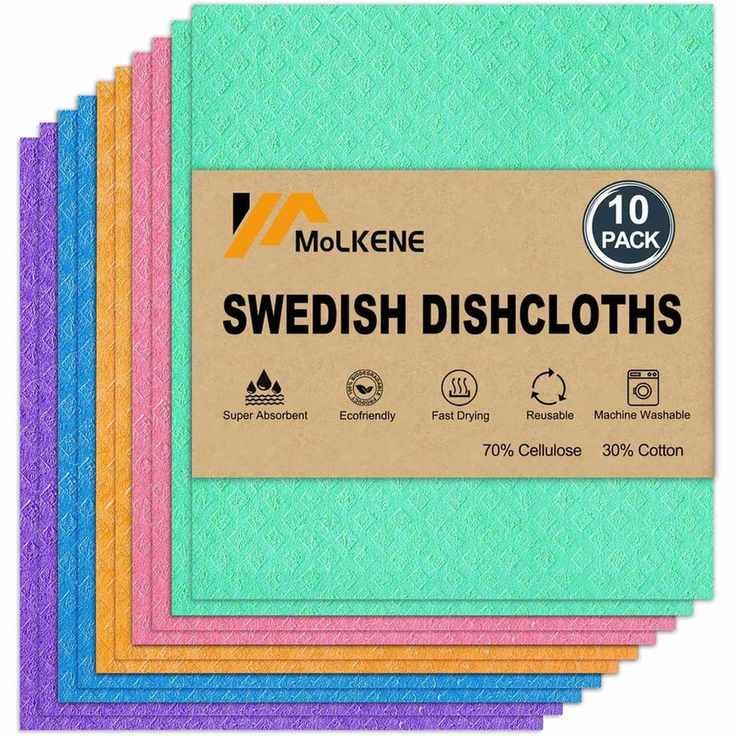 Pack of ten
Swedish Dish Cloths
"These are durable, biodegradable, and endlessly reusable," Erin states. "Plus, they come in vibrant colors that brighten up everyday cleaning tasks."
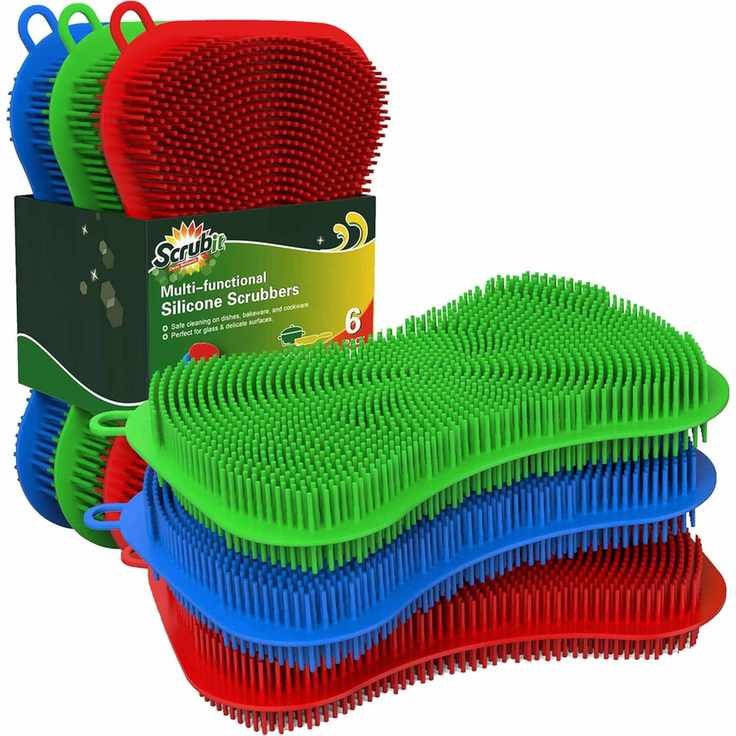 Non-scratch design
6 Pack Silicone Scrubbing Sponge
"These silicone dish scrubbers from Amazon are a great choice," Karina mentions. "They are flexible enough to reach corners and have numerous bristles to remove grime without getting dirty. Plus, you can easily toss them in the dishwasher for complete sanitization."
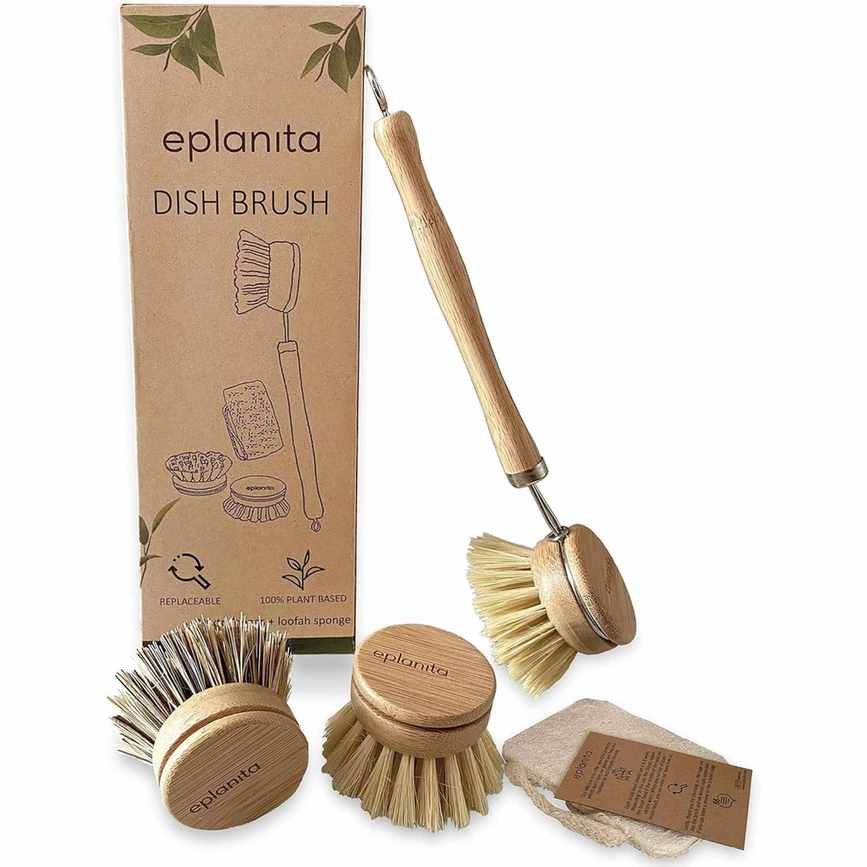 Comes with three replacement heads
eplanita Natural Dish Brush
"Crafted with a sturdy bamboo handle and recyclable bristles, this brush is both effective and eco-friendly," Erin states.
Meet Our Experts

Since its inception in 1984, family-owned Sophia's Cleaning Service has earned a reputation as a reliable cleaning company in Illinois.

As an expert in both commercial and residential cleaning, if Karina believes your cleaning sponge needs to go, it's definitely time for a change.

Tranquil Home is an eco-friendly cleaning service based in San Diego, dedicated to using non-toxic products.
FAQs
How often should you replace your kitchen sponge?
If you're not ready to part ways with your sponge just yet, at the very least, ensure that you are replacing it every two to four weeks. There are some cleaning rules that can be bent, but this certainly isn't one of them.
"Whatever you decide on, remember to clean your cleaning supplies regularly as well," advises Karina. "Even the best brush or cloth needs some attention! A quick run through the dishwasher or washing machine each week will keep them fresh."



