

When planning your deck, don't overlook the importance of edging. It plays a crucial role in giving your outdoor space a polished, professional appearance. Without proper edging, even the most beautifully designed decks can seem incomplete, especially when they meet a wall or fence without a clear boundary.
Choosing the right edging can frame your deck beautifully, resulting in a seamless finish. It allows you to express your personal style, ensuring your deck stands out from the rest in the neighborhood.
There are numerous innovative deck edging ideas to consider. You might want to incorporate patterned borders, lighting fixtures, low-maintenance plants to soften the edges, or even built-in seating. Below, we've compiled 10 of our favorite deck edging styles.
Creative Deck Edging Ideas
Considering your deck edging options during the design phase is beneficial, as they can complement both deck railing styles and color choices. Keep in mind that edging doesn't have to be wooden; it can be made from contrasting materials as well. Let's explore these options.
1. Combine Different Materials for Visual Interest

Designed by Ula Maria and constructed by The Landscaping Consultants
Utilizing a thoughtful combination of high-quality materials can completely transform a small space. This courtyard garden features a wooden deck surrounded by beds of colorful plants and ornamental grasses, which beautifully soften the edges.
The dark timber deck, treated with a Japanese charring technique, contrasts elegantly with the lush planting that spills over the sides. Steps lead down to a sunken garden with a tiled mosaic patio, enhancing the visibility of the deck.
This backyard exemplifies how blending modern materials with diverse plantings creates a deck that is rich in contrast and character.
2. Implement a Stylish Patterned Border
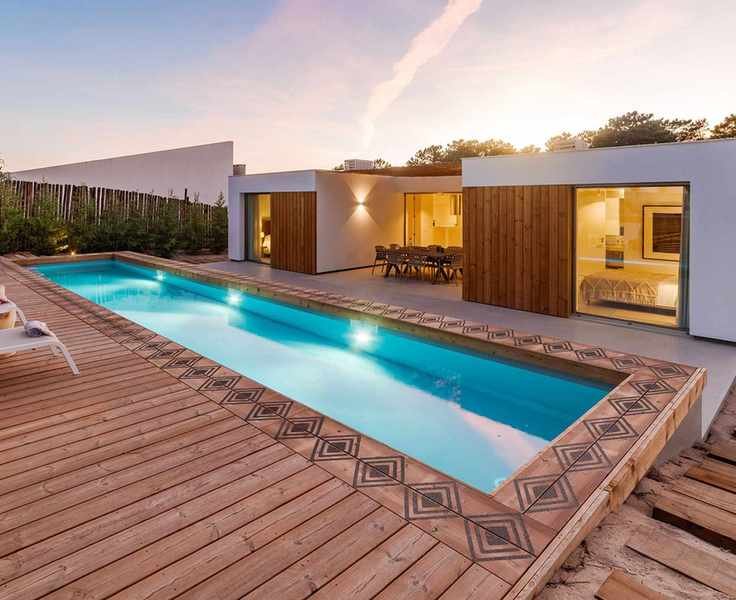
DeckArt boards from Gripsure allow you to create a customized decorative edge for your deck
For those seeking pool landscaping ideas, defined deck edging adds visual appeal. Composite and timber edging options provide a relaxed yet sophisticated look, perfect for poolside areas. This is an excellent opportunity to introduce a unique border that enhances your deck's overall aesthetic.
When designing a poolside deck, it's crucial to select edging that remains non-slip when wet. This geometric border features integrated non-slip elements, offering both practicality and beauty.
'Always use a sharp saw blade when cutting timber for edging to achieve a clean cut,' advises Ross Crouch from Gripsure. 'If possible, miter the joints to avoid exposed end grain. Any timber in constant contact with the ground should be properly treated or coated for protection.'
Instead of a standard horizontal patterned edge, consider a vertical border to introduce a distinctive decorative element that's both eye-catching and unique.
3. Use Planting to Soften Hard Edges
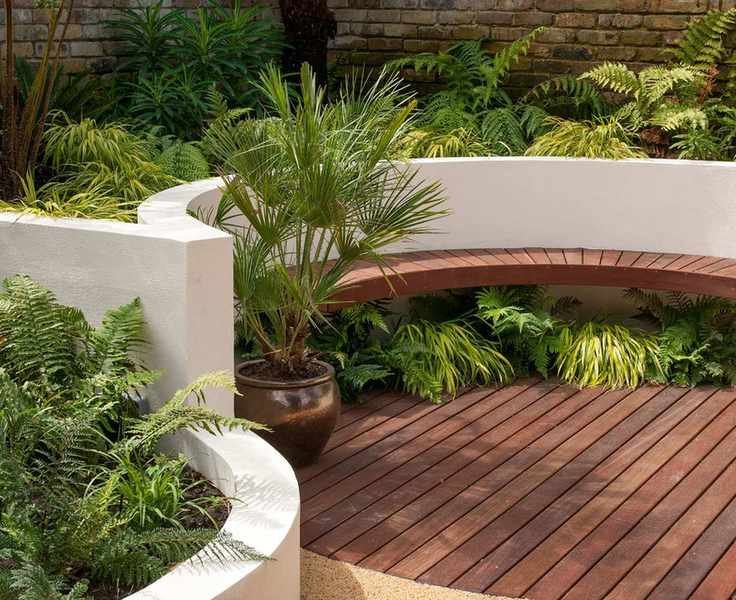
Curved deck design with soft planting by Catherine Clancy Garden Design
Curves are currently trending in garden design, and you can embrace this by blending decking edging designs with planting ideas. This approach yields a more organic appearance compared to the rigid lines of traditional square or rectangular decks, allowing for a more natural integration into your garden.
'In this design, we've used shade-loving Japanese forest grass and various evergreen ferns to soften the rigid outlines of the decking and walls,' explains garden designer Catherine Clancy.
'Focus on using predominantly evergreen plants with varying shades of green to add texture around your deck. Low-growing grasses, such as Japanese forest grass 'Aureola', Carex 'Ice Dance', and tall moor grass (Sesleria autumnalis), are excellent choices for deck edging.'
4. Incorporate Lighting Panels for Ambiance

Illuminated panels on deck roofs create ambient lighting at night
If you have a deck on a rooftop terrace, consider installing glass roof panel lights as a chic edging idea. These panels are designed to bear weight while allowing natural light to flood the space underneath. At night, if the room below is illuminated, these panels can provide secondary lighting for your outdoor area.
Creating a border with these panels can turn your deck edging into an eye-catching feature. Roof panel lights introduce a polished element that enhances your enjoyment of the deck at night. They also cast soft light through your plants, adding a magical evening glow.
5. Define Decking with Neat Borders
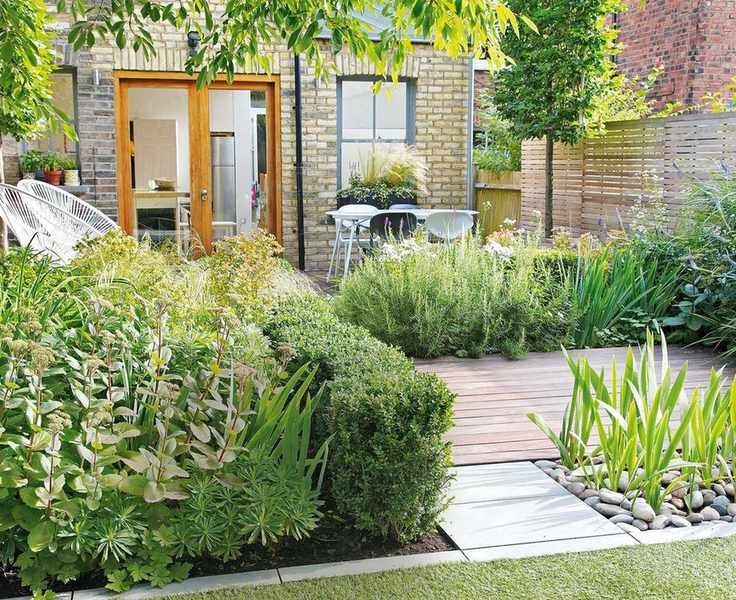
Enhance your decking by integrating planting beds
You might choose to keep your decking uniform, but consider adding planting beds within the deck for a more dynamic look that maximizes your growing space. After all, more plants are always a good thing.
Introduce geometric shapes using clipped boxwood to create a framework for your borders, then fill them with a variety of plants for added structure and texture. Smooth stones can serve as a backdrop to highlight sculptural foliage, creating a beautiful juxtaposition.
This combination of edging ideas creates an inviting spot for activities like yoga.
6. Use Pavers for Deck Borders

A stylish blend of limestone and Ipe decking creates distinct zones
'In garden designs, particularly in smaller spaces, defining materials is essential, and edging details often provide that definition,' notes garden designer Kate Gould. 'Choose strong, bold materials—brick, stone, or even metal—to ensure your edging has a crisp, clean finish.'
In Kate's innovative design, a segment of Ipe decking is integrated into limestone paving, surrounded by planter beds and seating areas. This wooden deck becomes the focal point, similar to how a rug enhances a room's decor.
For compact garden designs, all areas are significant, and smart edging can serve as a feature that visually enlarges the space. 'The bench here is cantilevered, making it appear as though the floor extends beneath it, enhancing the sense of space and allowing for lighting integration,' explains Kate.
7. Make Your Deck a Design Feature

Penthouse deck designed by LLI Design featuring varying tones of decking wood
'For this sky garden on a penthouse, we aimed to zone different areas by mixing decking and tiles,' shares Linda Levene, co-founder and design director of LLI Design.
'We opted for an Ipe hardwood in two tones—one lighter and one darker for the edges—to create a more engaging visual effect than simple linear planks. This grid pattern adds interest and connects seamlessly with the building's architecture.'
Subtle outdoor lighting enhances the deck's appearance at night, extending the view from inside. 'This was particularly crucial as the penthouse has glass walls on three sides,' Linda notes. 'We softly illuminated the low-growing plants with warm white lights and highlighted specimen plants and trees to emphasize their form and texture.'
8. Elevate Raised Decks with Edging

To create a walkway in your backyard using decking, ensure it is framed by its environment. A simple drop to grass or planting beds can make it seem unfinished. When staged properly, a raised deck can become the centerpiece of your garden.
Combine low planting beds, reflective water features, and smooth stones to achieve a contemporary aesthetic that makes your deck pop. You might also consider varying the colors of stones—white, gray, and black—to create a striking contrast along your deck.
These edging ideas are further enhanced by incorporating a contrasting wood tone along the sides of the deck walkway.
9. Integrate a Pergola for Added Depth
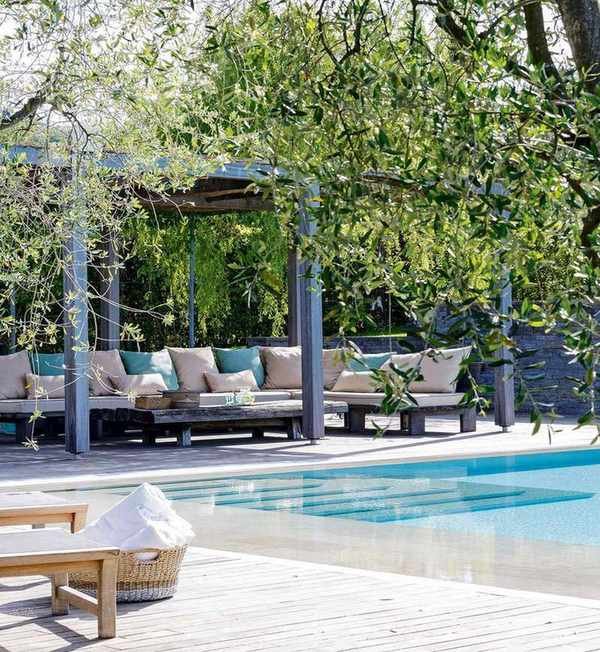
Pergolas are an excellent addition to elevate your deck area into a destination rather than just a passageway. They are particularly advantageous for poolside decking.
Consider purchasing easy-assembly decking kits that include built-in pergolas to enhance your deck's aesthetic. These kits come with everything necessary to create a beautifully designed space without the need for foundations or extensive preparation.
10. Create Coordinated Seating with Built-In Features
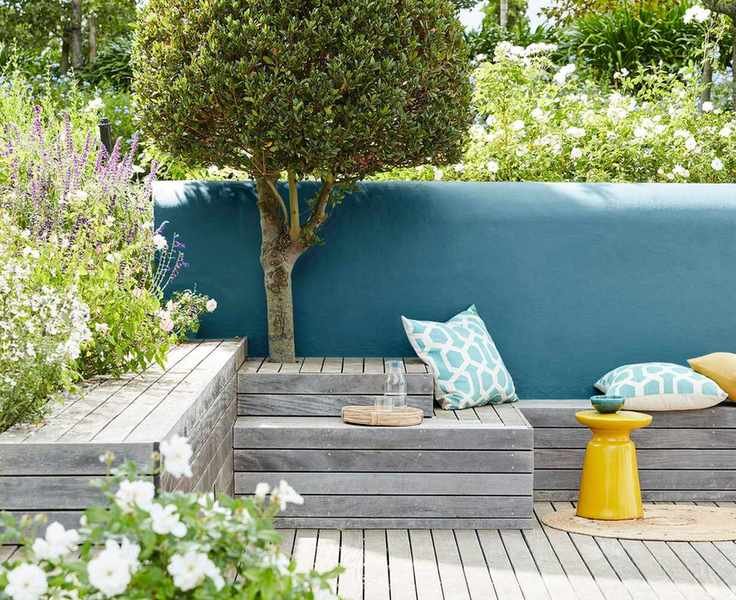
Wall painted with Little Greene Intelligent Masonry Paint in Tivoli
One of our favorite deck edging ideas involves integrating seating and plants. Utilizing the same wood for the deck, seating, and planters creates a cohesive and stylish look. Be sure to sand the wood to prevent splinters and apply a protective treatment for longevity.
Incorporating built-in seating that matches your decking not only looks spectacular but is also an affordable solution. You can customize it to include storage for cushions and gardening tools. This is especially useful for smaller gardens.
All that's left is to paint the backdrop in an eye-catching color and add coordinating accessories for a finished look.
How to Edge a Deck?
In addition to options like built-in seating, low-level planting, and lighting panels, you can also create an attractive border around your deck with fascia boards. Corner trims are another option.
Durable edge and corner trims provide a neat finish for edges and corners of decks and steps, allowing you to seal your new decking area effectively.
Another way to finish your deck surface is to install a trim board around the perimeter, known as picture framing or racetrack decking. This technique involves laying perimeter boards parallel to the edge of the deck frame, covering the exposed ends of decking boards.
Perimeter boards hide the butt ends of your deck, giving it a polished look and serving as a contrasting edge trim. Done correctly, adding a border around your deck can significantly enhance its quality.
What Can I Use to Edge the Bottom of My Deck?
Skirting is a great solution for many decking projects, allowing you to conceal the side of the boards and the visible subframe, ensuring a well-crafted appearance. For elevated decks, stacking skirting trims can help reach the desired height.
While your deck deserves the spotlight, no design is complete without skirting. There are various deck edging ideas to consider, and proper skirting allows for ventilation to prevent mold and rot. Additionally, deck skirting can disguise the space beneath an elevated deck, providing a concealed storage area.
Skirting can be made from lattice, wood, stone, or various composite materials, adding an appealing design element to your deck.



