
It's often said that rules are meant to be broken, and this is especially true in the world of small kitchen design. When space is limited, unconventional choices can enhance both aesthetics and utility.
As you consider design principles for your compact kitchen, think about what truly works for your space. A small kitchen may not always allow for strict adherence to spacing between appliances or the inclusion of an island, meaning that sometimes, breaking the rules can lead to the best results.
So, which design guidelines should you disregard in a small kitchen? We consulted several interior designers, and their insights may surprise you.
7 Design Guidelines to Disregard in Small Kitchens
Designing a small kitchen presents unique challenges, which can become even more daunting when you try to adhere to rigid rules that don't align with your actual usage. If you're going to disregard any guidelines, focus on these seven, as recommended by seasoned interior designers.
1. You Must Include an Island

A compact work table or kitchen cart can provide additional surface area and storage without overwhelming your kitchen's layout.
In recent trends, fitting an island into every small kitchen has become a popular practice. However, if your kitchen lacks the necessary space, this is one rule you can comfortably ignore.
"The rules I often break in small kitchens revolve around islands," says interior designer Bethany Adams. "Not every compact kitchen requires an island. Having room for movement is typically more beneficial than constantly navigating around an island.'
While an island can seem like a desirable feature, if it disrupts the flow and functionality, it's better to prioritize a layout that optimizes the area available.
As an alternative, consider a peninsula-style layout or a portable kitchen cart (our Style Editor suggests IKEA's FÖRHÖJA Kitchen Cart) or a small work table, as shown in this example.
2. Pendants are the Best Lighting Option
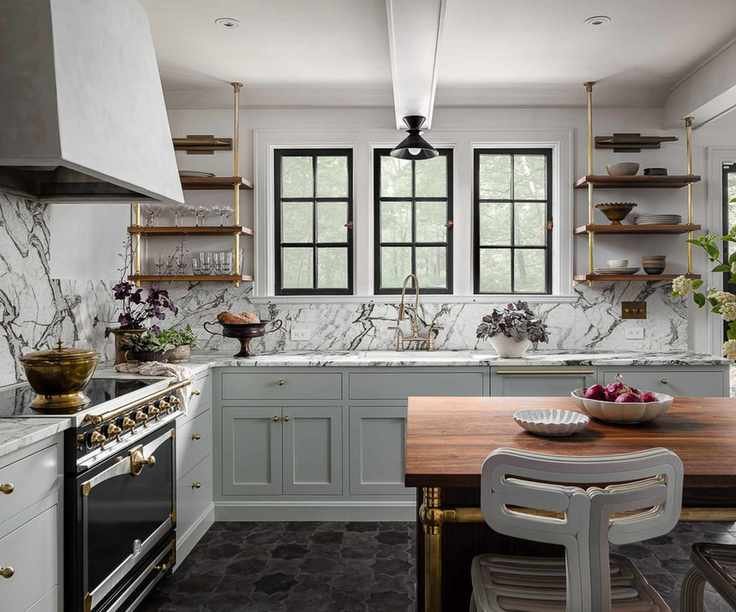
The Sophie Surface Light from Cedar & Moss in this kitchen is positioned high on the ceiling, providing ample light without creating visual barriers.
In kitchens with islands, pendant lights are often a staple. However, even if your small kitchen can accommodate an island, opting for these hanging fixtures may not be the best decision.
"My second recommendation for small kitchens is to skip the overhead pendants. In a confined area, hanging elements can clutter the visual space. Directing attention towards features like windows or attractive open shelving can help create a more open feel," Bethany suggests.
Instead, consider a layered lighting strategy. A stylish flush mount light can provide functional brightness without obstructing the view, complemented by wall fixtures like the Sculptural Cone Sconce from West Elm and lamps on countertops for a stylish balance.
3. Avoid Bold Statements
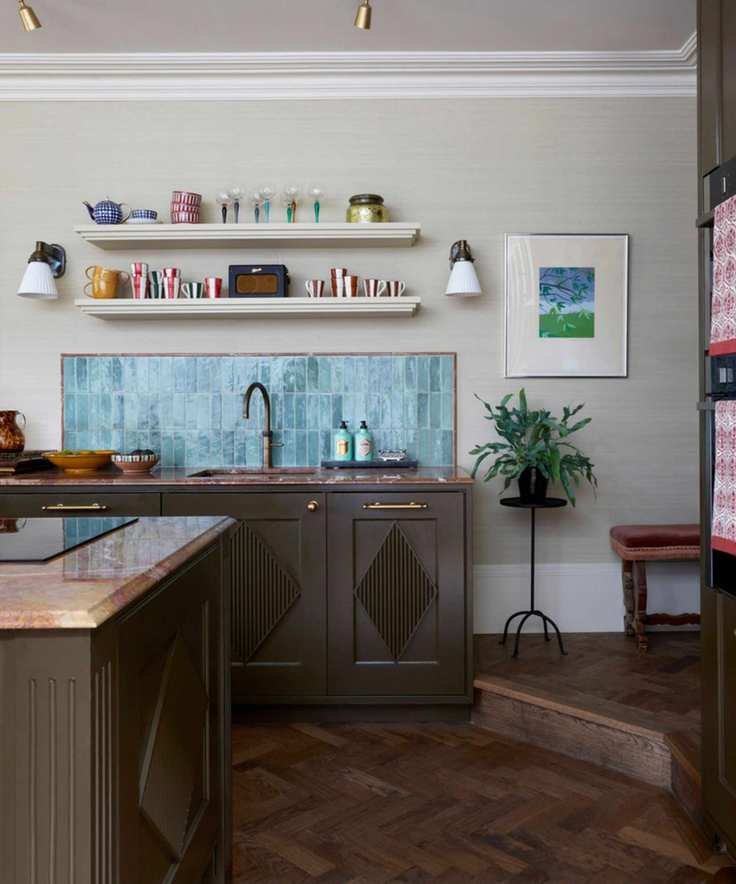
The diamond detail on the cabinets adds character and texture to this compact kitchen.
It's a common belief that small kitchens should minimize features to create a more spacious feel. However, many designers argue that this mindset can hinder the opportunity to make a striking design choice.
"The notion that 'less is more' in a small kitchen is a guideline I frequently challenge. When space is tight, I prefer to make a bold statement with one well-thought-out design element instead of playing it safe throughout. This could be a striking motif, like a graphic diamond detail we used in our Highgate project, or a daring color choice. A single bold statement gives a small kitchen character and presence, preventing it from appearing merely functional or apologetic," explains interior designer Laura Stephens.
"Taking this approach allows the kitchen to feel integrated within the overall design of the home, rather than a downgraded space due to its size. Going bold with a design element doesn't undermine functionality. The trick is to maintain a clear layout, storage, and circulation, then introduce the statement through surfaces, color, or pattern instead of excess clutter."
4. Stick to Light Colors
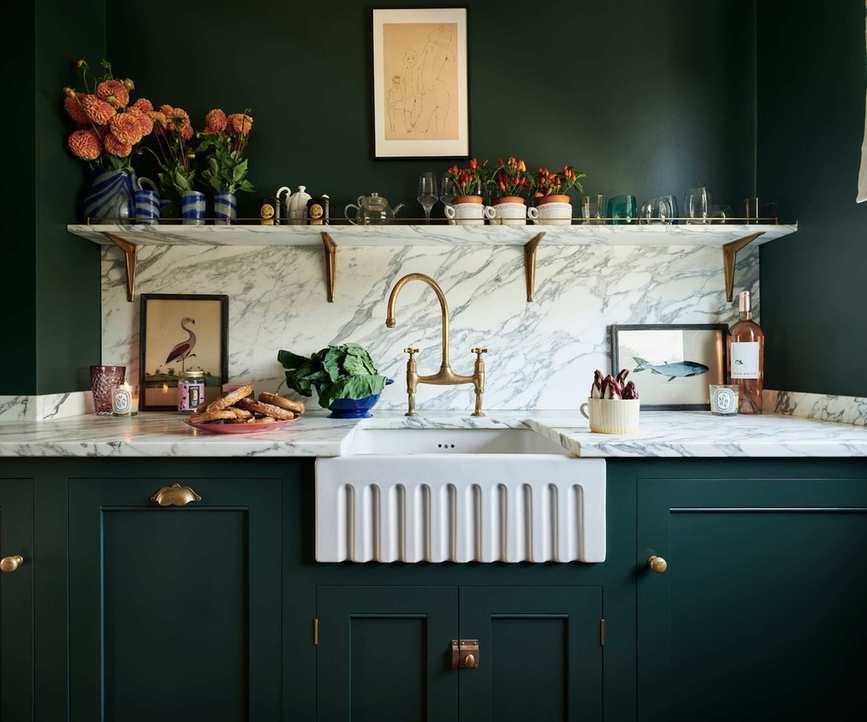
Utilizing dark colors can enhance the visual interest of a small kitchen. The deep green hue used here, along with Farrow & Ball's Railings or Benjamin Moore's Hale Navy, are excellent choices.
Many people fall into the trap of decorating a small kitchen to appear larger than it is. However, this often leads to a lack of personality and a sterile feel. Embracing the smaller dimensions with darker colors can have a striking impact.
"Contrary to popular belief, darker tones can introduce depth and dimension rather than making a kitchen feel constricted. When used thoughtfully on cabinets, walls, or ceilings, these colors can create a sense of continuity, allowing the eye to move freely and making the kitchen appear more intentional and spacious," says interior designer Becky Shea.
"In confined kitchens, depth often proves to be more effective than brightness, resulting in a room that feels layered and sophisticated, rather than just small. Breaking this guideline can significantly change how a small kitchen is perceived. Darker tones can establish a more intimate, romantic environment while adding visual richness and depth," she adds.
It's crucial to balance style and functionality, so the way these darker colors are introduced is essential. Becky emphasizes selecting materials for backsplashes and countertops that are rich in tone while ensuring durability and ease of maintenance.
"I focus on materials that feel luxurious and visually appealing, while also being practical. Thoughtful lighting, reflective finishes, and clearly defined work areas enhance functionality, creating a kitchen that harmonizes form and function rather than pitting them against each other."
5. Maximize Storage with Upper Cabinets
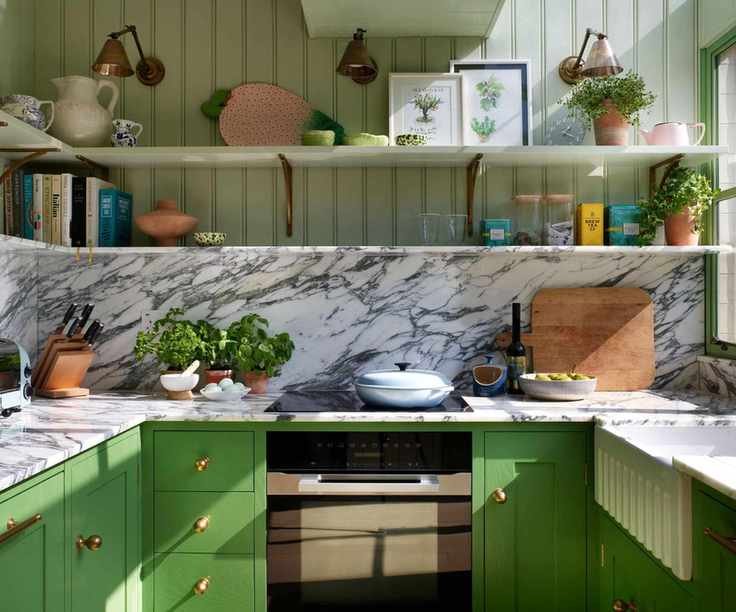
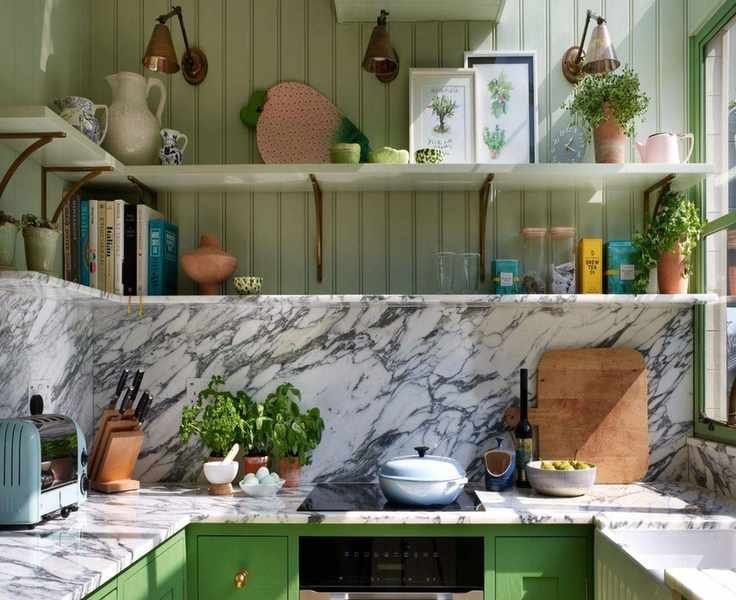
Open shelving in the kitchen offers both a storage solution and a decorative feature. Elevate your shelves by choosing elegant brackets, such as the Winona Shelf Bracket Set from Rejuvenation.
A common piece of advice for small kitchens is to maximize storage and utilize vertical space. However, filling walls with bulky upper cabinets can create a heavy atmosphere. Many designers prefer to break this design guideline by eliminating upper cabinets.
"In a small kitchen, I often discourage the use of overhead cupboards on every wall. While this may seem practical, too many cabinets can make the space feel cramped and top-heavy. Instead, I advocate for incorporating open shelving in strategic locations, which lightens the atmosphere and adds character. It also prompts you to be more thoughtful about what you display daily – something we could all benefit from," explains Melissa Hutley, interior designer and founder of Hutley & Humm.
"Removing rows of overhead cabinets creates breathing room and allows for personality to shine through. Instead of the monotony of identical cabinet fronts, you can introduce small but meaningful accents – like artwork, plants, or curated collections of dishes. These details bring warmth and life to the kitchen, preventing it from feeling overly sterile or uniform," she elaborates.
Many hesitate to break this rule due to concerns about storage, but Melissa points out that this design philosophy is often more functional than people realize. "You're not necessarily sacrificing storage – you're simply being more selective about what you keep and where you place it," she clarifies.
"By blending open shelving with well-thought-out base units and clever internal storage, the kitchen can remain highly functional. It's about prioritizing the items you genuinely use and cherish while creating a space that feels practical yet welcoming and lived-in."
6. Adhere to the Kitchen Triangle Layout
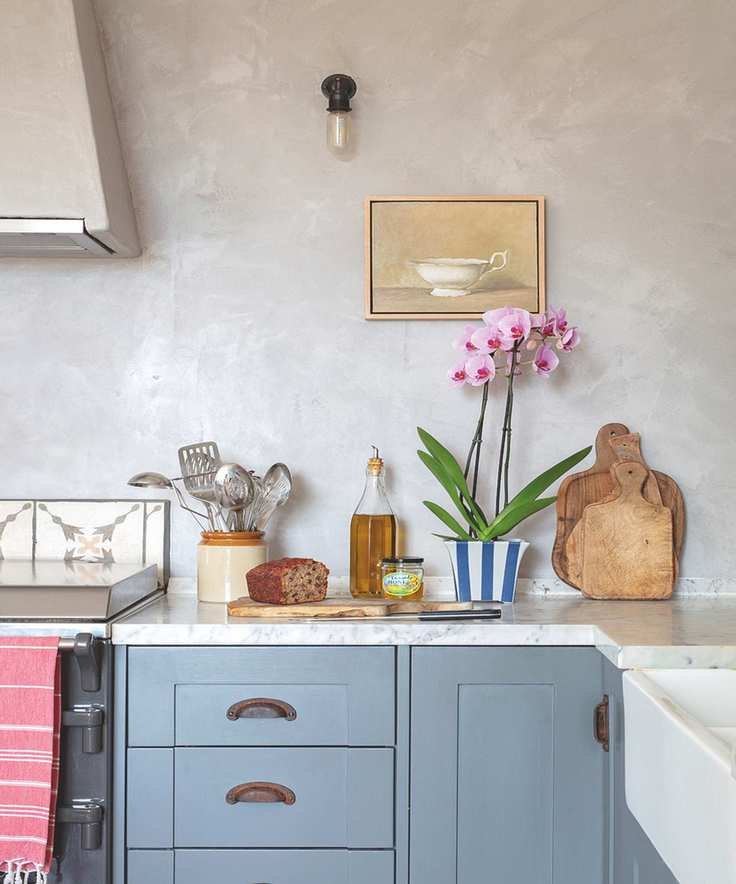
This kitchen features a closer arrangement of the stove and sink than traditional guidelines suggest, but ignoring the standard work triangle has optimized the available area.
There are times when it's best to disregard the kitchen triangle, especially in a small kitchen. While there are ideal distances between your cooktop, sink, and refrigerator, you can't magically create extra space.
"In compact areas, practicality must be prioritized, and a more efficient and intuitive layout often outperforms the traditional triangle rule. It enables you to focus on maximizing what you have rather than trying to conform to a standard layout in a limited area," advises Carina Raymond, founder of Studio Raymond.
"Compact appliances, such as slim dishwashers and integrated bins, can also enhance functionality without crowding the space. While you may not have room for a conventional pantry, smart internal storage solutions, like compartmentalized drawers or spice racks on cupboard doors, can make a small kitchen remarkably efficient."
7. Scale Everything Down
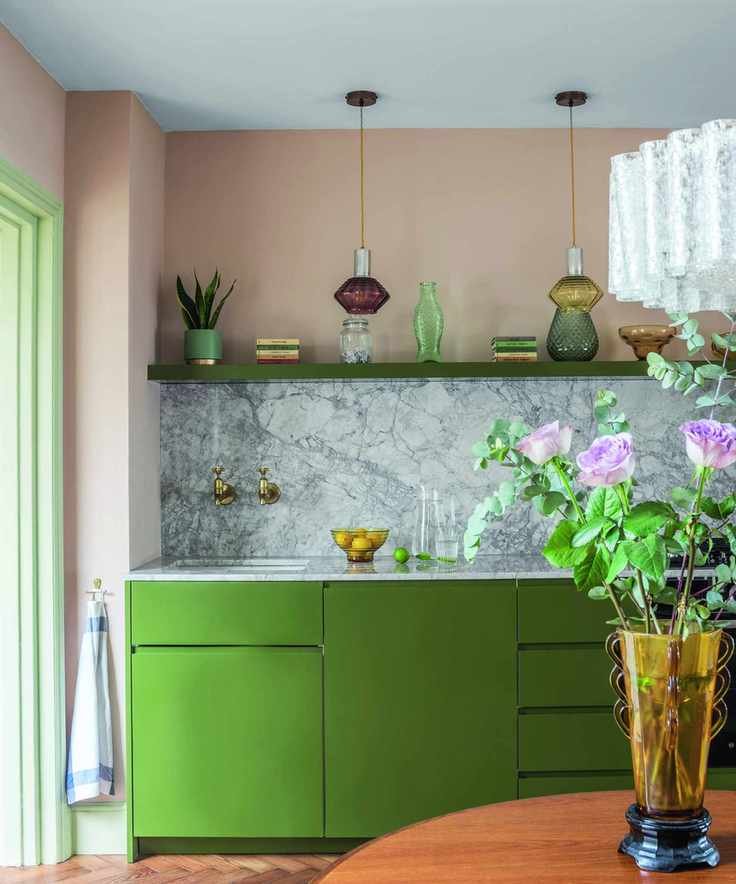
This one-wall kitchen shows that a small space doesn't have to feel cramped. The larger cabinet design creates an illusion of more space, aided by the slab-front style.
Scale in interior design is a frequent topic of discussion, but contrary to popular belief, a small kitchen doesn't necessitate smaller cabinetry. In fact, many designers find that larger cabinets work better.
"Rather than adhering to a strict rule, we often challenge the idea that small kitchens require numerous narrow cabinets. In compact spaces, opting for fewer, wider cabinets creates cleaner lines and reduces visual clutter, making the kitchen feel calmer and more spacious," states Sophie Pringle, founder of Pringle & Pringle.
"Using wider cabinets minimizes visual interruptions throughout the room and allows for a smoother visual flow, enhancing the overall sense of space. Functionality is always the priority. Thoughtful internal organization is crucial, from customized pantries to well-planned storage that maximizes height and depth," she concludes.
"When layouts are designed around actual usage, simplified cabinetry enhances both usability and character."
It's evident why these small kitchen design rules should be broken when space is tight – they often feel too restrictive in an era where blending functionality with personalized design is key.
Take the time to consider how you use your kitchen, and determine which of these guidelines you can adapt or abandon altogether to make your cooking area work for you. For a more flexible approach, explore some no-renovation ideas that can make small kitchens feel larger, or consider kitchen zoning – the designer-approved way to craft a truly personalized layout.



