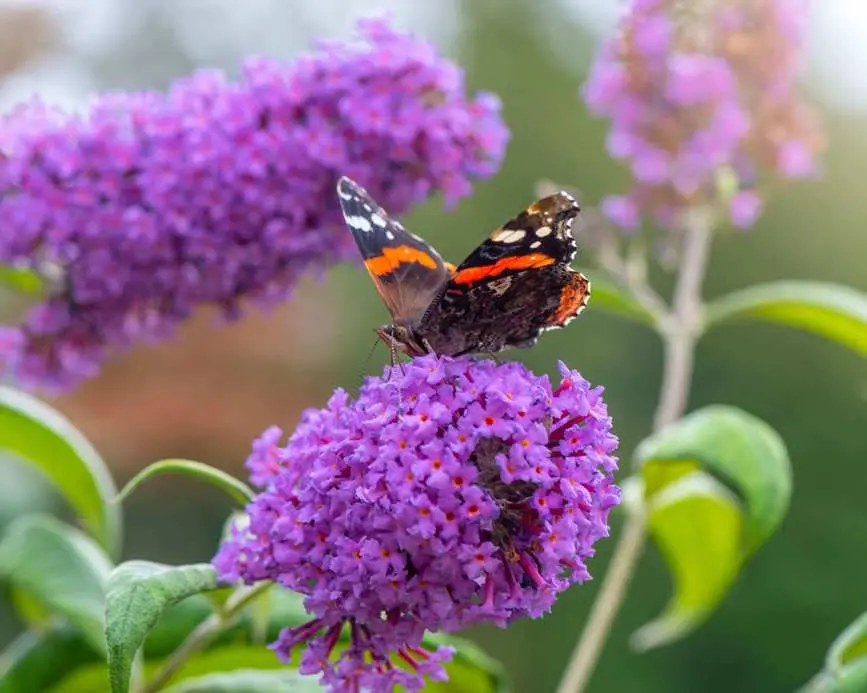
Learn to care for a butterfly bush and enjoy a brilliant display of color from late summer into fall. This fast-growing shrub features nectar-rich flowers that attract pollinators, including butterflies, hummingbirds, and orioles.
Similar to the top evergreen shrubs, butterfly bushes add significant visual interest. They're ideal for enhancing back borders, creating privacy, and masking unattractive views.
These bushes bloom in various late summer colors, including white, lilac, magenta, orange, and yellow, and they grow quickly to provide immediate impact.
However, it's essential to note that the butterfly bush is listed among invasive plants.
Caring for Your Butterfly Bush
This flowering shrub produces blooms that come in forms ranging from striking spires (panicles) to unique spheres, all composed of numerous tiny flowers. The foliage can vary from silvery grey to deep green.
In recent years, many new decorative hybrids have emerged, offering diverse shapes and sizes. From the tall Buddleia davidii to the graceful Buddleia lindleyana and Buddleia alternifolia, gardeners have an impressive selection. Dwarf varieties are also available, perfect for pots or low hedges.
“You can find buddleias year-round at garden centers and nurseries,” say experts. “Smaller potted versions might also be available, but they take a year longer to thrive and flower in the garden.”
Follow our guide to learn how to care for a butterfly bush.
Planting Tips for Butterfly Bushes
Understanding how to plant shrubs is crucial. Butterfly bushes thrive in USDA Hardiness Zones 5 and higher. As a deciduous to semi-evergreen perennial, they bloom from late June until fall, preferring neutral, well-draining soil in full sun.
Varieties differ in height and spread; miniature types like ‘Buzz’ and ‘Flutterby’ reach just 2 to 3 ft (60 to 90 cm), while Buddleia davidii can grow up to 8 to 9 ft (243 to 274 cm). Choose the right size for your garden.
Be cautious, as these fast-growing plants may appear on invasive species lists and can easily dominate unmaintained areas. They have even been known to push through brickwork and asphalt if neglected.
To control their spread, many gardeners prefer growing butterfly bushes in pots.
While resilient and generally self-sufficient, buddleia can be structurally weak, so they thrive better in sheltered spots away from strong winds, which can lead to broken branches and weak roots.
Pruning Your Butterfly Bush
Depending on the variety, you may need to consider pruning buddleia. Some species don’t require cutting back unless you want to shape them or limit their size.
However, newer and smaller varieties often benefit from pruning. “Larger buddleia hybrids require annual pruning due to their weak-wooded nature,” experts advise. “Without pruning, they can topple in the wind. Most Buddleia davidii hybrids flower on new wood and can be cut back in late winter to promote blooms. We typically cut them down to 1 to 2 in (2.5 to 5 cm) tall, but many can be cut to the ground and still recover.”
If trimming, do so in spring before new growth begins. Avoid fall or winter cuts, as they can stress the plant and reduce blooms for the following year. Remove any dead wood, and eliminate thin or crossing branches to promote healthy growth.
Maintaining a Butterfly Bush's Appearance
Buddleia generally blooms continuously from late summer into fall, stopping only with the first frost. “Deadheading spent flowers keeps the plant tidy and encourages more blossoms,” say experts. To deadhead, trim the stem back to the first set of leaves, just below the flower.
Growing Butterfly Bush in Containers
You can successfully grow a butterfly bush in a pot by following a few guidelines. These fast-growing plants need ample root space, so choose the largest pot you can manage. Be sure the pot has sufficient drainage holes to prevent waterlogged soil, which can cause root rot.
Dwarf varieties are especially suited for pots, growing up to 2 to 3 ft (60 to 90 cm) and making stunning patio features, particularly when adorned with blooms. Popular choices include ‘Flutterby Petite’, ‘Miniature’, and ‘Buzz’.
Fill the pot with lightweight commercial compost and apply slow-release fertilizer in spring or liquid feed from April to September.
Container plants require regular watering, especially during hot spells, and should be protected from frost to prevent root damage. Wrapping the pot with horticultural fleece or bubble wrap is an effective solution.
Pest and Disease Resistance of Butterfly Bushes
Generally resilient and low-maintenance, butterfly bushes remain strong if properly cared for. Spider mites can pose a threat but are typically drawn to stressed plants. Keep buddleia well-watered and occasionally feed with liquid fertilizer to deter pests.
Avoid chemical sprays as they may harm the very butterflies and insects you wish to attract.