
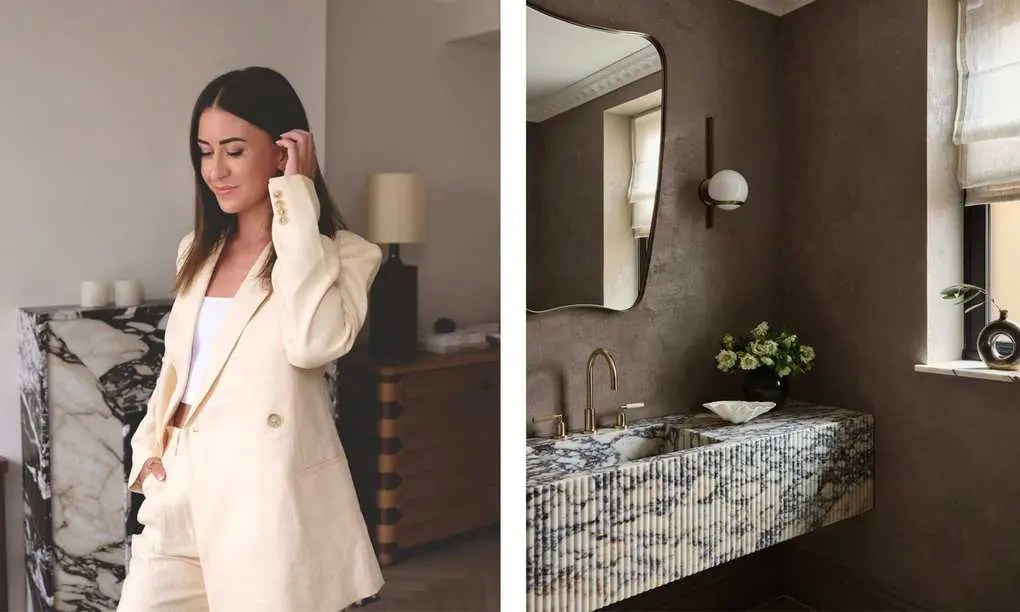
Since launching her studio five years ago, Amy Stoddart has made headlines as the Next in Design 2025 winner. Her most significant achievement? Securing an 18,000-square-foot home in Hertfordshire, where she truly showcased her creativity. 'I aim to meld heritage influences with contemporary living, favoring rich textures and modern materials,' she shares. 'My goal is to craft spaces that feel authentic and lived-in, designs that are subtly elevated without being overly polished.'

Amy's Bow House project exudes a 'soft, atmospheric quality' thanks to limewash application.
This design philosophy shines in her Bow House project. 'We collaborated with an exceptional artisan to apply limewash in multiple rooms, adding remarkable texture and depth to the walls,' Amy explains. 'It resulted in a soft, atmospheric ambiance—those subtle, imperfect finishes truly enliven a room.'
With a foundation in furniture design, Amy expertly combines her knowledge of bespoke millwork and spatial planning, creating a highly sought-after skill set. Clients benefit from a close working relationship with her. 'Currently, it's just me leading the studio,' Amy states. 'I intentionally keep my practice small to maintain attention to detail and ensure a thoughtful, hands-on design journey from beginning to end. There's immense satisfaction in creating spaces that feel enduring and significant.'
3 Essential Design Principles from Amy Stoddart Studio
1. Begin with a Solid Concept
Starting with a clear concept is vital for a well-defined brief and framework. This becomes my reference point throughout the design process. I prioritize hard finishes first—everything that remains fixed, like tiles and cabinetry. Once those elements are established, I can enrich the space with softer touches such as window treatments and textiles. Working through these stages is crucial for achieving a cohesive and layered interior.
2. Use Natural Materials
Natural materials infuse warmth, depth, and authenticity into environments. I absolutely adore marble. My partner often jokes that if we were to renovate again, the entire home would be marble-clad—and he's not wrong! Stone, timber, lime plaster, and wool not only enhance texture and character but also represent sustainable choices. They ground a space, giving it that inviting, homey vibe we all desire.
3. Avoid Following Trends
It's important not to simply chase after fleeting trends—interiors are a long-term commitment. Focus instead on what genuinely resonates with you—colors, materials, and styles that feel right. When you incorporate pieces you truly cherish, the outcome is more timeless and personal. I love a quote by William Morris: 'Have nothing in your home that you do not know to be useful or believe to be beautiful.' It perfectly encapsulates my vision. I want my clients to experience joy when stepping into a space that reflects their identity and feels authentic. That's the true mark of success.



