

For years, a single expansive island was the hallmark of an impressive kitchen. However, in contemporary homes with open layouts, the trend is shifting towards double kitchen islands. This new standard not only elevates design but also significantly enhances functionality, catering to larger gatherings and multitasking in the kitchen.
By incorporating two islands, kitchens can be organized into distinct zones. One island can handle the preparation, cooking, and cleanup, while the other serves as a social hub for dining and relaxation. Interior designer Kate Marker notes that having separate prep areas allows multiple chefs to collaborate seamlessly.
When executed correctly, double islands complement modern lifestyles, particularly in spacious open-plan kitchens where cooking, dining, and entertaining converge. Here's how to achieve the perfect setup, from layout to materials.
Why Consider Double Islands?

Divide tasks efficiently by dedicating one island for cooking and the other for dining and socializing.
The primary advantage of a second island is improved organization. Rather than relying on one massive surface, two smaller islands create defined areas that enhance navigation and usability.
This organization leads to a more inviting atmosphere. Clear pathways reduce congestion, making the kitchen feel more spacious and comfortable, especially when multiple people are present.
However, integrating two islands comes with challenges. Careful consideration of space, proportions, and visual balance is essential to avoid overcrowding. Natalie Fry, founder of Grid Thirteen Design Studio, emphasizes the importance of restraint, ensuring the layout feels calm and easy to navigate.
When done right, the advantages are substantial. Doubling your islands can transform the kitchen workflow, creating distinct areas for various tasks while enhancing storage and flow.
Layout and Space Considerations

Proper spacing between islands allows quick access to appliances and smooth flow for multiple cooks.
Getting the layout correct is crucial. Without sufficient space, even the most stunning designs can feel cramped. Installing two islands is about choreographing movement, not merely adding cabinetry.
Avoid Tight Spaces
To determine the ideal size for your islands, professionals start with the width of pathways. The gap between the islands should be a priority. 'Aim for 36–48 inches as a minimum, while 60 inches is more comfortable for multiple users,' advises Fry. This extra room facilitates easy movement, accommodating open drawers and appliance doors during busy times.
Consider the surrounding areas as well:
• Maintain 42–48 inches in main working aisles (for prep, cooking, and cleanup zones)
• Ensure at least 36 inches in secondary walkways
• Allow extra clearance at appliances for unobstructed access
• Provide 44–60 inches behind seating to avoid traffic jams
Let the Room Inform the Layout
The shape of your room will guide the placement of the islands. Consider doorways, windows, and traffic flow when determining their locations.
Parallel islands are often the most effective solution. 'They create a streamlined workflow, similar to a spacious galley kitchen,' Fry mentions, enabling easy movement between cooking and serving zones.
When to Explore Other Configurations
In larger or more complex layouts, additional configurations may be beneficial:
• L-shaped islands can help define spaces in open kitchens
• Staggered islands can enhance flow and break symmetry
• Asymmetrical layouts can adapt to unique architectural features
'Simplicity generally prevails,' Fry notes. Prioritize straightforward layouts to improve overall functionality. Consider key routes—fridge to sink, prep to cooktop—and ensure they flow smoothly. If they don't, even the finest cabinetry won't resolve the issue.
Functionality and Zoning

A prep sink on the second island can keep guests from interfering in the working area.
Double islands revolutionize kitchen seating. Instead of crowding one island, the second can function as a dining area, particularly useful if a formal dining room isn't available. Positioned closer to the kitchen's social hub, this 'dining island' fosters interaction.
Establish which island serves which purpose early on; typically, seating is allocated to the island furthest from cooking. 'In our Abby Manor kitchen, the second island has six barstools—four outside and two tucked beneath the countertop,' says Eleena Speck, co-founder of Parkway East Design. 'This allows for casual family breakfasts without needing the main dining table.'
Seating Arrangement Across Two Islands
Where double islands excel is in seating distribution. 'If the second island is primarily for working, keep stools tucked away to maintain accessibility,' Speck advises. 'If it's for casual gatherings, consider stools around it.' This approach avoids clutter. Two islands don't equate to double seating, but rather smarter arrangement:
• Designate one island as the main seating hub
• Keep the working island clear or limit it to tucked-under seating
• Ensure 44–60 inches behind stools where there's traffic
• Maintain at least 42 inches in work aisles to prevent congestion
Designing for Daily Use

A curved second island invites conversation while keeping seating away from the main working area.
One of the best aspects of double islands is their adaptability. You can design one for everyday activities and the other for entertaining. 'Being able to transition from baking to hosting is essential,' says Speck. 'Movable stools that tuck away make a significant difference.'
Practically, one island can cater to quick breakfasts and homework, while the other becomes a more spacious area for guests to gather without intruding on the main workspace.
For double island seating, apply the same principles as with any island—just with added consideration for access and flow:
• Allow around 24 inches per stool for comfortable spacing
• Plan a 12–15 inch overhang for legroom
• Choose low-back stools that fit neatly if they back onto a main path
• Use higher-back stools for added support in dining-focused areas
• Consider swivel stools in tighter spaces for easier access
• Select durable finishes like wood or leather
• Arrange stools on one side for a tidy look and better traffic flow
• Wrap seating around a corner only if space allows to prevent collisions
Storage Solutions

A smaller second island offers versatility, with open shelving for easy access to essentials.
With two islands, your storage capacity doubles, but it's essential to maximize every inch. Poor planning can lead to unnecessary steps while cooking. 'Storage should be zoned by use,' Speck advises. 'If your main island is for prep and cleaning, everyday items like dishes and utensils should reside there.'
Efficient storage zoning keeps the working side functional, while the second island can support hosting without disrupting the main kitchen:
Primary island (high-use zone):
• Cookware and utensils
• Daily dishes and glassware
• Trash and recycling (ideally near the sink)
• Prep tools, boards, and small appliances
Secondary island (support zone):
• Entertaining items (platters, serveware, linens)
• Wine storage or drinks fridge
• Occasional-use items
• Household overflow
The best kitchen island storage ideas ensure easy access. 'Drawers are fantastic! They let you access storage without digging into deep cabinets,' Speck states. 'Multiple trash drawers are also beneficial; having one near the sink and another at the second island enhances convenience.'
To maximize island depth, consider adding hidden cabinets behind stools for seldom-used items. 'This space is perfect for seasonal décor or other rarely needed items,' Speck explains.
Open shelving can also be advantageous—a lower shelf is suitable for bulkier items like pans or boards. A movable second island, like a butcher's block, can also be repositioned for flexible storage.
'A docking drawer in the second island is another great idea. Install an outlet strip inside to conceal cords while keeping electronics plugged in. This keeps the surface tidy while working.' Speck also recommends designated drawers for stationary or craft supplies and vertical storage for cutting boards and trays. 'Lastly, internal organizers make a kitchen feel more inviting by keeping everything orderly,' she adds.
Style and Material Choices

Using different materials in a spacious kitchen adds contrast and helps each island serve its purpose.
In terms of style, double islands can differ in appearance while still being cohesive. Varying the shape, size, or cabinetry details strengthens the layout by allowing each island to reflect its function. A working island might have simple, flat-front doors for efficiency, while a social island could feature softer lines and more intricate cabinetry.
Matching vs. Contrasting Finishes
Selecting materials for double islands presents the chance to create harmony or contrast. The right approach often depends on the kitchen size. 'In larger kitchens, contrasting materials can help define each island's function,' notes interior designer Marguerite Rodgers. 'In smaller kitchens, using the same material promotes cohesion and reduces visual clutter.'
Functionally, it makes sense for the islands to differ slightly. 'One typically serves as the primary workstation, prioritizing durability with harder surfaces like quartz or porcelain,' Rodgers explains. 'The second often becomes a social space, featuring warmer materials like timber for an inviting feel.'
Utilizing Lighting for Zoning
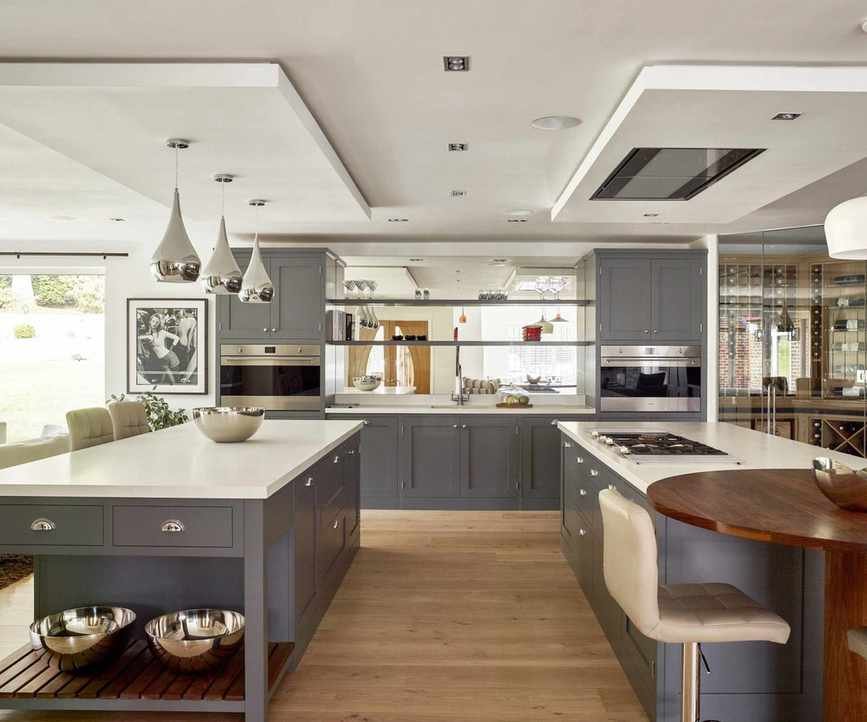
Over the social island, opt for larger, more decorative pendants for a dramatic effect.
Lighting above each island can enhance visibility and reinforce their individual purposes. Avoid using too many pendants of the same style to prevent chaos. For the working island, select simpler pendants that maintain sightlines, complemented by recessed task lighting positioned around 12–18 inches in from the edge to illuminate prep areas effectively.
For the more social island, you can be bolder, using larger pendants that hang lower (around 30–36 inches above the countertop) to foster an intimate atmosphere. Aim for cohesion without redundancy; coordinated finishes will unify the design while subtle differences in style or scale will help each island maintain its unique identity. Many lighting brands offer collections with variations in size and design that can enhance both islands while preserving distinctiveness.
Key Mistakes to Avoid with Double Kitchen Islands

In the striking Apple Smiles by Paint & Paper Library, double islands stand out against off-white cabinetry.
Even in spacious kitchens, double islands can fail if not carefully planned. Here are common pitfalls:
Insufficient Space
'Not every kitchen can accommodate two islands,' says Marguerite Rodgers. 'In smaller spaces, they can impede movement and feel overcrowded. It's often better to have one well-designed island with ample clearance than two that hinder functionality.
Poor Appliance Placement
Misaligning essential elements (sink, cooktop, fridge) can create awkward traffic flow or require lengthy routes between tasks. First, define your working triangle to ensure prep, cooking, and cleaning areas are logically arranged.
Underestimating Clearance
Crowded walkways quickly lead to frustration. Ideally, maintain around 40 inches (1m) between islands. Check for pinch points around appliances, doors, and seating during peak usage.
Overwhelming the Space
Oversized islands can feel heavy and disrupt the openness of a layout. Keep one island visually lighter—consider shallower depths or contrasting finishes to achieve balance.
Neglecting Power and Service Planning
Insufficient outlets and connections can limit daily functionality. Plan for electrical and plumbing needs early, as retrofitting later is often disruptive and costly.
FAQs About Double Kitchen Islands

Two islands, each with distinct roles: a lower marble island with a mixer facilitates baking alongside the main island.
How much space is needed for two islands?
Ensure enough room for comfortable circulation around both islands. Generally, allow at least 1m (40in) between them and 1–1.2m (40–48in) between each island and nearby cabinetry or walls. Anything tighter starts to hinder movement, especially when appliances are open or people are seated.
Can a small kitchen accommodate two islands?
Typically, no—it's not advisable to force it. Two islands function best when there's ample space for independent operation without disrupting flow. In smaller kitchens, consider one effective island and an additional element like a peninsula or freestanding piece for similar functionality.
How do I choose materials for dual islands?
Treat each island thoughtfully rather than as identical twins. Using the same countertop will ensure cohesion, while varying cabinetry finishes helps define their roles and reduces visual heaviness. A robust work surface for a prep island (like quartz) can complement a warmer finish on a social island (such as timber), giving each a distinct identity without sacrificing overall harmony.
The best double kitchen island concepts offer extensive storage, improved space efficiency, and enhanced style. They can also address architectural challenges by improving flow and breaking up large layouts. It's worthwhile to discuss the double island option with your kitchen designer or architect early, as it can foster better kitchen zoning and circulation than a single oversized island.



