
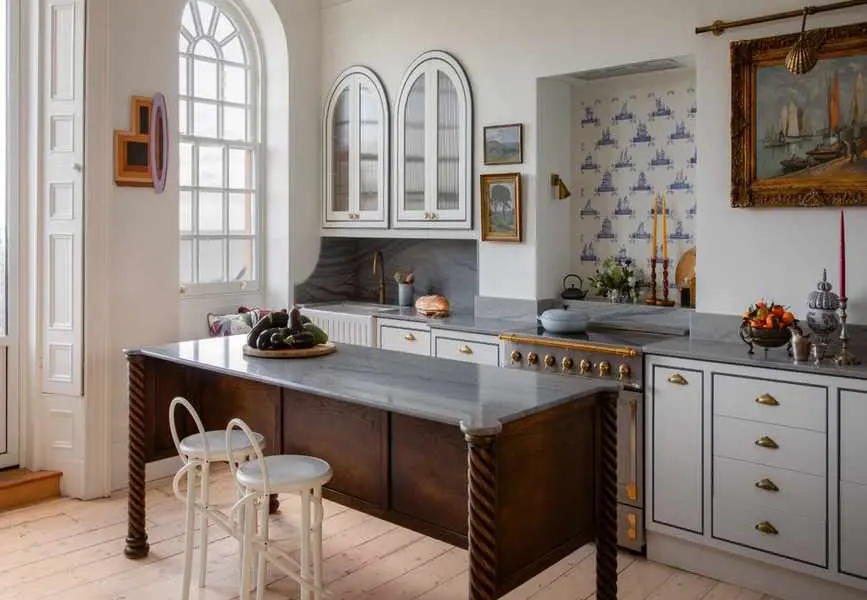
I've come to realize that overloading my home with too many standout pieces might detract from their intended impact. I've always loved collecting unique items, believing that more statement pieces equate to better design.
However, as I piled on sculptural light fixtures, bold fabrics, and large artworks, my space transitioned from curated to chaotic. While each item was thrilling on its own, the overall effect became overwhelming.
Designers acknowledge this as a frequent and costly design blunder. When too many focal points compete for attention, the eye finds no place to rest, leading to a disordered atmosphere.
To discover a balance between personality and negative space, I consulted designers on how to avoid the trap of too many main characters.
The Pitfall of Excessive 'Main Characters' in Your Space

This chic kitchen features a terracotta and white checkered floor that harmonizes with traditional white cabinetry and rattan details, enhancing rather than overwhelming.
I liken it to dressing up: if your closet is full of bold jackets and embellished tops without a few great basics, putting together an outfit can be challenging.
Every item clamors for attention; without foundational pieces to ground the look, it becomes a clash of styles. I've adopted this 'ooh shiny' shopping mindset for both my home and wardrobe.
Designer Bethany Adams shares, 'I face this in every project. While I get excited about beautiful furniture options, it's critical to choose the standout pieces while allowing others to serve as support.'

Bold color can still be the focal point, as seen in this butter yellow bedroom with simple white linens and scalloped detailing.
She continues, 'Supporting pieces don't have to be dull; their role is to enhance the main features of the standout items.'
Designer Kathy Kuo adds, 'When you simplify and create space, your true stars shine, making the area feel intentional and elevated.'
In 2026, I'm committed to keeping statement pieces but being more discerning about which ones take center stage in each room. Designers explain why this mistake is easy to make and, fortunately, simple to correct.
Finding Balance Between Boldness and Serenity
1. Identify Your Anchor Pieces

This charming dining nook keeps the walls plain white to let the antique table and blue banquette take the spotlight.
When every piece is chosen for its excitement, the overall design can feel overwhelming. Designers recommend pinpointing anchor pieces before adding anything else.
'I always advise clients to clarify the room's purpose,' says Jen Dean of Jede Interiors. 'From there, we can identify the main focus, ensuring everything else supports it.'
Anchor pieces could include a striking couch, unique wallpaper, or an exceptional artwork. Interior designer Justine Wolman of Justine Wolman Interiors emphasizes starting with 'the primary focal point and building around it.'
'One or two statement pieces are usually sufficient. Too many elements vying for attention create a noisy and unclear space, even if each item is beautiful,' Justine notes.

This entryway features mural wallpaper that dominates, allowing the flooring and woodwork to remain understated.
'When numerous statement items compete, the design can feel cluttered rather than cohesive,' adds designer Sean Symington. 'Effective design shines through a clear hierarchy, with one or two leading pieces supported by quieter elements.'
Marie Flanigan, another esteemed designer, echoes this sentiment, stating that 'when everything aims to be the focal point, the space lacks ease and intention.' Thoughtful design relies on a well-defined hierarchy, she notes.
'Too many standout pieces lead to visual chaos, making the eye restless rather than allowing for layered beauty.'
2. Ensure Supporting Pieces Serve Their Purpose
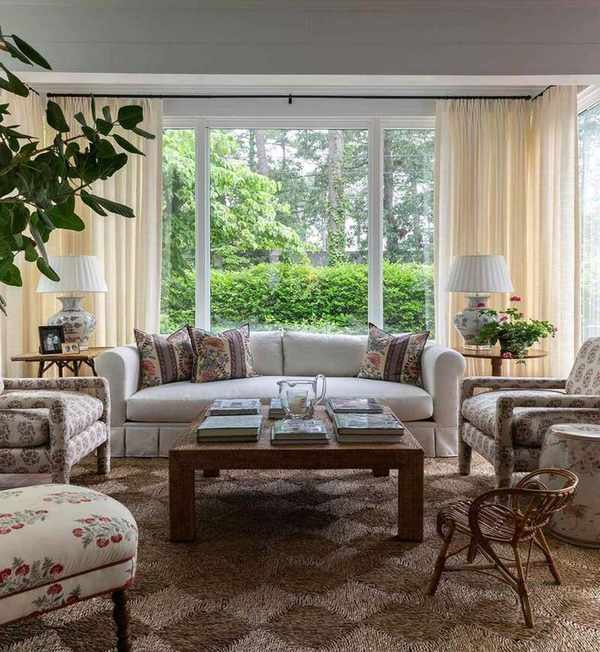
In this inviting sunroom, the view takes precedence. The neutral rug grounds the design, allowing for bolder furniture choices.
Once you've established a clear focal point, it's crucial to ensure that remaining items fulfill their supportive roles. This doesn't mean sacrificing character; it's about recognizing the need for balance.
Kathy Kuo explains, 'The key to a harmonious space is allowing one or two standout pieces in each category to shine while the rest play supportive roles. For instance, pair a striking chandelier with classic sconces or let a plush sofa be the focal point while keeping accent chairs simple.'
Kailee Blalock of House of Hive Design Co. describes this as visual pacing, warning against overusing standout pieces without establishing hierarchy.
'Establish a dominant focal point, secondary elements that reinforce it, and quieter components that provide the eye a moment to rest. Without this structure, a room can feel cluttered rather than elegantly layered.'

This kitchen exemplifies balance, combining color and pattern with a cohesive palette and vibrant accent.
Marie Flanigan adds that restraint enhances a design rather than detracts from it.
'Simplifying a room doesn't strip it of character; it refines what's most important,' she explains. 'Choosing a few leading elements allows the rest to provide support through tone, texture, and craftsmanship, resulting in a calm, balanced, and timeless space.'
Kailee emphasizes that reducing clutter doesn't diminish personality; it sharpens clarity and ensures that remaining statement pieces feel intentional.
3. Master the Use of Negative Space
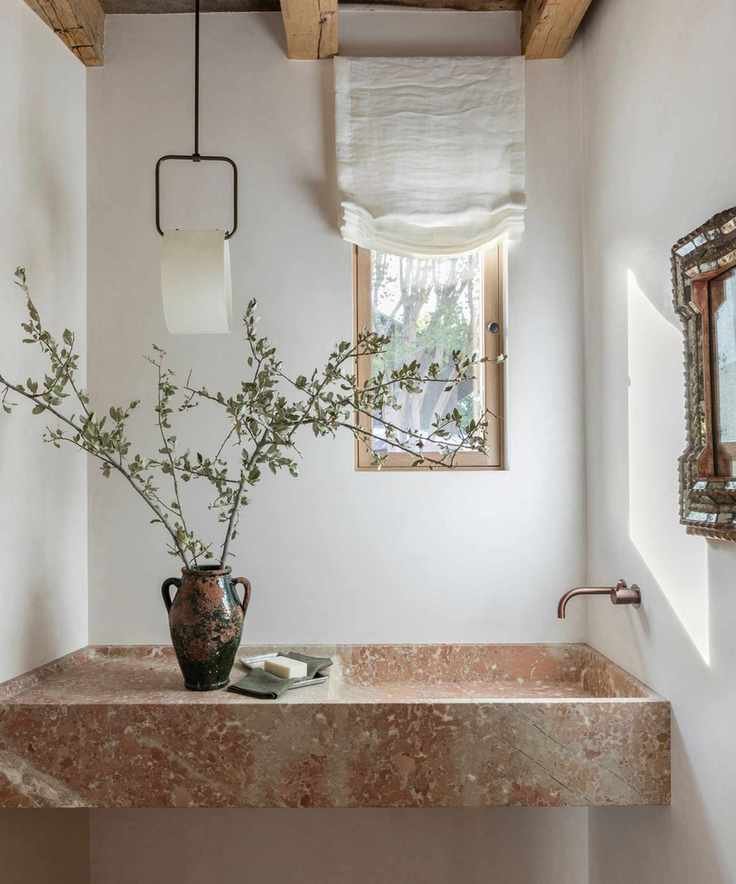
To let the pink marble make a statement, Marie Flanigan opted for white walls and plenty of negative space, accented with touches like the linen blind and vintage mirror.
Even with well-defined focal points and a carefully chosen supporting cast, one final principle is crucial: maintaining negative space.
Filling every nook doesn't inherently enrich a space. Erin Hackett Nordholt of Hackett House Studio notes that this can actually dilute the ambiance.
'I pay close attention to negative space, as the eye needs a resting place,' she explains. 'That pause allows a true standout to shine in its intended context. Restraint is a challenging yet potent discipline in any creative field. Without it, nothing truly resonates!'
Providing breathing room also enhances functionality. Justine Wolman observes that allowing 'quieter supporting pieces, negative space, and thoughtful layout helps the key elements thrive while improving flow and livability.'
This often entails editing: leaving some blank wall space, resisting the urge to fill every surface, and allowing furniture to fit comfortably within the space.
If you're in search of a versatile layer that allows bolder pieces to shine, consider the following selections:
McGee & Co.
Pieced Handwoven Jute Rug
This handwoven jute rug is a designer favorite, providing a warm foundation without overshadowing statement pieces.
AnthroHome
Willoughby Tess Two-Cushion Sofa
With its classic design and soft floral upholstery, this sofa strikes the perfect balance, offering visual interest while remaining adaptable.
Lulu and Georgia
Dog I Wall Art by Heidi Caillier
This vintage-style artwork demonstrates that personality doesn't require bold colors. The muted tones provide a storied charm, making it a captivating focal point.
The Six Bells
Sharland England Adeline Coffee Table
Featuring handwoven detailing and a sculptural edge, this coffee table adds intrigue while keeping the space grounded.
AnthroHome
Erin Gates Oakcliff Leaf Trail Floral Wallpaper
With its gentle botanical design, this wallpaper creates movement without competing for attention, allowing your space to breathe.
Crate & Barrel
Blume Swivel Accent Chair
The Blume chair's elegant shape makes it a standout piece. In a tonal velvet, it maintains sophistication and pairs well with streamlined furnishings.
'Good design follows a hierarchy,' says Jen. 'If a space feels chaotic, refining one main element often yields more benefits than adjusting multiple smaller ones.' Pairing back and refining your space isn't about a complete overhaul; it's about identifying what deserves attention and having the discipline to let that piece shine.



