
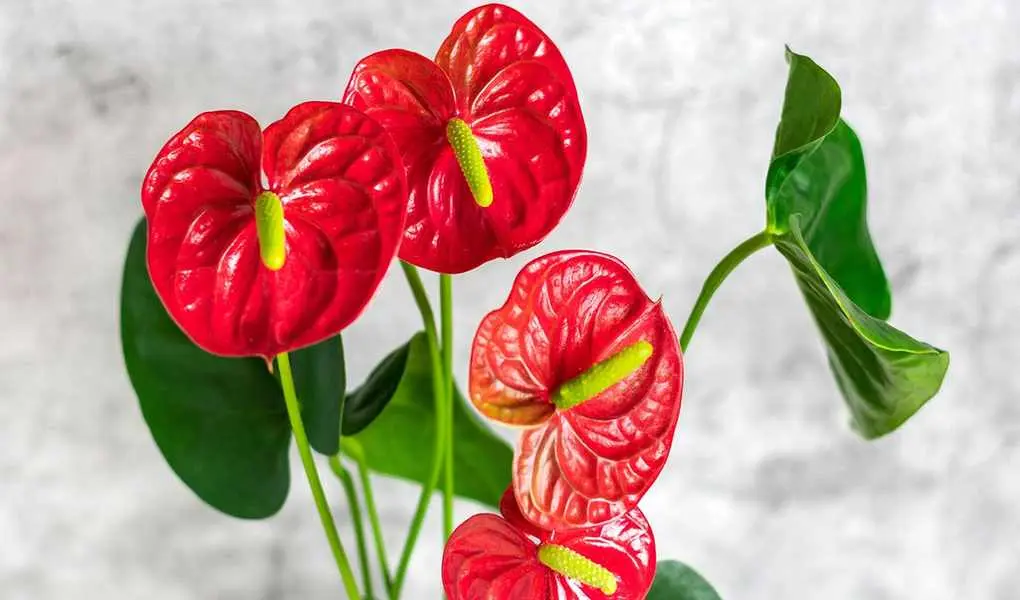
For a splash of color in your home year-round, an anthurium is an excellent choice. Originating from Central America, northern Argentina, and parts of the Caribbean, the most common type is Anthurium andraeanum, also known as the flamingo flower or painter's palette.
These plants showcase large, stunning blooms in various shades like red, pink, white, and burgundy, featuring a waxy heart-shaped spathe and a spadix filled with tiny flowers. They bloom for extended periods, and even when not in flower, their glossy, spear-shaped leaves keep things lively.
Plant enthusiasts may want to explore other varieties. Adam Besheer, co-owner of a New York-based plant shop, recommends the bird's nest anthurium, Anthurium hookeri, known for its unique leaf structure. Another favorite is Anthurium crystallinum, which boasts beautiful leaf patterns and is easy to manage.
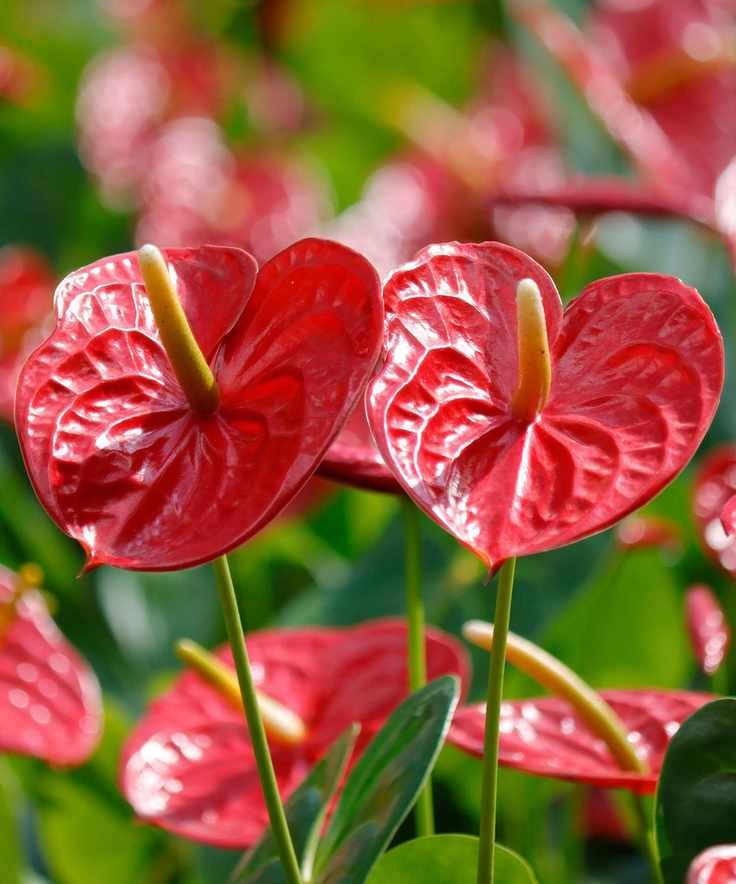
Anthuriums bloom for long periods of time
Optimal Placement for Anthuriums
Place your anthurium in a bright spot away from direct sunlight. Adam notes that while these plants appreciate light, harsh sun can bleach their leaves. If your plant starts leaning towards the light, it might be a sign of insufficient brightness.
These tropical plants thrive in humidity, making them great for kitchens or bathrooms. Remember, in their natural environment, they rarely experience cold temperatures, so keep them warm and shielded from drafts.
- Buy anthurium plants on Amazon
- Explore anthurium options at The Sill
- Shop anthurium plants at Plants.com
Watering and Feeding Anthuriums
Knowing when to water your anthurium is crucial. 'Water when the soil is about half dry,' suggests plant expert Lindsay Pangborn. This usually means the top layer of soil feels dry, yet some moisture remains at the root's base.
When watering, do so gradually, letting the soil absorb the liquid until it drains from the bottom. To prevent root rot, discard any excess water that collects in the saucer.
To boost humidity, consider placing your anthurium on a pebble tray filled with water, grouping it with other plants, or using a humidifier available on Amazon. Opening windows in warmer months can also help increase humidity.
While these plants appreciate some fertilizer, too much can harm them. 'Feed every two to three months during spring to early fall with a balanced fertilizer like 20-20-20, applying it to damp soil,' warns Lindsay. A product like Bonide Houseplant Liquid Plant Food from Amazon is a good choice for this purpose.
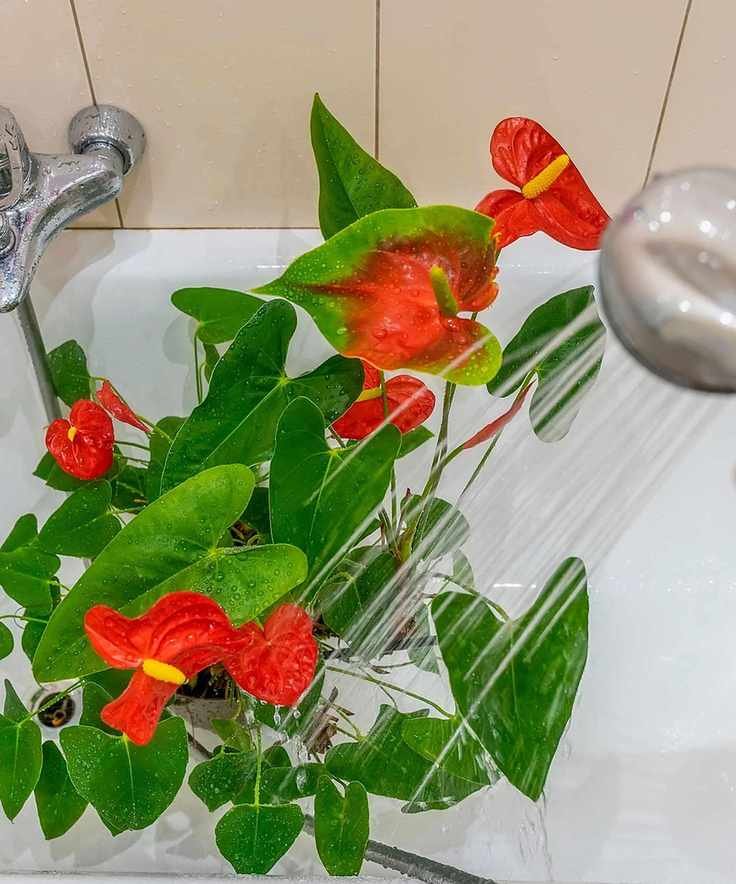
Allow the water to fully drain out of the pot when watering an anthurium plant
Common Issues with Anthuriums and Solutions
Be cautious not to overwater your anthurium, as this can lead to root rot and wilting. If the soil is too dry and the plant shows signs of wilting, a good watering should remedy the issue.
Excessive sunlight can cause leaf discoloration. If you notice yellowing leaves, relocate the plant away from the direct sun and ensure the soil isn't overly saturated, which can also cause similar symptoms. Adequate light is essential for encouraging blooms.
Adam mentions that over-fertilization can lead to yellow spots on leaves. Additionally, anthuriums can attract pests like spider mites, scale insects, and mealybugs. Spider mites create mottled leaves, while scale insects appear as bumps on stems and leaves. Mealybugs resemble tiny woodlice beneath a white fluff.
If you notice pests early and they are limited to a few stems or leaves, simply remove the affected areas. You can also wipe off scale and mealybugs. For larger infestations, consider a biological control or an organic spray with natural pyrethrum or plant oils. A product like Mighty Mint Plant Protection from Amazon can effectively treat spider mites, insects, and fungal issues.

Strong sunlight can cause yellowing leaves
Light Requirements for Anthuriums
Lindsay points out that anthuriums thrive in bright, indirect light, making them unsuitable for low-light environments. They can tolerate some morning sun but should be shielded from the harsh afternoon rays.
A sunny windowsill may be too intense, so positioning your plants further back in the room will yield better results.
Are Anthuriums High Maintenance?
While they do require specific care, anthuriums can be incredibly rewarding. 'Anthurium andraeanum' is a favorite due to its resilience and vibrant color. The crystal anthurium is also low maintenance and thrives without much fuss.
Can You Grow Anthuriums Outdoors?
You can take your anthurium outside in the summer when temperatures stay above 61°F, but Adam advises keeping them shaded to prevent leaf scorch. Lindsay recommends using pots with drainage holes or planting in well-draining garden soil. Just remember to bring them indoors before frost sets in during fall.



