
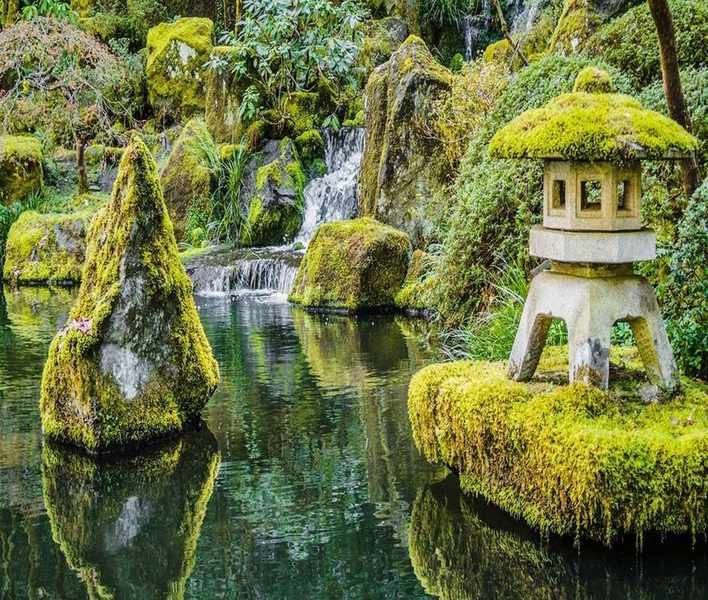
When envisioning a Japanese garden, images of elegant bridges, winding paths, mossy lanterns, and tranquil Koi ponds come to mind. But which features truly capture the essence of this unique gardening style?
Japanese gardens are remarkably varied, ranging from stroll gardens filled with winding paths and hidden surprises to Zen gardens characterized by meticulously raked gravel surrounding carefully placed boulders. Tea gardens offer a serene experience leading guests through a meditative journey before partaking in a tea ceremony. Each garden presents its own aesthetic, yet they all share a deep connection between human artistry and the natural world.
We consulted prominent gardening professionals to share their insights on what makes specific elements of Japanese gardens stand out. Below, we highlight five defining features that embody the spirit of Japanese gardens and suggest ways to incorporate them into your designs.
The Principle of Hide and Reveal
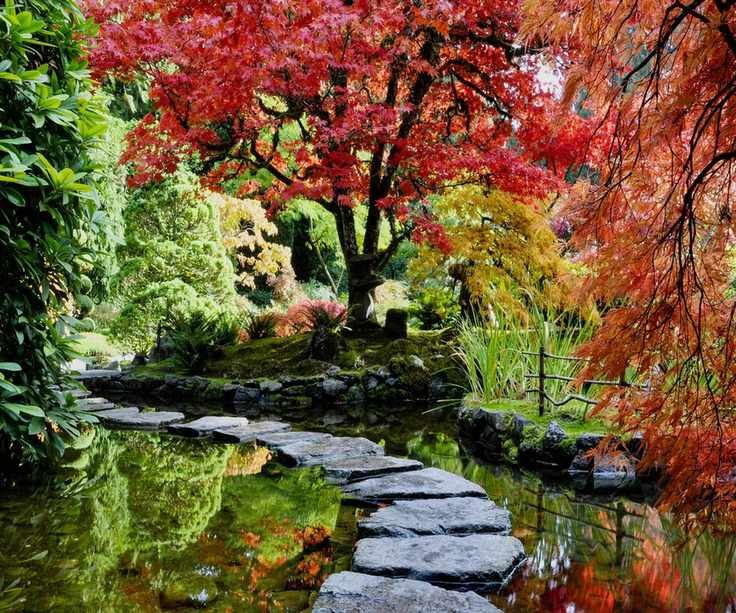
Successful Japanese gardens employ the concept of 'hide and reveal.' This classic design strategy involves thoughtfully positioning elements to obscure views, inviting visitors to explore deeper into the garden. You can see this principle beautifully illustrated in the Frederik Meijer Japanese Garden in Michigan.
This technique not only enhances the perception of space but also creates various viewpoints for guests to enjoy.
'Even in compact areas, a well-planned Japanese garden encourages exploration and mindfulness,' says Scott Solomonson, from Living Space Landscapes.
'Strategically taller plants can obscure full views, enticing visitors to discover what lies around the next bend. Instead of revealing the entire garden at once, focal points appear gradually as you follow the paths, unveiling the garden's hidden wonders.'
Landscape architect Shireen Zia concurs, noting that framing is key to achieving intentionally composed views.
'In my designs, this means shaping sight lines using unique plants, rocks, or trees. This approach is vital as it slows down visitors, transforming even small spaces into moments of contemplation.'

Scott has been immersed in horticulture, nursery, and landscaping since the 1980s. His time in Portland, Oregon, allowed him to master the art of Japanese gardens while collaborating with skilled builders.

Leading EcoGardens Landscape Design, award-winning designer Shireen Zia focuses on ecological, water-efficient gardens suited to the San Francisco Bay Area's climate. Her work emphasizes biodiversity, drought resilience, and refined beauty, gaining recognition from various industry bodies for its innovation and sustainability.
The Art of Niwaki
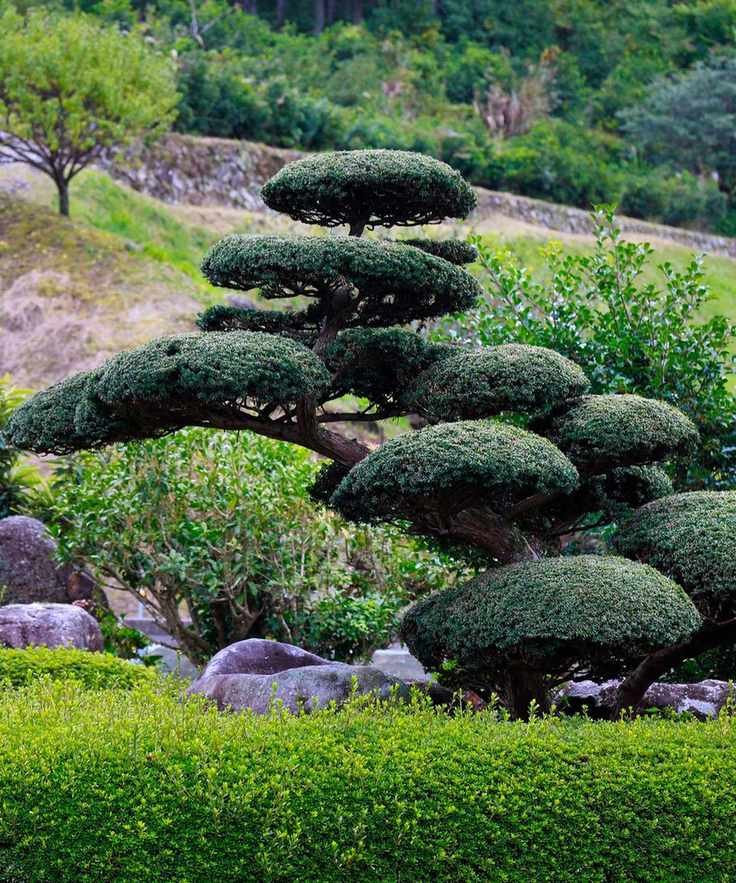
Shaping trees into cloud-like forms is an artistic practice that demands vision and patience.
Most effective with evergreens, these sculpted trees become striking features with distinct personalities.
'Niwaki provides a sense of permanence and tranquility, contrasting beautifully with more fluid shapes and textures,' explains Guy Watts, owner of Architectural Plants and a maintenance expert passionate about niwaki and bonsai.
'You can create niwaki with nearly any shrub that tolerates regular trimming and has pliable young branches,' Guy notes.
'Assess the shrub's shape to determine its potential. Identify a main stem to center your design around, and carefully choose which branches to keep or remove to create space for the pads.'
A quality set of pruning shears can be found at Amazon.
This process is lengthy and can take years, depending on the plant's growth rate.
Recommended plants for niwaki include narrow-leaved Mock Privet, Japanese Holly, and Chilean Myrtle.
You can find Chilean Myrtle and Japanese Holly at Amazon.

Architectural Plants is a specialized plant nursery and garden design studio based in West Sussex, UK. Guy Watts and his team are experts in shaping both exotic and traditional plants, including Japanese 'niwaki', topiary, and hardy palms. With over 30 years of experience, they excel in cultivating and training unique niwaki forms.
Create an Atmosphere of Calm

In Japanese garden design, defining characteristics often extend beyond physical objects; they also encompass the ambiance created by various elements.
'In my experience, the standout feature of a Japanese garden is its ability to foster intentional tranquility,' says Jim Fucetola, President of Moss Acres. 'Every element—stone, water, wood, and particularly moss—is arranged to minimize visual distractions and promote stillness.
'Moss is vital as it softens harsh lines, absorbs sound, and imparts an immediate sense of age and permanence.
'A stone lantern adorned with moss seems timeless, even if it was placed recently. This enduring quality is what makes Japanese gardens so impactful and calming.'

With over 25 years of experience working with live moss, Jim has supplied homeowners nationwide and partnered with garden centers and zoos. He pioneered biophilic moss wall design, creating his first indoor moss wall over 15 years ago, ahead of the trend.
Significant Rocks and Boulders
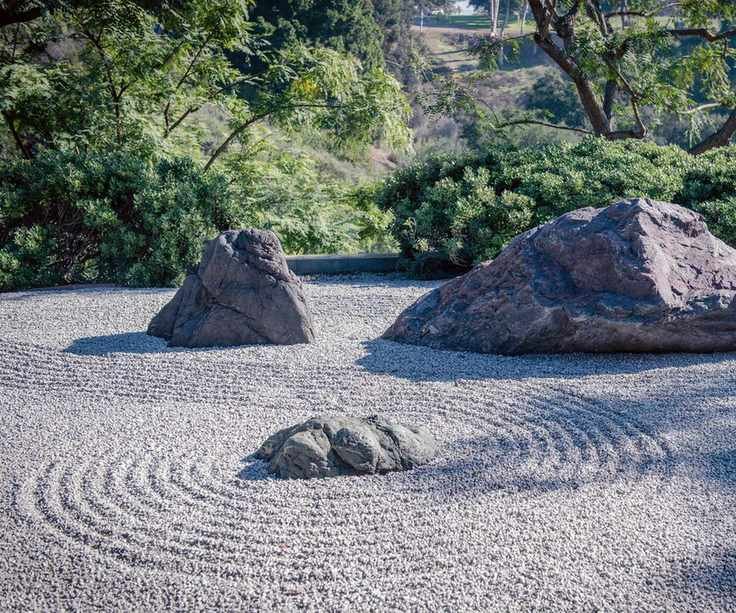
The unique essence of a Japanese garden isn't about showcasing rare plants but rather how elements are intentionally combined to create a natural feel.
Often encapsulating a miniature version of a wild landscape, stones play a crucial role.
Rocks and boulders symbolize mountains and permanence, while smaller pebbles represent water and motion. By carefully selecting and arranging these stones, designers can convey specific messages and shape the visitor experience.
Smooth, flat stones often serve as stepping stones, set in water or fine gravel, prompting visitors to pause and appreciate their surroundings rather than simply moving through.
Sturdy boulders are typically placed within raked gravel to signify mountain ranges and their enduring presence.
Shirakawa-suna is the traditional gravel used for raking patterns, available from specialty suppliers, but pea gravel from Amazon is a suitable alternative. Don't forget to invest in a Japanese wooden garden rake, also available at Amazon, for creating patterns.
Traditional Japanese Lanterns
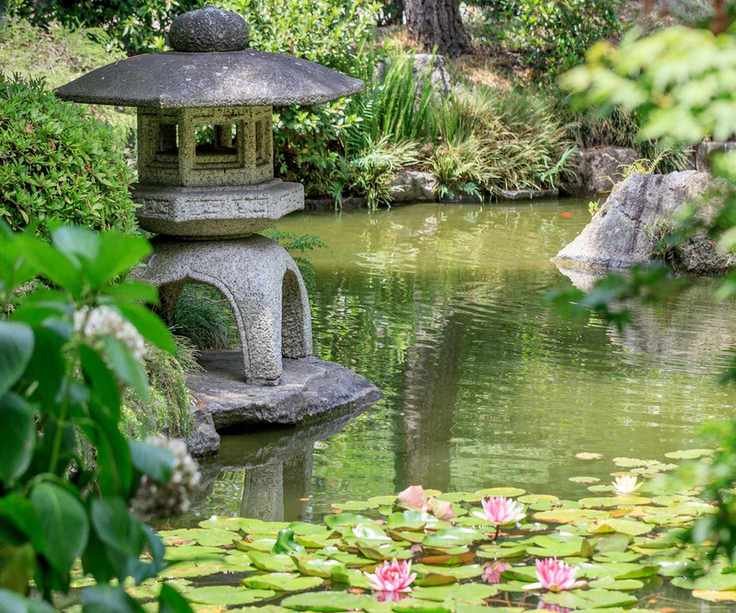
Originally from China, lanterns or 'toro' were initially used to illuminate temple exteriors, but they've become a staple in Japanese gardens.
Made from metal before transitioning to stone, these lanterns come in various forms, each with distinct meanings and purposes.
These fascinating elements provide insight into the rich history of Japanese garden design and culture, making them popular features in contemporary gardens.
Designs include Yukimi toro, a snow-viewing lantern with its broad roof and short legs, and the elevated Oribe-doro lantern, featuring a cube firebox supported by a stone pedestal.
If you're considering adding one to your yard, check out this Yukimi-inspired design from Walmart.
If you want to incorporate these Japanese design elements into your garden, consider surrounding them with the best plants for a Japanese garden and the best trees for a Japanese garden.


