
It may seem clear, but when your home is overflowing with clutter, pinpointing the true source of the chaos can be tricky. Knowing where to begin is often the hard part.
Professional organizers suggest that these 'accumulation pieces' are usually the culprits hindering your goal of a tidy environment.
Here, experts share their strategies for spotting these clutter-inducing items and how to finally remove them from your space.
Common Types of 'Accumulation' Pieces
As one organizer describes, 'Accumulation pieces are seemingly small items that gradually pile up without you noticing.'
Consider your book collection: how frequently do you purchase new books versus the number of times you declutter them? Many of us fall into this trap, and before you know it, you’re surrounded by stacks of unread books.
Clothing can also contribute significantly, especially if you're adding new items without donating old ones. Decorative pieces like candles, vases, and souvenirs can also clutter your space, taking up room without serving a purpose.
Paper clutter is another major issue—think old magazines, receipts, and miscellaneous paperwork that goes unchecked, leaving you scrambling to eliminate it before it overwhelms your home.
And let’s not overlook kitchen gadgets. If that avocado slicer or mini waffle maker is collecting dust, it’s contributing to the mess.
Ben Soreff, another professional organizer, summarizes, 'Accumulation clutter isn't random; it includes items with established categories in our homes, like books or clothes, which often go unput away or are accumulated unnecessarily.'
Conversely, items that are less common in our spaces, like a costume hat from a party, fall into the category of 'normal' clutter. While it’s useful to apply decluttering techniques to these cases, they likely aren’t the root of your clutter issues.
All prices correct at time of publication.
 Four finishes
Yasmine Hammered Metal Tray
Organize decorative items like candles and trinkets on a decorative tray to keep them contained, preventing them from spreading across your home.
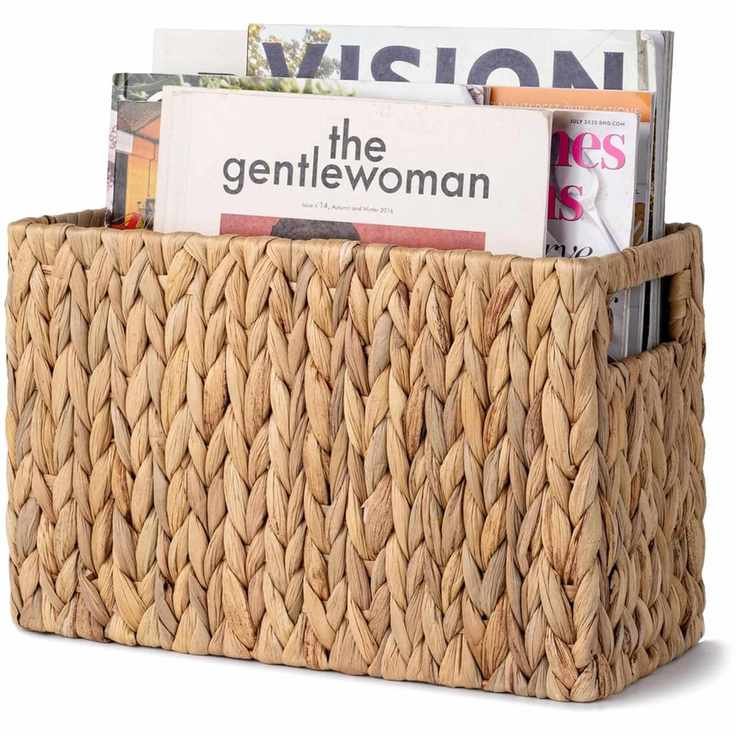 Handwoven
StorageWorks Magazine Holder
While a stack of magazines can look chic, storing extras in a stylish rack can prevent visual clutter.
 Stackable and strong design
Bankers Box Decorative File Box
Though not the most exciting storage solution, a document box keeps paper clutter organized and out of sight.
Identifying Clutter Hotspots

To achieve a tranquil space, recognizing areas where clutter gathers is crucial.
According to the organizers, fresh eyes are key in spotting these clutter hotspots, a technique favored by experts.
'If certain areas always appear messy regardless of your cleaning efforts, they likely harbor accumulation pieces,' one organizer mentions. 'Think of locations where items tend to pile up—like your bedside table, bookshelves, or the chair in your bedroom that's a clothes magnet.'
Even tackling one area at a time, like your nightstand, can significantly enhance the overall look of a room.
'Another indicator? Items you own but never use,' the organizer adds. 'If you're constantly rearranging things for new purchases but the old ones are untouched, that's a clear sign.
'Notice the items that fade into the background—they've been there so long you no longer see them.'
For these pieces, we suggest using the 'Didn't Know' decluttering method, gathering them in a sturdy basket, such as the Mainstays Large Easy Access Plastic Storage Bin, before deciding to donate or sell.
Strategies for Decluttering 'Accumulation Pieces'

Careful consideration is essential to successfully eliminate accumulation pieces from your home.
'To tackle these items, approach them by category,' suggests an organizer. 'If it's books, evaluate each one and ask yourself if you'd repurchase it today. If not, it’s time to part with it.'
For clothing, consider the hanger trick—a quick and effective method to declutter quickly. Turn all hangers backward; after several months, donate anything you haven’t worn.
'When it comes to decor, be honest about what enhances your space versus what’s just taking up space,' she advises. For paper, set a six-month rule: anything untouched after that should be donated.
'Stop keeping things “just in case,”' she concludes. 'If it’s not useful, meaningful, or genuinely brings joy, it’s just occupying space.'
Also, if you identify items to discard but struggle to remove them, consider the Overly Inconvenient Decluttering Method.
Meet Our Experts

Ben Soreff has experience with extreme clutter situations, providing insights into everyday clutter and how accumulation pieces can sneak up on you.

Di Ter Avest has guided many clients in reassessing their clutter relationships and recognizing problem areas to eliminate them effectively.



