
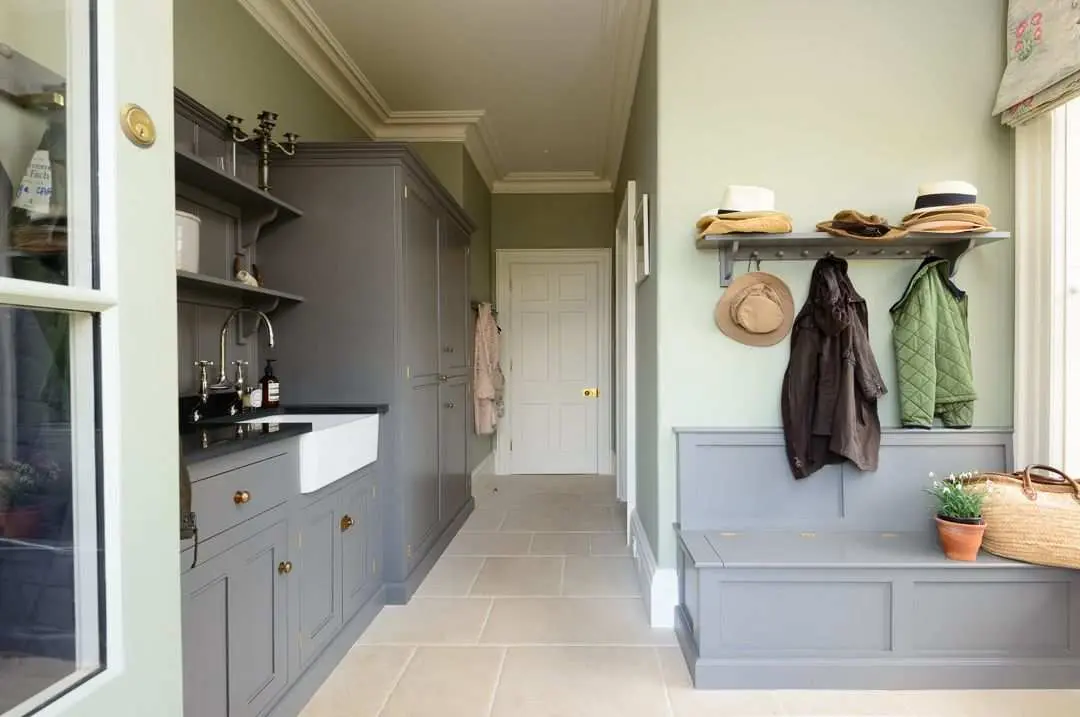
A mudroom, often referred to as a boot room, is essential for keeping your home tidy. It serves as a space to remove wet or muddy footwear, store outdoor gear, and prevent dirt from spreading throughout your home.
This area is also perfect for drying off pets after outdoor adventures, making it crucial for any household. Even if space is limited, creative mudroom solutions can transform small areas into functional spaces with minimal effort.
Here’s a comprehensive look at how to design your mudroom effectively.
1. Prioritize Practicality in Your Mudroom Design

Even the tiniest areas can be adapted for mudroom use. Whether you have a small room, part of your kitchen, or a corner in the hallway, focus on essential features before adding extras.
“Start by including plenty of hooks for coats, seating, and storage for shoes and boots,” recommends a senior designer. A bench can serve dual purposes, offering a place to sit and hidden storage for footwear. For example, a bench with a lift-up lid can keep shoes organized while allowing air circulation to prevent mustiness.
If space allows, think of additional uses for your mudroom. It could house laundry appliances, act as a pantry, or even store bikes and gardening supplies.
2. Choose Stylish Yet Durable Materials

Opt for robust, easy-to-clean finishes for walls, floors, and cabinetry. Wood paneling and tiles are more resilient than wallpaper or paint, while composite countertops and flat-finish flooring can disguise dirt effectively.
Choose colors that harmonize with adjacent spaces but don’t hesitate to be bolder than you would in the kitchen. For instance, patterned wallpaper can look stunning above paneling, blending style with utility.
3. Plan for Ample Storage

Your mudroom will likely become a catch-all for various items, so plan for more storage than you currently think you need. Fitted storage is often more efficient than freestanding options, and adjustable shelves can adapt as your family’s needs change.
Consider tall shelving, hooks, peg rails, low hooks for kids, pull-out baskets, and stackable lidded boxes. Essential features include shoe storage, coat space, a sink, seating, and air drying options.
Designers recommend starting with a bench that can store shoes beneath and installing hooks overhead for coats and hats. Built-in cupboards and shelves are also excellent for maximizing space.
4. Choose an Ideal Location for Your Mudroom

Position your mudroom near the outdoors, ideally adjacent to a garden or the main entrance. This placement prevents dirt from being tracked through your home. If you’re redesigning your kitchen or porch, make sure to integrate the mudroom into a convenient area.
“Ensure the room opens directly to the outside to keep mud and gardening supplies from entering the main house,” advises a creative director.
5. Include a Sink and Dog Shower

A sink is essential for cleaning muddy shoes and pets. “A deep sink is ideal for various tasks, and tall taps are necessary for filling buckets,” suggests a design expert.
Considering a dog shower? This feature is increasingly popular for washing pets before they enter your home. Even a simple shower attachment can be beneficial for cleaning boots and other items.
6. Ensure Adequate Lighting

Brighten up your mudroom with light cabinetry and colors, especially in smaller spaces. A home designer emphasizes that lighting and color choices can significantly enhance even compact areas.
7. Focus on Ventilation and Heating

Good ventilation is crucial in a mudroom due to wet items and pets. Consider installing a window or extractor fan, and think about a dehumidifier to minimize odors.
For heating, underfloor systems can efficiently dry shoes and clothes, creating a comfortable environment, especially if you plan to air laundry in the room.
What’s the Best Flooring for a Mudroom?
Choose flooring that’s easy to clean and can handle the dirt and moisture typical of a mudroom. Dark colors and natural stone or tile are great choices for durability and hiding dirt.
Could Your Mudroom Function as a Powder Room?
If your mudroom is stylish enough, you won’t mind guests using it as a bathroom. An extra toilet in this space can be incredibly practical, especially for families constantly on the go.
What is the Ideal Size for a Mudroom?
A mudroom should ideally be at least 5 feet wide and 5 feet long to accommodate two people and a dog comfortably. If possible, aim for a slightly larger space.
For laundry or additional storage, consider dimensions around 10 feet by 10 feet. Ensure the layout allows easy access from busy areas like the kitchen while maintaining a door to separate it from the rest of your home.
What’s the Cost of Building a Mudroom?
Building a mudroom typically costs around $12,000, with a fitted 50-square-foot space ranging from $8,000 to $16,000. If you opt for an unfitted project, you might create a mudroom for under $5,000, including essential elements like storage and lighting.
Does a Mudroom Increase Home Value?
A mudroom can enhance your property’s value, provided it doesn’t compromise kitchen space. It appeals to buyers, especially in rural areas, making your home attractive to families who love outdoor activities.



