

Understanding when to plant sweet peas ensures your garden bursts with colorful, aromatic blooms.
Clusters of sweet peas add charm among other summer flowers, fitting perfectly in your flower bed designs, whether in cottage gardens, mixed with veggies, or featured in a cut flower arrangement.
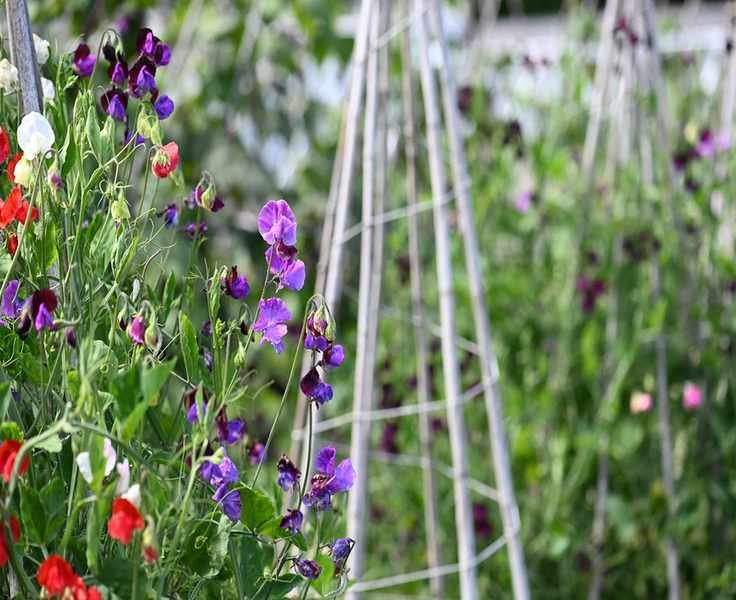
Consider using obelisks adorned with these fragrant flowers to enhance your garden beds, or leverage a trellis to create a delightful summer retreat. Dwarf varieties are also available, perfect for hanging baskets or cascading over pot edges without needing support.
Starting sweet peas from seed involves care, and a vital aspect of growing sweet peas is knowing the optimal planting time.
Best Timing for Planting Sweet Peas
Sweet peas thrive when sown in cool conditions, either in fall or spring, or indoors in deep containers to be acclimatized and planted out in mid-spring.
You can sow sweet peas from October to March. Being hardy annuals, planting them in October or November, depending on your hardiness zone, helps them establish robust roots before spring planting.
"If you sow your seeds in October, expect blooms in May or June," shares Molli Christman, a horticulturist at RHS Hyde Hall.
For spring sowing, start indoors and move outdoors once the weather warms, or direct sow in late spring, though results may vary. Always refer to the packet instructions for your selected varieties.

Can Sweet Peas Be Planted Directly in the Soil?
Yes, sweet peas can be directly sown into the soil.
These seedlings can endure harsh winter conditions and frost. Molli Christman advises sowing sweet pea seeds directly into well-prepared soil, enriched with compost or manure, ideally in late October to early November.
For a continuous bloom, plant one batch in October-November and another in January-February to enjoy flowers from May through August.
If opting for containers, keep them cool, like in a greenhouse. "Many gardeners mistakenly keep seedlings too warm with inadequate light, leading to weak growth. Remember, these hardy annuals thrive in cooler conditions," advises Philip Johnson from Johnson's Sweet Peas.

What Animals Might Eat Sweet Peas?
Rodents and birds may munch on sweet peas, so it's crucial to protect your seeds. Molli Christman suggests using a securely pinned mesh cover to safeguard the seeds.
"Although sweet peas are winter hardy, they aren't safe from animals, especially mice, which love the seeds before germination. Consider sowing extra seeds indoors as a backup," she says.
Soaking seeds in liquid seaweed fertilizer before planting can deter rodents, and adding netting helps keep birds at bay.

Do Sweet Peas Return Each Year?
Typically, sweet peas do not return annually, although some may self-seed if seeds don't freeze in winter. For optimal blooms, replant fresh seeds each year.
While sweet peas are primarily annuals, perennial varieties exist; however, they lack fragrance and can overcrowd other plants.



