

Prairie planting is one of the most dreamy landscaping styles out there, and its popularity keeps growing as more people want to create wildlife habitats in their yards—alongside a beautiful space to enjoy. The loose, romantic, and informal look focuses on a natural aesthetic, sustainability, and boosting biodiversity right outside your door.
When it comes to plants, prairie gardens mix native species like tall perennials and grasses in a way that mimics the grasslands of the American Midwest. This style works great as part of your backyard landscaping if you have deep borders or areas for meadowscaping, where plants can be grouped in harmonious drifts of color and texture to create a mini prairie.
Prairie gardens really shine in fall, when late-blooming perennials take center stage and the tapestry of grasses flowers, creating an immersive feel that connects you with nature. If you like the idea of bringing this look to your own yard, here's everything you need to know about prairie planting.

Stipa tenuissima Ponytails grass and Echinacea purpurea flowers
What exactly is a prairie garden?
'Prairies are ecosystems that grow where the climate dictates limited rainfall, hot summers and cold winters,' explains horticulturalist Mary Meyer of the University of Minnesota. 'Plants growing in prairies are typically herbaceous varieties, and trees are rare.'
If you're into the rewilding garden trend, prairies also provide a home for many different plants, including native wildflowers that support birds, butterflies, and other local wildlife. Without these habitats, many species decline and risk becoming threatened.
'A prairie garden is a smaller site, typically around 1/4 acre or larger, which has been planted with drifts of native grasses and perennial flowers,' says Laura Walsh, director of marketing at Oasis Forage Products. 'It's a low-maintenance form of landscaping that encourages a diversity of plant and animal species.'
It's easy to recreate the prairie garden look in an urban or suburban backyard to provide a suitable habitat for native plants, insects, and birds.
Why is prairie planting so popular right now?

The Oudolf Detroit Garden
Prairie gardens fit perfectly with the shift away from formal, over-designed outdoor spaces toward more natural landscaping.
'There is a real trend currently for rewilded yards and meadowscaping,' says Allison Messner, CEO of landscape architects Yardzen. 'We've seen even more interest in this trend this year as people embrace a more natural, wild look to their yards. Increasingly, we are planting for the planet and moving away from picture-perfect lawns and tidy pavers, and more towards planting that looks a little shaggy, with meandering pathways and crunchy gravel underfoot.'
The trend has been building for a while, with leaders like landscape designer Piet Oudolf, known for his naturalistic planting style, paving the way. His work includes the High Line in New York and the Oudolf Garden Detroit. American prairies clearly influence his designs.

Allison Messner is CEO of online landscaping design platform Yardzen, which she co-founded with her husband in 2018 after the Tubbs fire ravaged Northern California, destroying their neighborhood. They have since completed tens of thousands of designs for homeowners across the US.
What are the benefits of a prairie garden?
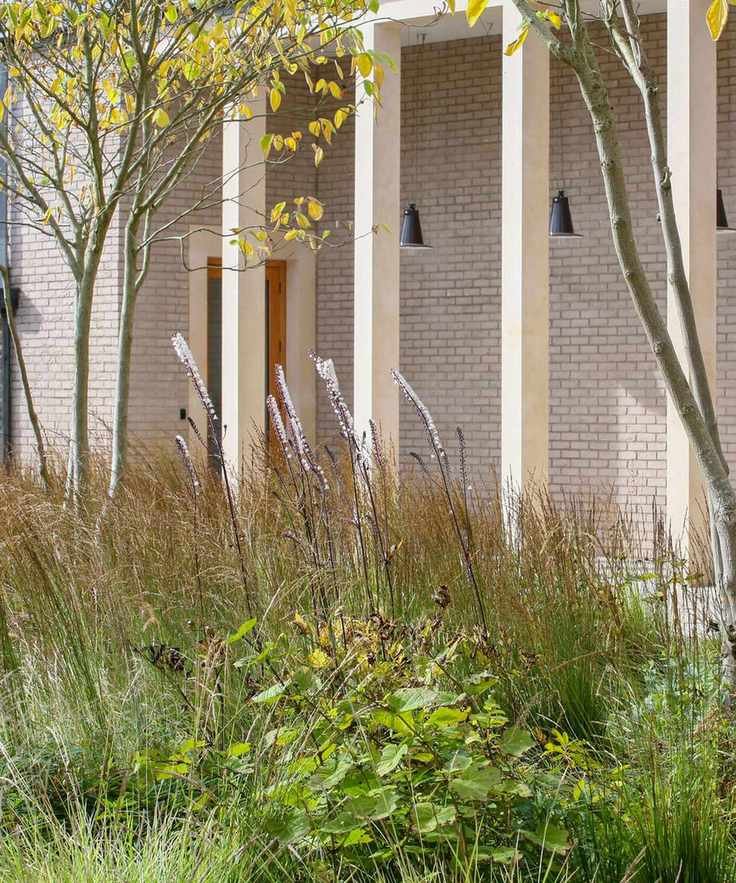
A courtyard garden with prairie planting
Prairie gardens take less time and money to maintain than traditional lawns, formal flowerbeds, and clipped shrubs. They reduce the need for watering, pesticides, and fertilizers, and cut down on mowing and pruning.
The simplest way to start is to stop mowing a section of lawn and let it grow long. You can also sow fast-growing wildflower seed mixes or carefully selected perennials that come back every year. You can pretty much leave your prairie garden to do its thing—so it's a great option if you're looking for low-maintenance garden border ideas to free up more time.
If you live in a drought-prone area, this is also a smart way to rethink your yard by swapping existing plants for water-thrifty grasses and flowers. Learn how to design a drought-tolerant yard and incorporate prairie planting as part of it.
How does it help wildlife and biodiversity?

'I love the opportunities for biodiversity that the prairie planting style affords,' says award-winning garden designer Judith Sargeant, who teaches courses on prairie gardens and is co-author of A New Naturalism, available on Amazon. 'It's also a way of creating diverse habitats for wildlife, along with winter foods and nesting materials.'
The plant diversity in prairie gardens attracts and supports a wide range of wildlife, including birds, insects, and essential pollinators. Choose this style and you'll see more wildlife visiting your garden. Prairie habitats are crucial for protecting many species and can be a key part of your wildlife garden ideas.
Bees and butterflies love native flowers. As fall fades into winter, leave the seedheads in place to provide food for birds and shelter for wildlife.
Are there practical things to consider?
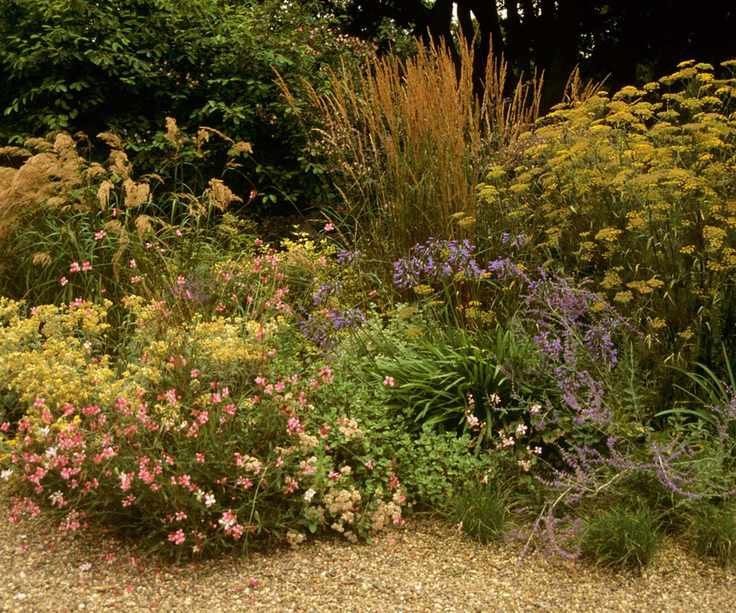
There are a few practical things to keep in mind. 'Check with your local city government about local weed ordinances before developing a prairie,' says Mary Meyer. 'You may need to apply for variances.'
Prairie gardens look more natural than other landscapes. Mary suggests discussing your plans with neighbors to let them know about the changes and that the site is being maintained. Consider using mowed edges, signs, or edging fences near your prairie garden to show the area is intentional.
How do I know if my site is suitable?

When choosing the best spot for a prairie garden, consider several key factors. Your yard should get full sun and be on the east, west, or south side of the house. It should have few trees and be free of weedy vegetation like quackgrass, Canada thistle, or reed canary grass.
Prairie gardens work well in areas that experience a range of temperatures throughout the year and are suited to temperate climates. The best conditions mimic the natural prairie ecosystems you're aiming to recreate.
Also consider drainage and sun/shade exposure when selecting plants for your location.
How do I check if my soil is right?

Prairie plants are adapted to specific soil types and moisture levels. You'll need to find out your soil type with a pH test to determine if it's sandy, clay, or loamy, and also check the moisture content.
'Well-drained soil is preferred,' says Laura Walsh. 'Avoid planting in areas with poor drainage and amend heavy clay soils with organic matter. Use native soil from your region when establishing the prairie garden.' Prairie plants particularly like fertile, loamy soils but will adapt to most soils.
There are additional benefits to choosing a prairie garden: they improve soil health and enhance water retention because their deep-rooted systems help prevent erosion and filter pollutants from runoff.
How do I plan the right mix of plants?
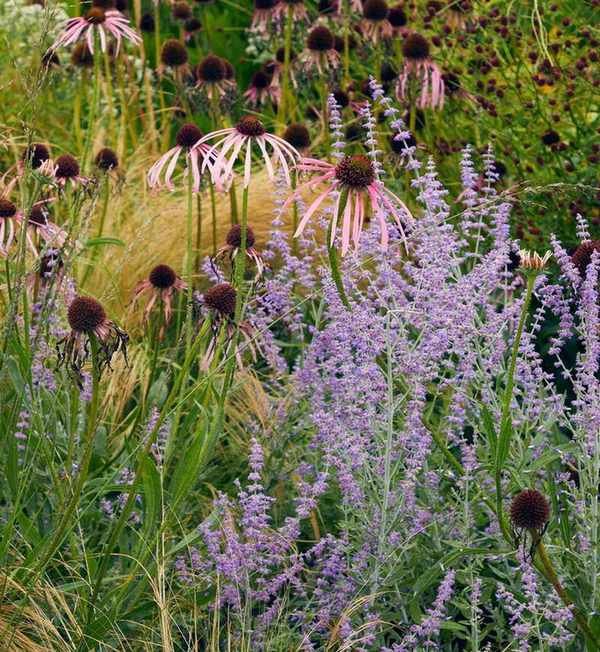
Drifts of native perennials and feathery grasses that come back year after year are key to the prairie garden look. It's a low-maintenance choice that encourages plant diversity.
To create a thriving prairie garden, first research and select species native to your area. Local plant nurseries can be a great resource for deciding the best plants for your soil and climate.
For the flowering component, native prairie species like aster, helianthus, rudbeckia, and solidago are excellent choices. Annual wildflower seeds can be added to the mix. For grasses, varieties like switchgrass, little bluestem, prairie dropseed, and blue grama grass are always popular. Together they form a tapestry of planting that offers color, texture, and movement to your prairie garden.
FAQs
Can I plant a prairie garden in a small yard?
Yes—planting a prairie border is a way to include this style even if you don't have a large space. The key is a soft block of informal planting with signature perennials and grasses. Include a few species but lots of each one. This combination adds late-season drama to your garden.
Choose a sunny spot with well-drained soil. Group plants together in sets of three or five, imagining how they'll look in drifts. Aim for an airy, almost translucent look that lets other layers show through, using lots of different heights.
If you love these ideas, you might also be interested in native wildflower seeds to sow for a naturalistic patch of meadow next year.



