

Silk is among the most extraordinary natural fibers in the textile industry. Composed mainly of fibroin (75-80%) and coated with sericin (20-25%), this protein fiber is created in the silk glands of certain insect larvae during cocoon formation. Silk's unique triangular cross-section refracts light, giving it a stunning shimmer that has enthralled wearers for centuries.
When discussing silk fiber, most refer to filaments from domesticated silkworm cocoons. However, various biological sources contribute to silk production, ranging from the prevalent Bombyx mori to semi-wild species offering distinct textures. Archaeological finds in ancient China, such as 8,500-year-old silk fragments from the Jiahu site, reveal humanity's long-standing relationship with silk.
This article delves into the biological and geographical origins of silk fiber, enhancing discussions about silk's status as a luxurious fabric and its diverse applications. It's designed to be informative for textile students, industry professionals, or anyone intrigued by this unique raw material.
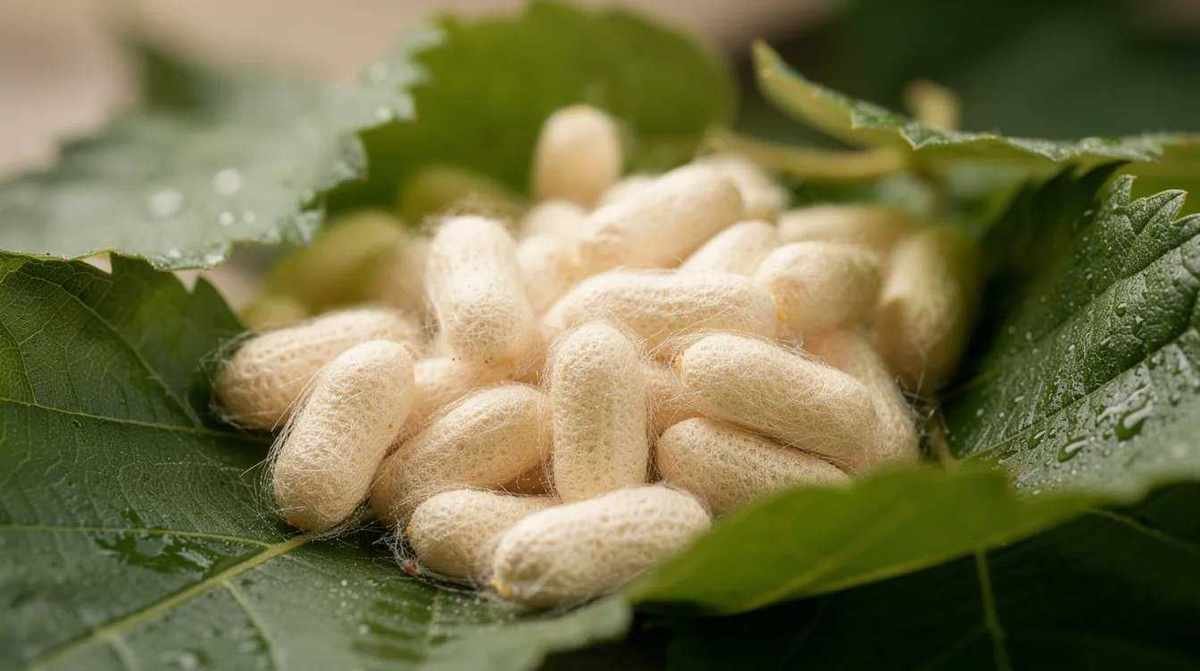
Silk Fibre Sources
Most silk fiber is derived from mulberry silk, produced by the Bombyx mori silkworm, which feeds solely on mulberry leaves and represents about 90% of global silk output. Notable non-mulberry silk sources include eri silk (from Samia ricini, which allows moths to emerge before harvesting, making it more ethical), tasar silk (from wild silkworms in India and Japan, known for its coarse texture), and muga silk (a rare, durable silk from Assam, India, prized for its natural golden hue).
Silk primarily comes from moth caterpillars, with rare examples including sea silk from mussels and experimental spider silk technologies. Spider silk, while exceptionally strong and elastic, is rarely used in textiles due to high production costs.
China and India dominate global raw silk production, although Japan, Thailand, Italy, and other regions boast rich silk traditions.
Ethical options like eri (peace silk) and Ahimsa silk permit the natural emergence of moths, resulting in staple silk rather than long filaments.
Diverse silk sources yield various colors, textures, and uses—from shiny mulberry fibers to the warm, coarse texture of eri silk and the naturally golden muga silk.
Primary Source: Mulberry Silk (Bombyx mori)
Bombyx mori produces mulberry silk, which accounts for 85-90% of natural silk globally. This dominance showcases centuries of meticulous breeding and cultivation that began along the Silk Road from China.
The Bombyx mori is a fully domesticated species, feeding primarily on fresh mulberry leaves (Morus species) and entirely reliant on human cultivation. Legends of Chinese emperors aside, this long-standing relationship between the insect and cultivator is deeply intertwined.
Each cocoon from Bombyx mori yields a single filament ranging from 700 to 1,600 meters. Workers usually combine 4-8 filaments during production to create consistent reeled silk yarn. Approximately 3,000 cocoons are required to produce just one yard or pound of silk thread.
Key characteristics of mulberry silk:
- Color: Off-white to cream
- Diameter: 10-12 microns (very fine)
- Lustre: High with natural sheen
- Uniformity: Consistent diameter
- Form: Continuous filament
Chinese silk represents over 70% of global production (approximately 170,000-180,000 metric tons annually), followed by India at 15-20%. Other contributors include Uzbekistan, Thailand, Vietnam, and Brazil, reflecting optimal sericulture infrastructure and conditions for mulberry cultivation.
Non-Mulberry Silks: Major Wild and Semi-Domesticated Sources
Non-mulberry silks, or “vanya” silks, make up the remaining 10-15% of global production. These wild silk types come from moths that consume plants other than mulberry, often raised in semi-wild forest conditions.
The primary non-mulberry silks—eri, tasar, and muga—are significant in India and parts of East and Southeast Asia. These fibers generally yield shorter filaments with unique textures suited for heavier, rustic fabrics.
Natural colors vary from creamy white to rich golden, with differing surface textures providing designers with aesthetic choices unavailable in standard mulberry silk.
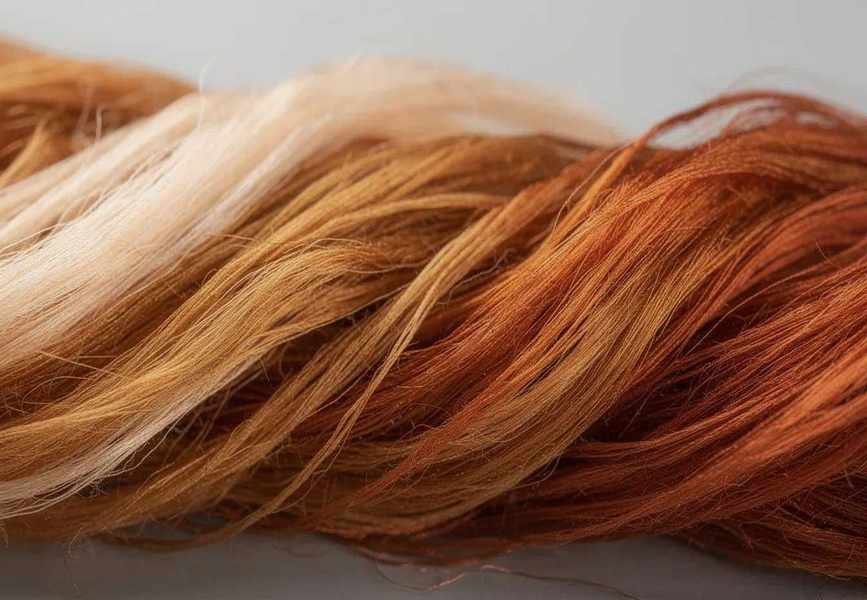
Eri Silk (Peace Silk)
Eri silk comes from the Samia ricini silkworm, which feeds on castor leaves and allows the moth to emerge before harvesting, making it an ethical choice. Production mainly occurs in Northeast India (Assam and Meghalaya) and extends to Bangladesh, Thailand, and China. Eri silkworms consume castor leaves among others, not mulberry.
Eri silk's harvesting process distinguishes it from other silks. Often referred to as peace silk, the cocoons are processed after the moth emerges, resulting in shorter staple fibers (1-5 cm) instead of long filaments.
Key characteristics of eri silk:
- Naturally creamy or brick-white
- Thicker fibers (20-30 microns) with a matte finish
- Wool-like texture with excellent insulation
- Spun like cotton, not reeled
- Perfect for shawls, stoles, and winter textiles
The staple form gives eri silk a unique texture, setting it apart from smooth mulberry silk.
Tasar (Tussar) Silk
Tasar silk, produced by wild silkworms of the Antheraea genus, primarily arises in India and Japan and is recognized for its coarse texture and color variations. Tasar silk production is concentrated in central and eastern India (Jharkhand, Chhattisgarh, Odisha), where Antheraea mylitta and Antheraea paphia produce distinctive coppery-brown or beige hues.
Unlike controlled mulberry cultivation, tasar silkworms feed on forest trees such as Terminalia and Shorea. Rearing often takes place in forest environments, linking tasar silk to its natural ecosystem.
Key characteristics of tasar silk:
- Coarser than mulberry (15-25 microns)
- Stronger yet less uniform
- Natural earthy pigments
- Crisp texture with good airflow
Tasar is favored in traditional textiles like saris and dress materials. Japanese green tasar silk from Antheraea yamamai has a unique greenish hue, though its production remains limited.
Muga Silk
Muga silk, an exclusive and pricey silk from Assam, India, is cherished for its natural golden hue and durability, making it perfect for traditional attire. Sourced from semi-domesticated Antheraea assamensis moths that feed on native som and sualu trees, muga silk production is largely confined to Assam.
Key characteristics of muga silk:
- Golden silk color that deepens with washing
- Exceptional durability and strength
- Limited natural habitat (primarily Assam)
- Yields affected by climate
- Labor-intensive cultivation and processing
- About 1,000 cocoons yield 125 grams
These factors contribute to low production volumes and high costs. Muga silk features prominently in ceremonial garments like Mekhela Chador and bridal saris, where its natural coloration adds significant value.
Other Natural Silk Fibre Sources
In addition to the prominent mulberry and non-mulberry silks, several rare sources provide silk-like fibers, usually in small quantities with limited commercial potential. These include coan silk, sea silk, and spider silk, each with historical significance or technological interest.
Many of these alternative silk types are found in museums or specialized artisan projects rather than in mainstream textile production. Their unique mechanical properties or historical contexts are worthy of exploration.
Coan Silk
Coan silk is produced by the moth species Pachypasa otus and related taxa from Greece, Turkey, and parts of Italy. Historical texts show its use in ancient Mediterranean textiles, including Roman fabrics blended with other fibers.
These moths feed on pine, juniper, and oak, creating wild cocoons that yield coarse, brownish fibers with less shine than mulberry silk. Ancient Chinese traders encountered these Mediterranean silk traditions.
Today, coan silk production is rare, limited to academic study or niche artisan interest. It is often used to bolster other silk fibers in blends or for creating historically inspired fabrics for museums and collectors.
Sea Silk (Mussel Silk)
Sea silk (byssus) is truly one of the most remarkable textiles. Sourced from Mediterranean bivalve mollusks, particularly Pinna nobilis, these creatures produce long byssus threads for surface attachment. Coastal communities in southern Italy maintained small-scale sea silk traditions until the 20th century.
Key characteristics of sea silk:
- Very fine diameter
- Natural golden-brown hue
- Inherent glossiness
- Historical ties to luxury and religious garments
However, modern sea silk production is nearly non-existent. Pinna nobilis is critically endangered, and the labor-intensive collection process makes commercial viability unlikely. Today, sea silk is mainly of ethnographic interest, with a few artisans preserving traditional techniques.
Spider Silk
Spider silk is renowned for its incredible strength and elasticity, making it suitable for specialized applications, although its high production cost limits textile use. Dragline and web silk from golden orb-weavers (Nephila spp.) can be 5-10 times stronger than steel by weight and offer superior elasticity, characteristics that synthetic materials struggle to replicate.
Despite these amazing attributes, large-scale spider silk production is impractical. Spiders' territorial and cannibalistic nature hinders dense farming like that of silkworms. Noteworthy experimental initiatives include:
- Handmade spider silk textiles from Madagascar (early 2000s)
- Lab-grown spider silk fibers (Japan, US, Europe since the 2010s)
- Bioengineered proteins from bacteria, yeast, and modified silkworms
Current commercial use is primarily for high-tech, small-volume products such as research materials for bullet-resistant fabrics. Many items marketed as “spider silk” utilize recombinant proteins instead of actual harvested fibers, with companies like Bolt Threads creating Micro silk through fermentation.
Geographical Distribution of Silk Fibre Sources
Several countries dominate silk production due to climate, tradition, and established sericulture practices. This distribution clarifies why certain silk producers have substantial market influence.
Shifts in history have transformed this landscape. Japan once led silk exports from the late 19th century until World War II, while Italy became the European silk processing hub. Today, North America and the European Union are primarily consumers and importers after unsuccessful 19th-century sericulture initiatives.
Chinese silk remains dominant due to advanced infrastructure, while Indian producers excel in non-mulberry varieties—a niche unmatched elsewhere.
Silk Fibre Structure and How Source Affects Properties
All true silks are protein fibers, but species and rearing conditions greatly affect fiber diameter, length, cross-section, and color. These variations influence how different silks perform in textile applications.
Bombyx mori mulberry silk showcases qualities making it ideal for luxurious lingerie:
- Uniform triangular cross-section
- Fine denier (10-12 microns)
- Bright white base color
- High luster and smooth texture
In contrast, wild silks like eri, tasar, and muga have thicker diameters (15-30 microns), irregular cross-sections, and naturally tinted colors that need no dye.
The form of silk that reaches manufacturers—filament or staple—largely depends on the harvesting method. Reeling cocoons before moth emergence yields long filaments, while allowing moths to emerge first or using pierced cocoons produces shorter staple fibers that must be spun.
These structural differences dictate typical uses: mulberry for fine garments and satin weaves (including protective silk bonnets for healthier hair); eri for warm shawls; tasar for structured fabrics; muga for durable ceremonial items.
Ethical and Sustainable Silk Sourcing
Concerns regarding the mortality of silkworm pupae have sparked interest in alternative harvesting methods, especially since ethical consumption gained traction in the late 20th century. Conventional silk production typically involves boiling or steaming cocoons to prevent the moths from breaking filaments upon emergence, a practice that can be unsettling for some consumers.
Ahimsa or non-violent silk practices allow moths to emerge before processing, resulting in staple silk:
- Preserves the moth's life
- Changes fiber form from filament to staple
- Affects yarn texture and fabric drape
- Can increase production costs (2-3x more)
- Aligns with ethical purchasing values
Sustainability extends beyond pupae concerns. Mulberry cultivation often uses fewer pesticides than cotton farming. Tasar and muga rearing in forest environments supports biodiversity. Compared to synthetics, natural silk generates minimal microplastic pollution during washing, especially in high-quality silk pajamas and sleepwear.
Certifications help buyers identify authentically sourced silk. India’s Silk Mark verifies purity, while organic labels in the EU and US denote responsible farming practices. These systems combat fraud, crucial since many textiles labeled as silk contain blends or synthetics.
Applications Linked to Silk Fibre Sources
Fibre source and quality significantly impact where specific silks fit in the value chain from yarn to final product. Production techniques and inherent properties naturally align each type with particular applications.
Mulberry Silk Applications
- High-end garments (saris, blouses, dresses, ties)
- Lingerie and next-to-skin clothing
- Lightweight scarves and accessories
- Luxury bedding and pillowcases
- Decorative textiles
Eri Silk Applications
- Warm scarves and shawls
- Winter wraps and stoles
- Handloom textiles
- Ethical fashion lines
Tasar Silk Applications
- Traditional Indian wear (saris, kurta fabrics)
- Textured dress materials for Western markets
- Furnishing fabrics requiring structure
Muga Silk Applications
- Ceremonial Assamese clothing (Mekhela Chador)
- Bridal and wedding attire
- Limited-edition luxury collections
Rare Silk Alternatives
Rare alternatives like coan silk, sea silk, and spider silk remain largely outside commercial production. These fibers primarily exist in museums, research centers, or niche artisanal projects, although biotechnology may eventually enhance the commercial viability of spider silk, similar to how evolving digital platforms emphasize user data and privacy practices in modern textile research and e-commerce.
Frequently Asked Questions
Which animal is the main source of commercial silk fibre today?
Most commercial silk is sourced from the domesticated mulberry silkworm, Bombyx mori, which spins cocoons that are reeled into long, continuous filaments. While various insects and some marine animals produce silk-like fibers, none match the scale and economic significance of Bombyx mori, which accounts for 85-90% of global natural silk.
Is all silk sourced from worms, or are there plant-based silk fibres?
True silk, by definition, is always an animal protein fiber derived from insects or mollusks. Some plant-based fibers, such as rayon or bamboo viscose, may be labeled as “artificial silk” due to similar drape or sheen, but they are regenerated cellulose, not authentic silk. Genuine silk exclusively comes from animal sources, with larvae producing the protein necessary for silk.
Why do some silks (like muga or tasar) have color even before dyeing?
Natural pigments and structural variations in wild silk lead to inherent colors ranging from cream to deep golden or brown. These colors stem from the biochemistry of the species and the host plants consumed by the silkworms. Muga silk's distinctive golden shade arises from unique protein structures, while tasar's copper tones relate to its forest-tree diet. Many consumers seek these undyed, natural hues for their authenticity and environmental benefits.
Are “peace silk” and “Ahimsa silk” different fibre sources?
Peace silk and Ahimsa silk refer to harvesting methods rather than distinct species. In these practices, moths are allowed to emerge before processing, ensuring the pupae are not killed. Eri silk often carries these designations as its traditional production already permits moth emergence. However, similar non-violent methods can apply to mulberry or tasar silk, transforming the fiber from continuous filament to staple form and necessitating spinning instead of reeling. Care requirements may differ slightly for these staple-spun silks.
Can spider silk or lab-made silk replace traditional mulberry silk in textiles?
While lab-produced spider silk proteins and bioengineered silks show potential for high-performance applications, they remain costly (10-100 times the price of mulberry) and limited in volume. Current production focuses on specialized uses, such as medical scaffolds and technical composites, rather than apparel or home textiles. For the foreseeable future, Bombyx mori mulberry silk will continue to be the primary source for mainstream silk fabrics, with engineered alternatives serving as specialized complements rather than replacements for the beauty and drape of natural silk.



