
Gray bathroom vanities are a stylish yet practical addition to any washroom.
These units, often featuring one or more sinks along with necessary storage, mirrors, and lighting, serve a crucial role in bathroom design. Being one of the most significant pieces of furniture in the room, they also make a substantial visual statement, so choosing the right color and design is vital.
Gray, as a versatile and neutral tone, complements a wide array of colors and styles, ranging from classic to modern. Thus, when considering bathroom vanity options, gray emerges as a smart pick.
Whether you need a vanity that aligns with your gray bathroom ideas or a neutral piece that pairs with bolder color schemes, these designs are sure to inspire.
Gray Bathroom Vanity Inspirations
When selecting gray bathroom vanities, consider aspects like size, functionality, shape, and which gray shade best matches the rest of your decor.
Do you prefer a statement-making vanity or one that discreetly fits into the room? Is additional storage a must, or do you fancy an open-frame design for an airy ambiance? These considerations are key in crafting your ideal bathroom vanity. Below, we've curated a range of gray bathroom vanity inspirations to kickstart your design journey.
1. Classic Shaker Style

A classic shaker vanity in a neutral gray is a timeless choice that endures trends.
Shaker-style vanities are suitable for both traditional and modern bathrooms due to their elegant simplicity. 'This design remains relevant even a decade later,' notes a design expert.
For a contemporary twist, consider integrating bold colors like teal, deep green, or even black, paired with metal handles for added flair.
2. Dark Gray as a Focal Point

Opting for a charcoal vanity can bring depth to white bathrooms or gray-and-white schemes. This design, complemented by black fixtures, adds structure and elegance, while marble tiles introduce essential texture.
3. Light Gray for Bright Spaces

In larger master bathrooms, avoid heavy dark gray tones that may overwhelm the space. Instead, a light gray can create a refreshing and spacious atmosphere.
Glossy marble surfaces and a large mirror near the window can further enhance natural light.
4. Open Frame for Illusion of Space

For compact bathrooms, an open-frame vanity can create an illusion of openness. A neutral palette featuring soft grays and whites can enhance this effect.
This design, paired with a natural wood countertop, beautifully complements shiplap wall paneling, perfect for a country-inspired bathroom.
5. Large Fitted Designs for Storage

A custom vanity unit optimizes bathroom storage, tailored for your needs. This unit, boasting drawers and cupboard space, keeps toiletries and cleaning supplies neatly organized.
Painting the vanity the same shade as the walls allows it to blend seamlessly, enhancing spatial perception.
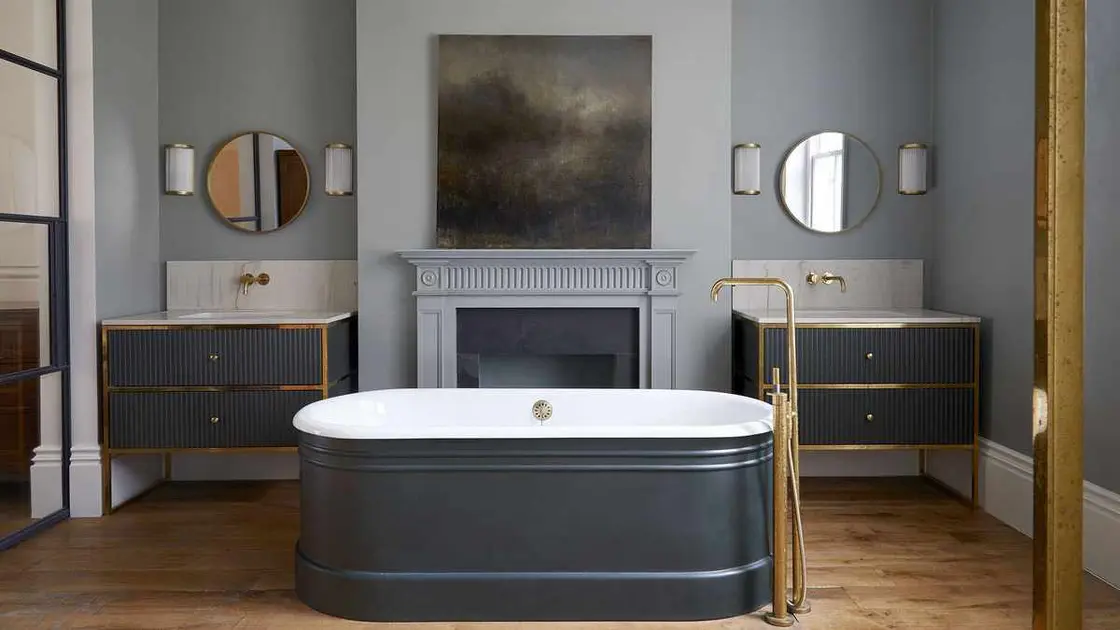
6. Metallic Accents for Luxury

These bespoke gray vanity units, featuring sleek lines and brass details, add a luxurious touch to any bathroom.
'This project strikes a delightful balance of materials. The warm gray/blue tones contrast beautifully with rich wooden floors and shining brass fittings,' says a leading designer.
7. Light and Dark Gray Contrast

In this balanced monochrome bathroom, various shades of gray provide depth and interest. The shaker-style vanity and herringbone marble flooring create a structured look. 'Contrast elevates the gray tones, while white highlights add personality,' explains the designer.
8. Textured Wood Elements

To avoid a cold feel in gray bathrooms, introduce texture with grained wood and veined marble tiles. Natural materials can take center stage without relying heavily on color.
9. Elevated Vanities to Highlight Flooring
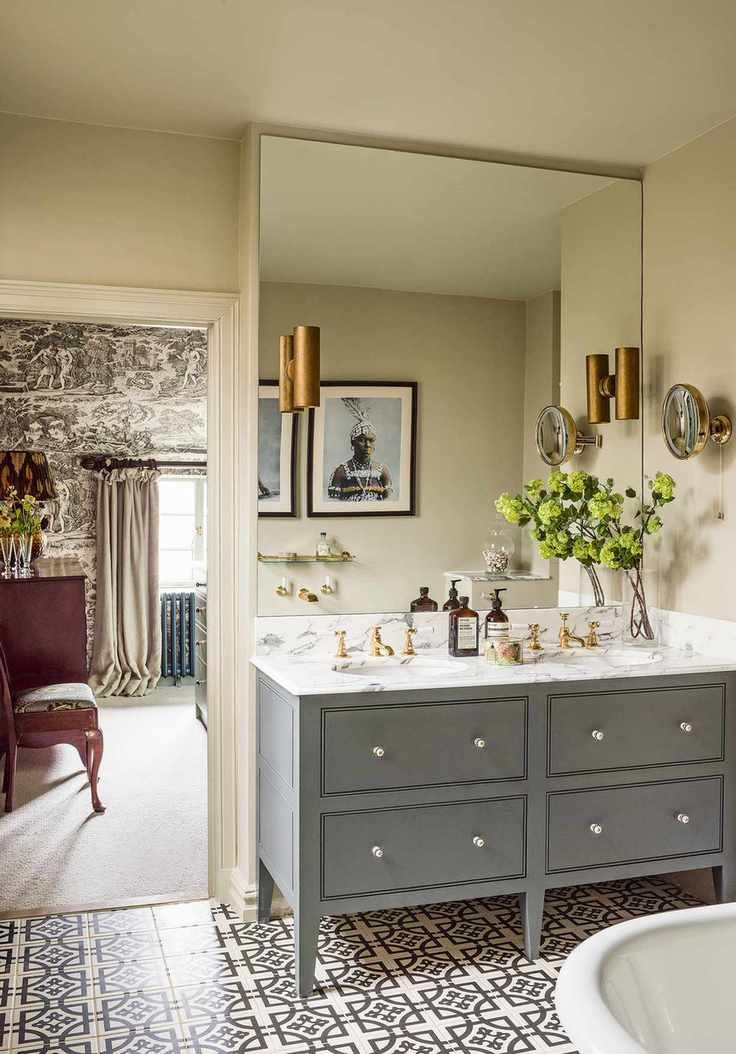
Patterned floor tiles add character to bathrooms. Choosing a floating vanity or one on legs allows the floor design to shine.
10. Asymmetrical Design Statements

This sleek, asymmetrical vanity, featuring a single sink, offers ample countertop space, perfect for storage or as a dressing area.
11. Upcycled Vintage Furniture

If you're on a budget but want to infuse character, consider transforming an old piece of furniture into a unique vanity. This approach not only saves money but also promotes sustainability.
In this example, an old console table is repurposed and painted charcoal, fitted with brass handles for a chic statement.
Color Pairings with Gray in Bathrooms
Gray is remarkably adaptable, pairing well with nearly every color.
Design experts appreciate gray for its versatility, offering a range of shades from smoky to deep charcoal that work beautifully in various applications.
While commonly paired with black and white, gray also complements soft pastels and vibrant hues, such as teal and yellow. 'Yellow and gray, for instance, convey a message of strength and hopefulness,' adds an expert.
Choosing Cabinet Colors vs. Wall Colors
Selecting cabinet colors depends on your desired aesthetic. Darker cabinets can serve as striking focal points against light walls, grounding the space.
Conversely, matching cabinets to wall colors creates a seamless look, making the area appear larger.
A light cabinet against dark walls can create a bold visual statement.



