
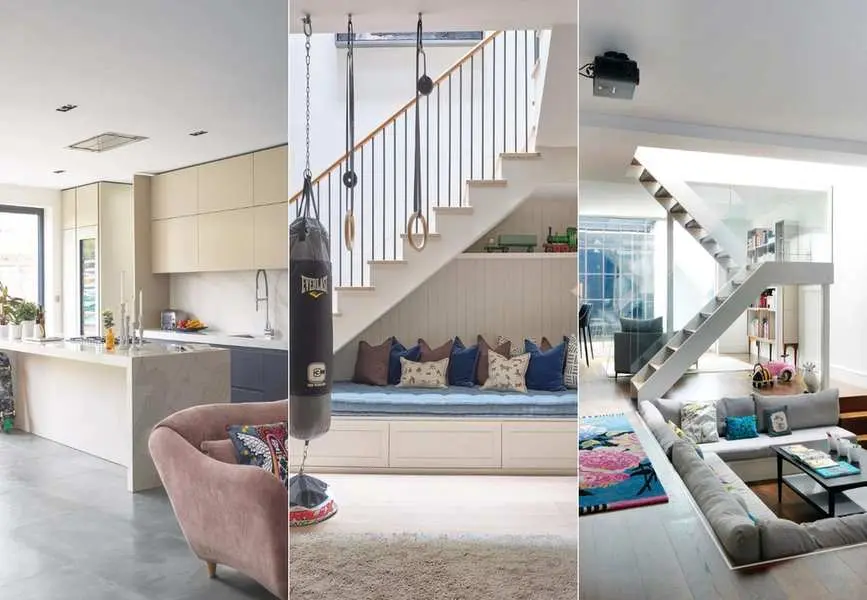
Musty odors in your basement often signal a lack of ventilation, leading to dampness and mold. Once mold infiltrates materials like drywall and carpets, removal becomes challenging.
Cleaning may help temporarily, but if mold embeds itself in a surface, it tends to return. Eventually, you'll face costly replacements.
To protect your creative basement projects from mold, proper ventilation is key. We consulted two experts to discuss effective strategies.
Effective Basement Ventilation Techniques
Experts outline the risks of insufficient basement ventilation and share six strategies to keep your area mold-free.
Importance of Proper Basement Ventilation

Regardless of usage, every basement needs adequate ventilation to avoid various issues, some more serious than others.
"Proper ventilation prevents damp air buildup, which fosters mold and mildew, posing health risks," explains Drew Mansur, Co-Founder & Director at Yabby.
Moreover, Mansur notes that good airflow protects your home's structure by preventing moisture accumulation that can lead to wood decay and other damages.
A well-ventilated basement not only looks and smells better but also enhances usability, potentially increasing your property's value.
Six Methods for Basement Ventilation

There are multiple ways to ventilate a basement, as John Parks, COO at Advanced Insulation System, shares below. Often, you will need just one or a combination of these methods to ensure your large or small basement gets the airflow it needs.
1. Expand Your HVAC System
Extending your HVAC ductwork into the basement is a straightforward approach to ensure it receives conditioned air, helping to regulate temperature and humidity for a healthier environment.
2. Install Exhaust Fans
Adding exhaust fans, particularly in basements utilized for laundry or bathrooms, can effectively remove humid air and direct it outside, thereby preventing moisture buildup.
3. Use Dehumidifiers
A practical solution is a dehumidifier, which can significantly decrease moisture levels. This makes the air less inviting for mold and mildew.
GENERAL ELECTRIC 50-Pint Portable Dehumidifier with Drain, White (Refurbished) |$165.00 at Walmart
This unit extracts up to 50 pints of moisture daily, making it ideal for musty spaces.
4. Install Air Exchangers
These systems are simple to set up and allow fresh outdoor air in while expelling stale indoor air, enhancing humidity balance and air quality.
5. Add Egress Windows
Installing egress windows not only improves safety by providing an escape route but also enhances airflow. These windows can be opened to introduce fresh air, promoting natural ventilation.
6. Fit Foundation Vents
If your basement is prone to moisture, foundation vents can facilitate cross ventilation, enabling drier air to enter and moist air to exit.
Common Questions
Can Basement Ventilation Eliminate Mold and Dampness?
Yes and no. While introducing ventilation is a preventative measure, it won't entirely eliminate existing mold and dampness. Good airflow regulates temperature and humidity, helping to push moisture away, which mold thrives on.
However, you must remove mold and mildew first before ventilation can effectively improve your space. Once mold penetrates materials, it becomes difficult to eradicate.
What's the Cost of Basement Ventilation?
Costs can vary based on your chosen ventilation method. If egress windows are already installed, simply opening them incurs no cost. However, installing new egress windows may set you back around $4000-$5000.
Dehumidifiers are a budget-friendly option, with portable units available for as little as $70. A larger dehumidifier for spaces up to 6500 sq ft, like the Kesnos 120 Pints Most Efficient Energy Star Dehumidifier from Amazon, costs around $300.
Expanding your HVAC system can be more expensive, typically starting at $4000, depending on your basement size and system complexity. Consult a local contractor for accurate pricing.
Installing an air exchanger generally costs more than a dehumidifier but less than extending HVAC. Prices vary based on factors like size and unit type, with some models like the Tjernlund X2D Reversible Basement Fans from Amazon available from $200, though costs can exceed $1000.
With a clean and well-ventilated space, consider how to manage airflow throughout your home for optimal ventilation and heating benefits.



