
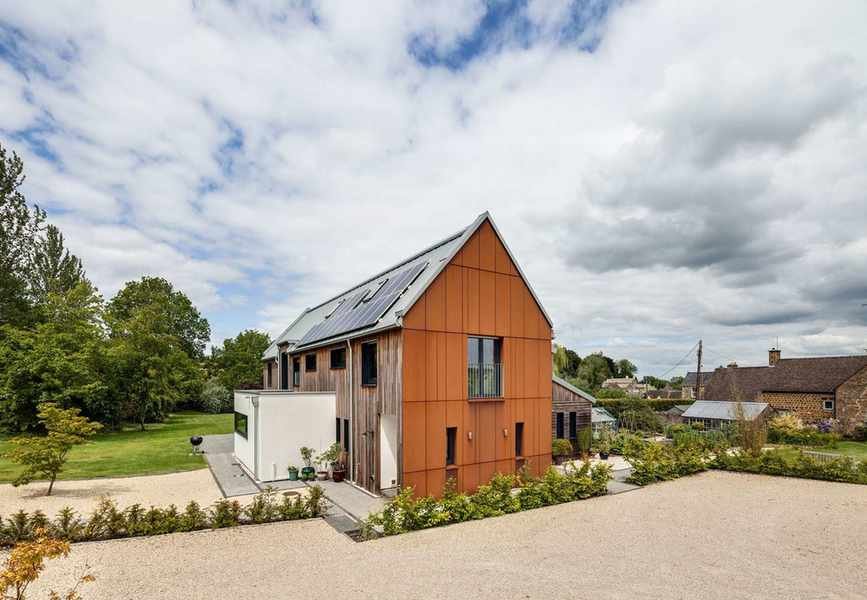
Looking for eco home improvements? Making your home more energy efficient and investing in renewable energy helps stretch precious resources further—and it can save you money, too.
We've rounded up the best green home upgrades, from eco-friendly heating and cooling to solar panels, rainwater harvesting, green roofs, and sustainable furniture and lighting choices. Keep reading for the full rundown, and start making changes that benefit both the planet and your wallet.
8 ways to make your home greener
If you're planning a renovation, sustainability should guide every decision—from the initial design through to the finishing touches. Here are eight steps to create a more earth-conscious home.
1. Find where your home leaks energy
Before upgrading to eco-friendly heating or sustainable products, it pays to know how your home currently performs energy-wise. Drafty windows, small gas leaks, or poor insulation are often the biggest culprits, and fixing them instantly makes your home greener.
A professional home energy audit uses blower door tests, gas leak detectors, and moisture meters to pinpoint exactly where you're losing energy. Once you have that information, you can target your improvements for maximum impact.
2. Add insulation
"The main sources of direct carbon emissions from a homeowner include cars/trucks and heating," says Austin Whitman, CEO of Climate Neutral. Upgrading your heating system helps, but proper insulation is just as critical—without it, you'll waste energy keeping your home warm or cool.
Homes built before the 1940s often lack fiberglass insulation, and even newer houses may have outdated insulation. The amount you need depends on your region: homes in the south require less than those in the north. The U.S. Department of Energy provides a color-coded map showing recommended R-values for attic, floor, and wall insulation by state.
Since most heat escapes through the roof, laying fiberglass insulation on the attic floor is the easiest upgrade. For full coverage, blow-in insulation around exterior walls works best. To double down on eco-friendliness, choose insulation made from renewable or recycled materials—like sheep's wool, recycled denim, castor oil, or cellulose.
3. Switch to eco-friendly heating
Heating a home uses more energy and costs more than any other system—about 45 percent of your utility bill in the US, and roughly 55 percent in the UK, according to the Energy Saving Trust.
Upgrading an old furnace or boiler to a high-efficiency model (with an AFUE of 90 to 98.5 percent) can significantly cut energy use. In the UK, new gas and oil boilers are condensing models that recover latent heat from waste gases, making them much more efficient.
Air source heat pumps (or mini-split systems) are another great option, especially if you're switching from oil heating. "Making a home energy efficient and all-electric improves indoor air quality," says Whitman. These pumps absorb heat from the air, compress it, and transfer it into your heating system—they can also cool your home. Just make sure your home is well insulated and airtight first.
Geothermal (ground source) heat pumps use buried pipes to extract energy from the ground. They're highly efficient but require a large enough yard for installation.
Smart technology can also help. "Home management systems like Alexa and Google Nest let you control your central heating with smart controls," says Martyn Bridges, Director of Technical Communication & Product Management at Worcester Bosch.
4. Cool your home more sustainably
Air conditioning accounts for about 6 percent of US electricity use. Upgrading to an Energy Star-qualified unit helps, but greener options exist.
Better ventilation—opening windows for cross breezes and using fans—is the most eco-friendly cooling strategy. Evaporative coolers pass hot air over water-saturated pads to lower temperatures; they work well in low-humidity areas. Both geothermal and air source heat pumps can also provide efficient cooling.
5. Install solar panels
Solar panels let you generate electricity or hot water from a renewable, clean source. Solar photovoltaic (PV) systems provide electricity, while solar thermal systems heat water. "Energy from the sun is collected via panels, usually on the roof, then converted," explains Christian Engelke, technical director at Viessmann. "Solar thermal can reduce fossil fuel consumption by up to 35 percent when used with a modern boiler. Solar PV can cover much of the electricity needed for heat pumps, potentially taking properties off-grid."
6. Shop sustainably for your home
What you buy matters, too. Look for sustainable products, eco-friendly paints, energy-efficient appliances, and solar-powered options.
For appliances, check for the Energy Star label (US) or the new A-to-G energy label (UK). Switch to LED light bulbs—they use far less electricity. For outdoor lighting, solar-powered options charge by day and illuminate your yard at night.
In the bedroom, choose mattresses made from wool, cotton, bamboo, or plant-based foams. For furniture, opt for reclaimed or upcycled pieces, or look for FSC-certified wood to ensure it comes from responsibly managed forests.
Etsy is a great source for sustainable decor. "From upcycled furniture to accents made from recycled plastic, cotton, or glass, it's easy to find something that looks great and helps the environment," says trend expert Dayna Isom Johnson.
Finally, focus on timeless pieces built to last. "Decorating with longevity means seeking trend-proof design and quality craftsmanship," says Emily McGarvey, director of sustainability at Room & Board. "Ninety percent of our manufacturers are US-based, which ensures better quality and a long life for your furniture."
7. Harvest rainwater
Rainwater harvesting lets you reuse water, reducing strain on municipal supplies. Collected rainwater can irrigate your garden, flush toilets, or—with proper filtration—meet all your home's water needs. The system size depends on whether you're using it outdoors only or inside as well.
8. Install a green roof
Green roofs—covered with vegetation like sedums—are becoming popular for homes too. "They aid biodiversity, improve air quality, regulate internal temperatures, and prolong roof lifespan," says John Carter, Head Buyer at Roofing Megastore.
A green roof absorbs heat, cools your home in summer, provides insulation in winter, and captures carbon dioxide. It also reduces rainwater runoff. Choose from lightweight, low-maintenance systems with grasses and sedum, or intensive versions with deeper soil that can support herbs, flowers, and even shrubs—and create extra outdoor space.
How to do an eco-friendly renovation
An eco-friendly renovation comes down to choosing the right materials and systems. Consider:
- Recycled materials like recycled glass and reclaimed wood
- Repurposed materials such as architectural salvage or secondhand finds
- Low-VOC paints and products for better indoor air quality
- Renewable materials like wool insulation and bamboo flooring
Your remodel is also the perfect time to upgrade your home's systems:
- Install a low-flow toilet to conserve water
- Choose Energy Star-certified appliances
- Add insulation to an older home
- Select energy-efficient doors and windows



